
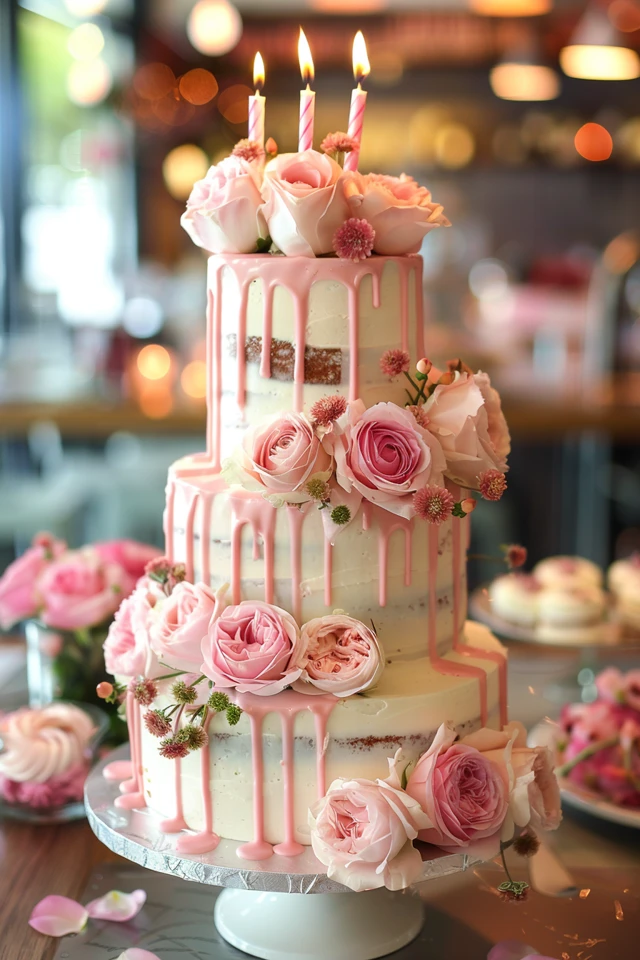
30th Birthday Cakes for Her – Unique Ideas!
Turning thirty is a massive transition. It is often the decade where we stop compromising on quality, whether that applies to our furniture, our relationships, or the dessert we serve at our parties. I view a 30th birthday cake not just as a sweet treat, but as the temporary focal point of the room’s design scheme.
In my years designing event spaces and residential interiors, I have learned that the cake table is the anchor of the party traffic flow. It is where the photos happen, where the singing happens, and where guests naturally congregate. Treating the cake as a sculptural element rather than just grocery store pickup changes the entire atmosphere of the event.
If you are just looking for visual inspiration, feel free to skip ahead to the curated Picture Gallery at the end of the blog post. However, if you want to understand the mechanics of styling, scale, and selecting a design that complements your space, keep reading. We are going to cover everything from trendy aesthetics to the logistics of display height and lighting.
1. Defining the Aesthetic: Cake as Decor
When I start a room design, I look for a “hero piece”—something that dictates the vibe of the space. For a birthday party, the cake is that hero piece. You want to choose a style that reflects the personality of the birthday girl but also respects the environment where it will be served.
The “Vintage Lambeth” style is having a major moment right now. These are the cakes with over-the-top, intricate piping that recall the Rococo era. They fit beautifully in homes with traditional molding or “Grandmillennial” decor. The texture is heavy, usually featuring garlands and ruffles made of buttercream.
On the other end of the spectrum is the architectural or structural cake. These often use fondant to create sharp edges, geometric shapes, or marble effects. If you are hosting in a modern apartment with concrete floors and clean lines, a fussy piped cake will look out of place. A sleek, sculptural cake bridges the gap between food and modern art.
Color palette is your next major decision. I always advise clients to pull the cake color from the room’s existing textiles or the party theme. If you have a neutral rug and linen curtains, a neon pink cake will jar the eye in photos. Instead, consider muted terracottas, sage greens, or a classic monochromatic cream.
Designer’s Note: The “Rule of Three” in Color
When selecting colors for the cake, stick to the 60-30-10 rule we use in interiors.
- 60% of the cake should be a dominant base color (often white, cream, or a soft pastel).
- 30% is the secondary color (drip details, major floral elements).
- 10% is the accent (metallic leaf, sprinkles, or a custom topper).
This ratio ensures the cake looks cohesive rather than chaotic.
2. The Architecture of Display: Staging the Table
A beautiful cake on a bad table is a wasted design opportunity. The surface you place the cake on matters just as much as the cake itself. I treat the dessert station as a vignette, similar to how I would style a console table in an entryway.
First, consider the table size relative to the cake. A common mistake is placing a standard 10-inch cake on a massive 8-foot dining table without any supporting decor. It looks lost. If you are using a large table, you must “shrink” the visual space by using trays, floral arrangements, or tiered stands to flank the cake.
Alternatively, use a dedicated pedestal table or a bar cart. A round cocktail table (typically 30 to 36 inches in diameter) is often the perfect scale for a birthday cake presentation. It allows guests to circulate fully around the piece, which is excellent for traffic flow.
Linens are the foundation. Avoid the cheap, shiny polyester tablecloths that come with rental packages. Opt for a heavy linen or a velvet runner that pools slightly on the floor. In design, we usually look for a “puddle” of 1 to 2 inches for a romantic look, or a clean hem that hovers 0.5 inches off the floor for a modern look.
Common Mistakes + Fixes: The “Floating” Cake
The Mistake: Using a glass cake stand on a glass table.
The Fix: Texture contrast is vital. If your table is glass or high-gloss lacquer, use a wood, ceramic, or marble cake stand. If your table is rustic wood, a sleek glass or metallic stand provides the necessary separation to make the cake pop.
3. Scale and Proportion: It’s Not Just About Servings
One of the hardest conversations I have with clients is about the size of the cake. They often say, “We only have 20 guests, so we just need a small round cake.” From a design perspective, a single 8-inch round cake rarely provides the “wow” factor suitable for a 30th birthday.
You have to balance the serving requirements with the visual impact. If you want the height and drama of a three-tier cake but only have 30 guests, ask your baker for “dummy tiers.” This is a trade secret in the event world. The bottom two tiers can be Styrofoam covered in icing, while the top tier is real cake.
This trick gives you the verticality needed for a stunning centerpiece without wasting pounds of food. In terms of measurements, a standard dining table sits at 30 inches high. If your cake is only 6 inches tall, it is below the eye line of standing guests.
I aim for the top of the cake to sit between 48 and 54 inches off the floor. If your table is 30 inches, and your cake is 12 inches, you need a cake stand that adds at least 6 to 8 inches of lift. This brings the focal point up to a comfortable viewing level for photography.
What I’d do in a real project:
- Assess the ceiling height: If you have 10-foot ceilings, a short cake will look stunted. I would order a 3-tier cake (two dummy tiers) to fill the vertical void.
- Check the stand stability: I never use pedestal stands for cakes heavier than 15 pounds. I opt for flat, wide-base plateau stands for safety.
- Measure the knife: It sounds silly, but ensure your cake knife is long enough to cut through the diameter of the bottom tier cleanly.
4. Lighting the Moment
Lighting is the most underutilized tool in amateur party planning. You can spend hundreds on a custom cake, but if you light it with harsh overhead kitchen recessed cans, it will look flat and unappetizing. Texture—whether it is smooth fondant or fluffy buttercream—needs shadows to read correctly.
Avoid direct downlighting. It creates harsh shadows under the tiers and can actually warm up the icing enough to cause drooping. Instead, aim for side lighting or ambient glow.
I often use battery-operated picture lights or small portable table lamps on the dessert table. This creates a warm, intimate pool of light around the cake. If that isn’t feasible, candlelight is the oldest trick in the book.
Place votives or taper candles at varying heights around the cake. The flickering light reflects off any metallic accents (like gold leaf or silver dragees) and makes the icing look dewy and fresh. Just be mindful of safety; keep open flames at least 12 inches away from the cake to prevent heat transfer.
Designer’s Note: Photography Lighting
For the best photos, pull the cake table at least 3 to 4 feet away from the wall. This creates depth of field, meaning the background blurs slightly while the cake stays in focus. If the table is pushed flush against the wall, the photos will look two-dimensional and cluttered.
5. Materiality and Fresh Florals
Using fresh flowers on a cake is a classic design move that connects the dessert to the rest of the room’s floral arrangements. However, this is where safety meets aesthetics. You cannot simply stick any flower into a cake.
As a designer, I love the look of hydrangeas, but they are toxic. The same goes for eucalyptus and baby’s breath. Never let these stems touch the edible parts of the cake. If you must use them for the look, they need to be wired and taped, or placed in a “flower spike” (a small plastic tube inserted into the cake).
Edible flowers are the safer and increasingly trendy route. Pansies, violas, roses, and lavender are safe and beautiful. Pressed edible flowers applied flat against buttercream create a whimsical, cottage-core aesthetic that is very popular for 30th birthdays right now.
Beyond flowers, consider other materials. Ribbon wrapped around the base of each tier adds a tailored, architectural finish. I prefer velvet or grosgrain ribbons for their matte texture, which contrasts nicely with the sheen of frosting.
Common Mistakes + Fixes: The Melting Point
The Mistake: Placing a buttercream cake in direct sunlight or near a heat vent.
The Fix: Buttercream stabilizes at room temperature but begins to lose structural integrity at around 80 degrees Fahrenheit. If your event is outdoors or in a warm room, ask your baker for American Buttercream (which crusts over) or Fondant, which is much more heat-stable than Swiss Meringue Buttercream.
Final Checklist: The Designer’s Approach
Before you finalize your order or set up your space, run through this quick checklist. These are the steps I take before any event to ensure the cake moment goes smoothly.
- Zone the Room: Identify exactly where the cake goes. Is it a high-traffic zone? If yes, move it. Corners are safer than hallways.
- Check the Level: Use a small bubble level on your cake table. Floors in older homes are rarely even. A slanted table leads to a leaning cake. Shim the table legs if necessary.
- Coordinate the Stand: Does the diameter of the stand match the bottom board of the cake? You want the stand to be at least 1 to 2 inches wider than the cake board for stability.
- Plan the Backdrop: What is behind the cake? If it’s a messy kitchen counter or a TV screen, hang a temporary backdrop or move the table.
- Review the Lighting: Turn off the big overhead lights and test your ambient lighting sources. Does the cake look appetizing?
FAQs
Q: How far in advance should I order a custom 30th birthday cake?
A: For a high-end custom bakery, you should book 3 to 6 months in advance. Good bakers have limited slots per weekend. If you are DIYing or buying from a grocery bakery, 2 to 3 weeks is usually sufficient.
Q: Can I mix faux flowers with real cake?
A: Absolutely. High-quality silk flowers are a great option because they don’t wilt and are non-toxic. Just ensure they are brand new and haven’t been gathering dust in a craft bin. Wrap the stems in floral tape before inserting them.
Q: What is the best cake size for 40 guests?
A: A two-tier cake consisting of a 10-inch bottom and a 6-inch top will yield roughly 40 to 45 party-sized servings. This creates a nice vertical shape while providing exactly enough cake.
Q: How do I transport a tiered cake safely?
A: Place the cake box on the flat floor of the car (passenger side front is best), not on the seat. Seats are slanted, which will cause the cake to slide. Blast the air conditioning—crank it to the max—to keep the car interior cold, regardless of the season.
Conclusion
Your 30th birthday is a declaration of your personal style. It is the perfect excuse to step away from the generic and embrace a design that feels authentic to you. Whether you choose a minimalist architectural sculpture or a vintage piped masterpiece, remember that the presentation is key.
By paying attention to the scale, lighting, and placement of your cake, you elevate it from a simple dessert to a memorable design element. Use these rules of thumb to create a celebration that looks as good as it tastes. Happy 30th!
Picture Gallery


