
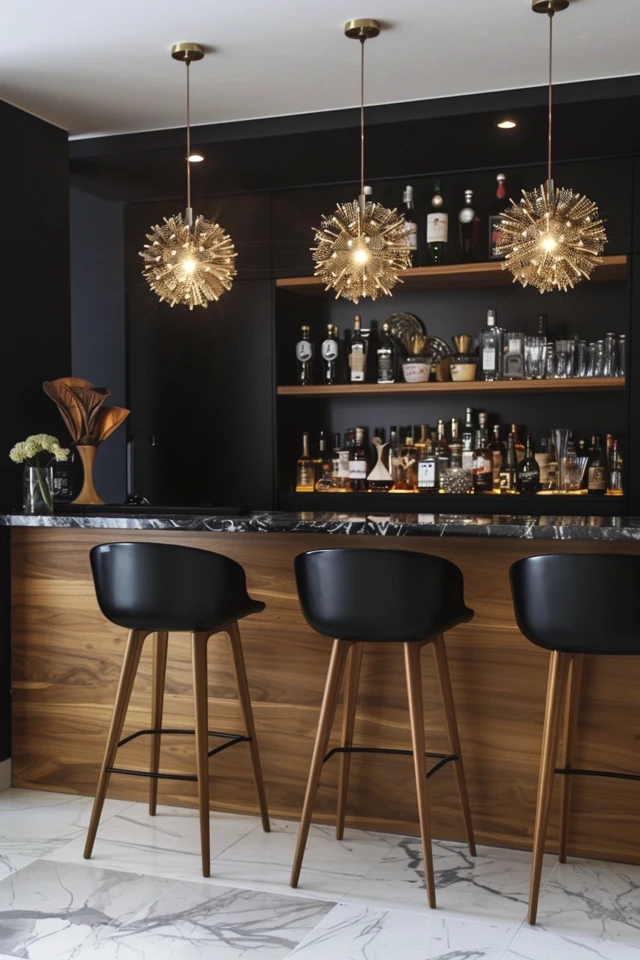
5 Elegant Black Home Bar Designs
Designers often gravitate toward white kitchens for their airy, safe appeal, but a home bar is the perfect place to rebel. A black home bar immediately signals sophisticated leisure; it creates a distinct “zone” that feels separated from the daily grind of meal prep and dishwashing. When I propose a black palette to clients, they often worry it will make the space feel small, but the opposite usually happens. Deep charcoal and jet black recede visually, often blurring the corners of a room and making the space feel infinite rather than cramped.
However, executing a black design requires rigorous attention to lighting and texture. Without these elements, you risk creating a “black hole” where expensive glassware and high-end finishes disappear into the shadows. I learned this early in my career when I painted a niche black but failed to upgrade the lighting, rendering the beautiful marble countertop invisible after sunset.
Whether you are renting a loft or renovating a dedicated entertainment room, black can work if you respect the balance of light and dark. For plenty of visual inspiration, scroll down to the Picture Gallery at the end of the blog post. Now, let’s look at five distinct ways to execute this look, complete with the measurements and materials you need to make it work.
1. The Matte Black Minimalist
This look is defined by an absence of shine. It is incredibly modern, tactile, and understated, relying on the silhouette of the cabinetry rather than flashy hardware. The goal here is to create a seamless wall of joinery that almost disappears when not in use.
I recommend using flat-panel cabinetry with integrated finger pulls rather than knobs. This keeps the visual lines unbroken. For the finish, look for “super matte” or “soft touch” laminates (like Fenix) or high-quality matte paint. If you go the paint route, ensure your painter uses a sprayer, not a roller, to avoid stippling texture.
For the countertop, skip the veiny marble. Opt for a honed black granite (like Absolute Black) or a solid charcoal quartz. The lack of reflection absorbs light, creating a calm, grounding focal point in an open-concept living area.
Designer’s Note: The Fingerprint Factor
Matte black is notorious for showing oily fingerprints. If you have kids or host frequently, this can be a nightmare.
- The Fix: Do not use standard flat wall paint on cabinets. Specify a specialized anti-fingerprint coating or laminate.
- The Cheat: If you are painting existing wood cabinets, choose a “satin” finish rather than a true “flat.” It offers a similar look but is significantly more wipeable.
Lighting the Void
Because matte surfaces absorb light, you need twice as much accent lighting as you think.
- Install LED channels vertically inside glass-front cabinets.
- Use under-cabinet tape light with a diffuser channel. Seeing the individual LED “dots” reflects poorly on the stone and ruins the illusion.
- Aim for a color temperature of 3000K. Anything cooler (4000K+) will make the black look sterile and commercial.
2. The High-Gloss “Jewel Box” Wet Bar
On the opposite end of the spectrum is the high-gloss wet bar. This is perfect for small, enclosed spaces like a butler’s pantry or an under-stair closet. The strategy here is to bounce light around to create a sense of luxury and depth.
I treat these small spaces like the inside of a jewelry box. We paint the walls, ceiling, and trim in the same high-gloss black lacquer. When the lights hit the surfaces, the boundaries of the room seem to dissolve.
Pair high-gloss cabinetry with polished metals. Unlacquered brass or polished nickel creates a stunning contrast against the ink-black background. A mirrored backsplash is also highly effective here. It doubles the visual depth of your liquor bottles and glassware.
Common Mistakes + Fixes
Mistake: Using high-gloss paint on uneven walls.
The Reality: Gloss highlights every imperfection, bump, and drywall seam.
The Fix: You must skim-coat the walls (Level 5 drywall finish) before painting. If that isn’t in the budget, use a high-gloss wallpaper or tile instead of paint.
Plumbing Considerations
If this is a wet bar, the sink choice is critical.
- Scale: In a small niche (4 to 5 feet wide), a standard kitchen sink looks massive. Use a dedicated bar sink, typically 15 to 18 inches wide.
- Faucet Height: Ensure a high-arc gooseneck faucet clears any shelving above. I usually leave 18 to 20 inches between the counter and the first shelf to accommodate tall bottles and faucet arcs.
3. The Organic Modern “Charcoal & Wood” Bar
If jet black feels too harsh for your home, this design bridges the gap between cozy and cool. It combines deep charcoal cabinetry with warm, natural wood accents. This is my go-to design for homes with a “Modern Farmhouse” or “Transitional” aesthetic.
Instead of solid black paint, try a semi-transparent black stain on oak cabinetry. This allows the wood grain to show through, adding texture and warmth that solid paint lacks. Pair this with a butcher block countertop or a wood-wrapped island.
Texture Layering
To keep this from looking like a basic kitchen cabinet, layering is key.
- Backsplash: Use a dark, hand-formed subway tile with dark grout. White grout can look too busy and clinical here.
- Shelving: Floating thick wood shelves (at least 2 inches thick) break up the dark wall. Match the stain of the shelves to your floor or the bar top.
What I’d Do in a Real Project
If I were designing this for a client, I would incorporate “reeded” or “fluted” glass in the upper cabinet doors.
- It obscures the contents (so you don’t have to keep your glasses perfectly organized).
- It adds a vintage texture that plays well with the wood grain.
- Backlight the cabinets so the reeded glass glows warmly in the evening.
Rug Sizing Logic
If this bar is part of a larger lounge, you will likely have a rug nearby.
- Ensure there is at least 30 inches of bare floor between the bar front and the edge of the rug.
- Bar stools need to slide in and out without catching the rug edge. A 30-inch clearance prevents tripping and frustration.
4. The Art Deco Speakeasy
This style is for the bold entertainer. It draws inspiration from the roaring 20s, utilizing black marble, velvet, and geometric patterns. It turns a corner of your living room into a destination.
The hero of this design is usually the stone. I look for black marble or quartzite with dramatic gold or white veining (like Nero Marquina or Belvedere Quartzite). Run the stone up the wall as a full-height backsplash for maximum impact.
Hardware and Metals
Art Deco relies on “jewelry” for the cabinets.
- Choose oversized hardware. Long, knurled brass handles add weight and luxury.
- Introduce a metal mesh insert in the cabinet doors. This allows air to circulate (great for electronics or wine fridges) and looks expensive.
Designer’s Note: Real Marble vs. Quartz
I always warn clients about using real marble in a bar setting.
The Risk: Alcohol, citrus (lemons/limes), and red wine are acidic. They will “etch” real marble instantly, leaving dull spots that you can see in certain lights.
The Solution: If you want the look without the panic, choose a honed black granite or a marble-look engineered quartz. If you insist on real marble, have it professionally sealed, and accept that the patina is part of the charm.
Lighting Placement Rule of Thumb
Sconces are essential for this look.
- Mount wall sconces on the backsplash to frame the shelving.
- Height: The center of the junction box should typically be 60 to 66 inches from the finished floor (AFF).
- If the sconces are above a shelf, ensure there is 6 to 8 inches of clearance between the top of the shelf and the bottom of the fixture.
5. The Industrial Metal & Concrete Bar
This design suits urban lofts, basements, and masculine spaces. It trades traditional wood cabinetry for steel, iron, and concrete elements. It is durable, edgy, and virtually indestructible.
Instead of standard upper cabinets, use a metal shelving unit suspended from the ceiling or mounted to the wall with industrial piping. For the base, a poured concrete countertop in a dark charcoal pigment looks incredible and costs less than many natural stones.
The “Steel Door” Aesthetic
Black metal framed glass doors are a staple of this look.
- Use them for wine storage towers.
- If custom steel doors break the budget (they are expensive), look for aluminum framed doors in a matte black finish. They offer the same visual weight for half the price.
Common Mistakes + Fixes
Mistake: The room feels cold and unwelcoming.
The Fix: Industrial spaces need softness to balance the hard metals.
- Add leather bar stools in a cognac or saddle tan color. The warm leather contrasts beautifully with the cold black metal.
- Add a runner rug with a vintage pattern behind the bar.
- Use warm dimmable lighting (2700K) to soften the harsh edges of the furniture.
Final Checklist: Before You Build
Before you order cabinets or knock down drywall, run through this “What I’d Do” checklist. These are the logistical checks I perform on every project to prevent costly changes later.
1. Check Your Appliances Specs
- Beverage centers and wine fridges are not all the same.
- Ventilation: Does the unit vent out the front or the back? If it vents out the back, you cannot install it fully flush in a cabinet without cutting air vents in the countertop or toe kick. Front-venting units are mandatory for built-ins.
- Door Swing: Ensure the fridge door doesn’t hit a wall or another cabinet when opened 90 degrees.
2. Measure Your Bottle Heights
- There is no standard height for liquor bottles.
- Standard shelf spacing: Usually 12 to 14 inches.
- Top shelf spacing: Increase this to 15 to 16 inches if you plan to display tall bottles like Grey Goose or certain whiskeys. Nothing is worse than building a custom shelf and realizing your favorite bottle doesn’t fit.
3. Countertop Depth
- Standard Kitchen Depth: 24 to 25.5 inches.
- Bar Depth: You can get away with a shallower depth (18 to 21 inches) if you are tight on space, but be warned: a standard bar sink will not fit in an 18-inch deep cabinet. You will need a tiny “prep” sink.
4. Electrical Outlets
- Do not ruin your beautiful black backsplash with a bright white plastic outlet.
- Specify black outlets and black faceplates.
- Better yet, hide the outlets. Install an outlet strip tucked up underneath the upper cabinets or on the side of the cabinet interior.
FAQs
Is a black home bar hard to keep clean?
It depends on the finish. High-gloss black shows dust and scratches easily. Matte black shows oils and fingerprints. Satin or semi-gloss finishes in wood grain are the most forgiving. If you choose a solid black countertop, expect to wipe it down daily; dust settles and becomes visible within hours on dark horizontal surfaces.
Will a black bar make my room look smaller?
Generally, no. Dark colors recede, adding depth. However, you must light it correctly. If you paint a corner black and don’t add accent lighting, it will feel like a dark cave. With proper lighting, it feels expansive and intentional.
Can I mix metal finishes in a black bar?
Absolutely. Black acts as a neutral canvas. Mixing metals adds character. A common combination I use is matte black cabinet hardware mixed with a polished brass faucet and light fixtures. Just stick to two metal finishes maximum to keep it cohesive.
What is the best countertop material for a bar?
For durability, Quartz is king. It resists wine stains and citrus acids. For aesthetics, Leathered Granite (like Black Pearl or Steel Grey) offers a tactile, matte texture that hides fingerprints and crumbs much better than polished stone.
Conclusion
Designing a black home bar is a confident move that pays off in atmosphere and style. Whether you prefer the sleekness of a minimalist matte finish or the drama of Art Deco brass and marble, the success of the design lies in the details.
Remember that black absorbs light, so your lighting plan is just as important as your paint choice. Pay attention to the textures—mixing glass, wood, metal, and stone prevents the space from feeling flat. Finally, always measure your appliances and glassware before committing to shelf heights. By following these rules of thumb, you can create a space that feels like a high-end lounge right in your own home.
Picture Gallery


