
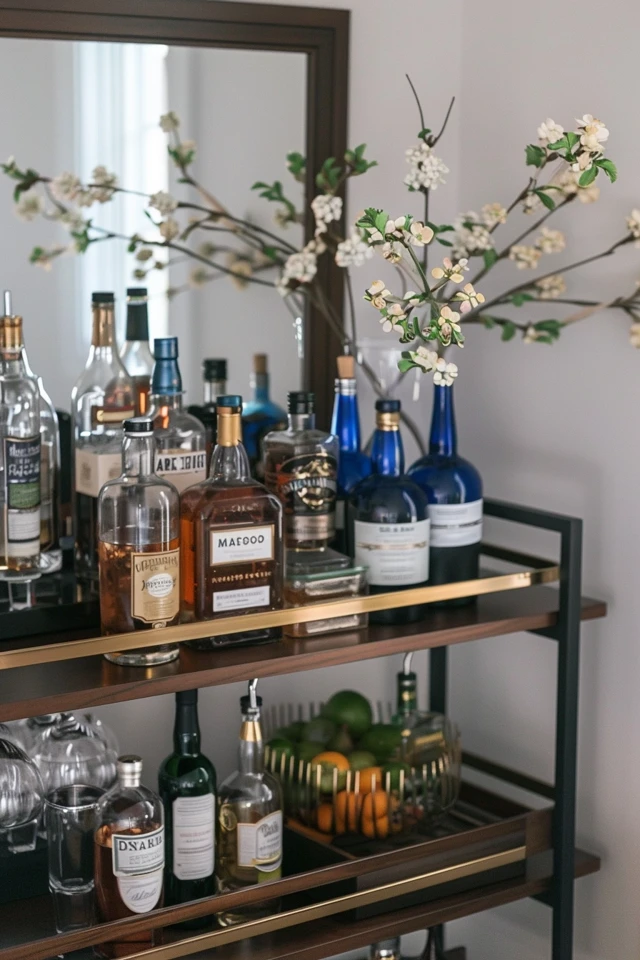
5 Home Bar Cart Ideas for Small Spaces
Designing for small spaces is often more challenging—and more rewarding—than working with sprawling square footage. When you don’t have a dedicated room for a built-in wet bar, a bar cart becomes the ultimate problem solver. It introduces luxury and functionality without demanding a permanent footprint.
However, in a compact apartment or a tight living room, you cannot simply choose a cart based on aesthetics alone. You have to consider traffic flow, visual weight, and dual functionality. I have seen many clients buy a bulky cart that ends up becoming a “hip bruise hazard” because it crowds the walkway.
In this guide, I will walk you through five specific bar cart concepts tailored for tight quarters. I have curated a special Picture Gallery at the end of this blog post that illustrates these concepts in real homes. Let’s look at how to blend style with serious space-saving strategy.
1. The Vertical “Bookshelf” Bar
When you cannot spread out, you must go up. One of the most effective ways to introduce a bar area in a small footprint is by utilizing a tall, narrow tiered cart. This mimics the utility of a bookshelf but with the mobility of a beverage station.
In professional design, we look at the “footprint” versus the “volume.” A standard horizontal cart might take up 36 inches of linear wall space. A vertical tower often takes up less than 18 inches square. This allows you to tuck the unit into tight corners or between two windows where other furniture simply wouldn’t fit.
The key here is shelf height management. You need to ensure the bottom or middle shelves have enough clearance for your tallest bottles. Standard liquor bottles range from 11 to 13 inches tall, but some specialty spirits can reach 15 inches. Always measure your tallest bottle before purchasing a cart with fixed shelves.
Styling for Verticality
To prevent a tower cart from looking cluttered, you need to distribute visual weight carefully. Place your heaviest visual items—usually the dark liquor bottles and larger decanters—on the bottom shelf. This grounds the piece and prevents it from feeling top-heavy.
Reserve the top shelf for lightweight glassware and perhaps a small garnish bowl. This draws the eye upward without making the piece feel precarious. If the cart has three tiers, use the middle shelf for tools, smaller mixers, and ice buckets.
Designer’s Note: The “Tip Factor”
Tall, narrow furniture is inherently less stable than wide furniture. In a high-traffic small space, a vertical cart on wheels can be wobbly.
The Fix: If you rarely move the cart, I recommend swapping the casters (wheels) for stationary rubber feet. If you must keep the wheels, ensure at least two of them have high-quality locking mechanisms. This is non-negotiable if you have pets or thick carpets that make rolling uneven.
2. The Double-Duty End Table
In a small living room, every piece of furniture should earn its keep by performing two jobs. The “End Table” bar cart is a strategy where we replace a standard side table next to the sofa or armchair with a low-profile bar cart.
This approach saves floor space because you aren’t trying to find a new spot for the bar; you are simply upgrading an existing slot. The most important metric here is height relative to your seating.
The top of the cart should act as your table surface. It needs to be within 2 to 3 inches of your sofa arm height. Most sofa arms sit between 24 and 26 inches high. If your cart is 32 inches high, it will feel awkward to set a coffee mug down, and it will visually overpower the sofa.
Managing the “Rattle”
The biggest complaint I hear from clients regarding this setup is the noise. If you place a drink on the cart, you don’t want the bottles on the shelf below to clink together.
To solve this, use a tray on the bottom shelf to corral the bottles. Line the bottom of the tray with a piece of felt, leather, or cork. This absorbs vibration and keeps the bottles silent when you bump the cart.
Common Mistakes + Fixes
Mistake: Overcrowding the top shelf so it can’t function as a table.
The Fix: Apply the 60/40 rule. Leave 60% of the top surface empty for a coaster, a book, or a phone. Style the remaining 40% with a small table lamp or a singular decorative object. Move all glassware and bottles to the lower shelves.
3. The Acrylic “Ghost” Cart
Visual clutter is the enemy of small spaces. Even if a piece of furniture fits physically, it can make a room feel tight if it looks heavy or dark. This is where acrylic (often called Lucite) carts excel.
Because they are transparent, they allow light to pass through them. This tricks the eye into thinking the floor space is still open. An acrylic cart effectively “disappears,” leaving only the colorful bottles and sparkling glassware visible.
This is particularly effective if you have to place the cart in front of a window or a patterned wallpaper wall. You don’t want to block the view or break the pattern. The acrylic material acts as a frame rather than a blockade.
Material Maintenance
While beautiful, acrylic is high-maintenance regarding scratches. In a tight space where you might brush against it with buttons or zippers, this is a valid concern.
Never clean an acrylic cart with paper towels or ammonia-based cleaners (like standard glass cleaner). This causes micro-scratches and cloudiness over time. You must use a microfiber cloth and a dedicated plastic cleaner.
What I’d Do in a Real Project
If I am using an acrylic cart, I am meticulous about the hardware finish. Since the cart itself is invisible, the screws, casters, and handle joints become the jewelry.
I usually look for unlacquered brass or polished nickel hardware. I also ensure the glassware used on the cart is crystal or high-quality glass. Since there is no wood grain to distract the eye, the quality of what you put on the cart becomes the focal point.
4. The Kitchen Island Extension
In many small apartments, the kitchen counter space is practically non-existent. A robust, butcher-block top bar cart can serve as a mobile kitchen island that transitions into a bar for evening entertaining.
This type of cart is generally heavier and sturdier than a decorative brass cart. It functions as a prep station during the day—holding your cutting board, coffee machine, or fruit bowl—and houses wine and spirits on the shelves below.
Placement is critical here. You want to position this at the end of your existing cabinetry to visually extend the kitchen. We call this “borrowing length.” If your counter ends, place the cart right next to it to create the illusion of a longer run of cabinets.
The “Zone” Strategy
Since this cart is likely holding kitchen items and bar items, you need to zone it to avoid chaos. I recommend using the top surface strictly for daily use (coffee pot, fruit, prep).
Use the middle shelf for glassware and plates. Use the bottom shelf for the heaviest items: wine bottles, liquor bottles, and perhaps a stack of cookbooks.
Lighting the Station
Since this is a functional workspace, lighting is key. If the cart is against a wall, consider installing a plug-in wall sconce above it. This defines the area as a purposeful station rather than just floating furniture.
If hardwiring or drilling isn’t an option, a small rechargeable LED table lamp on the corner of the cart adds a warm glow that transitions perfectly from morning coffee prep to evening cocktail hour.
5. The Removable Butler Tray Stand
Sometimes, the best bar cart for a small space isn’t a cart at all—it’s a tray stand. This consists of a folding set of legs and a removable top tray.
This is the ultimate solution for extreme space constraints or for renters who move frequently. When you are hosting a party, you set up the stand and arrange your bar. When the party is over, you can fold the legs and slide them under the sofa, then place the tray on top of your coffee table or ottoman.
It offers flexibility that a permanent wheeled cart does not. It also tends to have a more traditional, collected aesthetic, often resembling campaign-style furniture.
Stability Checks
Butler trays are generally lightweight. This is great for moving them, but bad for stability. I never recommend these for households with large dogs or active toddlers. A bumping tail or a grabbing hand can easily topple a folding stand.
If you choose this route, place the stand in a corner or flanked by a sturdy armchair to protect it from traffic.
Styling the Vignette
Because these trays are often lower and smaller, you cannot fit a full bar on them. You must curate.
Select three bottles of spirits, one mixer, and four glasses. Add a small bowl of citrus. That is it. Do not try to cram your entire liquor collection onto a butler tray. It will look messy and dangerous. Treat it as a “feature” bar for the specific drink you are serving that night.
Final Checklist: Before You Buy
As a designer, I run through a specific checklist before ordering a cart for a client. Use this to save yourself from a return headache.
- Measure the Walkway: You need a minimum of 30 inches (ideally 36 inches) of walking space around the cart. Tape the outline on the floor with painter’s tape to verify you can walk past it without turning sideways.
- Check Wheel Locks: If you have hardwood floors, non-locking wheels will roll every time you try to pour a drink. Ensure at least two casters lock.
- Audit Your Bottle Heights: Measure your tallest favorite spirit (often vodka or tequila bottles are the tallest). Ensure the shelf clearance exceeds this measurement by at least 1 inch for easy access.
- Sunlight Check: Do not place the cart in direct sunlight. UV rays degrade the quality of alcohol and can discolor labels. If the only spot is sunny, stick to dark glass bottles or opaque decanters.
- Material vs. Lifestyle: If you don’t use coasters, do not buy a cart with a marble top (it etches with acid/citrus) or a wood top (it rings with water). Glass or mirror is the most forgiving for spills but requires dusting.
Frequently Asked Questions
Q: Can I put a bar cart on a carpet or rug?
A: Yes, but be careful with the wheel size. Small, decorative wheels often get stuck in high-pile rugs or shag carpets, making the cart unstable. If placing it on a rug, look for larger, industrial-style casters or a cart with sled legs instead of wheels.
Q: How do I keep my bar cart from getting dusty?
A: This is the reality of open storage. Glassware on a bar cart should be stored upside down or rinsed before use if it hasn’t been touched in a week. To minimize dust, I recommend wiping down the horizontal surfaces weekly with a microfiber cloth. Avoid feather dusters, which just spread the dust into the air to settle back down later.
Q: What if I don’t drink alcohol? Can I still use a bar cart?
A: Absolutely. In design, we often call these “console carts.” They are perfect for a coffee station, a tea service trolley, or even a plant stand. The tiered vertical storage is practical for almost any collection. A “Mocktail Bar” with sparkling waters, syrups, and fresh fruit is just as stylish and welcoming.
Q: How do I hide the unsightly bottles?
A: Not every bottle has a beautiful label. If you have essential but ugly bottles, place them toward the back. Better yet, invest in three or four matching crystal or glass decanters. Pour the generic-looking spirits into the decanters and label them with a small metal tag. This instantly elevates the look and creates uniformity.
Conclusion
Living in a small space does not mean you have to sacrifice the ritual of hospitality. A well-chosen bar cart acts as a hearth for entertaining—a place where you gather, mix, and serve.
Whether you choose a vertical tower to save floor space, an acrylic cart to save visual space, or a folding tray for ultimate flexibility, the key is intentionality. Measure your space, be realistic about your traffic flow, and curate your bottles rather than cluttering them. With the right piece, even the tightest corner can become the most popular spot in your home.
Picture Gallery


