
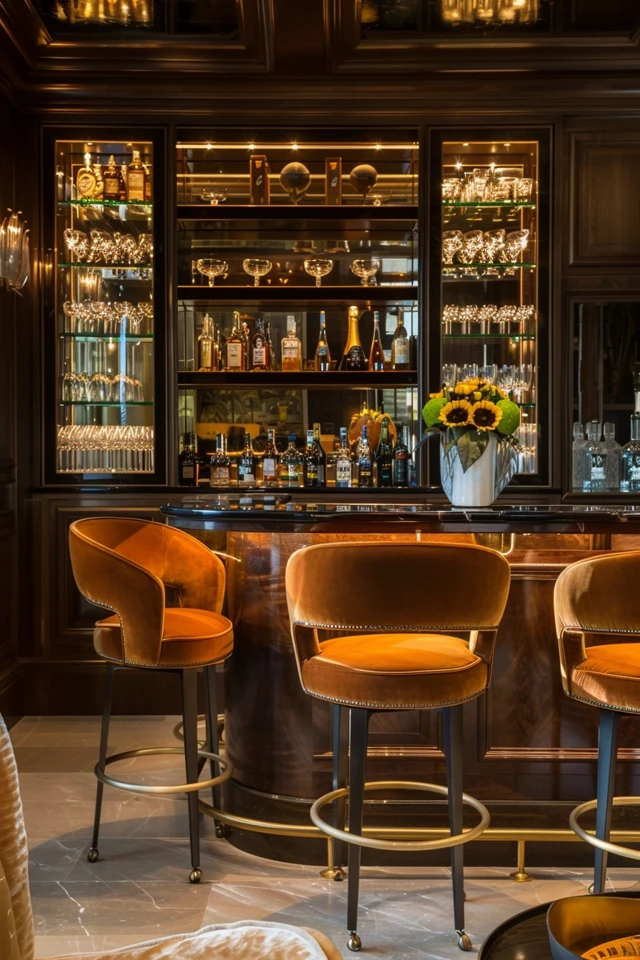
5 Home Bar Entertainment Area Ideas
Creating a dedicated space for drinks and socializing is one of the most requested upgrades I see in residential design. It changes the way you live in your home, turning a static living room or basement into a dynamic venue for hosting. Whether you are a wine connoisseur or a cocktail enthusiast, the layout dictates the flow of the party.
I once worked with a client who insisted they didn’t have room for a bar, yet they had a massive, cluttered closet right off their dining room. By removing the doors and installing custom millwork and a mirrored backsplash, we created a “jewel box” wet bar that became the focal point of the entire house. It proved that you do not need a massive footprint to create a high-impact entertainment zone.
To see visuals of these layouts in action, check out the Picture Gallery at the end of the blog post.
1. The Classic Basement “Wet” Bar
The basement is the traditional home for a full-service bar because it usually offers the most square footage. However, a “wet” bar implies plumbing, which changes the complexity of your renovation. This is where you can go darker and moodier than the rest of the upstairs living areas.
In a basement setting, I usually recommend an L-shaped or U-shaped layout if space permits. This creates a distinct “zone” that separates the bartender from the guests, mimicking a real pub experience. The goal is to create a destination, not just a kitchenette in a corner.
Since basements often lack natural light, your artificial lighting plan is critical. You need layers: recessed cans for general cleaning, pendants for ambiance, and under-cabinet LED tape to highlight the workspace.
Designer’s Note: The Importance of Overhangs
One detail that amateur DIYers often miss is the counter overhang. If you want people to sit comfortably at a bar, you need a minimum of 10 to 12 inches of overhang for knee clearance.
If you go deeper than 12 inches with a stone top, you will likely need steel support brackets hidden under the counter to prevent cracking. Without this clearance, your guests will be forced to sit sideways or lean awkwardly, which kills the comfort vibe immediately.
Technical Breakdown: Measurements that Matter
- Bar Height vs. Counter Height: A standard bar top is 42 inches high. Standard kitchen counters are 36 inches high. If you want a two-tier system, ensure you buy “bar height” stools (30-inch seat height) rather than “counter height” stools (24-inch seat height).
- Walkway Clearance: You need at least 36 inches of clearance behind the bar for the bartender to move freely. If there is a back bar with cabinets and a dishwasher, bump that to 42 inches so you can open appliance doors without hitting the island.
- Sink Size: Don’t install a full kitchen sink. A prep sink (roughly 15×15 inches) is sufficient for dumping ice and rinsing glasses, saving valuable counter space.
Common Mistakes + Fixes
Mistake: Using standard kitchen finishes in a basement bar.
Fix: This is a party zone, not a meal prep zone. Use moodier materials like leathered granite, hammered copper sinks, or smoked mirrors. Standard white subway tile often feels too sterile here.
Mistake: Forgetting the “wet” wall logistics.
Fix: Before building walls, verify where your main drain stack is. If your bar sink is far from the drain, you may need a sewage ejector pump, which adds cost and noise.
2. The Integrated “Dry” Bar Nook
Not every home has a basement or the budget for plumbing relocation. A “dry” bar (no sink) is a fantastic alternative that can be integrated into a living room, dining room, or transition hallway.
The key to a successful dry bar is treating it like a piece of furniture rather than a kitchen cabinet. It should feel intentional. I often design these with upper glass-front cabinetry to display stemware and a lower section for closed storage and a wine fridge.
Because there is no sink, you must prioritize surface durability for mixing and pouring. You will inevitably spill red wine or citrus juice here. I generally advise against porous materials like marble for these high-traffic pouring stations unless you are diligent about sealing.
What I’d Do in a Real Project
If I am designing a dry bar in an open-concept living room, I ensure the cabinetry color complements, but doesn’t exactly match, the kitchen.
- Paint: I would paint the bar cabinetry a few shades darker than the walls to ground the space.
- Hardware: I would use unlacquered brass or polished nickel to add a “jewelry” effect, elevating it above standard kitchen storage.
- Appliances: I would install a beverage center rather than a wine-only fridge. This allows you to store beer and mixers upright, which offers more versatility for families.
Lighting the Nook
Since this is often a smaller niche, lighting can make or break the look. I avoid putting a recessed can light directly over the person’s head, as it casts unflattering shadows.
Instead, I use LED puck lights inside the glass cabinets to illuminate the glassware. I also install a dimmable LED tape light hidden behind a light rail under the upper cabinets. This creates a warm glow on the countertop, turning the bar into an ambient light source during evening parties.
3. The Indoor-Outdoor Pass-Through Bar
Connecting your interior kitchen or entertainment room to the patio is one of the most high-value upgrades you can make. A pass-through bar involves replacing a standard window with a folding or strut window that opens fully to a counter on the exterior.
This layout effectively doubles your entertaining space. It allows the host to stay inside (near the air conditioning and main fridge) while still interacting with guests outside. It also eliminates the constant traffic of people walking in and out of the house with dirty shoes just to grab a drink.
Material Selection for Durability
You are dealing with two different climates here. The countertop material needs to run continuously from inside to outside to blur the lines between the spaces.
However, not all stones can handle direct UV exposure. Quartz (engineered stone) contains resins that will yellow and warp under direct sunlight.
The Best Option: Natural Quartzite or Granite. These are natural stones that can withstand UV rays and temperature fluctuations. Honed or leathered finishes are best for the outdoor portion to hide dust and pollen.
Designer’s Note: Weatherproofing
You must consider the overhang on the exterior side. An exterior bar needs a roof or awning overhang of at least 24 to 30 inches. This protects guests from light rain and prevents water from pooling against the window track.
Additionally, pay close attention to the window sill transition. A “flush sill” looks amazing, but in areas with heavy driving rain, a slight step-up (dam) is safer to prevent water intrusion into the home.
Checklist for Outdoor Connections
- Stool Storage: Choose stackable outdoor stools. You will want to put them away during winter or storms.
- Electrical: Install GFCI-protected outlets on the exterior side of the bar for blenders, phone chargers, or portable speakers.
- Heating: If you live in a cooler climate, consider mounting an infrared heater in the soffit above the outdoor bar to extend the season.
4. The “Speakeasy” Closet Conversion
Small homes often have underutilized coat closets or awkward alcoves under staircases. These are prime real estate for a “speakeasy” style bar. The small footprint is actually an advantage; it allows you to use high-end materials that would be too expensive in a large room.
Because the space is enclosed, you can take massive design risks. I love using high-gloss lacquer paint on the walls and ceiling, or a bold, large-scale wallpaper. When the doors are open, it’s a surprise party element. When closed, the visual clutter disappears.
Maximizing Vertical Storage
In a closet bar, floor space is limited, so you must build up. I typically design floating shelves that go all the way to the ceiling.
Pro Rule of Thumb: Shelf depth matters. Liquor bottles are roughly 3 to 3.5 inches in diameter. I design shelves to be 8 to 10 inches deep. This is deep enough for a row of bottles and some glassware, but shallow enough that things don’t get lost in the back.
Ventilation is Key
If you plan to put a mini-fridge inside a closet, you have a heat problem. Refrigerators generate heat to keep things cool. In a small, closed space, that heat has nowhere to go, which can burn out the compressor.
The Fix: You must purchase a “front-venting” or built-in capable refrigeration unit. Do not buy a cheap dorm fridge that vents out the back. Additionally, I often install a small vent grille in the closet door or the millwork toe kick to ensure airflow circulation.
What I’d Do in a Real Project
- Mirror: I would install an antique mirror on the back wall. It doubles the visual depth of the closet and reflects the light from the bottles.
- Surface: Since there is no room for a full counter, I would use a remnant piece of exotic stone (like Onyx or heavily veined Marble) for the small serving shelf.
- Doors: If space allows, I swap standard swing doors for pocket doors. This way, the bar can remain “open” during a party without the doors blocking the hallway traffic.
5. The Media Room “Drink Rail”
A media room bar serves a specific function: watching the game or a movie while enjoying a beverage. The traditional setup of a sofa facing a screen often leaves no room for food or drinks.
The solution is a “drink rail” or “console bar” positioned directly behind the main sofa. This is a long, narrow table (usually 16 to 20 inches deep) at bar height, with stools tucked underneath. It provides a second tier of stadium-style seating.
Sightlines and Heights
This layout requires careful math regarding sightlines. You do not want the people sitting at the bar to stare at the back of the sofa-sitters’ heads, nor do you want them to be so high that they feel disconnected.
The Ideal Ratio:
- Sofa Back Height: Typically 30 to 34 inches.
- Bar Table Height: 36 inches (counter height) or 42 inches (bar height).
- The Result: The bar top should clear the top of the sofa by at least 2 to 3 inches. This ensures that if someone spills a drink on the bar, it doesn’t run down onto the upholstery of the sofa.
Durability for Dark Rooms
Media rooms are often dimly lit. Spills happen because people are watching the screen, not their glass.
I always recommend performance fabrics for the bar stools in this area. Look for solution-dyed acrylics or high-quality vinyls that can be wiped down. Avoid velvets or linens unless they are treated with commercial-grade stain repellents.
For the floor, this is a high-traffic zone. If the room is carpeted, consider putting a hard surface (wood or tile) just in the bar zone. If that isn’t possible, choose a low-pile, dense carpet or a darker rug that hides drips.
Common Mistakes + Fixes
Mistake: Making the bar too deep.
Fix: You only need room for a plate and a glass. A depth of 16 to 18 inches is perfect. Anything deeper than 20 inches makes it hard to reach the sofa to chat with people sitting there.
Mistake: No power sources.
Fix: People will use this surface to charge phones while watching the game. Install pop-up outlets in the bar top or ensure there are floor outlets beneath the table.
Final Checklist: Planning Your Home Bar
Before you call a contractor or buy a cabinet, run through this final punch list to ensure your design is viable.
- Plumbing Access: If adding a sink, do you know exactly where the drain line will connect? This is usually the most expensive part of a bar build.
- Electrical Load: Do you have a dedicated circuit? A fridge, ice maker, and dishwasher running simultaneously can trip a standard breaker.
- Clearance Check: Tape the layout on the floor. Do you have 36 inches of walking space? Can the dishwasher door open fully without hitting the island?
- Lighting Temperature: Ensure all your lights (cans, pendants, LED tape) match in color temperature. I recommend 2700K or 3000K for a warm, inviting atmosphere. Avoid 4000K or 5000K daylight bulbs, which look clinical.
- Storage Audit: Count your bottles and glasses. Do you need tall storage for wine bottles? Deep drawers for liquor? Measure your tallest bottle (usually Grey Goose or similar) to ensure it fits the shelf height.
FAQs
What is the minimum size for a home bar?
For a functional wet bar, you need about 5 to 6 feet of wall space to fit a small sink and an under-counter fridge. For a dry bar, you can work with as little as 3 feet of width, which is enough for a cabinet and upper shelving.
Do I need a permit to add a bar in my basement?
If you are adding plumbing or new electrical circuits, yes, you almost certainly need a permit. If you are simply adding cabinetry and plugging a fridge into an existing outlet, you usually do not. Always check local codes.
What is the best countertop material for a bar?
Quartz is the most practical for indoor bars because it is non-porous and resists staining from wine and citrus. For outdoor bars, stick to Granite, Quartzite, or Concrete. Avoid Marble for bars unless you enjoy the “patina” of etched rings and stains.
Can I use a regular kitchen cabinet for a bar?
Yes, standard base cabinets work perfectly. However, standard kitchen upper cabinets (12 inches deep) can sometimes feel too bulky for a bar area. I often use reduced-depth uppers (8 to 10 inches) or open shelving to keep the look lighter.
Conclusion
Designing a home bar is about more than just finding a place to store liquor bottles. It is about creating a deliberate atmosphere where you and your guests can relax. Whether you choose a hidden closet conversion, a full basement build-out, or a simple media room rail, the success lies in the details.
Focus on practical measurements, durable materials that suit the location, and lighting that sets the mood. When these technical elements are handled correctly, the style naturally follows. A well-designed bar not only adds value to your home but significantly improves the quality of your time spent there.
Picture Gallery


