
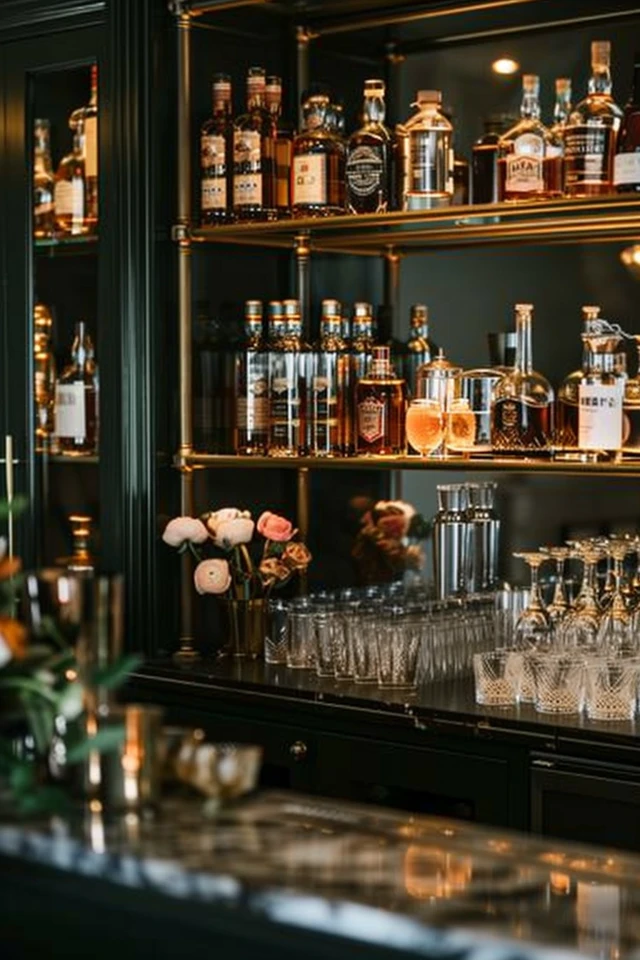
5 Home Bar Ideas for Throwing the Perfect Party
Every great party has a gravitational center, and more often than not, it isn’t the sofa. It is the place where the drinks are poured and the garnishes are chopped. Be sure to stick around until the end of this article to see the full Picture Gallery for serious inspiration.
As an interior designer, I often see clients treat home bars as an afterthought or a novelty. However, a well-designed bar is actually a crucial tool for traffic flow. It pulls guests out of the kitchen work triangle and gives them a designated spot to congregate without getting in the way of the host.
Whether you are planning a full-scale renovation or just want to style a credenza for the weekend, the principles of scale, lighting, and utility remain the same. The following ideas range from architectural built-ins to flexible furniture solutions, all designed to elevate how you entertain.
1. The Classic Built-In Wet Bar
The built-in wet bar is the gold standard for dedicated entertaining spaces. This is a permanent fixture, usually located in a living room, basement lounge, or game room. The defining feature here is the “wet” aspect, meaning it includes a plumbed sink.
When designing a wet bar, I treat it like a miniature kitchen. You need a distinct separation between the “clean” zone (glassware storage) and the “messy” zone (sink and waste disposal). This ensures that someone mixing a cocktail isn’t fighting for space with clean glasses.
Designer’s Note: The “Work Triangle” Still Applies
Even in a small bar, you need a logical flow. I always place the ice maker or beverage fridge to the far left or right of the sink, never directly under it. This allows one person to wash a glass while another grabs a beer, without bumping hips.
Key Measurements and Layout
If you are building from scratch, standard lower cabinets are 24 inches deep. However, for a bar in a tighter living area, I often reduce this to 18 or 21 inches to save floor space. Just be aware that an 18-inch depth limits your appliance choices significantly.
- Counter Height: Stick to the standard 36 inches for the working surface. If you add a raised bar top for seating, that should be at 42 inches.
- Upper Cabinets: Position these 18 inches above the counter. Any lower, and a tall blender or wine bottle won’t fit underneath.
- Walkway Clearance: If the bar is behind a sofa or island, you need a minimum of 42 inches of aisle width for comfortable movement.
Material Selection
Alcohol, citrus, and red wine are aggressive liquids. They will etch natural stone like marble or limestone instantly. For a worry-free countertop, I almost exclusively recommend quartz or a dark, honed granite for wet bars.
If you love the look of marble, choose a porcelain slab that mimics the veining. It gives you the high-end aesthetic without the panic every time someone slices a lemon.
Common Mistakes + Fixes
- Mistake: Ignoring the electrical plan.
- Fix: You need outlets above the counter for blenders, but you also need dedicated circuits below for wine fridges and ice makers. Ice makers, in particular, draw a lot of power and generate heat, requiring proper ventilation.
2. The “Hidden Gem” Closet Conversion
Not every home has a sprawling bonus room. One of my favorite high-impact projects is converting a reach-in closet or an awkward alcove into a stunning “jewel box” bar. This is a fantastic solution for dining rooms or hallways.
Because the space is small and often capable of being closed off, this is where you can take massive design risks. I encourage clients to go dark, moody, and dramatic here, even if the rest of the house is light and airy.
Making the Most of Vertical Space
In a closet conversion, you usually have limited width, so you must build up. I typically run cabinetry or open shelving all the way to the ceiling. The highest shelves are perfect for displaying dusty vintage bottles or glassware you only use once a year.
To make the space feel deliberate rather than like a storage closet, use a mirrored backsplash. Antique mirror tile is my go-to choice because it reflects light and doubles the perceived depth of the alcove, but the “antiqued” finish hides splashes and streaks better than clean glass.
Lighting the Nook
Lighting is non-negotiable in a recessed bar. Without it, it looks like a black hole in the wall. You need two layers of light here.
- Puck Lights: Recessed into the underside of shelves to illuminate the bottles and glassware.
- Picture Light or Sconce: Installed at the top header of the closet to wash light down the front of the cabinetry.
What I’d Do in a Real Project:
I would paint the entire interior—walls, ceiling, shelves, and cabinets—in a single high-gloss color. A deep navy (like Hale Navy) or a forest green creates an incredible sense of luxury. The high-gloss finish reflects the lighting and makes the small space feel gem-like.
3. The Butler’s Pantry “Pass-Through” Bar
If you have a hallway connecting your kitchen to your dining room, you have a prime location for a bar. In design terms, we call this a “Butler’s Pantry,” even if you don’t have a butler. This is the most functional location for a bar because it bridges the cooking zone and the eating zone.
This area serves a dual purpose. During the week, it is a coffee station or extra storage. During a party, it becomes the primary drink station. Because it is a transition space, traffic flow is the priority.
Traffic Flow and Clearance
Since people are walking through this space, you cannot have protruding elements. Avoid cabinet hardware that snags clothing. I prefer recessed finger pulls or low-profile knobs in these tight corridors.
If the hallway is narrow, consider using shallow base cabinets (12 to 15 inches deep). You won’t fit a sink or fridge in cabinets that shallow, but it provides plenty of surface area for setting out bottles, glasses, and decanters.
Styling for Utility
Since this space is visible from other rooms, clutter management is key. I use trays to corral loose items like bitters, shakers, and jiggers. A tray makes a collection of small items look like one deliberate design element.
Designer’s Note: The “Rule of Three” for Shelving
When styling the open shelves above a pass-through bar, group items in odd numbers. A stack of cocktail books, a sculptural decanter, and a small plant creates a balanced vignette. Don’t just line up glasses like soldiers; mix heights and textures to keep the eye moving.
Common Mistakes + Fixes
- Mistake: Poor counter material coordination.
- Fix: People often try to match the kitchen counter exactly, but miss slightly. If you can’t match the kitchen stone perfectly, go for a deliberate contrast. If the kitchen is white quartz, make the pantry bar a dark soapstone or walnut butcher block.
4. The Furniture-Based “Dry Bar”
For renters or those not ready for a renovation, a freestanding piece of furniture is the best answer. A sideboard, buffet, or credenza can function perfectly as a dry bar. The term “dry” simply means there is no plumbing involved.
This approach allows for total flexibility. You can move the party to different rooms depending on the season or the event size. However, because it is wood furniture and not a stone countertop, protection is your main concern.
Protecting Your Investment
Alcohol ruins wood finishes. If you are using a vintage mid-century credenza, you must protect the top. I often have a local glass cutter create a custom piece of tempered glass to sit on top of the sideboard. It is invisible, inexpensive, and saves the wood from water rings.
Alternatively, use large, substantial trays. A large leather or metal tray can hold the ice bucket and active bottles, catching any condensation before it hits the wood.
Setting the Scene
Since you don’t have upper cabinets, you need to create height and vertical interest to frame the bar area. I usually hang a large piece of art or a statement mirror centered directly above the credenza. The bottom of the frame should be 4 to 6 inches above the tabletop.
Flank the art with two tall buffet lamps. This creates a “stage” for your bar setup. The warm glow of the lamps makes the glass and liquids sparkle, which is much more inviting than harsh overhead ceiling lights.
What I’d Do in a Real Project:
I would source a vintage sideboard with locking doors. This is a practical safety feature if you have children in the house, allowing you to secure the liquor when the party is over. Inside, I’d use shelf risers to double the storage capacity for short items like tumblers.
5. The Indoor-Outdoor Connector Bar
Connecting your interior to your landscape is a massive trend that isn’t going away. An indoor-outdoor bar usually involves a window that opens fully—like a strut window or bi-fold window—with a counter that extends from the kitchen out to the patio.
This setup allows the host to be inside prepping food or grabbing ice while still chatting with guests outside. It effectively doubles your entertaining footprint.
Weatherproofing is Critical
Even if the bar is under an overhang, the outdoor portion of the counter must be durable. Materials like engineered quartz can sometimes discolor under direct UV exposure. For these transitional spaces, natural granite, concrete, or stainless steel are superior choices.
The overhang of the counter on the exterior side needs to be deep enough to tuck stools underneath. I recommend a 12 to 15-inch overhang for comfortable knee space. If the overhang exceeds 12 inches on stone, you will need steel support brackets hidden underneath to prevent cracking.
The Pass-Through Window
The mechanics of the window are the most expensive part of this idea. A true accordion or gas-strut window requires structural headers. For a budget-friendly version, you can install a standard sliding window, but ensure the track is flush with the counter to prevent crumbs and dirt from getting trapped.
Common Mistakes + Fixes
- Mistake: Forgetting about insects.
- Fix: An open window invites bugs. Install a retractable screen or an air curtain (a fan that blows a sheet of air down) above the opening to keep flies out while the window is open during a BBQ.
Final Checklist for a Functional Home Bar
Before you host your first gathering, run through this designer-approved checklist to ensure your bar is actually ready for service.
- Lighting: Are your lights on dimmers? Ambiance requires low light (2700K temperature is best).
- Surface Protection: Do you have coasters, napkins, and a cutting board for citrus?
- Tools: Do you have a corkscrew, bottle opener, jigger, and shaker readily accessible?
- Trash: Where does the trash go? A small, hidden waste bin is essential so trash doesn’t pile up on the counter.
- Height Check: Can you reach the wine glasses without a step stool?
- Flow: Is there a clear path for guests to walk up, grab a drink, and walk away without bottling up?
FAQs
What is the best depth for a home bar cabinet?
Standard depth is 24 inches, matching kitchen counters. However, for beverage centers, a 21-inch depth is often sufficient and saves floor space. If you are buying a wine fridge, check its depth requirements first; many require 24 inches to sit flush.
How high should a bar overhang be for stools?
If your counter is at standard kitchen height (36 inches), you need “counter stools” which have a seat height of 24-26 inches. If you have a raised bar top (42 inches), you need “bar stools” with a seat height of 30 inches. Do not mix these up, or guests will be uncomfortable.
Can I use a rug in a bar area?
Yes, but be strategic. In a wet bar area, I recommend a flat-weave vintage rug or a performance indoor/outdoor rug. Avoid high-pile or shag rugs, which trap crumbs and are impossible to clean if red wine spills.
Do I really need a sink in my home bar?
It depends on proximity to the kitchen. If the bar is in the same room as the kitchen sink, a wet bar is redundant. If the bar is in a basement, a second floor, or a sunroom far from the kitchen, a sink is mandatory for washing glasses and dumping ice.
Conclusion
Designing a home bar is about more than just storing liquor bottles. It is about creating a dedicated zone that signals to your guests that it is time to relax. Whether you choose a high-gloss closet conversion, a practical butler’s pantry, or a seamless indoor-outdoor ledge, the goal is hospitality.
By following the rules of scale, lighting, and material durability outlined above, you can create a space that looks professional and functions effortlessly. Remember, the best host is a relaxed host, and a well-organized bar is the secret to staying relaxed.
Picture Gallery


