
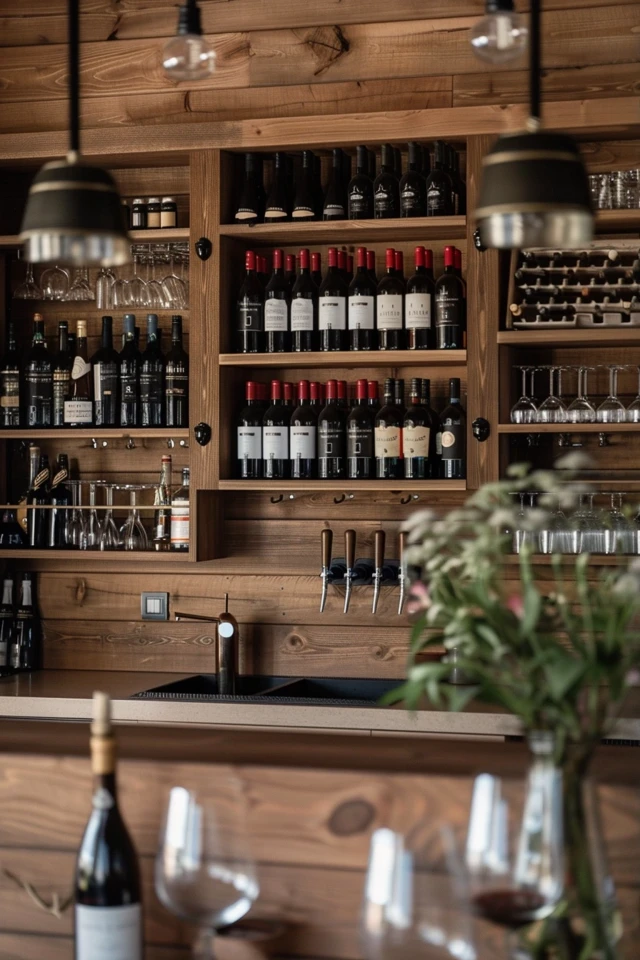
Title: 5 Home Bar Library Ideas for Book Lovers
Introduction
There are few pairings in life as harmonious as a good book and a perfectly mixed drink. For many of my clients, the dream isn’t just a dedicated home theater or a massive kitchen; it is a quiet, curated space where literature and libations intersect. Creating a home bar library allows you to slow down, unplug, and enjoy your home in a deeply personal way.
Whether you have a spare room waiting for a purpose or just an unused corner in your living area, merging these two functions requires careful planning. You need to balance the preservation of paper books with the potential mess of liquid spills. If you are looking for visual inspiration, check out our Picture Gallery at the end of this blog post.
In this guide, I will walk you through five distinct approaches to designing a home bar library. We will cover specific measurements, lighting requirements, and material choices that stand the test of time. Let’s create a space that feels like a private speakeasy and a cozy reading nook all in one.
1. The Integrated “Wet” Bookshelf
The most seamless way to combine a library and a bar is to integrate the bar directly into your joinery. This involves a wall-to-wall built-in unit where the center or a lower section is dedicated to drink preparation. This creates a unified look where your glassware serves as decor alongside your book collection.
However, this is not just about putting bottles on a shelf. A true “wet” bar implies plumbing, which changes the construction requirements significantly. You need to account for a sink, a faucet, and potentially a small beverage fridge.
Design & Layout Rules
When designing this wall, you must create a visual break between the books and the bar. I usually recommend a stone or quartz countertop and backsplash in the center section. This protects the wood cabinetry from splashes and condensation.
Standard bookshelf depth is usually 10 to 12 inches. However, a functional bar counter needs to be at least 18 to 24 inches deep. To solve this, I design the base cabinets (the bar portion) to be deeper than the upper shelving.
This creates a “step-back” design. The bottom half creates a ledge for pouring drinks, while the upper half recedes to hold books. This keeps the room feeling open rather than imposing.
Designer’s Note: Managing Moisture
The Problem: People often place beverage fridges inside tight wooden cabinetry without ventilation. The heat buildup can warp the wood and ruin your vintage wines.
The Fix: Always leave at least 2 inches of clearance behind the fridge and use a cabinet door with a mesh or slotted insert. If you are doing a custom build, ask your carpenter to route a ventilation channel through the toe kick (the bottom recessed part of the cabinet).
What I’d Do in a Real Project
- Cabinet Material: White Oak or Walnut for warmth and durability.
- Countertop: Honed Soapstone (it creates a moody, non-reflective surface that hides rings).
- Lighting: LED strip lighting recessed into the underside of the shelves to highlight the bottle labels.
- Hardware: Unlacquered brass pulls that will patina over time.
2. The “Dark Academia” Lounge
This aesthetic is currently trending, but it is actually a timeless design rooted in classic English libraries. The goal here is to create a moody, enveloping atmosphere using deep colors, heavy textures, and low lighting. This style works exceptionally well if your room has limited natural light.
The bar in this scenario is often a vintage chest, a freestanding credenza, or a rolling brass cart, rather than a built-in wet bar. The focus is on the seating and the sensory experience.
Color and Finish
To achieve this look, you need to commit to color. Painting the walls, trim, and ceiling in the same dark hue wraps the room and blurs the boundaries. Popular choices include navy, forest green, charcoal, or deep eggplant.
Use a satin or eggshell finish for the walls. High gloss can look spectacular and reflective, but it highlights every imperfection in the drywall. For the shelving, a semi-gloss finish helps the books pop against the dark background.
Furniture Scale and Placement
The star of this room is the reading chair. For a library bar, you want a chair with a deeper seat depth, ideally around 22 to 24 inches. This allows you to curl up comfortably.
Place a small drink table next to the chair. The rule of thumb is that the table should be roughly the same height as the chair arm, or slightly lower. If the table is too high, you risk knocking your drink over when reaching for it.
Common Mistakes + Fixes
Mistake: Relying on a single overhead light fixture. In dark rooms, a single ceiling light creates harsh shadows and a “cave” effect.
Fix: Layer your lighting. You need ambient light (a dimmable chandelier), task light (a floor lamp by the chair for reading), and accent light (picture lights over the bookshelves). Aim for warm bulbs with a color temperature of 2700K.
3. The Closet-to-Speakeasy Conversion
If you live in a smaller home or an apartment, you might not have an entire room to spare. One of my favorite high-impact renovations is converting a standard reach-in closet into a hidden library bar. This is a “jewelry box” approach where the interior is much more ornate than the exterior.
This allows you to close the doors to hide the clutter of bottles and glassware. When the doors are open, it becomes a focal point of the living space.
Structural Considerations
Remove the existing rod and shelf. You will likely need to reinforce the wall if you plan to install heavy floating shelves for bottles. A full bottle of liquor weighs about 3 pounds; a row of them adds up quickly.
If the closet is standard depth (24 inches), you have plenty of room for a counter and upper shelves. I recommend installing a mirror on the back wall of the closet. This doubles the visual depth and reflects the light from the bottles, making the small space sparkle.
Electrical Planning
Most closets do not have outlets. You will need to hire an electrician to run power for a bar fridge or lighting. If running new wire is impossible (e.g., for renters), use rechargeable puck lights under the shelves.
For the doors, consider swapping standard bi-folds for double French doors or distinct vintage panels. This signals that what is behind the doors is special, not just storage for coats.
Real Project Checklist
- Shelving Height: Allow 14 to 15 inches of clearance for bottom shelves to accommodate tall bottles (like Grey Goose or St-Germain). Standard wine bottles only need 12 inches.
- Work Surface: Install the main counter at 36 inches high (standard kitchen height).
- Flooring: If the room has carpet, consider tiling the floor inside the closet for easier cleanup of sticky spills.
4. The Vertical Library with Rolling Ladder
For homes with high ceilings (9 feet or higher), utilizing vertical space is essential. A floor-to-ceiling library with a rolling ladder is the ultimate luxury statement. In this layout, the bar is usually integrated into the lower central cabinets, while the books occupy the upper reaches.
The rolling ladder adds a kinetic, playful element to the room. It also serves a practical purpose, allowing you to access books or rare spirits stored on the top shelves.
Ladder Logistics
You need to plan for the track hardware early in the design process. The track needs a solid blocking reinforcement behind the drywall or cabinet face to support the weight of a person on the ladder.
You also need clear floor space. The ladder leans out from the wall. Generally, for every 4 feet of height, the ladder pulls out about 1 foot. In a standard room, the base of the ladder will sit about 20 to 30 inches away from the shelves. Ensure your sofa or rug doesn’t obstruct this path.
Zoning the Shelves
I like to mix the media on the shelves. Keep the books on the highest and lowest shelves. Keep the glassware and decanters at eye level (approx. 50 to 65 inches off the floor).
This creates a “bar zone” within the library wall. It makes mixing a drink convenient without having to reach up or bend down too far.
Designer’s Note: Safety First
The Problem: Ladders can damage hardwood floors over time, or worse, slip on area rugs.
The Fix: Ensure the ladder has rubberized wheels or “brakes” that engage when weight is applied. If you have an area rug in the room, make sure it is sized so the ladder wheels stop before hitting the edge of the rug, or roll completely on top of a very low-pile rug.
5. The Open-Concept Divider
In open-concept homes, walls are scarce. You can create a home bar library by using the furniture itself to define the space. This is often done by floating a sofa in the middle of the room and placing a console table or low bookshelf behind it.
This “sofa table” can serve as your bar surface. It creates a distinct zone for reading and drinking without requiring construction.
Defining the “Room”
Use a large area rug to anchor the furniture grouping. All front legs of the seating should sit on the rug. This visually separates the library area from the dining or kitchen area.
The console table behind the sofa should be slightly lower than the sofa back. If the sofa back is 32 inches high, look for a console that is 30 inches high. This prevents the furniture from looking disjointed.
Storage Solutions
Since you don’t have walls for tall shelves, you have to get creative with book storage. Use low, horizontal bookcases that run along the perimeter of the “zone,” perhaps under windows.
For the bar element, use a tray on the console table to corral bottles. This prevents the surface from looking cluttered. A tray establishes boundaries: if it doesn’t fit on the tray, it goes in a cupboard.
What I’d Do in a Real Project
- The Sofa: A velvet Chesterfield or a leather sectional to absorb sound.
- The Rug: A vintage wool Turkish rug. The pattern hides drops of red wine or coffee effortlessly.
- The Bar: A vintage mid-century sideboard. The drawers hold bar tools and napkins, the cabinets hold bottles, and the top displays a few key books and a decanter.
Final Checklist
Before you finalize your home bar library, run through this quick checklist to ensure you haven’t missed any functional details.
- Surface Durability: Have you chosen a coaster-friendly surface? If using wood, ensure it is sealed with polyurethane or varnish, not just wax.
- Lighting Temperature: Are your reading lights and shelf lights the same color temperature? Mixing cool and warm light makes a room feel unsettled. Stick to 2700K or 3000K.
- Seating Comfort: Have you actually sat in the chair? A library chair needs to be comfortable for hours, not just look good.
- Bottle Heights: Have you measured your tallest liquor bottles? Confirm your shelf spacing before installation.
- Power Access: Do you have outlets where you need them for lamps, fridges, or speakers?
FAQs
Can I put a home bar library in a room with a lot of sunlight?
Yes, but you must protect your books and wine. Direct UV light fades book spines and spoils wine rapidly. Install solar shades or UV-blocking window film. Keep the wine in a solid-door cabinet or a UV-protected fridge.
What is the best flooring for a home bar library?
Hardwood is the classic choice for libraries. However, near the bar area, wood is susceptible to water damage. I recommend using a large area rug for the seating area but leaving the floor bare immediately in front of the bar for easy wiping.
How much space do I need for a home bar?
A simple bar cart takes up about 2 feet by 3 feet of floor space. A built-in wet bar typically requires a minimum width of 4 to 5 feet to be functional.
Do I need a sink in my home bar?
It is a luxury, not a necessity. If your library is far from the kitchen, a sink is very helpful for rinsing glasses and dumping ice. If the kitchen is nearby, you can skip the plumbing expense.
Conclusion
Designing a home bar library is about creating a sanctuary. It is a place where you can disconnect from the digital world, pour a drink that you truly enjoy, and get lost in a story. Whether you choose a grand built-in wall or a cozy corner with a vintage cart, the success of the room lies in the details.
Focus on the lighting, the comfort of the chair, and the functionality of the surfaces. When these elements come together, you won’t just have a room that looks like a magazine spread; you will have a room that you actually live in.
Picture Gallery


