
5 Living Room Home Bar Ideas
For decades, the home bar was relegated to the basement or a hidden corner of the dining room. Recently, however, I have noticed a massive shift in how clients want to entertain.
Homeowners are now bringing the entertaining experience right into the center of the action: the living room. Whether you are mixing a complex craft cocktail or simply pouring a glass of wine after work, having a dedicated station in your primary living space creates a welcoming atmosphere of hospitality.
You do not need a massive renovation budget or a sprawling mansion to make this work. For visual inspiration, check out the curated Picture Gallery at the end of the blog post.
1. The Built-In Niche Bar
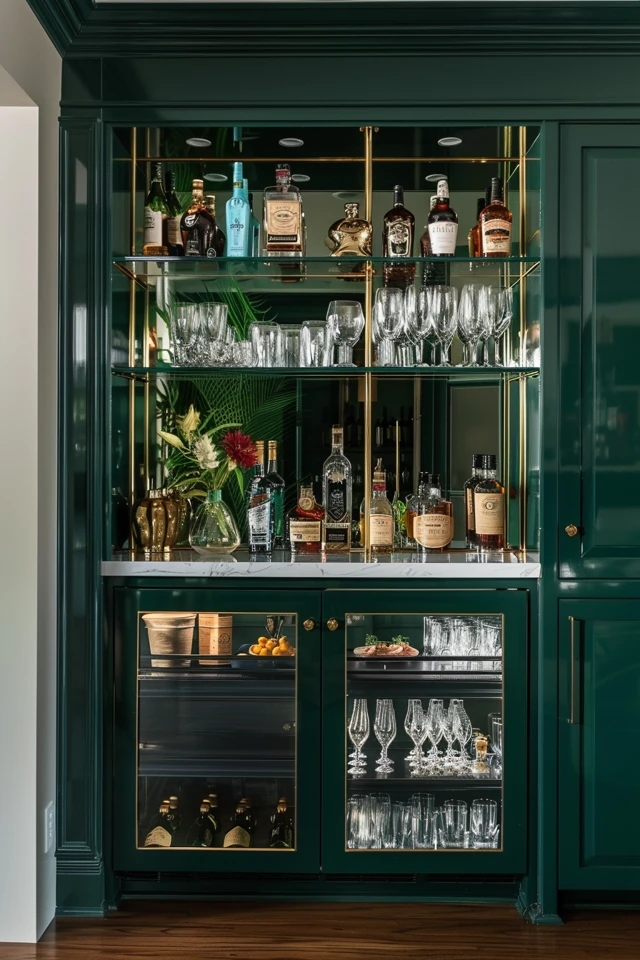
If your living room has an awkward alcove or a recessed wall next to a fireplace, you have the perfect footprint for a built-in bar. This is often the most high-end look because it feels like part of the home’s architecture rather than a piece of furniture you just dropped in. By utilizing existing recesses, you save floor space while adding significant value to the room.
When designing a built-in, the most critical decision is whether to make it a “wet bar” or a “dry bar.” A wet bar requires plumbing for a sink and potentially an ice maker, which complicates the project significantly.
If the living room shares a wall with a kitchen or bathroom, tapping into existing plumbing lines is feasible. If not, a dry bar—which focuses on storage, glassware display, and preparation space—is a much more practical and cost-effective choice.
Designer’s Note: Scale and Dimensions
The standard height for a base cabinet in a bar area is 36 inches, matching standard kitchen counters. However, I often push this to 38 or 40 inches in a living room setting.
This slight elevation distinguishes it from a kitchen workspace and makes it more comfortable for standing guests to lean against. For depth, aim for at least 21 to 24 inches to accommodate under-counter appliances like a wine fridge.
Common Mistakes + Fixes
- The Mistake: Installing upper shelving that is too shallow for liquor bottles.
- The Fix: Standard liquor bottles are roughly 3 to 3.5 inches in diameter, but magnum bottles and decanters are wider. Ensure your open shelves are at least 10 inches deep.
- The Mistake: Forgetting about vertical clearance for tall bottles.
- The Fix: Leave at least 14 to 16 inches of height between shelves. If you have adjustable joinery, this is easier to manage later.
What I’d do in a real project
- I would use a stone countertop remnant (quartz or quartzite) for durability against citrus acids.
- I would install an antiqued mirror backsplash to reflect light and make the niche feel deeper.
- I would ensure there is a dedicated electrical outlet inside the cabinet for a wine fridge or blender.
2. The Console Table Conversion
For renters or those who are not ready to commit to permanent millwork, converting a console table or credenza is a brilliant solution. This approach offers flexibility and allows you to change the layout of the room later. The key to making this look like a deliberate design choice, rather than a cluttered surface, lies in the styling and the furniture selection.
Look for a piece that offers closed storage below. You generally do not want every single beer koozie, napkin package, and backup bottle of tonic on display. The surface should be reserved for your most beautiful glassware, a decanter, and the spirits you are currently pouring.
A tray is non-negotiable here. It acts as a visual anchor, corralling your loose items so the table does not look messy. By confining bottles and tools to a tray, you essentially frame the bar area, leaving the rest of the console free for a lamp or books.
Designer’s Note: Height Matters
A common error I see is using a low media stand as a bar. A TV stand is usually 18 to 24 inches high, which is far too low for mixing drinks.
You must look for a console table or sideboard that is at least 30 to 34 inches tall. This prevents you from having to stoop over awkwardly to pour a drink.
Common Mistakes + Fixes
- The Mistake: Placing the bar in a high-traffic walkway.
- The Fix: Allow a minimum of 36 inches of clearance between the front of the console and the nearest piece of furniture. If you have to squeeze past it, guests will inevitably knock over a glass.
- The Mistake: Ignoring surface protection.
- The Fix: Alcohol strips varnish and citrus creates sticky spots. Always use a large decorative tray (leather or metal work well) or have a custom piece of glass cut to top the wood surface.
What I’d do in a real project
- I would flank the console with two tall sconces or place a tall buffet lamp on one side to create a focal point.
- I would use a vintage or burl wood credenza to add warmth and character to the room.
- I would hang a large piece of art or a round mirror about 8 to 10 inches above the console to tie the vignette together.
3. The Bookshelf Integration
Many living rooms feature large bookcases or built-in shelving units that are filled with generic decor. Carving out a section of these shelves for a bar is an excellent way to break up the visual monotony of books. This “Bar within a Library” concept feels sophisticated and cozy, perfect for evening entertaining.
To make this work, you need to clear out two or three shelves entirely. Do not just shove a bottle of whiskey next to a stack of paperbacks. You need to create a dedicated zone.
Remove adjustable shelves to create a larger vertical cavity if necessary. Wallpapering the back of just that specific section can visually signal that this area serves a different function than the rest of the unit.
Designer’s Note: Lighting is Everything
A dark bookshelf bar is uninviting and makes it hard to read labels. In professional projects, I always specify lighting for these nooks.
If you cannot hardwire electrical, buy rechargeable, motion-sensor LED puck lights. Mount them to the underside of the shelf above your bottles. The sparkle off the glass creates immediate ambiance.
Common Mistakes + Fixes
- The Mistake: Overloading flimsy shelves.
- The Fix: Bottles are heavy. A single liter of liquid weighs over 2 pounds, plus the heavy glass packaging. Ensure your shelf pegs are metal, not plastic, and check for sagging. Reinforce with a center bracket if the span is wider than 30 inches.
- The Mistake: Visual clutter.
- The Fix: Group items by type. Put all clear liquors together and all dark liquors together. Use a basket for small tools like corkscrews and jiggers.
What I’d do in a real project
- I would line the designated “bar shelf” with a leather mat to prevent glass rings on the wood.
- I would use a mix of vintage crystal decanters and modern glassware to create a collected look.
- I would keep the ice bucket stored elsewhere and only bring it out when entertaining to save space.
4. The Hidden “Armoire” Bar
For clients who prefer a minimalist aesthetic, the hidden bar is the ultimate luxury. This involves using a tall cabinet, armoire, or secretary desk that can be completely closed off when not in use. When the doors are shut, it looks like a beautiful antique or a sleek storage unit.
When the doors open, however, it reveals a fully stocked party station. This is ideal for families with young children, as you can easily install child-proof locks on the exterior doors to keep alcohol inaccessible.
The interior of an armoire allows for specialized organization. You can install hanging stemware racks on the underside of the top shelf, wine racks in the bottom, and shallow door shelves for mixers and spices.
Designer’s Note: Door Clearance
Pay close attention to the hinges. Standard hinges only open 90 degrees, which might block your view or stick out into the room.
I recommend upgrading to 170-degree hinges or articulating hinges. These allow the doors to swing all the way back against the sides of the cabinet, keeping the workspace open and accessible during a party.
Common Mistakes + Fixes
- The Mistake: A dark interior cavern.
- The Fix: Paint the inside of the cabinet a bold, contrasting color or use a high-gloss lacquer. If the room is white, make the inside of the bar navy blue or emerald green. It adds a “wow” factor when opened.
- The Mistake: No prep surface.
- The Fix: If using a secretary desk, the drop-down leaf is your prep surface. If using a standard cabinet, ensure there is a pull-out shelf or sufficient space on the middle shelf to actually pour a drink.
What I’d do in a real project
- I would install a mirrored back panel inside to reflect the bottles and make the cabinet feel larger.
- I would use battery-operated LED strips with a warm color temperature (2700K) to light the interior.
- I would organize the layout so that heavy wine bottles are at the bottom for stability.
5. The Floating Shelf & Credenza Combo
This is a modern, airy approach that works exceptionally well in smaller living rooms where floor space is premium but wall space is available. The concept involves a low, floating credenza or cabinet anchored to the wall, paired with open floating shelves above it.
This separates the “storage” from the “display.” The ugly stuff (backup mixers, paper napkins, tools) goes in the closed cabinet below. The beautiful stuff (premium scotches, crystal tumblers, art) goes on the shelves above.
Because the furniture is floating off the ground (or on tall legs), the eye can travel underneath it. This makes the room feel wider and less cramped than a solid, floor-to-ceiling unit would.
Designer’s Note: Installation Safety
I cannot stress this enough: Floating shelves holding liquor must be anchored into wall studs. Drywall anchors are not sufficient.
A single bottle of wine weighs about 3 pounds. If you have 10 bottles and heavy glassware, you are easily exceeding 40 or 50 pounds. Use heavy-duty floating shelf brackets that drill directly into the timber studs.
Common Mistakes + Fixes
- The Mistake: Improper spacing between the cabinet and the shelves.
- The Fix: Leave at least 18 to 20 inches between the top of the credenza and the bottom of the first shelf. You need room to open bottles and pour without hitting your knuckles on the shelf above.
- The Mistake: Shelf depth issues.
- The Fix: Floating shelves should be narrower than the cabinet below them. If the cabinet is 18 inches deep, make the shelves 10 or 12 inches deep. This prevents you from bumping your head when leaning in to pour.
What I’d do in a real project
- I would mix materials: a walnut cabinet below with brass or matte black metal shelves above.
- I would lean artwork on the shelves behind the bottles to add depth and layering.
- I would add a small, rechargeable table lamp to the credenza surface to connect the two elements visually.
Final Checklist: Before You Start
Before you buy furniture or start swinging a hammer, run through this quick professional checklist. It saves money and frustration down the road.
- Measure Your Tallest Bottle: Grey Goose and certain wine bottles are exceptionally tall. Ensure your shelf spacing accommodates them (min 14 inches).
- Check the Traffic Flow: Open the drawers or doors of your proposed bar. Can someone still walk past? You need 30 to 36 inches of pass-through space.
- Lighting Plan: Does the area have access to an outlet? If not, have you sourced quality rechargeable lights?
- Surface Durability: If you love red wine or citrus garnishes, avoid porous marble tops unless they are sealed professionally. Quartz or glass is safer.
- Child Safety: If you have kids, where are the breakables and alcohol stored? High shelves or locked cabinets are essential.
FAQs
What is the best location for a home bar in a living room?
The best location is usually a corner out of the direct traffic path or a recessed niche. Avoid placing liquor in direct sunlight (like right in front of a south-facing window), as UV rays and heat will degrade the quality of the alcohol over time.
Do I need a sink for a living room bar?
No, you do not. A “dry bar” is perfectly functional for a living room. You simply prepare your ice in the kitchen and bring it out in an insulated ice bucket. This saves thousands on plumbing and permitting costs.
How deep should a home bar cabinet be?
For a base cabinet, 21 to 24 inches is standard. For upper shelves or floating shelves, 10 to 12 inches is sufficient. Avoid shelves deeper than 12 inches for uppers, or bottles will get lost in the back rows.
What essentials do I need to style the bar?
Start with the “Rule of Three” for hardware: a jigger, a shaker, and a corkscrew. For glassware, you need 4 to 6 rocks glasses and 4 to 6 wine glasses. Add a decorative tray to corral the bottles and napkins to keep the surface safe.
Conclusion
Adding a bar to your living room is about more than just alcohol storage; it is about creating a deliberate zone for connection and relaxation. Whether you choose a custom built-in niche or a simple, well-styled console table, the principles remain the same.
Focus on scale, ensure your materials can handle the wear and tear, and layer in lighting to set the mood. Start small with a tray and a few bottles, or go all-in with a wet bar renovation. The best design is one that actually gets used, so choose the layout that fits your lifestyle and your space constraints.
Picture Gallery


