
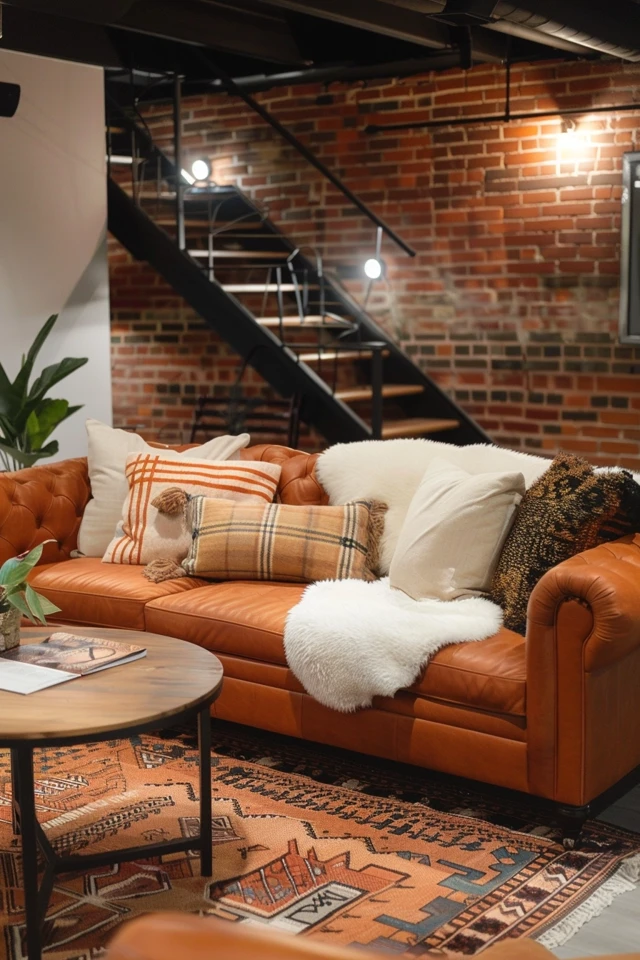
5 Tips for a Cozy 2 Bedroom Basement Layout
Designing a basement is fundamentally different from designing the upper levels of a home. You are working against natural constraints like low ceilings, limited natural light, and structural columns that always seem to be in the wrong place. However, a two-bedroom basement layout holds incredible potential. It can serve as a lucrative rental unit, a comfortable in-law suite, or a teenage retreat that actually feels like part of the home rather than an afterthought.
The goal is to trick the eye and the body into forgetting you are below grade. To achieve this, we have to prioritize layout efficiency, thermal comfort, and lighting above purely decorative choices. When I walk into a raw basement, I don’t see dark corners; I see an opportunity to curate a space that feels moody, grounded, and surprisingly high-end.
If you are looking for visual inspiration, you can check out the full Picture Gallery at the end of this blog post. But before we get to the pretty pictures, we need to handle the heavy lifting of spatial planning and technical design. Here is how I approach creating a two-bedroom basement that feels cozy, functional, and safe.
1. Prioritize Egress and “Public vs. Private” Zoning
The biggest mistake homeowners make is drawing a floor plan based on where they want the bedrooms to be, rather than where the safety codes and plumbing dictate they must be. In a basement, your layout is almost entirely governed by egress windows.
For a room to legally be considered a bedroom, it must have an egress window that allows for escape in an emergency. This usually means a clear opening of at least 5.7 square feet. Because these windows are generally located on the perimeter walls, your two bedrooms will naturally be pushed to the edges of the floor plan.
Once you identify those window locations, you need to establish a clear zone between “public” living areas and “private” sleeping quarters. In a two-bedroom layout, you generally have two options: the “Split” layout or the “Cluster” layout.
The Split Layout
This is ideal for privacy, especially if the basement is for roommates or guests who aren’t a couple. You place the living area and kitchen in the center, with one bedroom on either side. This eliminates shared walls between bedrooms, drastically reducing noise transfer.
The Cluster Layout
This places both bedrooms next to each other, typically sharing a bathroom wall. This is more cost-effective because it consolidates your plumbing runs, but it sacrifices acoustic privacy. If you choose this route, invest in sound-dampening drywall or Rockwool insulation between the bedroom walls.
Designer’s Note: The Plumbing Pivot
In a real project, I always start by locating the main waste stack. Moving a toilet location five feet in a basement requires jackhammering the concrete slab, which eats up your budget fast. Try to design your bathroom and kitchenette layout near existing drains to save thousands of dollars that you can spend on finishes instead.
Common Mistakes + Fixes
Mistake: Creating a long, dark hallway to access the bedrooms.
Fix: Minimize hallways. Have bedrooms open directly off the main living space or a small vestibule. If a hallway is necessary, keep it short and ensure it is at least 36 to 42 inches wide to avoid the “tunnel” effect.
2. Layer Your Lighting to Combat the “Cave” Effect
Lighting in a basement isn’t just about visibility; it is about psychological comfort. Because natural light is scarce, you must manufacture an atmosphere that mimics the warmth of the sun. The “one big boob light in the center of the room” approach is the enemy of coziness.
You need three distinct layers of light: ambient, task, and accent. For the ambient layer, recessed canning is standard, but placement matters. A good rule of thumb for 8-foot basement ceilings is to space 4-inch or 6-inch recessed cans about 4 to 6 feet apart. Avoid placing them directly over where someone will sit, as downlighting casts unflattering shadows on faces.
Color Temperature is Non-Negotiable
Never use “Daylight” (5000K) bulbs in a basement. It makes the space feel like a sterile clinical lab. Stick to 2700K (warm white) or 3000K (soft white). This warmer spectrum counteracts the cool, gray undertones of concrete and lack of sun.
What I’d Do in a Real Project
- Dimmers Everywhere: Every switch in the basement, specifically in the living room and bedrooms, gets a dimmer. This allows you to shift from “cleaning mode” (100% brightness) to “movie night” (20% brightness).
- Sconces for Height: I love using wall sconces in basements. By directing light upward and washing the wall, you visually lift the ceiling. Install them at roughly 60 to 66 inches from the floor.
- Floor Lamps: Use floor lamps in the dark corners of the living area. Lighting the corners expands the perceived footprint of the room.
3. Conquer the Cold: Flooring and Rug Strategy
Nothing destroys the “cozy” factor faster than a cold, damp floor. In a basement, moisture is a constant reality. Even if you have never had a flood, concrete slabs wick moisture from the earth. This makes solid hardwood a poor choice, as it will cup and warp over time.
I almost exclusively recommend Luxury Vinyl Plank (LVP) for basement renovations. High-quality LVP mimics the look and texture of real wood, is 100% waterproof, and is much thinner than wood, which saves you precious vertical headroom. Look for a wear layer of at least 20 mil for durability, especially if you have pets.
The Role of Area Rugs
Since LVP can still feel cool to the touch, area rugs are mandatory for coziness. In a 2-bedroom layout, you need large rugs to anchor the living space and the bedrooms.
For the living area, ensure the rug is large enough that at least the front legs of the sofa and armchairs sit on it. Usually, an 8×10 or 9×12 rug is required. This physically connects the furniture pieces and adds a layer of sound absorption.
Designer’s Note: The Rug Pad Secret
Do not skimp on the rug pad. In a basement, I specify a thick, felt-and-rubber combo pad (at least 1/4 to 1/2 inch thick). This adds thermal insulation and makes a budget-friendly rug feel luxurious and plush underfoot.
Common Mistakes + Fixes
Mistake: Installing wall-to-wall carpet directly over concrete without a vapor barrier.
Fix: If you demand carpet in the bedrooms for warmth, use a synthetic fiber (nylon or polyester) that resists mold, and ensure a proper moisture barrier and antimicrobial pad are installed underneath.
4. Managing Low Ceilings and Ductwork Soffits
Most basements have a ceiling height between 7 and 8 feet, and that’s before you account for the HVAC ductwork that needs to run across the ceiling. These drop-downs, called soffits, can make a layout feel claustrophobic if not handled correctly.
Instead of trying to hide soffits, incorporate them into the design zoning. For example, if a large trunk line runs through the middle of the room, use it to visually separate the kitchen from the living area. You can frame the soffit and paint it the same color as the ceiling to make it disappear, or clad it in wood for an architectural feature.
Curtain Placement Tricks
To make your ceilings feel higher, you need to manipulate vertical lines. Window treatments are your best tool here. Even if you have small, high “hopper” windows, do not hang a small curtain right above the frame.
Install the curtain rod as high as possible—right up against the ceiling or crown molding. Extend the rod 10 to 12 inches wider than the window on each side. When the curtains are open, they will stack against the wall, not the glass, maximizing the limited natural light. Use floor-length panels that “kiss” the floor. This draws the eye all the way up, creating the illusion of height.
What I’d Do in a Real Project
- Paint Strategy: I often paint the ceiling, baseboards, and walls the same color in a satin or eggshell finish. Blurring the line where the wall meets the ceiling makes the boundary harder to define, causing the room to feel more expansive.
- Low Profile Furniture: Choose a sofa and armchairs with lower backs (under 32 inches). Low-slung furniture leaves more “white space” between the top of the furniture and the ceiling, making the room feel taller.
5. Smart Storage and Flexible Furnishings
In a 2-bedroom basement, square footage is often tight. You likely do not have the luxury of a massive walk-in closet or a separate mudroom. “Cozy” can quickly turn into “cluttered” if you don’t have a plan for where things go.
Every piece of furniture should earn its keep. In the bedrooms, avoid bed frames that go all the way to the floor. Instead, choose beds with legs that allow for under-bed storage bins, or platform beds with built-in drawers. This is essential for storing out-of-season clothes or extra linens.
Living Room Scale
It is counterintuitive, but using a few large pieces of furniture makes a small room feel bigger than using many small pieces. A small loveseat and three tiny chairs will make a basement living room look like a dollhouse.
Opt for a standard-sized sofa (roughly 84 inches) or a sectional that hugs the perimeter walls. Ensure you maintain clear walkways. You need a minimum of 30 to 36 inches of clearance for main traffic paths. If you have to turn sideways to get past the coffee table, the layout is too tight.
Designer’s Note: The “Landing Zone”
Since basements often lack a formal entryway, create a “drop zone” near the stair bottom or the door. A simple console table with a lamp and a basket for keys/mail helps transition the mind from “transit” to “home.”
Common Mistakes + Fixes
Mistake: Using dark, heavy bookcases that absorb light and visual space.
Fix: Use open shelving or glass-front cabinets. Floating shelves are excellent in basements because seeing the wall behind the storage keeps the visual weight light.
Final Checklist: The Cozy Basement Audit
Before you finalize your plans, run through this checklist to ensure you have hit all the marks for a professional-grade finish.
- Egress Safety: Have I confirmed the bedroom windows meet local fire code size requirements (usually 5.7 sq ft clear opening)?
- Moisture Control: Have I accounted for a dehumidifier location with a drain line, so I don’t have to empty a bucket daily?
- Lighting Layers: Do I have at least three sources of light in the main living area (overhead, table/floor, accent)?
- Power Plugs: Have I placed outlets near where the bed nightstands and the sofa ends will be? (Concrete walls make moving outlets later very difficult).
- Wifi Signal: Have I planned for a wifi extender or a hardwired access point? Basements are notorious dead zones for wireless signals.
- Clearance Check: Is there at least 30 inches of walking space between all furniture pieces?
FAQs
Is it worth adding a second bathroom to a 2-bedroom basement?
If space and budget allow, yes. However, in a footprint under 1,000 square feet, a second bath often eats up valuable living space. A better compromise is a “Jack and Jill” style bathroom accessible from the hallway and one bedroom, or a compartmentalized bathroom where the vanity is separate from the shower/toilet, allowing two people to use it simultaneously.
How do I heat a basement effectively?
Basements are naturally cooler. While extending your home’s HVAC ductwork is standard, it often isn’t enough. I highly recommend electric baseboard heaters in the bedrooms or an electric fireplace in the living area. They provide supplemental zone heating that allows occupants to adjust the temperature without overheating the rest of the house.
What is the best paint finish for basement walls?
Avoid flat or matte paint if possible. A basement tends to have higher humidity and less airflow, which can trap dust. An eggshell or satin finish reflects a tiny bit more light (helping with brightness) and is much easier to wipe down and keep clean.
Does a basement renovation add value to my home?
Absolutely. Finished basement square footage generally appraises at 50% to 70% of the value of above-ground square footage. However, a legal 2-bedroom rental suite can add significant value due to the potential income generation, making it one of the highest ROI projects you can undertake.
Conclusion
Creating a cozy two-bedroom basement layout is a balancing act between strict technical requirements and soft, inviting aesthetics. It requires you to respect the moisture and lighting limitations of the space while pushing the boundaries of layout and texture.
By zoning your bedrooms for privacy, investing in varied lighting sources, and choosing warm, durable materials like LVP and thick rugs, you can transform a concrete box into the most popular part of the house. Remember, the difference between a “basement” and a “lower level suite” is in the details—the dimmer switches, the curtain height, and the thoughtful flow of traffic.
Picture Gallery


