
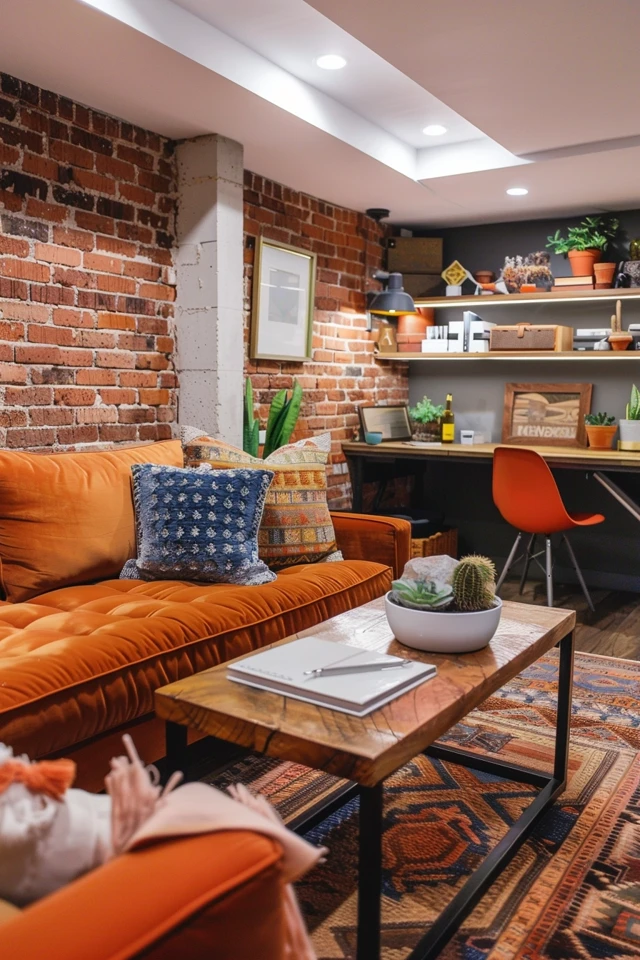
5 Tips for a Functional Basement Office Ideas
Turning a basement into a workspace is often the best solution for a growing household. It separates your professional life from the chaos of the living room and kitchen. However, basements present unique challenges like low ceilings, lack of natural light, and awkward structural poles.
Many homeowners treat the basement office as an afterthought, throwing in a leftover desk and a spare lamp. This usually leads to a space you dread entering. To create a room where you actually want to work, you have to approach it with the same design rigor as your main living areas. For a complete visual breakdown of these concepts, make sure to check out the Picture Gallery at the end of this blog post.
In my years of designing lower-level renovations, I have found that functionality must come before aesthetics in a basement. You need to address moisture, lighting, and sound before you worry about throw pillows. Here is my guide to creating a basement office that works as hard as you do.
1. Master the Lighting Layering Game
The biggest complaint about basement offices is that they feel like “dungeons.” Since you likely have small hopper windows or window wells that offer minimal sunlight, you must manufacture your own light. A single overhead fixture is not enough.
You need to create a lighting plan that includes three distinct layers: ambient, task, and accent lighting. Ambient lighting provides general illumination, usually through recessed cans. Task lighting focuses on your work surface, and accent lighting adds depth to dark corners.
The Kelvin Temperature Rule
In a basement, the color temperature of your bulbs matters more than anywhere else in the house. If you go too warm (2700K), the room will feel sleepy and dingy. If you go too cool (5000K+), it will feel like a hospital.
I recommend sticking to a range of 3000K to 3500K for overhead lighting. This mimics bright, clear daylight without turning blue. Ensure all your bulbs match this temperature to avoid visual clutter.
Designer’s Note: The “Wall Wash” Technique
A trick I use in almost every basement project is “wall washing.” Install recessed lighting or track heads about 18 to 24 inches away from the perimeter walls and aim the light at the wall itself.
Illuminating the vertical surfaces makes the room feel wider and taller. It pushes the walls back visually, combating that enclosed basement feeling.
Common Mistakes + Fixes
- Mistake: Relying solely on recessed “can” lights directly over your head.
- Fix: This creates unflattering shadows on your face during video calls. Place your desk lamp or a ring light in front of you at eye level to fill in those shadows.
2. Conquer the “Cold and Damp” Factor
Basements are naturally cooler and more humid than the rest of the home. It is impossible to be productive if your feet are freezing or if the papers on your desk feel damp. Addressing the climate is a foundational step in your design.
You need to choose flooring that acts as a barrier. While concrete floors look industrial and chic, they are uncomfortable for an eight-hour workday unless you have radiant heating installed underneath.
The Best Flooring for Basement Offices
Luxury Vinyl Plank (LVP) is generally the gold standard for basement renovations. It is waterproof, durable, and comes in realistic wood tones that add visual warmth. Unlike solid hardwood, it won’t warp with humidity fluctuations.
If you prefer a softer feel, consider carpet tiles. They are easy to install and, more importantly, easy to replace individually if a leak occurs. Avoid wall-to-wall broadloom carpet in basements, as it traps moisture and allergens.
Rug Sizing Logic
Even with LVP, you need a rug for warmth and acoustics. The rule of thumb for an office is that the rug should be large enough to accommodate the desk and the chair, even when the chair is pulled back.
This usually means an 8×10 rug for a standard executive desk setup. If your chair rolls off the rug every time you stand up, the rug is too small. This is annoying and ruins the flow of the room.
What I’d Do in a Real Project
- Subfloor: I always install a dimpled underlayment or moisture barrier over the concrete slab before laying the floor. This creates an air gap that allows the concrete to breathe and keeps the floor slightly warmer.
- Heating: If the HVAC system doesn’t reach the basement well, I add a dedicated electric baseboard heater or a high-quality space heater that mimics a fireplace for ambiance.
3. Navigate Low Ceilings and Ductwork
Basement ceilings are notoriously low, often dropping to 7 feet or less in areas with ductwork (soffits). Instead of trying to hide these imperfections, you have to work with them. Trying to cover everything up often lowers the ceiling further.
If you have exposed joists or ductwork, you have two main options. You can drywall over them for a clean look, or paint everything—pipes, ducts, and wood—a single color to make them disappear visually.
Paint Strategies for Low Ceilings
The instinct is to paint the ceiling white to “brighten” it. However, if your ceiling is full of ugly pipes, white paint highlights every shadow and flaw. This draws the eye upward to the mess.
In an office, I often paint the ceiling the same color as the walls, or even a shade darker. This blurs the line where the wall ends and the ceiling begins. It creates a cozy, “cocoon” effect that is excellent for deep focus work.
Furniture Scale and Height
When ceilings are low, your furniture needs to be low-profile. Avoid tall bookcases that stop just inches below the ceiling; they make the room look squat.
Opt for low, horizontal storage units like credenzas. If you need vertical storage, install floor-to-ceiling built-ins that go all the way up. This seamless line tricks the eye into thinking the ceilings are higher than they are.
Clearance Rules
- Walking Paths: Keep main walkways at least 36 inches wide.
- Chair Space: Ensure you have 42 to 48 inches of space behind your desk. In a small basement, you don’t want to hit a wall every time you scoot back.
4. Layout Planning Around Obstacles
Structural support poles and utility meters are facts of life in a basement. The key to a functional layout is zoning your office around these immovable objects rather than letting them dictate the room awkwardly.
Never float your desk in the middle of the room if it means a support pole is right in your visual field. It creates visual tension and disrupts focus.
Integrating Columns
If you have a column in the middle of the room, incorporate it into the design. You can wrap the column in wood to make it a decorative feature. Alternatively, build your desk or shelving attached to the column.
For example, a custom desk can wrap around a pole, turning a nuisance into a pivot point for an L-shaped workstation. This maximizes floor space and looks intentional.
Access to Utilities
Your layout must preserve access to the electrical panel, sump pump, and water shut-off valves. Never block these with heavy, immovable furniture. This is a safety hazard and a code violation in many areas.
If you want to hide a utility panel, hang a lightweight piece of art or a hinged cabinet door over it. Ensure it can be accessed instantly in an emergency.
Designer’s Note: The “Floating” Desk
In small basement rooms, I prefer to position the desk facing into the room rather than staring at a wall. This is called the “command position.”
Place your desk perpendicular to a wall or floating in the center (if space allows). This gives you a view of the door and prevents that claustrophobic feeling of staring at drywall 24 inches from your nose.
5. Soundproofing for Privacy
Basements are often directly beneath the noisiest parts of the house, like the kitchen or living room. Footsteps, plumbing noises, and TV sounds can travel easily through the floor joists. If you take calls frequently, soundproofing is not optional.
You don’t need a recording studio, but you do need sound dampening. Hard surfaces reflect sound, making the room echo. Soft surfaces absorb sound.
Strategic Textiles
Fill the room with absorptive materials. Heavy velvet curtains, even if they are just covering a small window or a wall, help dampen sound. A thick rug with a felt pad is essential.
Consider acoustic wall panels. Modern acoustic panels come in interesting geometric shapes and colors that look like art. Placing these on the wall in front of your desk can significantly reduce echo during Zoom calls.
Ceiling Insulation
If you are still in the renovation phase, add rock wool insulation between the ceiling joists before drywalling. This is the most effective way to muffle the sound of footsteps from above.
If the drywall is already up, you can add a second layer of drywall with “green glue” (a noise-proofing compound) in between. It is an investment, but for a full-time home office, it is worth every penny.
Common Mistakes + Fixes
- Mistake: Using a hollow-core door for the office entrance.
- Fix: Swap it for a solid-core door. The mass of the door blocks significantly more sound than standard hollow interior doors. Add a door sweep to the bottom to seal the gap.
Final Checklist for Your Basement Office
Before you start buying furniture or knocking down walls, run through this checklist to ensure you have covered the basics.
- Moisture Check: Tape a 2-foot square of plastic sheeting to the floor for 24 hours. If it’s damp underneath when you peel it up, you need to seal the concrete before installing flooring.
- Internet Connection: Wi-Fi signals struggle to penetrate concrete walls. Plan for a mesh network extender or, preferably, a hardwired Ethernet connection.
- Egress Safety: Ensure you have a clear path to an exit. If this is a bedroom conversion, an egress window is legally required.
- Outlet Mapping: Map out where your computer, printer, lamps, and heater will plug in. You may need to have an electrician add circuits to avoid tripping breakers.
- Lighting Temperature: Buy one box of 3000K bulbs and one box of 4000K bulbs. Test them in the room to see which one feels right before committing to the whole space.
FAQs
What is the best paint color for a basement office with no windows?
Avoid dark, muddy grays or browns, as they can make the space feel smaller. However, don’t just default to stark white, which can look gray in low light. Warm neutrals, soft terracottas, or sage greens work well. If you want drama, go for a deep navy or charcoal, but ensure your lighting is impeccable to pull it off.
How do I hide the sump pump in my office layout?
Build a closet around it if space permits, ensuring there is a door for access. If that isn’t an option, use a decorative folding screen. Just make sure the screen allows for airflow so the motor doesn’t overheat, and never block it with heavy filing cabinets.
Is a basement office considered a bedroom for resale value?
Generally, no. To be legally classified as a bedroom, the room needs a closet and an egress window (a window large enough for a person to escape through). If your office has these features, it can add to your home’s bedroom count. If not, it is listed as a “den” or “office,” which still adds value but in a different category.
How much space do I need for a functional office?
At a minimum, you need about 50 to 75 square feet for a comfortable one-person setup. This allows for a standard desk (48-60 inches wide), a chair, and some shelving. Anything smaller will feel like a closet.
Conclusion
Creating a functional basement office is about solving problems first and decorating second. Once you handle the lighting, the moisture, and the layout quirks, you unlock a massive amount of potential in your home. It stops being the place where you store holiday decorations and becomes a productivity powerhouse.
Remember that this space is separated from the rest of the house for a reason. Use that separation to your advantage. Create a zone that signals to your brain that it is time to work, regardless of what is happening upstairs. With the right planning, your basement might just become your favorite room in the house.
Picture Gallery


