
5 Tips for Affordable Basement Ideas on a Budget
For many homeowners, the basement represents the final frontier of home renovation. It is often a catch-all space filled with holiday decorations, outgrown toys, and miscellaneous boxes that haven’t been opened in years. However, transforming this underutilized square footage into a functional living area doesn’t require a contractor-level budget or a total gut renovation.
The secret to keeping costs low lies in working with the existing structure rather than fighting against it. For a visual boost of inspiration, make sure to scroll down because the Picture Gallery is at the end of the blog post. By embracing industrial elements and making strategic material choices, you can create a cozy, high-end look for a fraction of the price of a standard remodel.
As an interior designer, I often tell clients that the basement is the best place to take risks. Since it is separated from the main floor’s flow, you have the freedom to experiment with moody colors, unique layouts, and budget-friendly hacks that might feel out of place in a formal living room. Let’s look at how to maximize this space without draining your savings.
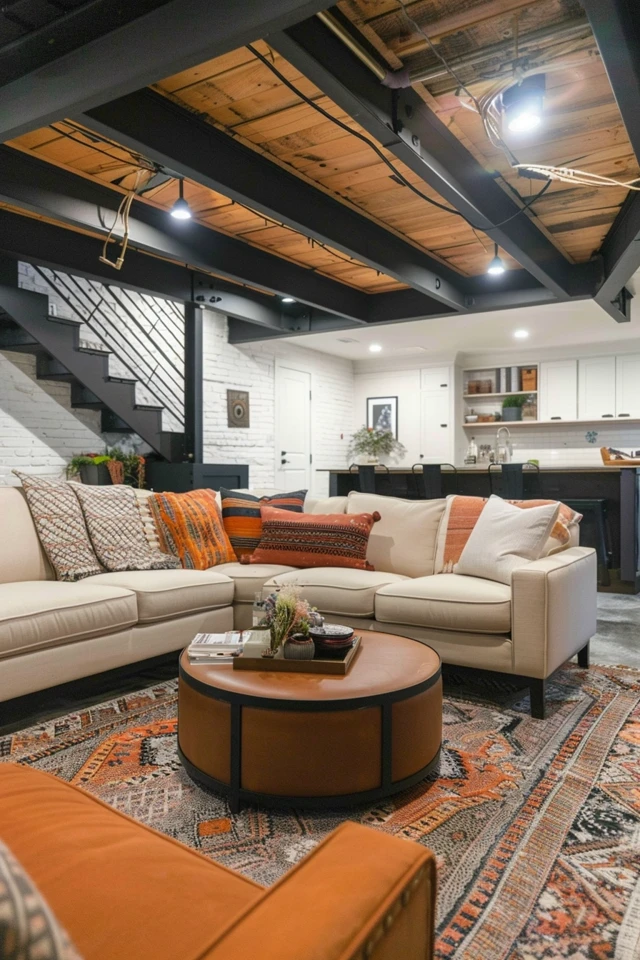
1. Embrace the “Industrial Chic” Exposed Ceiling
One of the most expensive parts of finishing a basement is framing and drywalling the ceiling. Not only does this cost thousands in labor and materials, but it also significantly lowers your ceiling height. In a basement where every inch of vertical space matters, a drop ceiling can make the room feel claustrophobic.
The affordable designer solution is to spray paint the exposed rafters, ductwork, and pipes. This technique, often seen in trendy coffee shops and lofts, maintains your maximum ceiling height and allows easy access to plumbing or electrical lines if repairs are ever needed.
You generally have two color choices here: matte black or flat white. Painting everything “Ceiling White” will brighten the space and make the room feel airier, but it can highlight the visual clutter of wires. Painting it “Black” or “Charcoal” makes the ceiling visually disappear, creating a cozy, theater-like atmosphere that hides imperfections perfectly.
Designer’s Note: The Spraying Reality
While this is a budget-friendly DIY, do not underestimate the prep work. Overspray is a real issue. You must mask off the furnace, water heater, and any windows with heavy-duty plastic sheeting and tape.
When I advise clients on this, I always recommend renting a professional airless paint sprayer rather than using rattle cans or a roller. You will need to spray from multiple angles to cover the sides of the joists and the tops of the pipes. Expect to use 30% more paint than you calculate due to the increased surface area of the wood and piping.
Common Mistakes + Fixes
- Mistake: Painting over shut-off valves or electrical junction boxes without marking them.
- Fix: Before you spray, wrap crucial valves in painter’s tape or tag them with bright neon tape immediately after the paint dries. You need to know where your water shut-off is in an emergency.
2. Choose Floating Floors or Enhanced Concrete
Basements are inherently prone to moisture, which makes solid hardwood a terrible choice. Wood acts like a sponge, expanding and contracting with humidity changes, leading to cupping and warping. Traditional tile is durable but can feel freezing cold without an expensive radiant heat system underneath.
For a budget renovation, Luxury Vinyl Plank (LVP) is the gold standard. It is waterproof, floats over the concrete (meaning no messy glue), and is thin enough that it doesn’t drastically reduce ceiling height. Look for a “rigid core” LVP with a wear layer of at least 12 mils for residential basements, though 20 mils is better if you have large dogs.
If LVP breaks the budget, consider painting and sealing the concrete floor. With the right epoxy or concrete paint, you can create a clean, modern slate look. Layer this with large area rugs to add softness and define specific zones.
What I’d Do in a Real Project
If I am working with a tight budget and a concrete floor that is in decent condition, I skip the full flooring installation. instead, I would:
- Thoroughly clean and etch the concrete.
- Apply a high-quality masonry paint in a warm gray (like a “Greige”).
- Use large, bound carpet remnants or indoor/outdoor rugs to cover 70% of the walking area.
- This saves roughly $3 to $5 per square foot compared to installing flooring.
Rug Sizing Rules for Basements
Because basements are often large, open rectangles, rugs are critical for acoustics and zoning. A common error is buying a rug that is too small, which makes the furniture look like it is floating on an island.
- Living Area: Ensure the front legs of the sofa and accent chairs are sitting on the rug. The rug should extend at least 6 to 8 inches past the sides of the sofa.
- Dining/Game Table: The rug needs to extend 24 inches on all sides of the table so chairs don’t catch on the edge when pulled out.
3. Zone the Space Without Building Walls
Framing new walls requires permits, lumber, drywall, mudding, sanding, and painting. It is the fastest way to blow a renovation budget. Unless you need a legally compliant bedroom (which requires an egress window) or a bathroom, try to keep the floor plan completely open.
You can define “rooms” within the open space using furniture placement and lighting. For example, turn your sofa creating a barrier between the “TV zone” and the “play zone.” Place a console table behind the sofa to further solidify that visual wall. This allows light to travel from one end of the basement to the other, keeping the space brighter.
If you absolutely need a visual divider to hide a storage area or a home gym, use heavy heavyweight curtains mounted on a ceiling track. This offers the softness of drapery, improves acoustics by dampening echoes, and costs a fraction of building a stud wall.
Measurements for Flow
When laying out an open basement, traffic flow is key. You don’t want people tripping over ottomans.
- Main Walkways: Keep a clear path of at least 30 to 36 inches wide for high-traffic areas.
- Between Furniture: Allow 14 to 18 inches between the sofa and the coffee table.
- Behind Seating: If a walkway runs behind a sofa or chair, leave at least 30 inches of clearance so it doesn’t feel cramped.
4. Strategic Lighting is Non-Negotiable
Lighting makes or breaks a basement renovation. Since natural light is usually scarce, you must manufacture it. The biggest error DIYers make is relying on a single row of recessed “can” lights. This creates a clinical, interrogation-room vibe with harsh shadows in the corners.
You need to think in layers. Start with your overheads, but put them on a dimmer switch immediately. Dimmers are cheap (usually under $25) and allow you to shift the room from “cleaning mode” to “movie mode” instantly.
Next, add floor lamps and table lamps to bring light down to the human level. Ideally, you want three distinct sources of light in any given zone. For example, in the TV area, you might have recessed lights overhead, a floor lamp next to the reading chair, and a small lamp on a side table.
The Color Temperature Rule
The color of the light bulb matters immensely in a basement.
- Avoid 5000K (Daylight): This reads as very blue and cold. It creates a sterile, hospital feel that is uncomfortable for relaxing.
- Avoid 2700K (Soft White): In a dark basement, this can sometimes look too yellow or dingy.
- The Sweet Spot: Aim for 3000K (Warm White). It is crisp and bright without being blue, and it renders colors accurately.
Designer’s Note: The Mirror Trick
Hang a large mirror on the wall directly opposite your basement window. Even if the window is small, the mirror will bounce that natural light deeper into the room. It tricks the eye into thinking there is a second window, effectively doubling the sense of openness.
5. High-Impact, Low-Cost Wall Treatments
Basement walls can be long, boring expanses of drywall or concrete. Covering them with art can get expensive, but leaving them bare feels cold. Paint is your best friend here, but how you use it matters.
Vertical shiplap or beadboard paneling is a great way to add texture and durability, especially in homes with kids. You can install 4×8 sheets of beadboard paneling horizontally (railroad style) or vertically for about $25 a sheet. Paint it a moody color like navy or forest green up to a chair rail height (roughly 36 inches), and paint the rest of the wall white.
This “wainscoting” effect draws the eye upward, making ceilings feel higher, and the hard paneling protects the drywall from scuffs and dents in play areas.
Common Mistakes + Fixes
- Mistake: Using flat paint in high-traffic basement zones.
- Fix: Use an Eggshell or Satin finish for walls. Basements tend to accumulate dust more than upper floors, and moisture can be higher. Eggshell resists moisture better than flat paint and is wipeable when the kids draw on the walls.
What I’d Do in a Real Project
For a media wall, I would buy three identical IKEA bookcases (like the Billy series). I would anchor them to the wall and use simple trim molding to bridge the gaps between them. Once painted the same color as the wall, they look like custom built-ins for a tenth of the price. This provides essential storage for board games, blankets, and electronics while acting as a focal point.
Final Checklist for Your Budget Basement
Before you buy a single gallon of paint, run through this checklist to ensure you are spending money where it counts.
- Moisture Check: Tape a 2×2 foot piece of plastic to the concrete floor and leave it for 48 hours. If there is condensation underneath, you have moisture issues that must be addressed before flooring.
- Lighting Plan: Do you have at least three sources of light planned for the main seating area?
- Clearance Check: Measure your stairwell width and ceiling height. Will your sectional sofa actually fit down the stairs? (This happens more often than you think!)
- Rug Sizes: Measure your room and ensure your rug will anchor the furniture, not float in the middle.
- Access Points: Have you identified all water shut-offs and clean-outs? Ensure your design leaves them accessible.
Frequently Asked Questions
Is it worth finishing a basement without a permit?
Generally, no. If you are adding electrical or plumbing, unpermitted work can cause major headaches when you try to sell the house. However, cosmetic updates like painting an exposed ceiling or laying down an area rug do not typically require permits. Always check your local building codes.
How do I stop my basement from smelling musty?
Airflow is critical. Run a dehumidifier set to 45-50% humidity year-round. Ensure you have furniture raised on legs rather than sitting flush on the floor to allow air to circulate underneath. Avoid heavy, wall-to-wall carpeting if you have a history of dampness.
Can I use peel-and-stick tiles on concrete?
I generally advise against this. Concrete is porous and often dusty or damp, which causes the adhesive to fail quickly. If you want a tile look, use a floating vinyl tile that clicks together.
What is the best way to heat a cold basement on a budget?
Electric baseboard heaters are relatively inexpensive to install but can be costly to run. A better option for comfort is thick area rugs with high-quality rug pads. Also, ensure your HVAC vents in the ceiling are open and not blocked by furniture.
Conclusion
Renovating a basement on a budget is about prioritizing function and comfort over structural perfection. By embracing the raw nature of the space—exposed ceilings, painted floors, and open layouts—you create a room that feels intentional and stylish rather than “unfinished.”
Remember that you don’t have to do everything at once. Start by addressing the lighting and the walls. These two changes alone will transform the “dungeon” feel into a welcoming extension of your home. Take your time, measure twice, and enjoy the process of reclaiming this valuable square footage.
Picture Gallery


