
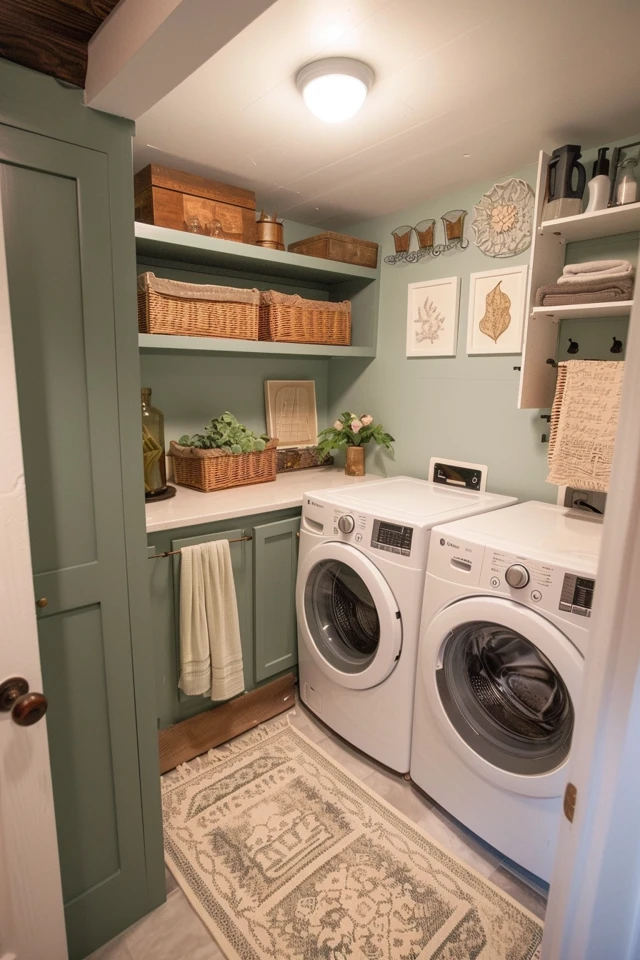
5 Tips for Basement Laundry Room Ideas Unfinished Spaces
Walking into an unfinished basement to do laundry often feels like a trip to a dungeon. You are dodging low-hanging cobwebs, navigating uneven concrete floors, and trying to ignore the hum of the furnace while you sort your delicates. However, you do not need a full-scale renovation budget or drywall to transform this utility area into a functional, inviting space.
As an interior designer, I often tell clients that unfinished spaces offer a unique opportunity to embrace an industrial, raw aesthetic that is both trendy and practical. For plenty of visual inspiration on how to execute these raw looks, be sure to check out our curated Picture Gallery included at the very end of this article. By focusing on lighting, flooring, and smart organization, you can create a laundry zone that feels intentional rather than neglected.
The goal here is not to hide the structure of your home, but to clean it up and accessorize it. We are going to look at five specific strategies to elevate your unfinished basement laundry room, complete with the measurements and material recommendations I use in real client projects. Let’s turn that scary corner of the basement into a room you actually don’t mind visiting.
1. Embrace and Refine the Industrial Aesthetic
The biggest mistake homeowners make with unfinished basements is trying to force them to look like finished rooms with cheap hacks. Instead, lean into the “loft” look. The exposed joists, ductwork, and pipes are architectural elements that can look high-end if treated correctly.
Start by unifying the ceiling. In a finished room, we rely on drywall, but in an unfinished space, paint is your best friend. Painting the entire ceiling structure—joists, pipes, wires, and ducts—a single color creates instant visual calm.
The Paint Strategy
I usually recommend one of two paths: stark white or charcoal black. White brightens the space significantly, which is often necessary in basements with small hop-up windows. It makes the ceiling feel higher and reflects light down onto your work surface.
Charcoal or black, conversely, makes the “mess” of wires and pipes disappear entirely into the shadows. This creates a cozy, moody vibe, but requires significantly more artificial lighting. If your basement ceiling is lower than 7 feet, stick to white to avoid feeling claustrophobic.
Designer’s Note: The Spray Gun Solution
Do not attempt to roll or brush a joist ceiling. It will take you weeks and you will miss crevices. Rent an airless paint sprayer for a weekend.
When I manage this for clients, we spend 80% of the time masking off the furnace, water heater, and washer/dryer with plastic sheeting. The actual spraying only takes a few hours. Use a dry-fall paint if possible, which dries to dust before it hits the floor, making cleanup easier.
Common Mistakes + Fixes
- Mistake: Painting over shut-off valves or electrical junction boxes so they are sealed shut or unreadable.
- Fix: Use painter’s tape to mask off all valve handles and electrical panel labels before you spray. You need to be able to turn off your water in an emergency.
2. Treat the Concrete Floor for Warmth and Drainage
Concrete is durable, but it is also dusty, cold, and porous. In a laundry room, you are dealing with potential water leaks and definitely dealing with standing in one spot for long periods while folding.
You need a flooring solution that can handle moisture but feels better underfoot. Avoid standard laminate or hardwood, which will warp with the fluctuating humidity typical of unfinished basements.
Epoxy and Concrete Paint
For a sleek, showroom finish, a 2-part epoxy coating is the gold standard. It seals the concrete dust, resists water, and bounces light back up into the room. If epoxy is out of the budget, a high-quality masonry paint (specifically formulated for porch and patio use) is a solid alternative.
Ensure you clean the concrete with a degreaser and an etching solution before painting. If the paint peels, it is almost always because the floor wasn’t cleaned properly first.
Area Rug Rules
Soften the standing area with an outdoor rug. Outdoor rugs are made of polypropylene, which resists mold and mildew—essential for basements. Do not use a cotton or wool rug here; it will absorb moisture from the slab and smell musty within a month.
Sizing Rule of Thumb:
Ensure the rug extends at least 18 to 24 inches outward from the front of your washer and dryer. You want to be able to stand on the rug with both feet while loading the machine, without stepping off the edge.
What I’d Do in a Real Project
If the floor is very uneven or prone to minor dampness, I use interlocking rubber or PVC floor tiles. They allow air to circulate underneath, preventing mold growth, and they provide cushion for your knees and back. Look for tiles rated for “garage” or “gym” use.
3. Lighting: Go Bright and Go Specific
Unfinished basements typically suffer from the “single bulb syndrome”—one bare bulb hanging from a pull chain that casts harsh shadows. This makes stain removal difficult and makes the room feel dingy.
Since you likely don’t have a finished ceiling to house recessed cans, you have the freedom to use surface-mounted fixtures or conduit lighting. Good lighting is arguably the most impactful change you can make in an unfinished space.
The 4000K Rule
In living rooms, I prefer a warm 2700K or 3000K light. In a basement laundry room, you need functionality. Go for 4000K (Cool White) LED bulbs.
This color temperature mimics daylight and allows you to see colors accurately. This is crucial when you are trying to distinguish between navy and black socks or checking if a stain has truly washed out.
Placement Logic
You need two layers of light:
- General Overhead: Use 4-foot LED shop lights suspended from the joists with chains. They are inexpensive, plug into standard outlets (no complex wiring needed), and provide massive light output.
- Task Lighting: Install a directional clamp light or a wall-mounted sconce directly over your folding station and the washer/dryer openings.
Designer’s Note: Conduit is Cool
If you need to run new electrical wire, don’t try to hide it. Use rigid metal conduit (EMT) on the surface of your concrete walls. It looks intentional and industrial. It is much safer than having loose Romex wire dangling near water sources.
4. Use Heavy-Duty, Open Shelving Systems
In a finished kitchen, we might hide clutter behind shaker cabinets. In an unfinished laundry room, enclosed cabinets can feel heavy and are susceptible to moisture damage if they are made of particleboard. Open shelving is the superior choice here.
Chrome wire shelving (often called metro shelving) is my go-to recommendation. It allows for airflow, which prevents musty odors from building up on linens. It is also impervious to water and extremely strong.
Vertical Spacing Standards
To maximize your vertical storage, follow these spacing rules:
- Detergent Shelf: Place the first shelf 15 to 18 inches above the top of your washer and dryer. This allows clearance for lid operation (if top-loading) and easy reach.
- Shelf Depth: Use shelves that are 12 to 14 inches deep. Anything deeper than 14 inches usually becomes a black hole where items get lost in the back.
- Floor Clearance: If using a freestanding unit, ensure the bottom shelf is at least 6 inches off the floor to protect against minor flooding and to allow for sweeping.
Organizational Systems
Because open shelving exposes your supplies, you need to decant. Bright orange detergent jugs and cardboard boxes create visual noise.
Transfer pods into clear glass or acrylic jars. Use large woven plastic bins (which look like wicker but don’t mold) to corral unmatched socks, rags, and cleaning supplies. Grouping items into bins reduces the visual clutter against the “busy” backdrop of unfinished walls.
Common Mistakes + Fixes
- Mistake: Using wood shelving in a damp corner.
- Fix: If you must use wood, seal it with a marine-grade varnish. However, metal or heavy-duty plastic is always safer in a basement environment.
5. Create a Proper Work Zone with Concrete Constraints
A laundry room needs a work surface. In a finished room, we install countertops. In an unfinished space, we have to be creative with freestanding furniture.
If you have front-loading machines, the best space-saver is a “waterfall” counter over the top of the units. You can build this easily using a piece of butcher block sealed with polyurethane, resting on plywood waterfall legs or supported by cleats on the wall.
The Folding Table
If you have top loaders, you cannot put a counter over them. You need a separate folding table. In a tight unfinished space, a wall-mounted drop-leaf table is ideal.
Installation Height: Mount your folding table so the surface is at 36 inches off the floor (standard counter height) for comfortable standing work. If you are tall (over 5’9″), bump this up to 38 or 40 inches to save your lower back.
Managing the Utility Sink
Most unfinished basements have a plastic utility tub. It is usually stained and wobbly. While practical, it is an eyesore.
Upgrade the faucet to a high-arc pull-down sprayer with a matte black or stainless finish. This instantly makes the sink feel intentional. You can also paint the outside of a plastic tub with plastic-bonding spray paint to match your color scheme (black or navy looks great).
Designer’s Note: Curtains as Walls
If your furnace or water heater is right next to the laundry area, visually separate it with a ceiling-mounted curtain track. Use a heavy canvas drop cloth as a curtain. It fits the industrial vibe, is durable, and effectively hides the mechanicals without blocking access for service.
Final Checklist: The Project Plan
Ready to tackle your basement? Here is the step-by-step order of operations I would follow to ensure the project runs smoothly.
- Clean and Purge: Remove everything. Sweep, vacuum the joists, and scrub the floors with a degreaser.
- Protect Mechanicals: Tape off the furnace, water heater, and valves.
- Paint the Ceiling: Spray the joists (White for brightness, Black for coziness).
- Paint/Seal Walls: waterproof masonry paint on the concrete walls helps control dust and moisture.
- Address the Floor: Apply epoxy, floor paint, or lay down interlocking rubber tiles.
- Install Lighting: Hang LED shop lights or conduit fixtures. Aim for 4000K brightness.
- Bring in Machines & Storage: Place the washer/dryer and install wire shelving units.
- Add Softness: Lay down the outdoor rug and hang any canvas curtains to hide utilities.
- Final Styling: Decant soaps into jars and set up your folding station.
FAQs
How do I handle humidity in an unfinished laundry room?
Moisture management is key. Run a dehumidifier constantly—drain it directly into the floor drain or utility sink so you don’t have to empty the bucket. Additionally, ensure your dryer vent is rigid metal (not foil) and is taped perfectly at the seams to prevent moist air from leaking back into the basement.
Is it safe to put a rug on a concrete basement floor?
Yes, provided it is breathable. Avoid rubber-backed bathroom mats that trap moisture against the concrete, as this promotes mold. Stick to “outdoor” rugs made of polypropylene and always use a felt rug pad underneath to allow for slight airflow.
What is the cheapest way to cover concrete walls?
Waterproofing masonry paint (like Drylok) is the most cost-effective solution. It brightens the gray concrete and stops minor moisture seepage. For a warmer look without framing, you can hang heavy canvas drop cloths on tension rods or conduit pipes to create soft “walls.”
How much clearance do I need in front of the washer and dryer?
Ideally, leave 48 inches of clear space in front of the machines. The absolute minimum is 36 inches. You need room to open the doors fully and stand behind the door to transfer clothes from the washer to the dryer without contorting your body.
Conclusion
Transforming an unfinished basement laundry room doesn’t require a general contractor or a permit-heavy renovation. It requires a shift in perspective. By treating the raw industrial elements as features rather than flaws, you can create a space that is stylish, durable, and highly functional.
Focus on the “envelope” of the room first—cleaning and painting the ceiling and floor—and then layer in high-quality lighting and tough storage solutions. With these tips, you can turn your laundry chores from a dreaded dungeon visit into a pleasant, efficient part of your week. Start with the lighting; you will be amazed at the difference it makes immediately.
Picture Gallery


