
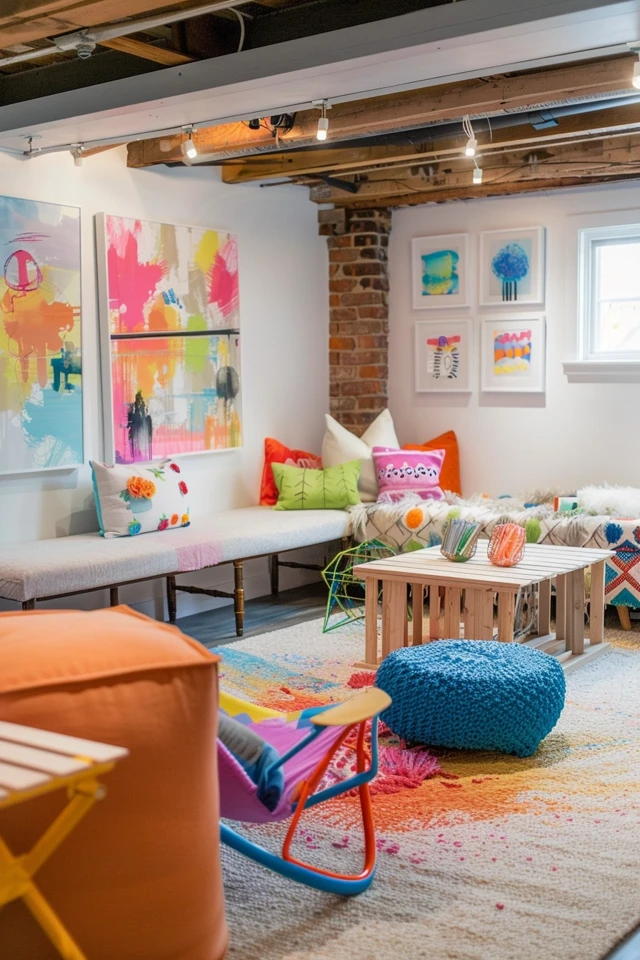
5 Tips for Designing a Basement Playroom Ideas
Designing a basement playroom is one of the most rewarding projects you can tackle because it reclaims “lost” square footage. I remember my own childhood basement being a dark, wood-paneled cave that we avoided at all costs, but today’s designs are entirely different. We are looking to create a bright, functional extension of the home where kids can be loud and messy without disrupting the main living areas.
However, basements come with a unique set of challenges that standard bedrooms do not, specifically regarding lighting, moisture, and awkward structural layouts. To help you navigate this, I have compiled my top five strategies for turning a subterranean space into a magical retreat. Make sure you check out the Picture Gallery at the end of this blog post to see exactly how these concepts come to life.
These tips are based on real on-site experiences, focusing on safety, durability, and style that grows with your family. Let’s dive into the specifics of layout, lighting, and materials.
1. Master the Art of Layered Lighting
The biggest hurdle in any basement design is the lack of natural light. If you rely on a single overhead fixture, the corners will remain shadowy, making the room feel smaller and less inviting. As a designer, my rule of thumb is to over-light the space and then use dimmers to control the mood.
You need to approach lighting in three specific layers: ambient, task, and accent. Start with recessed “can” lights for your general ambient light. In a playroom with standard 8-foot ceilings, I typically space 4-inch cans about 4 to 5 feet apart to ensure even coverage.
Pay close attention to the “color temperature” of your bulbs. For basements, I strictly recommend 3000K LED bulbs. Anything lower (2700K) will look too yellow and dingy in a windowless room, while anything higher (4000K-5000K) will feel like a hospital or a garage. 3000K provides a crisp, warm white that mimics natural daylight.
Designer’s Note: Avoiding the “Runway” Effect
A common mistake I see is arranging recessed lights in straight, rigid rows that look like an airport runway. Instead, layout your lighting based on furniture placement. If you have a craft table in the corner, center a light over it. If the sofa is floating in the middle of the room, grid the lights around the seating area to avoid casting harsh shadows on faces.
Task and Accent Lighting
Once the ceiling lights are set, add floor lamps or sturdy table lamps. This brings the light source down to the child’s level, making the room feel cozy rather than cavernous. For a reading nook, a wall-mounted sconce is a great solution because it eliminates trailing cords that can be tripping hazards.
Common Mistakes + Fixes:
- Mistake: Relying on one central “boob light” fixture.
- Fix: Replace it with a track light system if you cannot install recessed cans. This allows you to aim light into dark corners.
- Mistake: Using glass table lamps in active play zones.
- Fix: Opt for heavy ceramic bases or metal floor lamps with weighted bases to prevent tipping.
2. Choose Flooring That Handles Moisture and Impact
Basement subfloors are concrete, which means they are naturally cold, hard, and prone to moisture vapor. While wall-to-wall carpet feels cozy, it is often a risky choice for basements. If a pipe bursts or the foundation weeps during heavy rain, ripping out wet carpet is a nightmare and a health hazard.
My top recommendation for basement playrooms is Luxury Vinyl Plank (LVP). It is waterproof, durable, and comes in realistic wood tones that warm up the aesthetic of the room. Look for a product with a “wear layer” of at least 12 mil, though 20 mil is better for high-traffic zones with pets and toys.
To combat the coldness of the concrete, you should install a moisture-barrier underlayment or choose LVP with an attached cork backing. This adds a slight cushion and a thermal break, making the floor much more comfortable for little knees and toes.
The Case for Carpet Tiles
If you are dead-set on a soft surface, look into commercial-grade residential carpet tiles. Unlike broadloom carpet, tiles are modular. If a child spills grape juice or a pet has an accident, you can lift up that single square, wash it in the sink, or replace it entirely.
Rug Sizing Rules
If you go with hard flooring like LVP, you will need a large area rug to define the play zone. A standard designer rule is that the rug should be large enough that at least the front legs of all major furniture pieces (sofas, chairs) sit on it.
- Clearance: Leave 12 to 18 inches of bare floor exposed around the perimeter of the room to keep the space from feeling choked.
- Material: Avoid high-pile shags; small Lego pieces and crumbs get lost in them forever. A dense, low-pile wool or polypropylene blend is easiest to vacuum and clean.
- Safety: Always use a thick, non-slip felt rug pad underneath. In a basement, this also helps with sound absorption.
3. Implement “Grow-With-Me” Storage Solutions
Playrooms are notorious for becoming disaster zones. The secret to maintaining your sanity is a storage system that is easy enough for a 3-year-old to use but stylish enough for a 13-year-old to appreciate later.
I recommend a ratio of 80% closed storage to 20% open display. Visual clutter causes anxiety, and seeing piles of toys can make a room feel chaotic. Closed cabinets or opaque bins allow you to hide the visual noise at the end of the day.
Vertical Storage Logic
Utilize the vertical wall space, but keep accessibility in mind. Everyday toys should be stored on shelves no higher than 48 inches so children can reach them safely. Use the upper shelves for board games with small pieces, art supplies that require supervision, or decorative items.
Labeling and Categories
Broad categories work better than specific ones. Instead of a bin for “red cars,” have a bin for “vehicles.” This makes cleanup faster and less frustrating for kids. Use picture labels for toddlers and switch to text labels as they learn to read.
What I’d Do in a Real Project
If I were designing a basement playroom today, I would install a wall of built-in cabinetry or utilize a modular system like IKEA’s Besta or Pax. I would secure it to the wall (non-negotiable for safety) and use standard-sized square bins. I would designate one lower cabinet specifically for “ugly” large plastic toys that don’t fit in bins, keeping the floor clear.
Realistic Constraints:
- Low Ceilings: If your basement ceiling is low, avoid tall, looming armoires. Stick to low, horizontal credenzas to make the ceiling feel higher.
- Budget: If built-ins aren’t in the budget, line up three identical low bookshelves and top them with a single long piece of wood (painted or stained) to create a custom “built-in” look for a fraction of the cost.
4. Zoning for Multi-Age Functionality
A basement playroom is rarely just for playing. It often doubles as a media room, a guest space, or a home gym. To make this work, you need to create distinct “zones” rather than one muddled multipurpose mess.
Start by floating your sofa away from the walls. Pushing all furniture against the perimeter is a common layout error that leaves a “dead zone” in the middle of the room. By bringing the sofa in, you create a cozy conversation or TV-watching island.
Behind the sofa, place a console table or a low bookshelf. This acts as a physical divider between the “lounge zone” and the “active play zone.” This layout allows adults to watch a movie or chat while keeping an eye on the kids playing on the other side of the room.
Traffic Patterns and Clearance
You must maintain clear walkways. In interior design, we look for a minimum of 30 to 36 inches of walking space between furniture pieces. In a basement where you might have support columns, this is crucial.
If you have a structural support pole in the middle of the room, don’t try to hide it. Embrace it. I have wrapped columns in rope for a nautical look, boxed them in with wood for a craftsman feel, or even turned them into a circular table base where kids can sit and draw.
The Activity Table
Every playroom needs a flat surface for puzzles, drawing, or Legos. Ensure there is enough clearance to pull chairs out. You need about 24 to 30 inches behind a chair for someone to stand up comfortably. If space is tight, consider a wall-mounted drop-leaf table that can fold down when not in use.
5. Managing the “Basement Atmosphere”
No matter how beautiful the furniture is, if the room feels damp or smells musty, no one will want to spend time there. Addressing the environment is just as important as the decor.
Before you bring in any furniture, run a dehumidifier for a few days to test the moisture levels. In many climates, a permanent dehumidifier is necessary to keep humidity below 50%. This prevents mold growth and keeps soft furnishings smelling fresh. You can hide these units in a closet with a louvered door for airflow.
Paint and Finishes
For walls, use an eggshell or satin finish. These reflect a tiny bit of light, which helps brighten the basement, and they are much easier to wipe down than flat paint. Scuff marks are inevitable in a playroom, so durability is key.
When selecting paint colors, be careful with grays and blues. In a low-light basement, cool colors can turn very cold and sad. Lean toward warm neutrals—creamy whites, greiges, or warm wood tones. If you want bold color, use it on an accent wall or the ceiling (if it’s high enough) rather than painting the whole room a dark shade.
Acoustics
Basements are echo chambers. Concrete floors and drywall bounce sound around, making screaming kids sound twice as loud. To dampen the noise, you need soft, absorbent materials.
- Curtains: Even if you only have small hopper windows, hang wide curtain panels. The fabric absorbs sound.
- Canvas Art: Wrapped canvas prints absorb more sound than glass-framed photos.
- Furniture: Upholstered sofas and ottomans soak up noise better than leather or wood furniture.
Final Checklist: Is Your Design Ready?
Before you start purchasing furniture or painting walls, run through this quick checklist to ensure you have covered the functional bases.
- Lighting Check: Do you have at least three sources of light (overhead, floor, table)?
- Bulb Check: Are all bulbs 3000K LED?
- Flooring Check: Is the material waterproof or easily replaceable (tiles)?
- Rug Check: Is the rug pad thick enough to provide thermal insulation?
- Storage Check: Do you have a mix of 80% closed and 20% open storage?
- Safety Check: Is all heavy furniture anchored to the wall?
- Moisture Check: Do you have a plan for humidity control?
- Layout Check: Is there a 36-inch walkway through the main traffic areas?
FAQs
What is the best way to cover an ugly basement ceiling?
If you have exposed pipes and ductwork, the most budget-friendly modern option is to spray paint everything matte black or charcoal dryfall paint. This creates an industrial “loft” look and makes the ceiling maximize height. If you need soundproofing, a drop ceiling is effective, but it will lower your ceiling height by several inches.
How do I make a basement playroom safe for a toddler?
Focus on “softening” the hard edges. Use round coffee tables or upholstered ottomans instead of square wood tables. Install edge bumpers on the hearth if you have a fireplace. Most importantly, anchor every bookshelf and dresser to the wall, as toddlers will try to climb them.
Can I use wallpaper in a basement?
Yes, but be cautious. Avoid natural grasscloths, which can absorb moisture and smell musty over time. Stick to “paste-the-wall” or peel-and-stick vinyl wallpapers. These are durable, wipeable, and less prone to harboring mold if the humidity is controlled properly.
How do I design around a small, high window?
Don’t cover it up with heavy blinds. Use a translucent roller shade or sheer roman shade to let maximum light in while maintaining privacy. To fake the look of a larger window, hang curtain rods high and wide, so the drapery panels sit against the wall, not covering the glass.
Conclusion
Designing a basement playroom is about balancing the practical constraints of the structure with the imaginative needs of your family. It requires a shift in thinking—viewing the lack of light and odd layouts not as problems, but as opportunities to create a cozy, focused environment.
By investing in proper lighting, choosing warm and waterproof flooring, and creating distinct zones for different activities, you can double your home’s livable space. Remember that this room doesn’t have to be perfect; it has to be durable and fun. It is a space for creativity, noise, and memories.
With these tips in hand, you are ready to tackle the renovation. Take your time planning the layout and don’t skimp on the lighting. The result will be a destination that your kids—and you—will love for years to come.
Picture Gallery


