
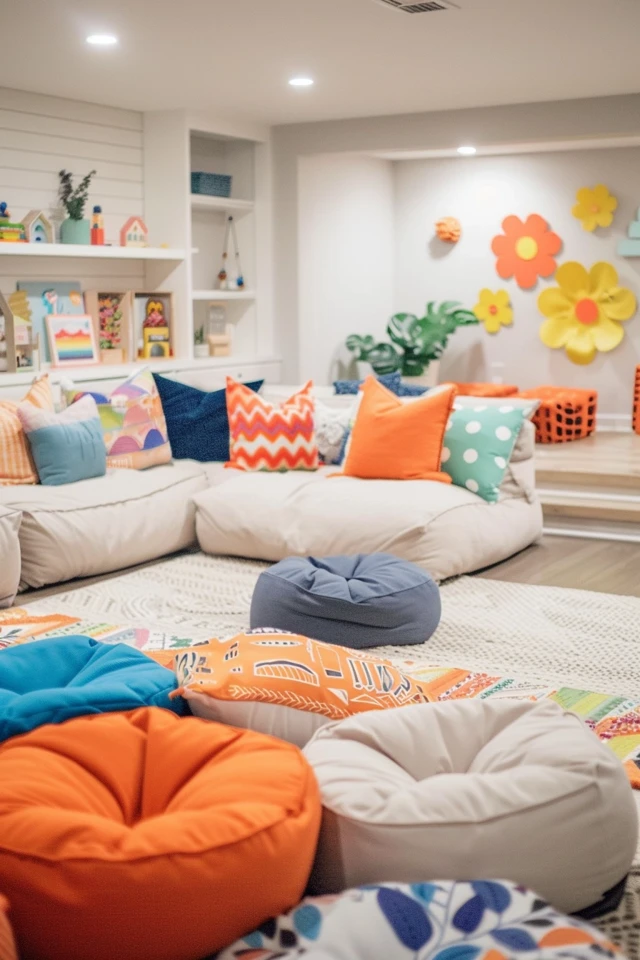
5 Tips for Designing a Fun Basement Playroom
Every parent knows the struggle of tripping over a rogue toy truck in the living room or finding Lego bricks embedded in the sofa cushions. As families grow, the need for a dedicated space where chaos is allowed (and contained) becomes a top priority. A basement playroom is often the perfect solution, offering a separate zone for creativity without cluttering your main living areas.
However, transforming a basement into a welcoming play space brings unique challenges. You are often dealing with lower ceilings, limited natural light, and awkward structural columns. The goal is to create a room that feels like a destination, not a dungeon.
I have designed dozens of lower-level recreation rooms, and the secret lies in balancing high durability with high comfort. For a dose of inspiration before you start measuring your space, be sure to check out the Picture Gallery at the end of the blog post. Now, let’s dive into the practical rules of thumb that will help you design a playroom that works for your kids today and grows with them tomorrow.
1. Create Distinct “Micro-Zones” for Different Activities
One of the biggest mistakes homeowners make in open basements is lining all the furniture against the walls. This creates a “dance floor” in the middle that actually discourages deep play. Kids—and adults—feel more comfortable in clearly defined areas.
To fix this, you need to break the square footage into “micro-zones.” Think about the activities your children actually do. You usually need three core zones: a creative zone (arts, crafts, Legos), an active zone (gross motor skills, jumping, dancing), and a lounge zone (reading, screen time).
The Designer’s Rule of Thumb for Layouts:
When floating furniture to create these zones, you need to respect traffic flow. Leave a minimum of 30 to 36 inches of walking space between furniture pieces and walls. If you have a main thoroughfare leading to a bathroom or exit, increase that width to 42 inches to prevent bottlenecks.
Common Mistake: The “Everything Everywhere” Layout
A room without zones results in toys being scattered across the entire floor. If there is no designated spot for building blocks, they will inevitably end up in the TV area.
The Fix: Use Rugs to Define Space
Use area rugs to anchor specific zones. A low-pile rug defines the lounge area, while a wipeable play mat defines the art station. This visual cue tells children instinctively where certain toys belong.
Designing for Sightlines
If your children are young, sightlines are safety. You need to be able to see the play area from wherever you are seated.
Avoid tall bookcases in the center of the room that block your view. Keep central furniture low—think poufs, low benches, or credenzas under 30 inches high. This keeps the room feeling open and ensures you can supervise without hovering.
2. Master the Lighting (Because Basements are Dark)
Lighting is the single most important element in a basement design. Because you are below grade, you cannot rely on the sun. If you get the lighting wrong, the room will feel cold and uninviting, and your kids won’t want to play there.
You must use a layered approach. Relying on a single grid of recessed can lights creates harsh shadows and a “cafeteria” vibe. You need three layers: ambient, task, and accent.
Layer 1: Ambient Lighting
This is your overhead lighting. Recessed LEDs are standard here. Ensure they are on a dimmer switch—this is non-negotiable for movie nights.
Layer 2: Task Lighting
This lights up specific activities. Add a directional floor lamp near the reading chair or a pendant light over the craft table. This reduces eye strain and adds warmth.
Layer 3: Accent Lighting
This is what makes a room feel “designed.” Use LED strip lights inside bookshelves or wall sconces to wash the walls with light. Lighting the walls makes the room feel wider and less subterranean.
Pro-Tip: Choose the Right Color Temperature
Pay close attention to the Kelvin (K) rating on your bulbs.
- 2700K: Very warm, yellow. Good for cozy bedrooms, but can make a basement look dingy.
- 3000K: Soft white. This is the sweet spot for basements. It is crisp and bright without being sterile.
- 4000K-5000K: Daylight/Cool White. Avoid this. It looks like a hospital or a garage.
Handling Low Ceilings
Many basements have ceilings between 7 and 8 feet. Avoid hanging fixtures that drop too low.
A pendant light needs to be at least 7 feet from the floor if people are walking under it. If you are placing a light over a table, you have more flexibility; hang it 30 to 34 inches above the tabletop to create an intimate pool of light.
3. Implement “Accessible” Storage Solutions
Storage is the engine that keeps a playroom running. However, beautiful storage that kids can’t use is worthless. If a child cannot reach the bin, they cannot put the toy away.
I follow the “Open vs. Closed” ratio. In a playroom, aim for 80% closed storage and 20% open display. Visual clutter increases anxiety and makes a room feel smaller. You want to hide the mismatched plastic parts behind doors or in opaque bins.
The “Kid-Level” Strategy
Keep everyday toys on lower shelves (0–24 inches off the floor). Reserve higher shelves (36+ inches) for items that require supervision, like paint, glue, or messy craft kits. This promotes independence for the kids and sanity for you.
Designer’s Note on Bins
Avoid deep, large toy chests. They become bottomless pits where toys go to break. Instead, use smaller, categorized bins.
- Clear bins: Good for sets with many pieces (Legos, Magna-Tiles) so kids can see what is inside.
- Woven baskets: Great for soft items like stuffed animals or dress-up clothes.
- Labeling: Use picture labels for pre-readers and text labels for older kids.
Safety First: Anchoring
In a basement, floors are often uneven concrete beneath the flooring. This can make tall furniture wobbly. You must anchor every single bookshelf, dresser, or cabinet to the wall studs.
This is not optional. Kids climb furniture. Even heavy pieces can tip. Use heavy-duty metal L-brackets or anti-tip kits provided by the manufacturer.
4. Choose Flooring for Warmth and Durability
Basement floors are cold and hard. Concrete slabs radiate the earth’s temperature. Your flooring choice dictates whether your children will sit on the floor to play or migrate back upstairs.
Carpet vs. Hard Surface
Wall-to-wall carpet is warm, but it is a risk in basements due to potential moisture or flooding. If a pipe bursts, carpet is a total loss.
What I Recommend: Luxury Vinyl Plank (LVP) + Area Rugs
LVP is waterproof, scratch-resistant, and looks exactly like wood. It floats over the concrete, often with an attached underlayment for warmth. It is virtually indestructible against spilled juice or paint.
To bring back the comfort, layer a large area rug on top. This gives you the best of both worlds: the hygiene of a hard floor and the softness of carpet.
Rug Sizing Rules
Don’t buy a postage-stamp rug. A rug that is too small makes the room look cheap.
- Living Area: The front feet of the sofa and chairs should sit on the rug. This usually requires an 8×10 or 9×12 rug.
- Play Area: Ensure the rug is large enough for the activity. A 5×8 is usually the minimum for a building zone.
Rug Material Matters
For basements, avoid natural fibers like Jute or Sisal. They are rough on little knees and absorb moisture like a sponge, which can lead to mold.
Stick to Wool (naturally stain resistant and durable) or high-quality Polypropylene (synthetic, easy to clean, and affordable). If you use a synthetic rug, a thick felt rug pad (at least 1/4 inch) is mandatory to add cushion and prevent slipping.
5. Design for Longevity (Future-Proofing)
Children grow faster than your renovation budget recovers. A common error is designing a room that is too specific to a toddler’s current age. A “Winnie the Pooh” themed room is cute at age two, but embarrassing at age eight.
Design the “shell” of the room—walls, flooring, lighting, and main furniture—for adults. Use neutral colors on the walls and invest in a high-quality, neutral gray or navy sofa.
Inject Fun through Accessories
Bring in the color and theme through easy-to-swap items. Throw pillows, art prints, curtains, and rugs can be bright and playful. When your child moves from dinosaurs to video games, you only have to change the accessories, not repaint the room or buy new furniture.
Furniture Scale
Avoid “kid-sized” furniture for the main pieces. A tiny armchair will be outgrown in two years. Buy a regular armchair. Your child will curl up in it now and sit properly in it later.
The “Double-Duty” Approach
Select furniture that can evolve.
- A low activity table for toddlers can become a coffee table later.
- A changing table dresser can just be a dresser.
- Built-in shelving works for picture books now and trophies or textbooks later.
Real-World Checklist: What I’d Do
If I were designing your basement playroom today, here is the exact sequence I would follow to ensure success:
- Test for Moisture: Tape a 2×2 plastic sheet to the concrete floor for 24 hours. If it’s damp underneath, address waterproofing before laying floors.
- Map the HVAC: Identify where the ductwork runs. Keep main play areas away from low-hanging bulkheads if possible.
- Install Dimmers: Replace standard toggle switches with dimmers on all overhead lights immediately.
- Select Closed Storage: Buy a credenza or cabinet with doors to hide the “ugly” toys.
- Purchase a Felt Rug Pad: Buy the thickest one available to insulate against the cold slab.
- Create a “Yes” Wall: Paint one wall with chalkboard paint or install a large whiteboard where drawing on the wall is actually encouraged.
Frequently Asked Questions
How do I get rid of the “basement smell”?
That smell is usually dampness. Run a high-quality dehumidifier year-round. aim to keep humidity levels below 50%. Also, ensure you have proper air circulation. If windows are operable, open them occasionally. Avoid textiles that trap moisture, like heavy velvet drapes.
Is it okay to paint the ceiling black?
Yes! This is a great trick for unfinished basements. Spraying the exposed joists, pipes, and ductwork matte black (or charcoal) makes the ceiling “disappear” visually. It adds an industrial, loft-like vibe and is much cheaper than installing drywall.
How do I soundproof the ceiling so I don’t hear screaming upstairs?
True soundproofing is construction-heavy, involving resilient channels and extra drywall. However, for a lighter fix, fill the ceiling joist cavities with mineral wool insulation (like Rockwool) before drywalling. It dampens airborne noise significantly. Adding soft textiles (rugs, curtains) in the room also stops sound from bouncing.
Conclusion
Designing a basement playroom is one of the most rewarding home projects because it directly improves your family’s quality of life. It reclaims your upstairs living room and gives your children a space where they have ownership. By focusing on practical zoning, warm lighting, and flexible storage, you can create a room that handles the rough-and-tumble of play while looking polished enough for family movie night.
Remember that this room doesn’t have to be perfect instantly. Start with the basics: a good layout, safe flooring, and proper lighting. Let the collection of toys and art grow with your children. The best playrooms are the ones that get used every single day.
Picture Gallery


