
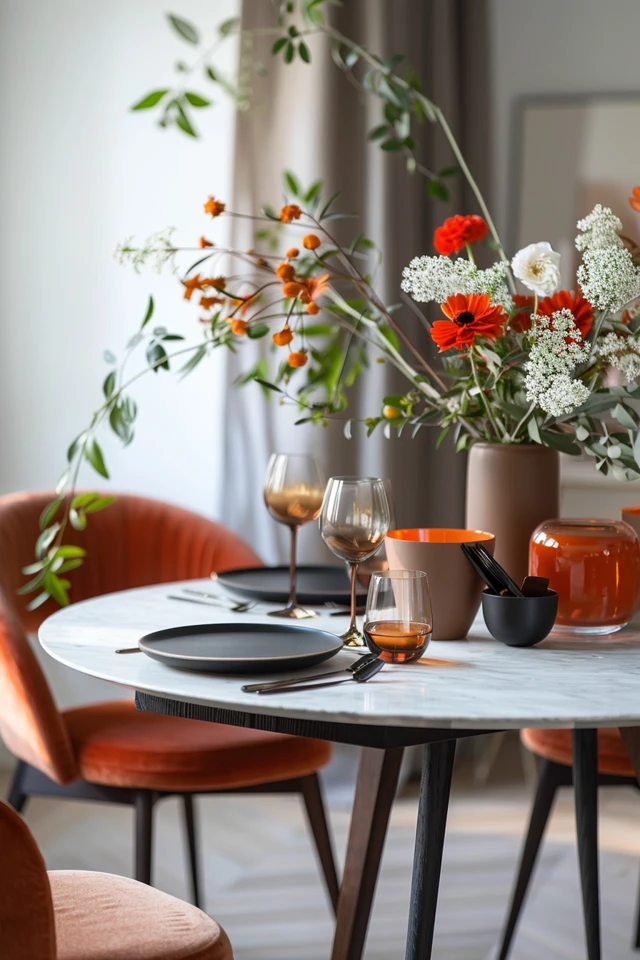
5 Tips for Dining Room Alternative Use Transformation
The formal dining room is often the most underutilized space in a modern home. For many families, this room sits empty for 360 days a year, gathering dust until a major holiday warrants a large sit-down meal. If you find yourself walking past an expensive table and a set of chairs you never use, it might be time to reclaim that square footage for a purpose that actually serves your daily life.
Converting a dining room into a functional office, a cozy library, or a vibrant playroom requires more than just swapping out the furniture. To make the transition feel intentional rather than accidental, you must consider architectural scale, lighting transitions, and the flow of your home’s floor plan. If you find yourself inspired by these transformative ideas, make sure to scroll all the way to the bottom to see our full Picture Gallery illustrating these concepts in real homes.
At-a-Glance: Key Takeaways
- Function over Tradition: Identify the biggest pain point in your current home layout (e.g., lack of storage, no quiet workspace) and let that dictate the room’s new purpose.
- Scale is Everything: Dining rooms are often designed around a central focal point; your new layout must maintain proper clearances (usually 36 inches for walkways) to feel professional.
- Lighting Strategy: A single chandelier centered over a non-existent table rarely works for an office or library; plan for layered lighting including task, ambient, and accent sources.
- Zoning with Rugs: Use large-scale area rugs to define the new functional area, ensuring the rug is large enough to ground all furniture pieces.
- Permanent vs. Flexible: Decide if you want a permanent conversion with built-ins or a flexible setup that can revert to a dining space for resale value.
What This Style/Idea Means (and Who It’s For)
The “Alternative Dining Room” movement is part of a larger shift toward high-utility interior design. Instead of adhering to traditional floor plan labels, homeowners are now prioritizing how they actually live. This approach is for the remote professional who needs a dedicated “zoom room,” the avid reader who lacks shelf space, or the parent who wants to contain toy clutter to a single, stylish area near the main living space.
This design philosophy is especially beneficial for those living in older homes with “choppy” layouts where the dining room is a separate, walled-off box. It is also a lifesaver for residents of urban condos where every square inch carries a high price tag. By repurposing this room, you are essentially “gifting” yourself a home addition without the cost of a renovation. It’s for the pragmatist who values a daily-use home gym or craft studio over a once-a-year dinner setting.
The Signature Look: Ingredients That Make It Work
To ensure the room looks like a professional conversion rather than a storage unit, you need a cohesive design palette. Start with “The Anchor”—this is usually a substantial piece of furniture like a double-sided executive desk, a wall of floor-to-ceiling bookshelves, or a custom-built banquette. This piece replaces the visual weight that the dining table previously provided.
Next, focus on verticality. Most dining rooms have great ceiling height but very little wall interest. Adding wainscoting, deep-toned paint, or textured wallpaper can help shift the mood from “eating area” to “productive den.” For a library look, use wood tones and leather textures. For a modern office, lean into clean lines, metal accents, and ergonomic seating that still carries a high-design aesthetic.
Finally, consider the “Soft Layer.” Because dining rooms often have hard floors (hardwood or tile) and lack upholstered furniture, they can be echoey. Adding heavy drapes, a plush high-pile rug, and soft seating like an armchair or a small sofa will improve acoustics and make the space feel inviting. This balance of hard surfaces and soft textiles is the hallmark of a successful room transformation.
Layout & Proportions (Designer Rules of Thumb)
When I walk into a dining room conversion project, the first thing I look at is the “flow.” Dining rooms are typically pass-through spaces located between the kitchen and the living room. You cannot block these natural traffic paths. Use the 36-inch rule: always maintain at least three feet of clear walking space between the edge of your furniture and the walls or nearest obstacles.
Rug Sizing Logic: In a dining room, we usually want the rug to be 36 inches wider than the table on all sides. For an office or library conversion, the rule changes. The rug should be large enough that at least the front legs of all major furniture (desks, sofas, chairs) sit on the rug. Avoid the “floating island” look where a small rug sits in the middle of the room with no furniture touching it. A standard 8×10 or 9×12 rug usually works best for most 12×12 or 12×14 dining rooms.
Lighting Placement: If you are turning the room into an office, don’t just rely on the existing overhead junction box. A chandelier directly over a computer screen creates a terrible glare. I recommend moving the junction box or using a “swag” kit to reposition the light. Alternatively, ignore the ceiling light for tasks and invest in a high-quality floor lamp and a heavy brass desk lamp. For bookshelves, battery-operated picture lights or hardwired “puck” lights can add that high-end library glow without a full electrical overhaul.
Window Treatments: To make the room feel like a permanent office or lounge, mount your curtain rods “high and wide.” This means placing the rod 4 to 6 inches above the window frame (or even just below the ceiling) and extending it 6 to 10 inches past the sides of the window. This makes the room feel grander and allows more natural light to flood your new workspace.
Step-by-Step: How to Recreate This Look
- The Great Purge: Remove every item from the room. It is impossible to visualize a new use while the old table is still there. If you plan to sell the dining set, do it now to clear the “visual noise.”
- Acoustic Assessment: Stand in the empty room and clap. If it echoes, you need to plan for heavy textiles. This is the stage where you decide on wall-to-wall carpeting or a large area rug.
- Electrical Audit: Count your outlets. Dining rooms are notorious for having very few outlets, often only one per wall. If this is becoming an office, you may need an electrician to add floor outlets under the desk or more wall ports for electronics.
- Paint and Mood: Choose a color that reflects the new function. A library might thrive in a dark “Moody Teal” or “Charcoal,” while a playroom benefits from a bright, durable “Eggshell” finish in a neutral warm white.
- Furniture Mapping: Use blue painter’s tape on the floor to outline your new furniture. Tape out the desk, the bookshelves, or the lounge chairs. Walk around the tape for two days to ensure the 36-inch walkways feel natural.
- Installation of “The Anchor”: Bring in your largest piece first. If you are doing built-ins, this is when the carpentry happens. Ensure all built-ins are anchored to the wall studs for safety, especially in playrooms or libraries.
- Layered Lighting: Install your primary overhead fixture (if applicable) and then add your secondary sources. Use warm-dim LED bulbs (2700K to 3000K) to keep the space feeling residential rather than commercial.
- Styling and Personalization: Add the “life” to the room. This includes books, plants, art, and personal artifacts. In an office, use beautiful trays to corral paperwork. In a playroom, use uniform baskets to hide colorful plastic toys.
Designer’s Note: In one project, a client wanted a “library look” but didn’t have the budget for custom millwork. We used six tall, off-the-shelf bookcases and added a continuous crown molding piece across the top and a shared baseboard at the bottom. We then caulked the seams and painted everything the same color as the walls. It cost 15% of a custom build but looked nearly identical. The lesson? Integration is the key to making “alternative use” look permanent.
Budget Breakdown: Low / Mid / Splurge
Low Budget ($500 – $1,500):
Focus on paint and repurposing. A fresh gallon of high-quality paint ($70) can change the entire vibe. Look for a large, flat-weave rug ($300) and a sturdy desk or table from a second-hand marketplace. Use “smart” lighting like plug-in sconces ($150) that don’t require an electrician. This budget is perfect for a basic home office or a simple craft room.
Mid-Range Budget ($2,000 – $5,000):
This level allows for “semi-custom” touches. You can afford a high-end ergonomic chair ($600), a custom-sized area rug ($800), and a wall of modular shelving (like the IKEA Billy hack or higher-end West Elm units). You can also hire an electrician to move your ceiling box or add a couple of outlets. This budget is ideal for a stylish library or a sophisticated “speakeasy” lounge.
Splurge Budget ($7,000+):
This is the territory of custom cabinetry, architectural moldings, and professional interior design services. You can install floor-to-ceiling built-ins with integrated lighting ($5,000+), premium window treatments like motorized Roman shades ($2,000), and designer furniture pieces. This budget turns a dining room into a “jewel box” space that significantly adds to the home’s appraisal value.
Common Mistakes (and How to Fix Them)
- The Mistake: Keeping the dining room chandelier for a different room type.
The Fix: Chandeliers meant for dining tables usually hang low (30-34 inches above the table). If you put a desk there, you’ll hit your head. Swap it for a semi-flush mount or a higher-hanging drum shade that sits at least 7 feet above the floor. - The Mistake: Neglecting the floor-to-wall transition.
The Fix: When you remove a dining table, the room can feel empty and “leggy.” Add a “weighty” furniture piece like a credenza or a low sideboard (even in an office) to ground the walls and provide hidden storage for printers or toys. - The Mistake: Poor cord management in an office conversion.
The Fix: Nothing ruins a beautiful room like a “rat’s nest” of black cables. Use cord channels, under-desk trays, or furniture with built-in grommets. If your desk is in the center of the room, use a decorative rug to hide a flat extension cord running to the nearest outlet. - The Mistake: Ignoring the view from other rooms.
The Fix: Since dining rooms are often visible from the foyer or living room, the “back” of your furniture matters. If you place a desk facing the window, ensure the back of the desk is finished. Avoid showing the messy underside of furniture to your guests.
Room-by-Room Variations
The Executive Home Office:
Focus on a “Power Layout.” Place the desk in the center of the room (the “command position”) facing the door. Use the back wall for a large piece of art or a symmetrical set of bookshelves. This setup feels professional for video calls and provides plenty of space to move around.
The Reading Library & Music Room:
Focus on comfort. Instead of a desk, use four upholstered armchairs arranged in a circle around a central ottoman or low coffee table. Line the walls with books. If you have a piano, this is its new home. Ensure you have high-quality task lamps next to every seating position for evening reading.
The Modern Playroom:
Durability is the priority. Use an outdoor-rated rug or a “washable” rug that can handle spills. Install low-level storage so children can reach their own toys. Use the existing dining room “niche” or buffet area as a crafting station with a kid-sized table and chairs.
The Lounge/Speakeasy:
This is for the entertainer who prefers cocktails to sit-down dinners. Use a moody color palette (navy, forest green, or burgundy). Replace the dining table with a round, bar-height table or several low cocktail tables. Add a stylish bar cart or a built-in “dry bar” where the china cabinet used to be.
Finish & Styling Checklist
- Hardware Coordination: Do your new cabinet knobs or desk handles match the existing door hardware in the rest of the house? (Consistency creates a professional look).
- Greenery: Does the room have at least one large “floor plant” like a Fiddle Leaf Fig or a Monstera? This softens the corners of the room.
- Textile Check: Do you have a mix of three textures? (e.g., a wool rug, velvet curtains, and a leather chair).
- Scent: In a library or office, a specific scent (like cedar, tobacco, or sandalwood) can help psychologically “prime” you for the task at hand.
- Art Scale: Ensure your wall art covers at least 60-75% of the available wall space above a piece of furniture to avoid looking “dwarfed.”
What I’d Do in a Real Project: Mini Checklist
- Measure the doorway width before buying a large executive desk; dining room doors are often narrower than standard entrance doors.
- Check the flooring under the current rug for sun-fading before committing to a different furniture layout.
- Install a dimmer switch for every overhead light fixture to control the mood between “work mode” and “relax mode.”
- Add a “landing strip” near the entrance—a small stool or narrow console—where you can set down a coffee cup or a laptop bag.
- Test the Wi-Fi signal strength in the room; dining rooms are often at the edge of a house and may require a mesh extender for office use.
FAQs
Will converting my dining room hurt my home’s resale value?
Generally, no, as long as the conversion is “reversible.” Avoid removing structural walls. If you use high-quality furniture and removable shelving, a buyer can easily see it as a dining room again. In fact, many modern buyers prefer seeing a functional office over a dusty dining table.
How do I handle the lack of privacy in an open-concept dining room?
If your dining room has a wide arched opening but no doors, consider installing “French Doors” or “Barn Doors.” If you are a renter, a heavy set of floor-to-ceiling “room divider” curtains can provide a visual and acoustic barrier without permanent changes.
What is the best flooring for a playroom conversion?
I recommend luxury vinyl plank (LVP) or a high-quality laminate. Both are nearly indestructible, water-resistant, and easy to clean. Layer a large, soft rug on top for comfort during floor play.
Can I still use the room for Thanksgiving if I convert it to an office?
Yes! This is the “Flexible Conversion” strategy. Choose a desk that is actually a beautiful wooden table. When the holidays come, clear the computer equipment, throw on a tablecloth, and you have your dining table back. Just make sure your office chairs are comfortable enough for a long meal.
Conclusion
Your home should work for you, not for a tradition that no longer fits your lifestyle. Transforming a dining room into a high-utility space is one of the smartest ways to increase your daily quality of life without the stress of a major construction project. By focusing on proper scale, thoughtful lighting, and the right balance of textures, you can create a room that feels like it was always meant to be an office, library, or lounge.
Remember that the key to a professional-grade transformation lies in the details. Don’t just move a desk into the center of the room and call it a day. Take the time to address the acoustics, the cable management, and the visual flow from the rest of your home. When done correctly, your “alternative use” dining room will become the most popular spot in the house.
Picture Gallery


