
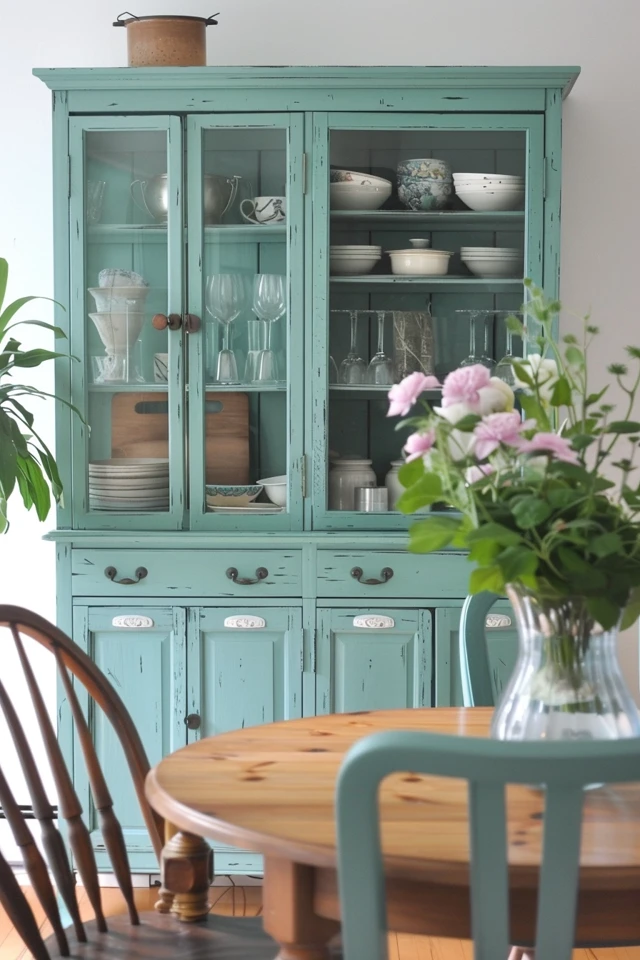
5 Tips for Dining Room Hutch Decorating Ideas Display
The dining room hutch is often the crown jewel of the eating area, yet it is frequently the most misunderstood piece of furniture in the home. Many homeowners inherit these large pieces or buy them with grand intentions, only to end up using them as accidental storage lockers for mismatched papers and broken appliances. A well-styled hutch should bridge the gap between practical storage and artistic display.
I once worked with a client who wanted to throw out a beautiful vintage mahogany breakfront because she felt it looked “messy and heavy.” After we decluttered the interior, painted the back panel a soft charcoal, and curated her collection of ironstone, it became her favorite feature in the house. For plenty of inspiration, check out our comprehensive picture gallery at the end of the blog post.
The secret to a beautiful display lies in treating the hutch as a composition rather than a cabinet. You do not need to fill every inch of space to make it look complete. In fact, the most elegant displays rely heavily on negative space and intentional grouping to let the eye rest.
1. Set the Stage with Background and Lighting
Before you place a single plate or vase, you must assess the “container” itself. The interior of your hutch is the canvas for your display, and if it is dark and shadowy, your decor will disappear. Most traditional hutches are wood-toned on the inside, which camouflages wooden bowls or darker ceramics.
Lighten the Backdrop
If you own the piece and are willing to modify it, painting the back panel is the highest-impact change you can make. A creamy white or soft greige reflects light and makes colorful dishes pop. For a moody, dramatic look, a dark navy or charcoal backboard creates incredible contrast for white ironstone or crystal stemware.
If you are a renter or hesitant to paint an antique, cut foam core boards to the exact size of the back panels. Wrap these boards in a textured linen fabric or a peel-and-stick wallpaper. Press them into the back of the shelving unit. This gives you a custom look that is 100% reversible.
Layering Light
Lighting is non-negotiable for a professional look. Shadows are the enemy of a curated display. If your hutch does not have built-in lighting, you have two easy options.
- Battery-operated puck lights: These attach to the underside of shelves. Look for lights with a remote and a warm white temperature (2700K to 3000K). Avoid cool blue daylight tones, as they make food and furniture look clinical.
- LED tape lighting: If you can drill a small hole in the back for a cord, run LED tape channels vertically inside the front face frame. This casts light backward onto your objects, highlighting the texture without blinding the viewer.
Designer’s Note: The Depth Perception Trick
In narrow dining rooms, I often install a mirrored back panel in the hutch. It reflects the room’s chandelier and gives the illusion that the space is twice as deep. However, be careful with this if your shelves are cluttered; mirrors double the mess just as easily as they double the beauty.
2. Anchor the Layout with Visual Weight
One of the biggest mistakes DIY decorators make is ignoring the “visual weight” of objects. Visual weight refers to how heavy an object looks, not how much it actually weighs. Darker colors, solid masses, and large items carry more visual weight than clear glass, light colors, or spindly items.
The Bottom-Up Rule
Always place your heaviest items on the bottom shelf. This grounds the display and prevents the piece from looking top-heavy or precarious. Large soup tureens, stacks of heavy dinner plates, oversize serving bowls, or woven baskets belong on the lowest visible shelf.
The Zig-Zag Formation
To keep the eye moving, you want to distribute similar weights or colors in a zig-zag or triangular pattern. If you place a large white pitcher on the top left shelf, place a stack of white bowls on the middle right, and a white platter on the bottom left. This forces the viewer’s eye to travel across the entire piece.
Common Mistakes + Fixes
Mistake: Lining up items in a straight regimented row, like soldiers.
The Fix: Create “vignettes” or clusters. Group items in odd numbers (1, 3, or 5). Instead of three candlesticks in a row, cluster them together at varying heights.
Mistake: Placing small items on high shelves.
The Fix: Small items get lost when placed too high. Keep intricate items, like teacups or small figurines, near eye level where the details can be appreciated.
3. Mix Practical Function with Sculptural Form
A dining hutch is technically storage, but it shouldn’t look like a warehouse. The best designs blur the line between utility and art. You want to mix your functional dining ware with sculptural elements that break up the monotony of round plates and cylindrical glasses.
Incorporate Vertical Elements
Stacks of plates are horizontal. To counter this, you need vertical height. Lean large platters against the back of the shelf. If your hutch doesn’t have a plate groove, buy clear acrylic easels; they disappear visually and hold platters safely.
Add Textural Contrast
Ceramics and glass are hard, shiny surfaces. A hutch filled only with china can feel cold and sterile. Introduce warmth with organic textures.
- Wood: A rustic cutting board or a turned wooden bowl adds immediate warmth.
- Paper: Stack vintage cookbooks horizontally to act as a riser for a bowl. Face the spines outward if the colors coordinate, or turn the pages outward for a neutral, textural look.
- Metals: Silver pieces, brass candlesticks, or pewter mugs add a necessary gleam that differs from the shine of glass.
What I’d Do in a Real Project
When styling for a client, I follow a specific formula for every shelf:
- One vertical anchor: A tall vase, pitcher, or artwork leaning against the back.
- One horizontal stack: A pile of 4–6 plates or horizontal books.
- One bridge object: A small sculptural item that connects the two, like a small bowl placed on top of the books.
4. Use Color to Create Cohesion
You do not need to stick to a single color, but you do need a palette. A hutch can quickly turn into a chaotic jumble if every color of the rainbow is represented without a plan.
The 60-30-10 Rule
Apply this classic design rule to your shelves.
- 60% Main Color: Usually white or cream (your dishes/china).
- 30% Secondary Color: A dominant accent like blue (transferware), green (jadeite), or terracotta.
- 10% Metallic or Black: This acts as the “eyeliner” of the room, adding definition.
Editing is Key
If you have a collection of mismatched mugs or novelty pint glasses, the open hutch is not the place for them. Store those behind the solid doors of the lower cabinet or in the kitchen drawers. Open shelving requires strict curation. If an item doesn’t fit the palette or the vibe, it distracts from the pieces that do.
Designer’s Note: Handling Heirlooms
Clients often feel guilty about not displaying every piece of grandma’s floral china. However, displaying the entire 12-place setting often looks cluttered. Instead, display just the serving pieces (gravy boat, platter, tureen) and stack four dinner plates. Keep the rest in storage. The pattern will be appreciated more when it isn’t overwhelming the eye.
5. Layering for Depth and Lifestyle Constraints
The difference between a flat display and a dynamic one is depth. You want to utilize the full depth of the shelf, not just the front edge.
Front-to-Back Layering
Start by leaning art or platters against the back wall. Place your largest distinct objects (stacks of plates, pitchers) in the middle ground. Finally, place smaller filler objects (votive candles, salt cellars, napkin rings) in the foreground. This creates a rich, three-dimensional look.
Practical Constraints: Safety and Stability
Interior design must be livable. If you live in an earthquake-prone area or have active children and pets, you must secure your breakables.
- Museum Wax: This is a clear, removable putty used by museum curators. A small pea-sized ball under a vase or stack of plates will secure it firmly to the shelf so it doesn’t rattle or slide.
- Plate Positioning: Never stack plates higher than 6 or 8 high, depending on their thickness. High stacks are unstable and difficult to access when you actually need to set the table.
Seasonal Rotations
Don’t glue your design in place mentally. The hutch is the perfect place to reflect the seasons. In autumn, swap a white bowl for a wooden one filled with pinecones. In spring, add a small glass bud vase with a fresh clipping from the garden. Keeping the display fluid prevents it from becoming “invisible” to you over time.
Final Checklist
Before you consider your hutch “finished,” run through this quick quality control list. I use this on install days to ensure the look is polished.
- The Wobble Test: Tap the side of the hutch. Does anything rattle? If so, apply museum wax or felt pads.
- The Step-Back: Stand 10 feet away. Is there any “black hole” (dark spot) that needs lighting or a lighter-colored object?
- The spacing: Is there at least 15% empty space on the shelves? If not, remove three items.
- The cords: Are all lighting cords tucked behind the face frame or taped down invisibly?
- The height: Do you have variety in height on every shelf, or is everything at the same level?
FAQs
What if I don’t have nice china?
You don’t need fine china to style a hutch. A collection of simple white everyday plates from IKEA looks stunning when stacked neatly. You can also style a hutch entirely with books, framed family photos, and baskets. The hutch is a vessel for display, not strictly for dinnerware.
How do I handle glass shelves?
Glass shelves are tricky because you can see the underside of the items above. Avoid heavy, ugly bottoms (like unfinished ceramic). Use linens or napkins under stacks of plates to soften the look. Also, ensure you do not exceed the weight limit of the glass; keep heavy cookbooks on the solid bottom wood shelf.
How often should I dust inside a hutch?
If your hutch has doors, you only need to dust 2–3 times a year. If it is open shelving, you will need to dust monthly. To make this easier, use a fluffy microfiber wand that can navigate between objects so you don’t have to unload the entire shelf every time you clean.
Can I mix gold and silver in a hutch display?
Absolutely. Mixing metals feels modern and collected. The key is to make sure one finish is dominant. For example, use mostly brass candlesticks and frames, but include one or two silver bowls. If the ratio is 50/50, it can look accidental.
Conclusion
Styling a dining room hutch is an exercise in balance. It requires a blend of utility and beauty, heavy and light, vertical and horizontal. By focusing on your backdrop, creating varied vignettes, and adhering to a cohesive color palette, you can transform a looming storage piece into a captivating focal point.
Remember that a home is meant to be lived in. Your hutch display should evolve as your collection grows and your tastes change. Don’t be afraid to pull everything out and start fresh on a rainy Sunday; sometimes the best ideas come from reimagining what you already own.
Picture Gallery


