
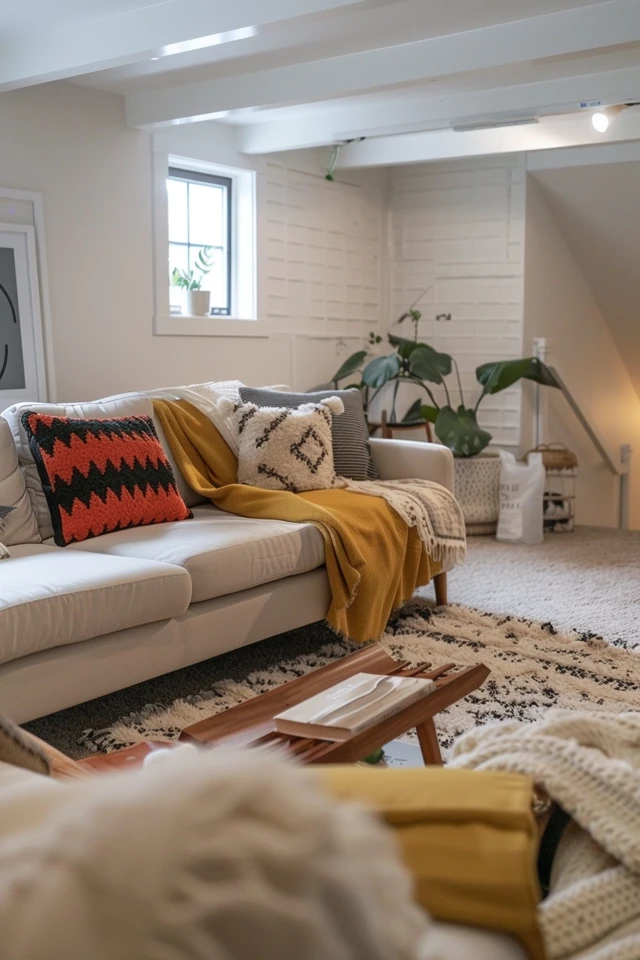
5 Tips for Making a 6ft Ceiling Basement Feel Bigger
Introduction
Walking into a basement with a six-foot ceiling can feel a bit like entering a hobbit hole. The beams feel dangerously close to your head, and the instinctive reaction is to hunch over. This is a common architectural quirk in older homes, specifically those built before the 1950s when basements were strictly utilitarian cellars for coal storage and furnaces.
Transforming this space into a livable, inviting room requires more than just a coat of white paint. You have to fight the actual architecture using visual trickery and strict rules regarding scale. I have worked on several historic renovation projects where we had to claw back every inch of perceived height. For a visual dose of inspiration, make sure to check out the curated Picture Gallery at the end of this blog post.
The goal isn’t just to distract the eye; it is to physically alter how the brain perceives the volume of the room. By manipulating light, color, and furniture profiles, we can turn a cramped storage area into a cozy lounge or playroom that feels intentional rather than restrictive.
1. Master the Art of Recessed and Layered Lighting
Lighting is the single most important variable in a low-ceiling basement. In a room with standard height, you might rely on a central flush mount or a semi-flush fixture to disperse light. With a six-foot clearance, protruding fixtures are physical hazards.
You must switch to recessed lighting, specifically “wafer” LED lights. These are ultra-thin discs that clip directly into the ceiling drywall without requiring a bulky housing can. They take up zero headspace. This keeps the ceiling plane completely flat, which helps the eye glide across the surface without interruption.
However, recessed lighting alone creates shadows in the corners, making the walls feel like they are closing in. You must layer your lighting. This means adding light sources at eye level and floor level to wash the walls with illumination.
Designer’s Note: The “Runway” Effect
A mistake I often see is homeowners installing two straight rows of recessed lights down the middle of the room. This creates an “airport runway” effect that actually emphasizes the narrowness and length of the room. Instead, place lights in a grid pattern or closer to the corners to illuminate the perimeter.
Common Mistakes + Fixes
- Mistake: Using “Daylight” (5000K) bulbs to make it feel brighter. This makes a basement look like a sterile operating room or a garage.
- Fix: Stick to 3000K or 3500K LED bulbs. This provides a warm, inviting white light that mimics soft natural daylight without the harsh blue tint.
- Mistake: Relying on one switch.
- Fix: Always install dimmers. In a low room, full brightness can cause glare off the ceiling. Dimming allows you to soften the boundaries of the room.
What I’d do in a real project
If I were designing your basement, I would skip table lamps, which can clutter surface areas. Instead, I would install wall sconces approximately 60 inches off the floor. Since you likely don’t want to open up walls for new electrical wiring, I recommend plug-in sconces or rechargeable battery-operated sconces. They direct light up and down the wall, pushing the ceiling visually upward.
2. Embrace Color Drenching (Blur the Horizon)
Conventional wisdom says to paint a small room white to make it look bigger. While true for standard rooms, a low basement is different. If you paint the walls a color and the ceiling stark white, you create a harsh horizontal line right at the six-foot mark.
This line creates a distinct “lid” on the room. Your eye immediately registers exactly where the wall ends and the ceiling begins. To fix this, use a technique called color drenching. This involves painting the baseboards, walls, crown molding (if you have it), and the ceiling the exact same color.
When the corners and seams disappear, the brain has a harder time judging the dimensions of the room. The boundaries blur. This doesn’t mean the room has to be dark; you can color drench with warm cream, soft greige, or sage green.
Understanding Paint Sheen
While the color should be the same, the finish plays a tactical role.
- Walls: Use an Eggshell or Matte finish to hide imperfections in the drywall.
- Ceiling: Use a Flat finish. Any sheen on a low ceiling will reflect light sources, creating “hot spots” that draw attention to the low height.
- Trim: Use Satin for durability, especially if you have pets or kids.
Designer’s Note: The Dark Room Theory
Don’t be afraid of going dark if the room is intended for watching movies. A charcoal or navy room with a matching ceiling creates a cozy, “womb-like” effect. In this context, the lack of height becomes a feature, making the space feel secure and enveloping rather than cramped.
3. Choose Low-Profile, Horizontal Furniture
Scale is the concept that trips up most DIY designers. If you put a standard overstuffed recliner or a tall wingback chair in a six-foot basement, it will look massive. The top of the chair will be too close to the ceiling, shrinking the perceived vertical space.
You need “low-slung” furniture. These are pieces designed with a lower center of gravity. By increasing the distance between the top of your furniture and the ceiling, you trick the eye into thinking the ceiling is higher than it is.
Look for sofas where the back height is 30 inches or lower (standard is often 34-36 inches). While a few inches sounds negligible, it exposes significantly more wall space. This negative space above the furniture allows the room to breathe.
Measurements to Look For
- Sofa Seat Height: Aim for 16 to 17 inches (standard is 18). It feels lounge-y but is still comfortable.
- Media Consoles: Choose long, low consoles rather than tall entertainment centers. Look for units under 22 inches in height.
- Coffee Tables: Opt for sleek, open legs rather than solid blocks of wood. Seeing the floor through the furniture makes the footprint feel larger.
Common Mistakes + Fixes
- Mistake: Buying a high-back sectional. This acts like a room divider and visually cuts the room in half.
- Fix: Choose a sectional with a low back and low arms. Modular “pit” sofas often work well here as they are designed for lounging.
- Mistake: Using tall bookcases for storage.
- Fix: Use low, horizontal credenzas running along the entire length of a wall. This emphasizes the width of the room rather than the lack of height.
4. Emphasize Vertical Lines in Decor
Since we lack actual vertical height, we must manufacture it. You want to force the viewer’s eye to travel up and down, rather than side to side. Verticality stretches the visual field.
One effective way to do this is through wall treatments. Vertical V-groove paneling or beadboard can work wonders. The lines guide the eye upward. However, ensure the panels go all the way to the ceiling. Do not use a chair rail, as that cuts the wall horizontally and shortens it.
Window treatments are another powerful tool, even if your basement windows are tiny rectangular hoppers near the ceiling. Never mount a curtain rod right above the window frame.
The Curtain Track Trick
In a low basement, skip the curtain rod entirely. Standard rods hang down 2-3 inches, wasting precious height. Instead, use a ceiling-mounted curtain track.
Install the track directly into the ceiling drywall. Hang floor-to-ceiling drapery panels that kiss the floor. Even if the window is small, the long column of fabric creates an illusion of a grander window and a taller wall.
What I’d do in a real project
I would place a tall, lean floor mirror leaning against a wall. A mirror that is 60 to 65 inches tall fits perfectly in a low basement. The reflection acts like a “window,” bouncing light around and doubling the visual depth of the space. Ensure the frame is thin and minimal to avoid adding bulk.
5. Uniform Flooring with Light Reflectance
The floor is the second largest surface in the room after the ceiling/walls. In a basement, your flooring choice needs to accomplish two things: durability against potential moisture and light reflection.
Avoid dark, heavy carpets or dark walnut floorboards. These suck the light out of the room and ground the space too heavily. Light, warm wood tones (like white oak or maple) or light-colored luxury vinyl plank (LVP) are ideal.
If you choose planks, run them parallel to the longest wall in the room. This stretches the perspective. If you run them across the short width, you create a “ladder” effect that makes the room feel choppy and smaller.
Rug Sizing Rules
Rugs are essential for coziness, especially on a cold basement slab. However, a postage-stamp-sized rug floats in the middle of the room and highlights the limited floor space.
You want a rug that is generous. It should sit under the front legs of all your seating furniture. Ideally, leave about 12 to 18 inches of bare floor visible around the perimeter of the room. This border creates a sense of spaciousness.
Designer’s Note: The durability factor
Basements are prone to humidity. I rarely recommend solid hardwood for below-grade spaces. Engineered hardwood or high-quality LVP are the industry standards. If you prefer carpet for warmth, choose a low-pile berber or a tight loop. High-pile shag carpets reduce the visual gap between floor and ceiling, making the room feel shorter.
Final Checklist
Ready to tackle your basement? Here is a quick summary of the steps to take to maximize your space.
- Lighting: Swap hanging fixtures for wafer LEDs (3000K) and add floor/wall lamps.
- Paint: Color drench the room. Paint walls, trim, and ceiling the same color.
- Furniture: Source sofas with backs lower than 30 inches.
- Decor: Use ceiling-mounted curtain tracks and vertical paneling.
- Flooring: Use light-colored flooring and run planks parallel to the longest wall.
- Storage: Switch from tall bookcases to low, long credenzas.
FAQs
Can I leave the ceiling joists exposed to get more height?
Yes, this is a popular industrial look. By removing the drywall, you can gain 6 to 10 inches of height between the beams. The best approach is to spray paint the pipes, wires, and wood beams a single cohesive color (usually matte black or white). Matte black creates a void where the eye gets lost, effectively masking the height.
What if I have ductwork that makes the ceiling even lower than 6ft in spots?
Bulkheads are inevitable. Do not paint them a contrasting color. Paint them the exact same shade as the ceiling to make them disappear. If a bulkhead is over a seating area, try to position the furniture so you aren’t walking directly under the lowest point.
Is it okay to use pattern in a low basement?
Yes, but be careful with scale. Avoid large, sprawling floral prints on the walls. Subtle vertical stripes (wallpaper or paint) are excellent. For rugs, a vintage-style oriental rug or a subtle geometric pattern works better than loud, large graphics.
How do I handle support columns in the middle of the room?
Don’t try to hide them with fake ivy or mirrors. Accept them as architecture. You can “square them off” with drywall and paint them to match the walls, or wrap them in wood for a natural texture. Incorporating a column into a built-in bar or a wraparound table can also make it feel intentional.
Conclusion
A six-foot ceiling presents a unique set of constraints, but it doesn’t doom your basement to being a storage locker. The secret lies in confusing the eye. By eliminating the hard lines where the wall meets the ceiling, bringing the furniture scale down to the floor, and washing the walls with warm light, you change the experience of the room.
You stop noticing the height of the beams and start noticing the comfort of the space. It becomes a cozy retreat rather than a compromise. It takes discipline to stick to low-profile furniture and specific lighting plans, but the result is a room that feels twice as big as it actually is.
Picture Gallery


