
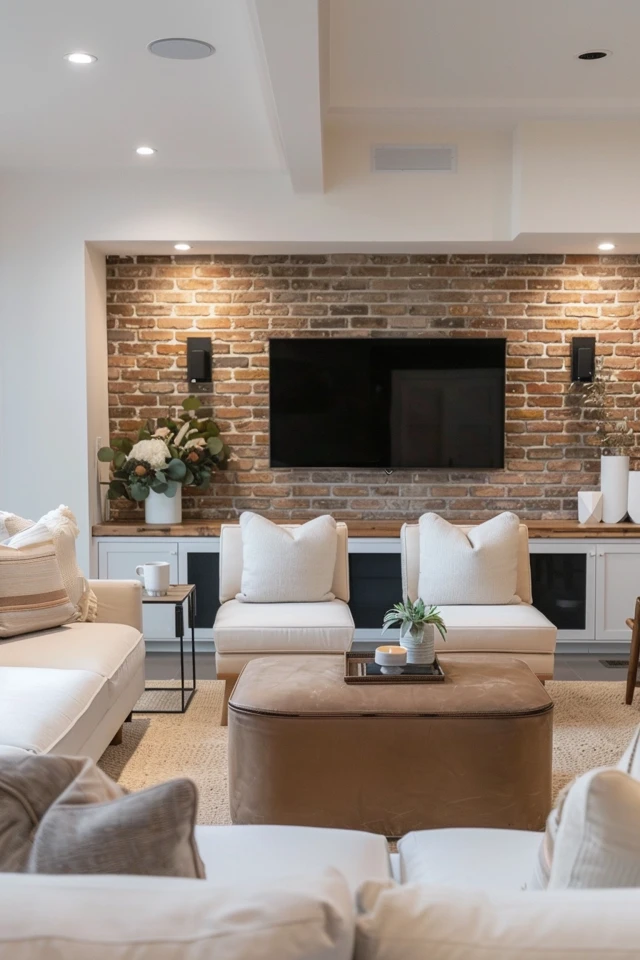
Title: 5 Tips for Planning 5 Bedroom House Plans with Basement
Introduction
Designing a large home is an exercise in balance. When you step up to a five-bedroom floor plan, specifically one that utilizes a basement, you aren’t just adding rooms; you are managing a complex ecosystem of privacy, noise, and traffic flow. I remember working on a project in Upstate New York where the clients wanted maximum square footage but ignored zoning, resulting in a cavernous home where you couldn’t find a quiet corner to read.
A five-bedroom home often spans three distinct levels: the upper floor, the main level, and the basement. The challenge lies in making the basement feel just as inviting and integral to the home as the foyer. If you treat the lower level as an afterthought, you end up with “dead space” that gathers dust rather than family memories.
In this guide, I will walk you through the structural and stylistic decisions that make these large floor plans livable and luxurious. For visual inspiration on how these layouts come together, be sure to check out the Picture Gallery at the end of the blog post.
1. Establish Clear Zoning and Vertical Flow
The biggest trap in a five-bedroom house is poor circulation. When you have five bedrooms, you likely have four to six people living there, plus guests. If everyone is funneling through a single narrow hallway or congregating in one spot, the house will feel chaotic regardless of its square footage. You need to zone the house vertically.
In a typical layout, I prefer to place the primary suite on the main level or a private wing of the second level. The basement usually houses the fifth bedroom, which serves as a guest suite or a teenager’s retreat. This vertical separation ensures that the occupants of the basement bedroom have autonomy, while the main sleeping quarters remain quiet.
Pay close attention to the staircase placement. A central staircase acts as a noise funnel. If your basement is designed for entertainment (home theater, game room), a central open stairwell will carry that sound straight up to the second-floor bedrooms. Consider a switchback stair design with a heavy door at the top or bottom of the basement landing to dampen sound.
Designer’s Note
I once designed a home where the basement playroom was directly under the master bedroom. We didn’t account for impact noise—footsteps and jumping. We had to go back in and blow insulation into the ceiling joists and add acoustic panels. Always insulate the floor joists between the basement and the main level, even if you think the floor covering is thick enough.
Common Mistakes + Fixes
Mistake: Narrow hallways that create bottlenecks.
Fix: In a 5-bedroom house, standard 36-inch hallways feel cramped. Increase main arteries to 42 or 48 inches wide. This allows two people to pass comfortably and makes moving furniture significantly easier.
Mistake: Ignoring sightlines from the foyer.
Fix: Ensure the view from the front door doesn’t look straight into a bedroom or a bathroom door. Create a visual terminate point, like a piece of art or a window, to draw the eye away from private zones.
What I’d Do in a Real Project
- Map the Noise: I would draw “noise circles” on the plan. If the basement media room circle overlaps with the primary bedroom circle, we move walls.
- Widen the Stairs: I always specify stairs to be at least 42 inches wide in large homes to accommodate the scale of the space.
- Door Swings: Check that bedroom doors do not swing into hallway traffic. They should always swing into the room, against a wall.
2. Treat the Basement as “Garden Level,” Not Storage
The term “basement” often conjures images of dark, musty storage rooms. In a high-end 5-bedroom plan, the lower level needs to function as a “garden level.” This means maximizing natural light and ceiling height to match the quality of the floors above.
If the topography allows, a walk-out basement is the gold standard. It allows you to install full-size sliding doors and large windows. If the lot is flat, you must use deep window wells. These shouldn’t be tight metal semi-circles; they should be terraced landscape features with stone retaining walls that allow ample light to flood the space.
Ceiling height is the non-negotiable factor here. Standard 8-foot ceilings can feel oppressive in a large basement, especially once you add ductwork soffits. Aim for a 9-foot or 10-foot foundation pour. This gives you room to drop ceilings for mechanicals without the space feeling crushed.
Designer’s Note
Lighting temperature makes or breaks a basement. Never use “daylight” (5000K) bulbs in a basement; they make the space look clinical and cold. Stick to 2700K or 3000K warm white LEDs. Layer the lighting: recessed cans for general light, sconces for mood, and floor lamps for task lighting.
Common Mistakes + Fixes
Mistake: Exposed support columns in awkward places.
Fix: Plan your steel beams to span larger distances or hide columns inside interior walls. If a column must be exposed, wrap it in drywall or wood trim to make it an architectural feature rather than an eyesore.
Mistake: using hardwood flooring below grade.
Fix: Solid hardwood expands and contracts with moisture, which is prevalent in basements. Use Luxury Vinyl Plank (LVP) or engineered wood with a moisture barrier. These materials handle humidity changes much better.
What I’d Do in a Real Project
- The 10% Rule: I ensure window glazing equals at least 10% of the floor area in the main basement living space.
- Soffit Planning: I pre-plan exactly where the HVAC ducts run so we don’t end up with a soffit cutting through a visual focal point.
- Warm Floors: I would specify radiant floor heating in the basement bathroom and bedroom. Cold concrete slabs suck the heat right out of your feet, making the room feel uninhabitable in winter.
3. Strategize Bedroom Hierarchy and Bathroom Access
In a 5-bedroom home, not all bedrooms are created equal. You generally have a Primary Suite, a VIP Guest Suite (often the basement or main floor room), and three secondary bedrooms. The hierarchy determines the size, closet space, and bathroom access.
The “Jack and Jill” bathroom arrangement is popular for secondary bedrooms, but it can cause traffic jams during the morning rush. In a 5-bedroom house, you should aim for a minimum of 3.5 bathrooms, but 4.5 is ideal. The basement bedroom absolutely requires a dedicated full bathroom nearby. Do not make guests walk up a flight of stairs to shower.
For the secondary bedrooms (usually for kids or offices), size matters. A 10×10 foot room is too small for a house of this magnitude. Aim for a minimum of 12×12 feet for secondary rooms. This accommodates a queen bed, a nightstand, and a desk—essential for resale value as these rooms often double as home offices.
Designer’s Note
Closet depth is a constant struggle. A standard reach-in closet must have a clear interior depth of 24 inches to hang clothes without the sleeves getting crushed in the door. I often push this to 26 inches for ease of use. For walk-ins, you need a minimum width of 6 feet to have hanging space on both sides and a walkway in the middle.
Common Mistakes + Fixes
Mistake: Placing the primary bed against a shared wall with a noisy room.
Fix: Use closets as sound buffers. Place the walk-in closet between the bedroom and the hallway or bathroom to insulate the sleeping area from noise.
Mistake: Forgetting aging-in-place potential.
Fix: Ensure at least one bedroom on the main floor has a bathroom with a walk-in shower (no tub ledge). This adds immense value for multi-generational living or future accessibility.
What I’d Do in a Real Project
- Bed Placement: I verify there is at least 30 to 36 inches of walking space around the perimeter of the bed. Anything less feels cramped.
- Outlet Planning: I place outlets with USB ports on both sides of where the bed will go. In the basement bedroom, I add extra outlets for dehumidifiers or space heaters, just in case.
- Privacy Locks: I specify solid core doors for all bedrooms and bathrooms for sound privacy, rather than hollow core doors which feel cheap and block zero noise.
4. Designing High-Performance Utility and Storage Areas
A five-bedroom house generates a lot of laundry, trash, and clutter. The utility systems must be robust enough to handle the load. A standard laundry room often isn’t enough.
Consider a primary laundry room on the bedroom level and a secondary stackable unit in the basement or mudroom. This prevents you from hauling sheets and towels up and down two flights of stairs.
The mechanical room in the basement needs to be sized correctly. You will likely have two HVAC zones (or two separate units), a large water heater (or two tankless units), and potentially a sump pump and water filtration system. Do not squeeze this into a closet. dedicate 10-15% of your unfinished basement square footage to mechanicals and storage.
Designer’s Note
The “Drop Zone” or Mudroom is the most critical room for organization. For a 5-bedroom home, you need a cubby or locker for every family member, plus one for guests. Bench seating should be 18 inches high. Hooks should be mounted at 60 inches for adults and 42 inches for kids.
Common Mistakes + Fixes
Mistake: No access to mechanicals.
Fix: Ensure the path to the mechanical room is wide enough to replace a furnace or water heater. I’ve seen people build walls that have to be torn down when a unit fails.
Mistake: Undersized water heaters.
Fix: With 5 bedrooms, you might have 4 showers running simultaneously. Install a recirculating hot water loop so the basement bathroom doesn’t wait 5 minutes for hot water.
What I’d Do in a Real Project
- Soundproof the HVAC: I would line the mechanical room walls with Rockwool insulation to prevent the rumble of the furnace from disturbing the basement bedroom or media area.
- Under-Stair Storage: Utilize the space under the basement stairs for luggage storage or a wine cellar. Custom millwork here turns dead space into a feature.
- Egress Safety: Ensure the path from the basement bedroom to the exterior door is clear and unobstructed by mechanicals or storage bins.
5. Integrating the Landscape: The Indoor-Outdoor Connection
The transition from a basement to the outdoors defines how often you will use the space. If you have a walk-out basement, the patio outside becomes an extension of your living room. The hardscape materials should flow.
If you are using a specific stone tile inside the basement, consider using a slip-resistant paver in a similar tone for the patio. This blurs the line between inside and out.
Pay attention to the deck above. If there is a deck off the main floor, the basement patio is likely underneath it. This area requires waterproofing the underside of the deck (using a drainage system) so the patio stays dry during rain. Otherwise, the space becomes a muddy, dripping mess that ruins your outdoor furniture.
Designer’s Note
Landscape grading is vital for basement health. The ground must slope away from the foundation at a rate of 6 inches for the first 10 feet. If you are digging out window wells or a walk-out patio, you need a robust drainage plan involving French drains and gravel backfill to keep the basement dry.
Common Mistakes + Fixes
Mistake: Planting too close to window wells.
Fix: Keep shrubs and trees at least 3 feet away from window wells. Overgrown roots can crack the well walls, and foliage blocks the natural light you are desperately trying to let in.
Mistake: Dark, unlit exterior stairs.
Fix: If you have exterior stairs leading from the basement patio to the upper yard, integrate step lights into the risers. This is a safety requirement and adds a high-end resort feel.
What I’d Do in a Real Project
- Patio Sizing: I would design the basement patio to be at least 12 to 14 feet deep. This creates enough room for a dining table or lounge chairs without feeling pushed against the house wall.
- Lighting Control: I would install a switch at the basement door to control the landscape lighting, so you don’t have to go upstairs to turn on the backyard lights.
- Privacy Screen: If the basement patio is visible from neighbors, I would use tall ornamental grasses or a trellis with climbing vines to create a secluded feel.
Final Checklist
Before you finalize your blueprints, run through this quick checklist to ensure your 5-bedroom plan is practical.
- Bathroom Ratio: Do you have at least 3.5 bathrooms? (4+ is better).
- Hallway Width: Are main hallways at least 42 inches wide?
- Ceiling Height: Is the basement foundation pour at least 9 feet?
- Egress: Does the basement bedroom have a code-compliant egress window or door?
- Soundproofing: Are shared walls and floor joists insulated?
- Storage: Is there a dedicated mechanical room with 10-15% of the total footage?
- Light: Do you have varied lighting sources (overhead, task, accent) in the basement?
- Privacy: Is the primary suite buffered from noise by closets or hallways?
FAQs
Does a basement bedroom count toward the total bedroom count for appraisal?
Generally, yes, provided it meets local building codes for egress (exit) and ceiling height. It must have a window large enough for a person to climb out and a firefighter to climb in. However, some real estate listings separate “above grade” and “below grade” square footage.
Is it expensive to add a bathroom to a basement later?
Yes, extremely. It involves jackhammering the concrete slab to lay plumbing lines. It is significantly cheaper to “rough-in” the plumbing for a future bathroom when the foundation is originally poured. Always do the rough-in, even if you don’t finish the room immediately.
What is the best flooring for a basement bedroom?
Avoid carpet if the area is prone to any moisture. Engineered hardwood or Luxury Vinyl Plank (LVP) are top choices. They offer the warmth and look of wood but are dimensionally stable. If you choose tile, use large format rugs to soften the acoustic echo and add warmth.
How do I stop the basement from smelling like a basement?
Humidity control is key. Install a whole-house dehumidifier connected to your HVAC system. Ensure proper ventilation in the bathroom and laundry areas. Keep air circulating, and avoid organic materials (like solid wood or wool carpet) directly on the concrete slab.
Conclusion
Planning a 5-bedroom house with a basement is about more than just fitting beds into rooms. It is about orchestrating how a large group of people live together comfortably. It requires looking at the invisible elements—sound, light, and flow—just as much as the visible finishes.
By zoning your privacy, respecting the basement as a primary living space, and ensuring your utility systems can keep up with demand, you build a home that serves you, rather than one you have to manage. Take the time to get the dimensions right on paper; moving a wall in the design phase costs nothing, but moving it after construction begins is a budget-breaker.
Picture Gallery


