
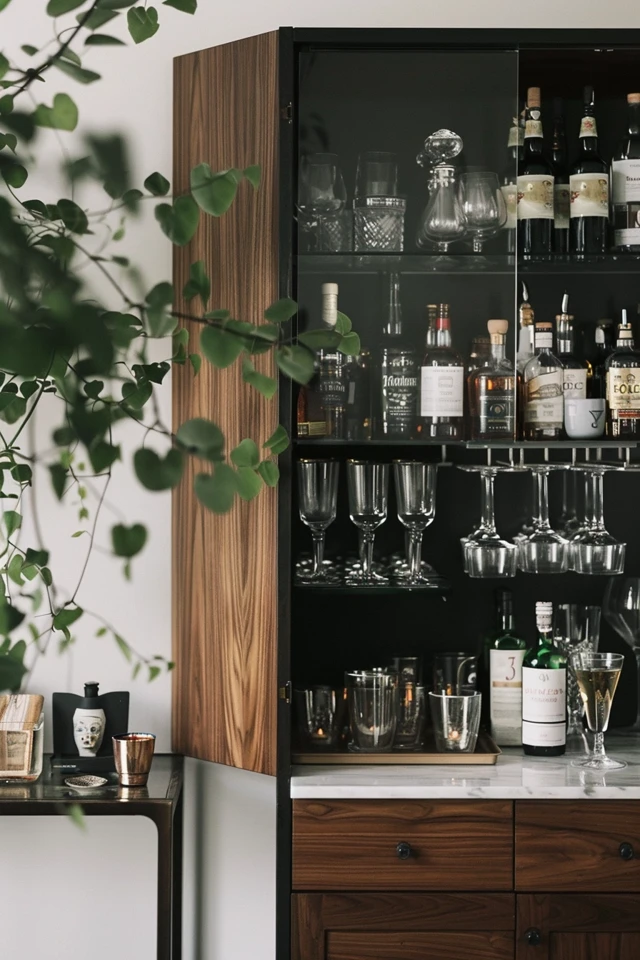
5 Tips for Small Home Bar Areas in Tight Spaces
Creating a dedicated space for entertaining does not require a sprawling basement or a massive formal dining room. In the world of interior design, some of the most charming and functional home bars are tucked into the most unexpected corners of small apartments or compact urban homes.
Designing for a tight footprint requires a shift in perspective, focusing on efficiency, verticality, and high-impact aesthetics. If you find yourself needing a bit of visual inspiration before we dive into the logistics, feel free to scroll all the way down to view our curated Picture Gallery at the end of the post.
At-a-Glance: Key Takeaways
- Prioritize vertical storage to keep the footprint small while maximizing bottle and glassware capacity.
- Use reflective surfaces like mirrors and glass to prevent the bar area from feeling heavy or cluttered.
- Incorporate layered lighting to define the zone and create a high-end lounge atmosphere.
- Scale your furniture and accessories to the room; a standard-sized bar cart can often overwhelm a tiny alcove.
- Select multi-functional pieces that can serve as storage, prep surfaces, and decorative accents simultaneously.
What This Style Means (and Who It is For)
The small-scale home bar is an exercise in “jewel-box” design. This approach treats a small area with the same level of detail and luxury as a full room, making it a focal point rather than an afterthought. It is about creating a designated “destination” within the home where the ritual of making a drink becomes an experience.
This style is perfect for urban dwellers, renters who cannot commit to permanent renovations, and homeowners who want to utilize awkward architectural features like under-stair nooks or shallow closets. It is for anyone who values hospitality but lacks the square footage for a traditional wet bar or a full-sized cellar.
In a small home, the bar area often needs to be “polite.” This means it should blend seamlessly with your existing decor when not in use, while still being fully equipped to handle a Saturday night gathering. It is a balance of utility and sophisticated styling.
The Signature Look: Ingredients That Make It Work
To make a small bar look professional rather than like a cluttered shelf, you need a cohesive set of materials and finishes. Start with a foundational surface, such as a tray or a marble-topped console, to ground the items.
Metal finishes play a huge role in the “signature” bar look. Antique brass, polished nickel, or matte black hardware can elevate the area instantly. Use these metals in your bar tools, shelf brackets, or even the frames of your glassware racks.
Glassware is another essential ingredient. In a tight space, choosing clear or lightly tinted glass prevents the area from looking visually “loud.” Opt for a set of uniform highball glasses, coupes, and double old-fashioned glasses that can be stacked or lined up neatly to create a sense of order.
Finally, natural elements provide the necessary warmth. Think of a small wooden cutting board for citrus, a marble mortar and pestle, or even a single potted plant or a small vase of dried florals. These textures break up the hard surfaces of bottles and glass.
Layout & Proportions (Designer Rules of Thumb)
When working with limited square footage, measurements are your best friend. A few inches can be the difference between a bar that feels integrated and one that feels like it is blocking a walkway.
- Counter Height: If you are installing a built-in or using a tall console, aim for 36 inches for standard counter height or 42 inches for bar height. Bar height is often better for small spaces because it allows for taller stools with smaller footprints.
- Stool Clearance: If you are adding stools, allow for 12 inches of “knee room” between the seat of the stool and the underside of the counter. Each stool should have roughly 24 to 30 inches of horizontal space to ensure guests aren’t elbowing each other.
- Shelf Spacing: For liquor bottles, you need at least 12 to 14 inches of vertical clearance. For wine bottles stored upright, 12 inches is usually sufficient. If you are hanging glassware underneath a shelf, factor in an additional 8 to 10 inches of height for the glasses themselves.
- The 18-Inch Rule: If your bar is located in a high-traffic area, ensure there is at least 36 inches of walkway space in front of it. However, in a very tight “standing only” nook, you can get away with 18 to 24 inches of clearance if it is not a primary path.
- Rug Sizing: If you place a rug under a bar cart or a small bar cabinet, ensure it is at least 6 to 12 inches wider than the furniture piece on all sides. This defines the zone without making the furniture look like it is “falling off” the rug.
Designer’s Note: In my experience, the biggest mistake people make is buying “bar-sized” accessories that are too big for their specific cart. I once worked on a project where the client bought a massive, 20-inch wide ice bucket for a 24-inch wide cart. It left no room for bottles or prep. Always measure your “hero” items (like ice buckets or trays) before purchasing them to ensure they leave at least 40 percent of the surface area free for actual work.
Step-by-Step: How to Recreate This Look
- Identify Your “Found” Space: Look for unused areas. This could be a wide hallway, the space between two windows, an empty corner in the dining room, or even a deep bookshelf that can be cleared out.
- Choose Your Anchor Furniture: For renters, a tiered bar cart or a slim console table is best. For homeowners, consider floating shelves paired with a small floor cabinet. The furniture should be proportional to the wall it sits against.
- Install Vertical Storage: Use the wall space above your furniture. Wall-mounted wine racks or stemware holders that screw into the bottom of shelves are excellent space-savers. This keeps the main surface clear for mixing drinks.
- Layer Your Lighting: Avoid using only overhead “big lights.” Add a small cordless LED lamp to the bar surface, or install battery-operated puck lights under your shelves. The goal is a warm, concentrated glow that highlights the glassware.
- Curate Your Inventory: You do not need every type of liqueur. Stick to the essentials: one clear spirit, one dark spirit, a bottle of bitters, and two types of vermouth. Store “overflow” bottles in a kitchen pantry and only display the beautiful ones.
- Style with Purpose: Use a tray to group your most-used items. This prevents “clutter creep” and makes it easy to lift everything off if you need to clean the surface. Add a small bowl for garnishes and a linen cocktail napkin stack for texture.
Budget Breakdown: Low / Mid / Splurge
Low Budget (Under $200): Focus on a thrifted bar cart or a repurposed end table. Use “S” hooks on a simple wall rail to hang bar tools. Invest in one high-quality set of all-purpose glasses and use a decorative mirror you already own as a “tray” to reflect light.
Mid Budget ($500 – $1,200): Purchase a dedicated bar cabinet with built-in wine storage. Install permanent floating shelves with integrated LED strip lighting. Buy a matching set of professional-grade bar tools (shaker, jigger, strainer) and a high-end marble or wood serving board.
Splurge ($2,500+): Custom-built cabinetry or a high-end designer bar cabinet. Install a mirrored backsplash or “antique mirror” tiles behind the shelves. Add a small wine fridge or a “beverage center” drawer if plumbing and electric allow. Commission custom stone or quartz remnants for the bar top.
Common Mistakes (and How to Fix Them)
- Mistake: Overcrowding the Surface.
The Fix: Use the “Rule of Three.” Group items in threes on a tray, and keep the rest of the surface empty. If you have too many bottles, rotate them seasonally.
- Mistake: Poor Lighting.
The Fix: If you can’t hardwire a light, use a rechargeable “library lamp.” Avoid cool-toned or blueish bulbs; stick to 2700K (warm white) to make the amber colors of the liquor look appetizing.
- Mistake: Ignoring Functionality.
The Fix: Ensure there is a spot for trash (a small hidden bin) and a place to put down a sticky spoon. A small silicone mat or a stone coaster can save your furniture from ring marks and spills.
- Mistake: Using Heavy Furniture in a Small Room.
The Fix: Opt for “leggy” furniture. Pieces with thin metal frames or glass tops feel lighter and allow the eye to see more of the floor, which makes the room feel larger.
Room-by-Room Variations
In the Kitchen: Use a corner of your existing countertop. Define it by using a different material for the backsplash in that small section, or by using a tiered stand to hold coffee supplies by day and bar supplies by night.
In the Living Room: The “Bar Cart Corner” is a classic. Position it next to a lounge chair to create a “club chair” feel. Make sure the cart has wheels so it can be moved if you need to clear space for a larger gathering.
In the Dining Room: A buffet or sideboard is the perfect host for a home bar. Use the interior cabinets for heavy mixers and less attractive bottles, while using the top surface for a beautiful decanter and your best crystal.
The “Clobar” (Closet Bar): If you have a spare reach-in closet, remove the doors and the lower hanging rod. Install a base cabinet and shelving above. This creates a “hidden” bar that can be painted a bold, dark color for a dramatic contrast with the rest of the room.
Finish & Styling Checklist
- Surface: Is the material water-resistant or sealed? (Marble should be sealed; wood should have a poly-coat).
- Hardware: Do the metal finishes on your tools match or intentionally coordinate with the cabinet pulls?
- Glassware: Do you have at least 4 glasses of each essential type (Wine, Rocks, Highball)?
- Lighting: Is there a dedicated light source specifically for this zone?
- Tools: Shaker, jigger, bar spoon, strainer, and bottle opener.
- Textiles: A few clean, high-quality linen cocktail napkins.
- Botanicals: A small bowl for fresh citrus or a vase for greenery.
What I’d Do in a Real Project: Mini Checklist
- Measure the wall depth to ensure the bar furniture doesn’t protrude into the walkway.
- Check for nearby power outlets for lamps or small appliances.
- Select a “statement” wallpaper or paint color for the wall behind the bar to create depth.
- Source a vintage tray to add character and “soul” to the setup.
- Install a “lip” or “rail” on open shelves to prevent bottles from accidentally sliding off.
FAQs
Can I have a home bar if I rent?
Absolutely. Use a freestanding bar cart or a console table. For “built-in” looks, use removable wallpaper on the wall behind the cart and use battery-operated sconces that stick to the wall without wiring.
How do I keep my bar from looking messy?
The secret is “decanting.” Pour your most-used spirits into glass decanters. This removes the visual noise of mismatched labels and creates a much more cohesive, high-end look.
What is the best material for a bar top?
Quartz is excellent because it is non-porous and won’t stain from lemon juice or red wine. If you use marble, choose a “honed” finish, which hides etches and scratches better than a “polished” finish.
Do I need a sink for a small bar?
A “wet bar” is nice but not necessary for a small space. A “dry bar” works perfectly fine as long as you have a tray or board to contain spills and a small container for ice. You can always prep garnishes in the kitchen beforehand.
How do I store wine in a small bar?
If you don’t have room for a fridge, use a wall-mounted rack that stores bottles horizontally. This keeps the corks moist and saves your counter space for other things. Avoid storing wine near heat sources like ovens or heaters.
How much space do I need for a bar cart?
A standard small bar cart is usually around 24 to 30 inches wide and 12 to 16 inches deep. As long as you have a 3-foot wide section of wall, you can fit a functional bar cart comfortably.
What kind of lighting is best?
Warm, indirect lighting is best. LED strips tucked under shelves (aimed downward) create a “floating” effect for your bottles. A small lamp with a fabric shade provides a soft, inviting glow for the whole corner.
How do I organize my bar tools?
Use a “tool set” that comes with its own stand, or place them all inside a heavy-bottomed glass or a silver julep cup. Keeping them contained in one vessel makes the area look organized rather than scattered.
Conclusion
Creating a small home bar is one of the most rewarding design projects you can undertake. It is a functional addition that immediately boosts the “hospitality factor” of your home, regardless of how many square feet you have. By focusing on smart measurements, vertical storage, and curated styling, you can turn a forgotten corner into your favorite place to unwind.
Remember that the best designs are those that reflect your personal habits. If you are a wine lover, prioritize the racks; if you love craft cocktails, prioritize the prep surface. With a little bit of planning and a designer’s eye for proportion, your tight space can become the ultimate entertaining hub.
Picture Gallery


