
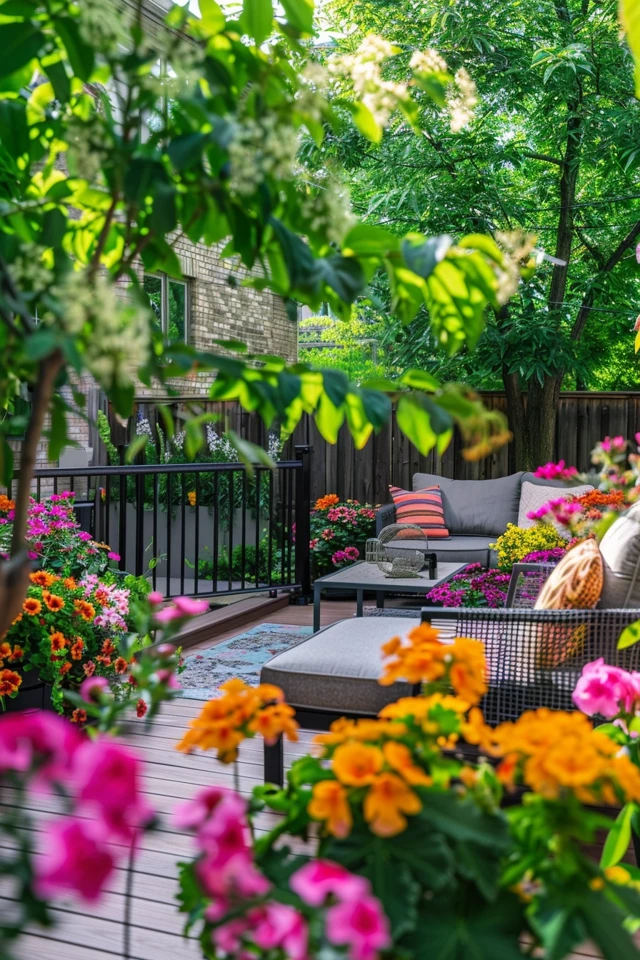
5 Tips for Small Yard Deck Design
Designing a functional outdoor living space in a compact yard is often more challenging than working with a sprawling estate. When you have acres of land, a mistake in scale or layout is easily forgiven. In a small yard, every inch counts, and a single miscalculation can make the entire deck feel cluttered or unusable.
I recently worked with a couple who were convinced their 15×15 backyard was destined to remain a patch of dirt. By applying strict zoning rules and using vertical space effectively, we transformed it into a dining area and a lounge without it feeling cramped. For plenty of visual inspiration on how we maximize square footage, be sure to check out the Picture Gallery at the end of the blog post.
The secret to small deck design isn’t just about buying smaller furniture. It requires a strategic approach to flooring direction, sightlines, and multi-functional structures. Below, I’m sharing the exact principles I use to make small decks feel spacious and luxurious.
1. Prioritize Scale and Traffic Flow Over Furniture Count
The most common error homeowners make is trying to squeeze a standard “living room set” onto a modest deck. In interior design, scale is everything, but outside, you also have to account for movement.
If your deck is small, you must choose between a dining focus or a lounging focus. Trying to do both with full-sized furniture usually results in a space where you can’t pull a chair out without hitting a railing.
To make the space feel open, you need to preserve clear walkways. I always recommend maintaining a minimum 30-inch to 36-inch clearance for main traffic paths. If you block the flow from the back door to the yard gate, the deck will feel like an obstacle course rather than a retreat.
Designer’s Note: The Tape Method
I never order furniture for a small deck without taping it out first. Blue painter’s tape is your best friend here. Outline the exact footprint of the sofa, table, and chairs on the deck floor.
Once the tape is down, physically walk through the space. Carry a tray of drinks or a plate of food to simulate real usage. If you have to turn sideways to shimmy past a taped outline, that piece of furniture is too big.
Common Mistakes + Fixes
- Mistake: Using bulky, rolled-arm wicker furniture.
- Fix: Switch to “apartment scale” outdoor furniture with clean, straight lines and exposed legs. Seeing the floor beneath the furniture makes the footprint feel lighter.
- Mistake: Buying a rectangular dining table for a square deck.
- Fix: Opt for a round pedestal table. It improves flow around the perimeter and eliminates sharp corners that are painful to bump into in tight quarters.
What I’d do in a real project
If I am designing a 10×12 deck, I skip the sofa entirely. Instead, I place four comfortable club chairs around a central round coffee table or fire pit. This arrangement creates a conversation circle that feels intentional, not squeezed.
2. Integrate Storage and Seating with Built-ins
In a small yard, standalone furniture eats up floor space rapidly. The legs of chairs and benches create visual clutter. The solution is almost always built-in perimeter seating.
By building a bench directly into the railing or along a privacy wall, you eliminate the “dead space” that usually exists behind a sofa. You also gain valuable inches in the center of the deck for circulation.
A standard built-in bench should be about 18 inches high and 18 to 20 inches deep. If you add a slight angle to the backrest, comfort increases significantly without sacrificing much space.
Maximizing Utility
I rarely design a bench that is just a bench. In a small footprint, everything must do double duty. I prefer constructing benches with hinged lids to store cushions, gardening tools, or charcoal.
If you have a raised deck, we can build drawers into the risers or access panels on the side. This keeps the deck surface clear of deck boxes, which are notoriously bulky and unattractive.
Designer’s Note: Floating Benches
If storage isn’t a priority but visual space is, I use floating benches. These are anchored to the wall or railing posts and have no legs touching the ground.
Because the eye can see the decking material continue underneath the seat, the deck feels wider. It is a trick of perspective that works exceptionally well in narrow row-house backyards.
What I’d do in a real project
For a client with a compact urban deck, I would design an L-shaped bench in the corner. I would construct it out of the same material as the decking (like Ipe or a high-quality composite) for seamless visual continuity. I would top it with custom cushions in a performance fabric to soften the hard lines.
3. Use Verticality for Privacy and Greenery
When you don’t have horizontal spread, you must design upwards. Small decks often suffer from the “fishbowl effect,” where neighbors can see everything because the yards are close together.
However, building a solid wall can make a small deck feel like a cage. The goal is to screen the view without blocking light or airflow.
I rely heavily on horizontal slat screens or vertical trellises. Using 1×2 slats with 1-inch gaps provides privacy while keeping the structure looking airy.
The Role of Plants
You do not need a grass lawn to have a lush garden. In fact, keeping plants off the floor is crucial for small decks. Use wall-mounted planters or hang greenery from a pergola.
If you use pots, go big but few. One large, tall planter in a corner looks elegant. Five small pots scattered around look like clutter. I often use tall, columnar plants like Horsetail Reed or non-invasive Clumping Bamboo to create a “living wall.”
Common Mistakes + Fixes
- Mistake: Putting small pots all over the steps and perimeter.
- Fix: Consolidate. Build a long, narrow planter box that acts as a railing or divider. It adds greenery without tripping hazards.
- Mistake: Using a solid privacy fence.
- Fix: Use a semi-transparent material. Lattice is the traditional choice, but modern horizontal slats or laser-cut metal screens look more contemporary and feel less confining.
What I’d do in a real project
I would install a pergola over the deck to define the “ceiling.” I would then hang string lights and two distinct hanging ferns. This draws the eye up, making the volume of the space feel larger than the square footage suggests.
4. Blur the Indoor-Outdoor Threshold
One of the most effective ways to make a small deck feel huge is to borrow space from the indoors. If your living room flows seamlessly onto the deck, the deck becomes an extension of the house rather than a separate, tiny appendage.
This is largely a visual trick achieved through materials and layout. If your indoor living room has wood floors running parallel to the sliding door, lay your decking boards in the same direction.
The eye will follow the lines from the inside out, creating an illusion of one continuous surface.
Color Coordination
Try to match the color tone of your interior flooring to your outdoor decking. You don’t need an exact match, but staying in the same color family helps.
If you have warm oak floors inside, choose a warm cedar or composite tone outside. If you have grey tile inside, opt for grey pavers or slate-toned decking.
Designer’s Note: The Threshold
The physical threshold—the bump you step over—breaks the illusion. If budget and architecture allow, I advocate for a flush threshold.
This requires specific waterproofing details and drainage planning (like a linear drain), but allowing the floor levels to match perfectly transforms the usability of the space. It effectively doubles your entertaining area when the doors are open.
Renter-Friendly Workaround
If you are renting or can’t change the decking, use an outdoor rug. Choose a rug that mimics the color palette of your indoor rug or flooring. Place it just outside the door to create that visual bridge.
What I’d do in a real project
I would replace a standard swing door with a large sliding glass door or French doors. I would then ensure the curtains or drapes frame the view of the deck, rather than blocking it, encouraging the eye to travel outside even when the doors are closed.
5. Layer Lighting to Expand Visual Space
Bad lighting shrinks a space. A single bright floodlight flattens everything and creates harsh shadows, making the corners of the deck disappear into darkness.
To make a small deck feel expensive and spacious, you need layered lighting. This involves mixing ambient light, task light, and accent light.
Illuminating the perimeter of the deck pushes the visual boundaries outward. If you light up the fence or the trees at the edge of the property, the deck feels like it extends all the way to those illuminated points.
Kelvin Temperature Matters
Always check the color temperature of your LEDs. For residential outdoor spaces, I strictly use 2700K to 3000K. This is a warm white light that mimics the glow of fire or incandescent bulbs.
Anything higher (4000K or 5000K) looks blue and clinical, resembling a parking lot or a hospital. It kills the mood instantly.
Specific Lighting Placements
- Stair Risers: Install small recessed lights in the stair risers. It creates safety and looks architectural.
- Under-Rail Lighting: LED tape light hidden under the handrail casts a soft glow downward, washing the deck surface with light without shining in your eyes.
- Uplighting: Place small spotlights at the base of your corner plants or privacy screen. Lighting vertical surfaces creates depth.
Common Mistakes + Fixes
- Mistake: Relying solely on solar stakes that provide barely any light.
- Fix: Invest in a low-voltage landscape lighting system. It is reliable, brighter, and can be put on a timer.
- Mistake: hanging string lights too low.
- Fix: Ensure the lowest point of the swag is at least 8 feet high. If it’s too low, it makes the “ceiling” feel oppressive.
What I’d do in a real project
I would create zones using light. A pendant light over the dining table anchors that space. Dimmable sconces near the house provide general light. Soft uplighting on the perimeter trees creates a backdrop. This variety allows the homeowner to change the atmosphere from “party” to “intimate” instantly.
Final Checklist: Designing Your Small Deck
Before you buy a single board or chair, run through this checklist to ensure your plan is solid.
- Check Clearances: Do you have 36 inches for main walkways?
- Check Chair Space: Do you have 24 to 30 inches of space behind dining chairs so guests can slide out?
- Zoning: Have you decided on the primary function (dining vs. lounging)? Don’t try to force both if the space doesn’t allow it.
- Verticals: Have you planned for privacy screens or tall plants to soften the edges?
- Storage: Is there a plan for where cushions go when it rains?
- Lighting: Do you have at least two sources of light (e.g., string lights + step lights)?
- Materials: Have you compared composite vs. natural wood maintenance requirements?
FAQs
What is the smallest functional size for a deck?
To fit a small round table and two chairs comfortably, you generally need a minimum of 6 feet by 6 feet. However, a 10×10 or 12×12 space allows for much more flexibility. If you only have a 4-foot deep balcony, switch to a “bar top” railing table to save floor space.
Is composite decking better for small spaces?
Composite is often better for small spaces simply because you are closer to the material. You notice splinters and imperfections more on a small deck than a large one. High-quality composite offers a smooth, splinter-free finish that is comfortable for bare feet, which is great for small, intimate zones.
How do I choose a rug size for a small deck?
The rule of thumb is the “front legs” rule. At a minimum, the front legs of all your seating furniture should sit on the rug. Ideally, the rug is large enough that all legs fit. This anchors the furniture and defines the “room.” Avoid “postage stamp” rugs that float in the middle of the furniture setup; they make the space look smaller.
Can I paint my small deck to make it look bigger?
Light colors tend to recede, making spaces feel larger. Painting a deck a soft grey or tan can help reflect light. However, dark colors can blur boundaries at night. If you paint the deck fences dark (like charcoal or black), they often disappear into the background behind plants, creating an illusion of depth.
Conclusion
A small yard does not mean you have to sacrifice style or function. In fact, some of the most charming and inviting outdoor spaces I have designed were under 200 square feet. The constraints of a small footprint force you to be intentional with every design choice.
By focusing on scale, utilizing vertical space, and blurring the lines between indoors and out, you can create a deck that feels like a spacious sanctuary. Remember to measure twice, respect the traffic flow, and layer your lighting. With these adjustments, your compact deck will punch well above its weight class.
Picture Gallery


