
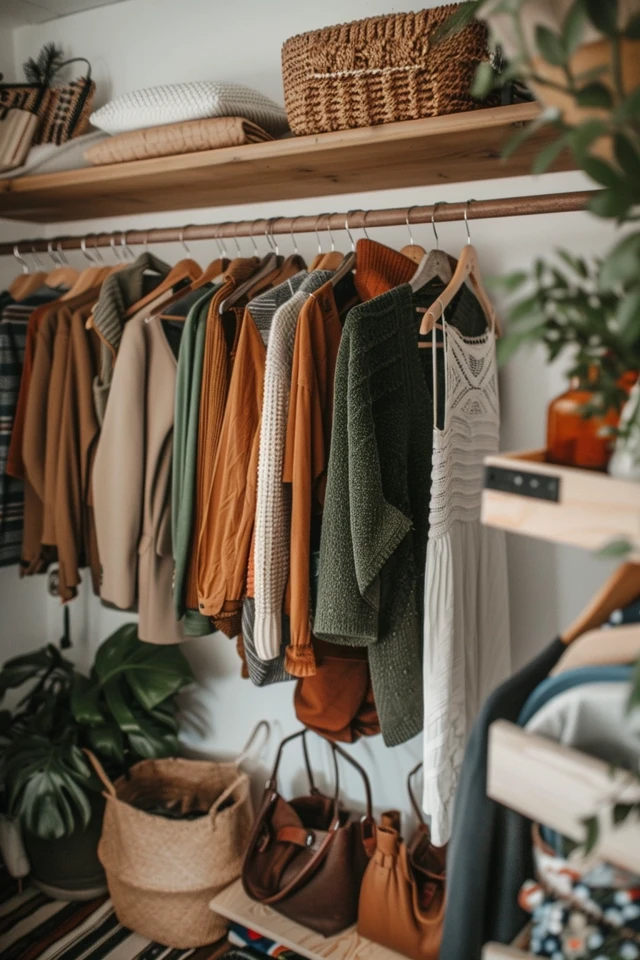
5 Tips for Smart Closet Design for Small Rooms
One of the most frequent complaints I hear from clients isn’t about their living room layout or their kitchen cabinets. It is almost always about a lack of storage in the bedroom. When you are dealing with a small footprint, the closet often becomes a chaotic catch-all that creates stress the moment you open the door.
Designing for a small room requires a shift in mindset from “storage” to “efficiency.” I once worked on a 400-square-foot studio apartment where the only closet was three feet wide. By completely gutting the interior and utilizing every vertical inch, we actually doubled the usable hanging space without changing the structural walls.
If you are looking for visual inspiration to spark your own renovation, be sure to scroll all the way to the Picture Gallery at the end of this blog post. But first, let’s dig into the mechanics of how to make a tiny closet function like a boutique dressing room.
1. Maximize Vertical Real Estate
In small rooms, floor space is premium currency. You cannot afford to waste the space between your top shelf and the ceiling, nor the space near the floor.
Most standard builder-grade closets come with a single rod installed at 66 inches high with one shelf above it. This leaves a massive “dead zone” above the shelf and often wasted space below your hanging clothes. To fix this, you must think in tiers.
If you have standard 8-foot ceilings, you have room to go up. I always recommend installing shelves all the way to the ceiling line. This upper area is perfect for seasonal items, luggage, or keepsakes that you do not need to access daily.
The Rule of Double Hanging
The single most effective way to increase capacity is to install double hanging rods. By having two levels of hanging space, you instantly double the amount of shirts, jackets, and pants you can store.
Here are the measurements I use in almost every project:
- Top Rod: Install at 80 to 82 inches from the floor.
- Bottom Rod: Install at 40 to 42 inches from the floor.
- clearance: Ensure you have at least 38 inches of vertical space for shirts and folded trousers.
If you wear long dresses or long coats, reserve a small section (about 12 to 18 inches wide) for “long hang” storage. The rod for long hanging items should be placed at 66 to 70 inches high.
Designer’s Note: The “Dead Corner”
In L-shaped walk-in closets, corners are notorious for becoming black holes where clothes disappear. A common mistake is running hanging rods all the way into the corner from both sides, causing clothes to overlap and tangle.
The Fix: dedicate the corner to shelving rather than hanging rods. Alternatively, stop one hanging rod 24 inches before the corner wall, and run the adjacent rod all the way to the wall. This gives you clear access without the frustrating overlap.
2. Eliminate the Swing Radius
In a small bedroom, the arc of a swinging closet door can eat up 10 to 12 square feet of usable floor space. This dictates where you can place your bed, your nightstands, and your rugs.
If your room feels cramped, look at the closet doors first. Standard bi-fold doors are better than swing doors, but they still protrude into the room and often block access to the edges of the closet interior. They are also notorious for coming off their tracks.
For a truly sleek, space-saving design, consider removing the door mechanism entirely or switching to a slider. Sliding doors require zero clearance into the room. This allows you to place a nightstand or an accent chair just a few inches from the closet entrance without worrying about collision.
The Curtain Solution
For renters or those on a strict budget, replacing hard doors with a high-quality textile is a soft, elegant solution. This adds texture to the room and absorbs sound.
However, there are rules to making this look intentional rather than messy:
- Mount High: Mount the curtain track or rod at the ceiling, not just at the top of the door frame. This draws the eye up and makes the room feel taller.
- Fullness: The curtain width should be 1.5 to 2 times the width of the opening. If the fabric is flat when closed, it looks like a sheet; you want nice, full pleats.
- Fabric Weight: Use a heavy linen or velvet. Flimsy cotton will look cheap and won’t hide the contours of the clothes inside.
Common Mistakes + Fixes
Mistake: Installing barn doors on a wall that isn’t wide enough.
Fix: Barn doors need a wall space adjacent to the opening that is equal to the door width. If you don’t have that empty wall space, a barn door will block light switches or artwork. In these cases, a triple-track sliding door system is a better engineering choice.
3. Proper Lighting is Non-Negotiable
You cannot organize what you cannot see. Small closets are often dark caves, which leads to “buy and return” cycles because you forget what you already own. Lighting is not just aesthetic; it is functional infrastructure.
The goal is to have light that hits the front of your clothes. A single bulb in the center of a walk-in ceiling often casts your own shadow onto the clothes as you step inside. You need light sources that are positioned between you and the hangers.
The Kelvin Temperature Rule
For closets, color accuracy is paramount. You need to be able to tell the difference between navy blue and black.
I strictly specify LEDs with a color temperature between 3000K and 3500K. Anything lower (2700K) will look too yellow and distort colors. Anything higher (5000K) will look like a sterile hospital lab and feel harsh in a bedroom setting. Look for a High CRI (Color Rendering Index) of 90+ on the packaging.
Solutions for Every Budget
- Hardwired: Recessed gimbal lights that can be angled toward the clothes are the gold standard.
- Plug-in: LED tape light channels running vertically up the side returns of the closet frame create a boutique look.
- Battery/Rental: Motion-sensor LED bars that attach magnetically to the underside of shelves. These are rechargeable and require no drilling.
What I’d Do in a Real Project
If I am designing a custom reach-in closet, I always route a channel into the underside of the shelves to recess an LED strip. If that is out of budget, I install a lighted closet rod. The rod itself acts as the light source, illuminating the shoulders of the garments directly. It is a game-changer for visibility.
4. Prioritize Drawers and “Zoning”
In a small room, you may not have space for a large dresser. This means your closet needs to handle socks, underwear, pajamas, and accessories. Moving these items inside the closet frees up bedroom floor space, making the room feel larger.
The most efficient closets are zoned by frequency of use. Ergonomics dictate that your “prime real estate” is between your waist and your eye level. This is where your daily items should live.
The Shelf vs. Drawer Debate
Open shelves are cheaper, but they require discipline. If you are not a meticulous folder, open shelves will look messy very quickly. Drawers conceal the chaos.
However, drawers take up more space and budget. A good compromise is to use open shelving with coordinating bins or baskets. This mimics the function of a drawer—you can pull the bin out to rummage through it—without the cost of drawer slides and cabinet fronts.
Sizing Your Storage
When planning your layout, use these standard dimensions to ensure everything fits:
- Folded Sweaters/Jeans: Require 12 to 14 inches of shelf depth.
- Men’s Shoes: Require 12 to 13 inches of depth.
- Women’s Shoes: Require 10 to 12 inches of depth.
- Drawer Height: 5 to 7 inches is ideal for socks and underwear. 8 to 10 inches is better for bulky sweaters.
Designer’s Note: The Hanging Depth
A standard hanger is 17 to 18 inches wide. To hang clothes freely, the interior depth of your closet must be at least 24 inches. If you live in an older home with shallow closets (20 inches or less), your clothes will rub against the door.
The Fix: If you have a shallow closet, do not use a standard rod. Instead, use “valet rods” that pull out toward you, allowing you to hang clothes facing forward. Alternatively, stick to shelving and drawers entirely for that space.
5. Standardize Your Hardware
This tip seems purely aesthetic, but it has a massive impact on space saving. Mismatched hangers are the enemy of a small closet. They sit at different heights and widths, causing clothes to snag and wasting precious horizontal inches.
I insist that clients switch to slimline velvet hangers or uniform wooden hangers. Slimline hangers can increase your hanging capacity by up to 20% compared to chunky plastic tubular hangers. That is significant when you only have a four-foot rod.
Furthermore, visual noise contributes to the feeling of a space being “cramped.” When you open a small closet, you want it to feel calm. Uniform hangers provide a visual rhythm that tricks the eye into seeing the space as more organized and spacious than it actually is.
The “Edit” Before Design
No amount of smart design can solve a hoarding problem. Before you buy a single bin or install a shelf, you must edit your wardrobe.
In small rooms, you do not have the luxury of storing clothes “just in case.” A good rule of thumb is the one-year rule. If you haven’t worn it in four seasons, it does not earn the right to take up space in your limited square footage.
Common Mistakes + Fixes
Mistake: Buying storage products before measuring the closet.
Fix: Never buy bins, baskets, or shoe racks until the closet layout is finalized. There is nothing more frustrating than a shoe rack that is half an inch too wide for the wall. Measure the clear opening of the door frame, not just the inside wall-to-wall width, to ensure you can actually get the drawers inside.
Final Checklist: The Small Closet Audit
Before you commit to a renovation or a reorganization, run your plan through this checklist to ensure you haven’t missed a critical detail.
- Clearance Check: Can you open all drawers fully without hitting the door frame or the bed?
- Height Check: Have you measured your longest dress or coat to ensure the “long hang” section is tall enough?
- Lighting Check: Is there a light source that illuminates the dark corners?
- Floor Check: Is the floor clear of clutter? (Ideally, nothing should touch the floor directly).
- Hanger Check: Are all hangers identical to maximize density?
- Access Check: are the items you use daily within easy reach (no step stool required)?
FAQs
What is the minimum depth for a reach-in closet?
The standard minimum is 24 inches to accommodate hangers comfortably. However, you can make a closet work with 22 inches if you are careful. Anything less than 22 inches requires shallow shelving or forward-facing valet rods.
How high should I hang a single rod if I don’t want double hanging?
If you prefer a single rod, I usually place it at 66 to 68 inches off the floor. This allows for longer items and leaves plenty of room below for a shoe rack or a low dresser.
Can I use wallpaper in a closet?
Absolutely. In fact, I highly recommend it for small closets. Adding a bold wallpaper to the back wall of a closet creates depth and makes the space feel like a dedicated room rather than a utility hole. It turns the closet into a “jewelry box” feature.
What is the best material for closet shelves?
For budget projects, coated wire is common, but it can leave lines on clothes. I prefer solid melamine or laminate shelves. They are easy to clean, don’t snag fabrics, and look more high-end. If using wire, add a plastic liner to create a flat surface.
Conclusion
Designing a closet for a small room is a puzzle of geometry and discipline. It is about respecting the constraints of the architecture while refusing to compromise on functionality. By using the full vertical height, improving the lighting, and selecting the right door mechanism, you can transform a cramped cupboard into a highly efficient storage machine.
Remember that the goal isn’t just to fit everything in; it is to make your daily routine smoother. A well-designed closet saves you time every morning. It reduces visual noise in your bedroom, which ultimately helps you rest better.
Take the time to measure twice, edit your wardrobe ruthlessly, and invest in adjustable systems that can change as your needs change. Your small room has more potential than you think.
Picture Gallery


