
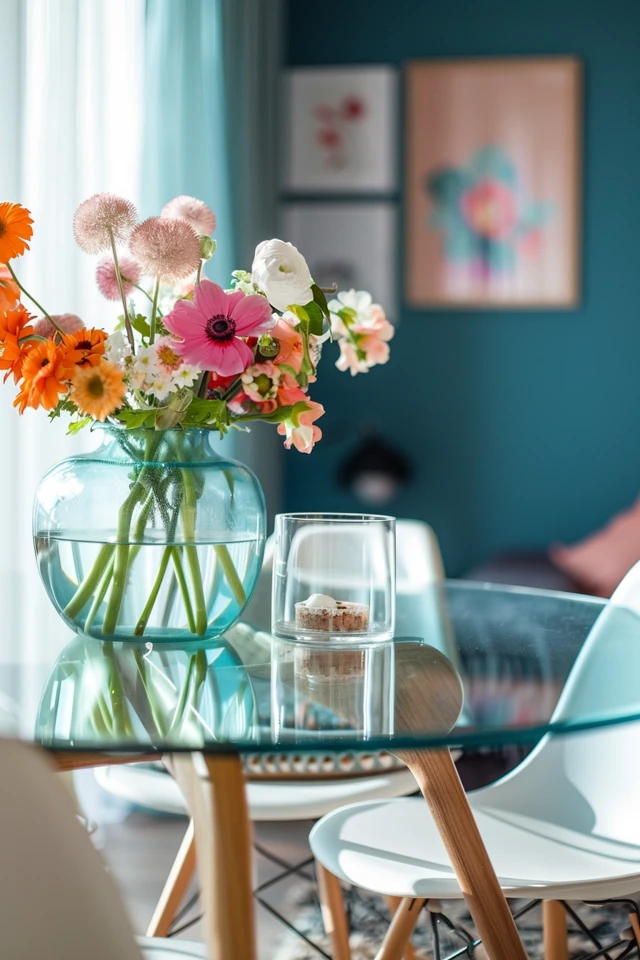
5 Tips for Styling a Dining Room Glass Table
Glass dining tables are the chameleons of the interior design world. They possess a unique ability to make a small room feel spacious and a dark room feel airy, thanks to their visual transparency. However, that same transparency can make them notoriously difficult to style, often leaving a dining space feeling cold, sterile, or unfinished if not handled correctly.
I remember a specific project in a downtown apartment where the client insisted on a massive glass tabletop to keep the view of the city unobstructed. Once we installed it, the room felt more like a conference center than a home; it lacked soul, warmth, and acoustic softness. We had to layer in texture and strategic lighting to bring the “home” feeling back into the space.
In this guide, I will walk you through the specific styling rules I use to make glass tables feel grounded, inviting, and practical for everyday use. If you are looking for visual inspiration, you can jump right to the Picture Gallery at the end of the blog post.
1. Ground the Space with the Perfect Rug
With a wood or stone table, the tabletop itself acts as a visual anchor in the center of the room. A glass table does the opposite; it disappears. This means the floor underneath the table becomes the focal point, making your choice of area rug the most critical design decision in the room.
Without a rug, a glass table can feel like it is floating aimlessly in the room. You need a rug to define the dining zone and provide a visual “landing pad” for the furniture. This also helps with acoustics, as glass surfaces reflect sound, making dining conversation loud and echoey without soft textiles to dampen the noise.
The Rules of Rug Sizing
When pairing a rug with a glass table, size matters more than usual because you can see the rug borders clearly through the table. You want to ensure the rug extends at least 24 to 30 inches beyond the edge of the table on all sides. This ensures that when a guest pulls a chair out to sit down, the back legs of the chair stay on the rug rather than catching on the edge.
Texture and Pattern
Since the table is clear, the rug pattern will be on full display. This is your opportunity to introduce bold geometric patterns or rich, organic textures that might be overwhelmed by a solid wood table.
If you prefer a neutral look, opt for a rug with high tactile variation, like a chunky wool loop or a braided jute. The roughness of the rug provides a necessary contrast to the sleek, smooth surface of the glass.
Designer’s Note:
A common mistake I see is using a rug that looks great from the top but has a messy or unfinished look when viewed closely. Remember, with a glass table, you see the rug all day long, not just the edges. Ensure your rug is clean and high-quality right to the center.
Common Mistakes + Fixes:
- Mistake: Using a rug that is too small, creating a “postage stamp” look under the table.
- Fix: Measure your table and add 4 to 5 feet to both the length and width to determine your minimum rug size.
- Mistake: Choosing a flat-weave rug without a rug pad.
- Fix: Always use a thick felt rug pad underneath. It adds luxury underfoot and prevents the rug from rippling, which is highly visible through the glass.
2. Curate Chairs for a 360-Degree View
When you have a solid dining table, the table hides the seats and the mechanical components of your chairs. With a glass table, everything is exposed. The seat material, the joinery of the legs, and even the dust that collects on the chair stretchers are visible from every angle.
This transparency means you must select dining chairs that are aesthetically pleasing from the back, the side, and the front. The chairs become the main architectural element of the dining set because the table itself recedes visually.
Material Contrast
To combat the “coldness” of glass, you should almost always choose upholstered dining chairs. A glass table paired with metal or plastic chairs often looks too industrial or sterile for a residential setting.
Look for fabrics like velvet, boucle, or worn leather. These materials add warmth and softness that balances the hardness of the glass. If you must use wood chairs, ensure the wood tone is warm and rich (like walnut or white oak) rather than a cool-toned gray wash.
Scale and Silhouette
Glass tables often have a very modern, streamlined profile. To keep the room from looking flat, choose chairs with an interesting silhouette. Curved backs or sculptural arms work beautifully because they break up the straight lines of the glass edges.
Pay attention to the height of the chair arms. Standard dining table height is 30 inches. Ensure there is at least 7 inches of clearance between the top of the chair arm and the underside of the glass so guests can tuck their chairs in without banging the glass.
What I’d do in a real project:
- I would avoid “skirted” dining chairs with glass tables, as they can look heavy and dated against the modern glass.
- I would prioritize chairs with attractive leg finishes, perhaps capping them with brass ferrules to add a touch of jewelry to the view beneath the table.
- I would verify the “under-seat” view. If the chair has ugly staples or black landscaping fabric underneath the seat, it will be visible through the glass.
3. Manage Reflections with Strategic Lighting
Lighting a glass table is trickier than lighting other surfaces because glass is highly reflective. If you hang a chandelier with exposed bulbs directly over a glass table, you will likely get a harsh glare reflecting right into your diners’ eyes.
The goal is to create a soft, diffused glow that illuminates the table without creating a mirror effect on the surface.
Fixture Selection
Avoid downlights or pendant lights with focused beams pointing straight down. Instead, choose fixtures with a diffuser (a frosted glass or acrylic sheet at the bottom) or fixtures with fabric shades.
Chandeliers that cast light upward or outward are generally safer choices than those that cast light downward. Linear suspension lights can look fantastic over rectangular glass tables, provided the light source is diffused.
Hanging Height
The standard rule for hanging a dining fixture is 30 to 36 inches above the table surface. With glass, I often lean toward the higher end of that range (34 to 36 inches).
Raising the fixture slightly helps move the reflection point out of the direct line of sight for seated guests. However, do not go too high, or the light will feel disconnected from the dining zone.
Designer’s Note:
Always install a dimmer switch. Glass tables sparkle beautifully under low light, creating a candlelit vibe even without candles. At full brightness, however, the glare can be clinical. Being able to adjust the intensity is non-negotiable for atmosphere.
Common Mistakes + Fixes:
- Mistake: Using clear glass pendants over a clear glass table.
- Fix: This creates too much visual noise and glare. Switch to a fixture with texture, metal, or fabric to anchor the space overhead.
- Mistake: Relying solely on the overhead fixture.
- Fix: Add sconces or a floor lamp in the corner. Ambient light reduces the contrast of the overhead light, minimizing harsh reflections on the glass.
4. Style the Tabletop with “Soft” Decor
Styling the surface of a glass table requires a different approach than wood. First, there is the practical concern of scratching. Second, there is the visual need to create weight.
If you place a single, small vase in the center of a large glass table, it will look lost. You need to create a grouping or use a substantial piece to ground the center of the table.
The Scratch Factor
Never place unglazed ceramics, rough stone, or metal objects directly on a glass table. They will leave fine scratches over time that accumulate and ruin the clarity of the glass.
The Fix: I adhere felt pads to the bottom of every decorative object on a glass table. It’s a five-minute task that saves the furniture. Alternatively, use a table runner or a decorative tray to hold your accessories.
Grouping and Composition
I love using the “Rule of Three” on glass tables. A grouping of three objects at varying heights creates a dynamic look. For example, a tall vase with greenery, a medium-height candle, and a low decorative bowl.
Because the table is transparent, you can get away with visually heavier centerpieces. A large wooden dough bowl or a thick woven tray works perfectly because the table itself takes up zero visual weight. This contrast prevents the centerpiece from feeling like clutter.
Real World Constraints:
If you have young children or energetic pets (like a tail-wagging Golden Retriever), avoid tall, unstable vases. Glass surfaces are slippery. A slight bump can send a vase sliding. For family homes, I recommend low, heavy bowls or trays that have a low center of gravity and are less likely to tip or slide.
5. Balance the Room with Surrounding Textures
A glass table is essentially a “void” in the room. If the rest of your furniture is also sleek, shiny, or hard (like a lacquer buffet or metal shelving), the room will feel like an operating theater.
To make a glass table feel at home, the surrounding elements must provide the warmth that the table lacks. This is about balancing Yin and Yang. The glass is cold and hard; the room needs warm and soft.
Wall Treatments
Consider adding texture to the walls. Wallpaper, wainscoting, or even a limewash paint finish can add the necessary depth to the room. If your walls are flat white and your table is glass, the room will lack dimension.
Curtains and Drapery
Window treatments are essential in a room with a glass table. Floor-to-ceiling drapery adds a vertical column of softness that counters the horizontal sheet of glass.
Velvet or linen drapes absorb sound and reduce the light bounce that can occur with glass tables. Even if you don’t need them for privacy, install stationary panels to frame the window and soften the acoustics.
Case Goods
If you have a sideboard, buffet, or console table in the dining room, try to ensure it is made of wood or a matte-finish material. Avoid matching a glass dining table with a glass console table. The room needs a mix of materials to feel curated and high-end.
Designer’s Note:
Plants are a glass table’s best friend. The organic, irregular shapes of leaves contrast beautifully with the manufactured precision of the glass. A large floor plant in the corner or a fern on the sideboard can instantly breathe life into the sterile nature of the glass.
Final Checklist: The “Real Project” Run-Through
Before you consider your dining room finished, run through this checklist. This is the mental loop I do before photographing a project or handing it over to a client.
The Layout Check:
- Is there at least 36 inches of clearance between the edge of the glass table and the wall or buffet? Glass tables can be deceptive; people often buy them too big because they look small. You still need physical walking space.
The Comfort Check:
- Sit in the chair and pull yourself in. Do your knees hit the table legs? (Common with trestle-style glass bases).
- Does the rug extend far enough back that your chair doesn’t “trip” over the edge?
The Visual Check:
- Look under the table. Are there loose cords from a nearby lamp? Is the underside of the rug clean?
- Check for fingerprints. Glass tables need to be polished with a microfiber cloth before guests arrive.
The Lighting Check:
- Turn on the overhead light. Is there a blinding glare on the glass? If so, dim the light or swap the bulbs for lower-lumen, soft-white versions.
FAQs
How do I keep a glass table looking clean with kids?
This is the biggest hurdle. To be honest, if you have toddlers with sticky fingers, a glass table requires daily maintenance. I recommend keeping a spray bottle of a 50/50 mix of water and distilled white vinegar nearby. It cuts through grease and doesn’t leave streaks like some soapy cleaners. Also, use placemats for every meal—they are easier to wash than the table is to polish.
Is a glass table safe for a busy family home?
Yes, provided you purchase tempered glass. Tempered glass is heat-treated to be four to five times stronger than standard glass. If it does break, it shatters into small, dull pebbles rather than dangerous jagged shards. Always check the manufacturer’s specifications to ensure the top is tempered.
Can I put a glass table in a small dining room?
Absolutely. In fact, it is the best choice for a small room. Because it is visually weightless, it tricks the eye into thinking the room is larger than it is. Just be sure to measure the physical footprint—don’t let the visual lightness trick you into buying a table that physically crowds the walkways.
What shapes of glass tables are best?
For square rooms, a round glass table is excellent for flow. It removes the sharp corners that you might bump into in a tight space. For rectangular rooms, a rectangular or oval glass table works best. Oval is particularly nice as it softens the look further and is more forgiving in high-traffic zones.
Conclusion
Styling a glass dining table is an exercise in balance. The table itself offers a sleek, modern, and airy aesthetic, but it relies heavily on the supporting cast—the rug, the chairs, and the lighting—to bring the comfort and personality.
By grounding the table with a textured rug, choosing upholstered chairs to add warmth, and managing reflections with proper lighting, you can create a space that feels sophisticated rather than sterile. Remember that the beauty of glass lies in its ability to highlight everything around it. Use that to your advantage by curating the floor, chairs, and decor that will be on display.
With these tips, your glass table will stop feeling like a fragile display piece and start feeling like the heart of a welcoming home.
Picture Gallery


