
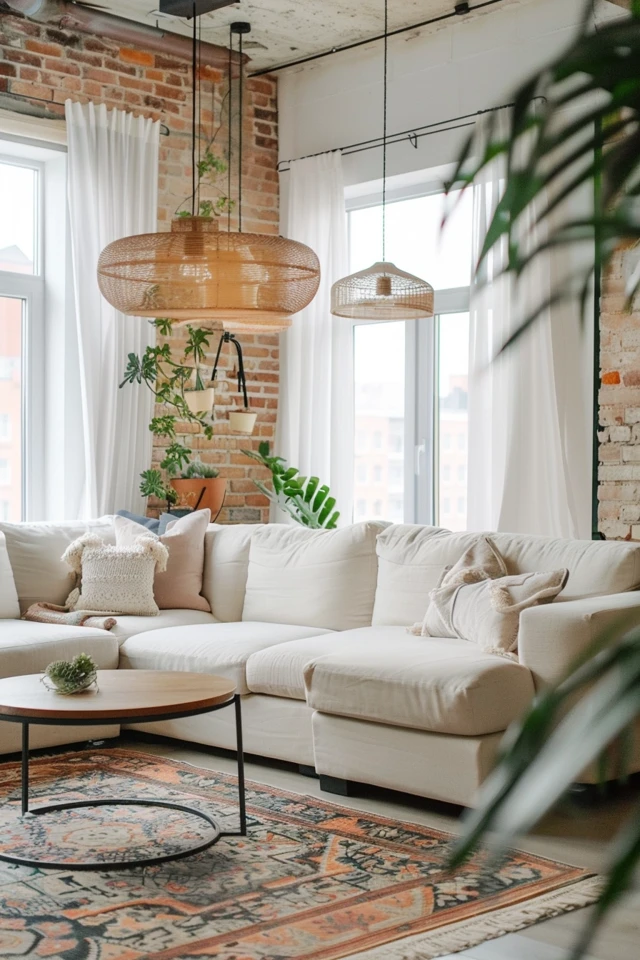
5 Tips for Stylish Basement Window Treatments
Basements often get a bad reputation for being dark, cold, or uninviting, but the right window treatments can completely change that narrative. When you treat basement windows with the same design attention as your living room, you effectively erase the “below-grade” feeling of the space.
Whether you are designing a cozy media room, a guest suite, or a functional home office, the windows are your connection to the outside world. Be sure to scroll to the end of this blog post to see the full Picture Gallery for inspiration.
At-a-Glance: Key Takeaways
- Fake the height: Mounting drapery hardware as close to the ceiling (or joists) as possible makes small basement windows feel significantly larger.
- Layering is luxury: Combine hard treatments (blinds/shades) with soft treatments (curtains) to add visual warmth and texture to a boxy room.
- Mind the materials: Basements are naturally more humid; choose faux wood, aluminum, or synthetic fabrics over natural fibers like silk or untreated linen.
- Preserve the light: extend curtain rods 10 to 12 inches past the window frame so the stack of the curtain sits against the wall, not the glass.
- Safety first: Ensure your window treatments do not obstruct emergency egress routes; they must operate easily and clear the opening fully.
What This Style Means (and Who It’s For)
Stylish basement window treatments are about architectural correction. Most basement windows are short, wide, and placed high up on the wall, often referred to as “hopper” or “slider” windows.
Without proper styling, these windows can look like afterthoughts or utility vents. The goal of this design approach is to trick the eye into seeing a standard-sized window, creating a sense of normalcy and comfort.
This approach is specifically for homeowners who are finishing their basements to be true extensions of their living space. If you are creating a bedroom, the focus shifts to privacy and light control. If you are designing a playroom, the focus shifts to durability and cordless safety.
This is also crucial for renters or owners of garden-level apartments. Even if you cannot change the size of the glass, you can change the perceived size of the opening through smart textile placement.
The Signature Look: Ingredients That Make It Work
To achieve a high-end look in a basement, you need to move away from the standard cheap plastic mini-blinds. The signature look involves three main ingredients: texture, expansion, and light management.
Texture and Warmth
Basements usually feature a lot of drywall, concrete, or carpet. They lack the architectural details found upstairs, like crown molding or fireplaces. Your window treatments need to compensate for this.
- Woven Woods: Use bamboo or grassy shades (often lined for privacy) to add organic texture.
- Fabric Roman Shades: These add softness without the bulk of floor-length drapes, perfect for windows above furniture.
- Performance Velvet: If you use drapes, a heavy velvet creates acoustic dampening, which helps reduce the echo often found in basements.
Visual Expansion
The most critical ingredient is manipulating scale. We rarely treat the window size as it is; we treat it as we want it to be.
- The “Wall of Drapery”: If you have a small window on a short wall, run the curtains wall-to-wall. This masks the small window size and creates a feature wall.
- The Outside Mount: Never mount shades inside the glass frame if the window is tiny. Mount them on the wall above the trim to make the window appear taller.
Layout & Proportions (Designer Rules of Thumb)
In my years of designing lower-level spaces, I rely on specific measurements to ensure the result looks intentional, not messy. Basements have quirks, like bulkheads and low ceilings, so you have to adapt.
Mounting Height
For drapes, mount the rod as high as possible.
- Standard rule: Halfway between the top of the window frame and the ceiling (or crown molding).
- Basement rule: Ideally, go all the way to the ceiling or the bottom of the soffit/bulkhead. leaving only 1 to 2 inches of breathing room at the top. This lifts the visual ceiling height.
Rod Width and Stacking
You want to maximize every square inch of natural light.
- The Rule: Extend the curtain rod 10 to 15 inches past the window casing on both sides.
- Why: When you open the drapes, the fabric “stack” should rest against the wall, exposing 100% of the glass. If the rod is too narrow, the curtains cover the glass even when open, making a dark basement darker.
Hem Length
There are only two acceptable lengths for floor curtains in a basement.
- The Kiss: The fabric just barely touches the floor. This is the cleanest look.
- The Float: The fabric ends 1/2 inch above the floor. This is best for basements with high-pile carpet or potential moisture issues, as it keeps the hem clean.
- Avoid: Never let curtains end at the window sill unless there is a radiator or permanent furniture (like a built-in desk) directly below it.
Designer’s Note: The Humidity Factor
In a project I worked on recently, the client insisted on 100% linen drapes for a basement guest room. Within six months, the fabric had elongated and sagged due to the humidity changes, dragging on the floor and collecting dust bunnies.
The lesson: In basements, use synthetic blends (polyester, acrylic, or olefin) or faux-wood blinds. They hold their shape and resist moisture absorption much better than natural fibers.
Step-by-Step: How to Recreate This Look
1. Assess the Obstacles
Look for bulkheads, soffits, and mechanicals. Is there a water meter near the window? Is the ceiling height uneven? Note the location of electric baseboard heaters; you cannot hang long drapes over heaters due to fire hazards.
2. Measure for the Illusion
Don’t just measure the window. Measure the wall space available.
- Width: Measure the window frame width and add 20 to 24 inches total (10-12 inches per side).
- Height: Measure from the floor to the highest installable point (ceiling or soffit).
3. Select the “Privacy Layer”
This is the layer closest to the glass.
- Option A: Top-down, bottom-up cellular shades. These are excellent for basements because they let light in from the top while blocking the view from the street level.
- Option B: Faux wood blinds (2-inch slats). These are durable and allow you to tilt light up toward the ceiling, brightening the room.
4. Select the “Soft Layer”
This is your decorative layer.
- If you have space for long drapes, choose a light-filtering fabric to keep it airy, or a blackout liner for media rooms.
- If you have furniture under the window, opt for a stationary Roman shade mounted high above the frame to fake height.
5. Installation Tips
Basement walls are often concrete or masonry behind the drywall. You may need a masonry bit and specific anchors (like Tapcons) if your studs aren’t lining up where you need the brackets.
Budget Breakdown: Low / Mid / Splurge
Low Budget ($50 – $150 per window)
- The Strategy: Ready-made retail and simple functionality.
- Hardware: Tension rods (if inside mounting) or simple matte black rods from big-box stores.
- Treatments: Paper accordion shades (temporary) or vinyl mini-blinds.
- Better Look: use IKEA curtain panels. Buy the longer length and hem them with iron-on tape. Hang them high and wide to mimic a custom look.
Mid-Range ($200 – $500 per window)
- The Strategy: Higher quality materials and better light control.
- Hardware: Crate & Barrel or West Elm telescoping rods with substantial finials.
- Treatments: Faux wood blinds with cloth tape (covers the strings/holes) or cellular shades.
- Layering: Adding linen-blend drapery panels from retailers like Pottery Barn. The fabric weight will be significantly better than the budget options.
Splurge ($800+ per window)
- The Strategy: Custom fit, automation, and luxury fabrics.
- Hardware: Custom-cut traverse rods that allow drapes to glide smoothly with a baton or remote.
- Treatments: Hunter Douglas Silhouette or Pirouette shades, or custom Roman shades made by a workroom.
- Automation: Motorized shades are fantastic for basements, especially for windows that are high up and hard to reach manually.
Common Mistakes (and How to Fix Them)
Mistake 1: The “High-Water” Curtain
Many homeowners buy standard 84-inch curtains for basements with 7-foot ceilings, but because they mount the rod on the frame, the curtains still look short or awkward.
The Fix: Measure specifically. If your ceiling is low, you might need to hem a 96-inch panel or mount the 84-inch panel exactly at the ceiling line to just graze the floor.
Mistake 2: Ignoring Egress Codes
An egress window is a designated emergency exit. If you install a fixed heavy shutter or a shade that is difficult to lift, you are creating a safety hazard.
The Fix: Ensure any treatment on an egress window can be fully raised or swept aside instantly by a child or elderly person. Avoid heavy tie-backs or complicated cord systems.
Mistake 3: The “Black Hole” Effect
Using dark, heavy fabrics on small windows sucks all the light out of the room.
The Fix: If you need blackout capabilities for a movie night, use a light-colored fabric with a blackout liner. The room side of the fabric stays bright, while the liner does the work.
What I’d do in a real project:
- Step 1: Paint the window casing white (if it isn’t already) to bounce light.
- Step 2: Install a cordless, light-filtering cellular shade (inside mount) for privacy and insulation.
- Step 3: Mount a simple black French return rod (curved at the ends) about 2 inches below the ceiling.
- Step 4: Hang neutral, textured drapery panels on rings for easy movement.
Room-by-Room Variations
The Media Room / Home Theater
Light control is paramount here.
- Action: Install side channels. These are U-shaped tracks that stick to the side of the window frame. A blackout roller shade slides inside them, preventing light gaps (halos) at the edges.
- Styling: Layer heavy velvet curtains over the top to absorb sound and create a cinema vibe.
The Guest Bedroom
You need privacy and darkness, but also a welcoming feel.
- Action: Use a “day and night” shade. This is a single headrail that houses two fabrics: one sheer and one blackout. Guests can choose their privacy level.
- Styling: Keep colors light and airy to prevent the room from feeling like a dungeon.
The Playroom / Gym
Safety and durability rule this space.
- Action: Go cordless. Children and dangling cords are a dangerous mix. Cordless roller shades or shutters are best.
- Styling: If using drapes in a playroom, ensure the hardware is anchored into studs, as kids might pull on the fabric. In a gym, solar shades are excellent—they reduce glare on screens but allow you to see outside.
Finish & Styling Checklist
Before you call the project done, run through this checklist to ensure the finish level is professional.
- Check the finials: If your window is close to a corner, ensure the decorative end of the curtain rod (the finial) fits. If not, use an “end cap” or a French return rod on that side.
- Train the drapes: New curtains flare out at the bottom like a triangle. Fold them into an accordion shape by hand and loosely tie them with a ribbon for 3-4 days. This “trains” the pleats to hang straight down.
- Hardware color: Match your drapery hardware to the other metals in the room (cabinet pulls, light fixtures) or go with matte black for a modern, high-contrast look.
- Clip rings: Using rings instead of sliding the rod through the fabric pocket makes the curtains slide easier and look more expensive. It also adds about an inch of length to the curtain.
FAQs
What if my basement windows are deep wells?
Deep wells are great for inside-mounting blinds or shades. You can place the treatment close to the glass, leaving the deep sill open for decor like plants (if there is light) or books. Just ensure the handle of the window doesn’t obstruct the shade’s movement.
Can I use shutters in a basement?
Yes, but choose composite or vinyl shutters, not real wood. Real wood can warp in the humidity variance of a basement. Shutters are excellent for curb appeal and privacy, but they do block significantly more natural light than shades, even when open.
How do I clean basement window treatments?
Basements tend to be dustier than upper levels.
- Hard treatments (blinds): Vacuum with a brush attachment monthly. Wipe faux wood with a damp microfiber cloth.
- Soft treatments (drapes): Take them outside and shake them vigorously twice a year. Steam them in place to kill dust mites and refresh the pleats.
Conclusion
Treating your basement windows with intention is the fastest way to elevate the entire level of your home. By ignoring the “basement” label and applying standard interior design principles—proper scale, luxe layering, and smart material choices—you create a space that feels just as curated as your main floor.
Remember, the goal is to maximize light while maintaining privacy and warmth. Don’t be afraid to fake the height or width of your windows; it is a design secret used by pros in almost every lower-level renovation.
Picture Gallery


