
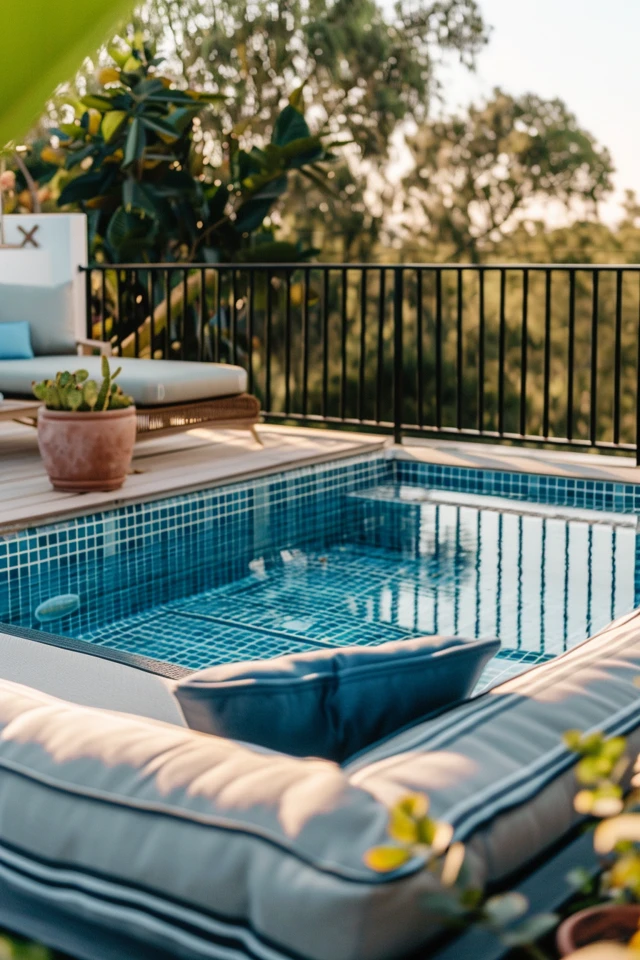
Title: Above Ground Pool Privacy Ideas for Your Oasis
Introduction
There is nothing quite as jarring as floating peacefully in your pool, only to make direct eye contact with a neighbor watching from their second-story window. The illusion of a private resort is instantly broken. Above-ground pools present a unique challenge because the swimmers are elevated, often putting them on display for the entire neighborhood.
Creating a true backyard oasis requires more than just water; it requires a sense of seclusion. Whether you are dealing with a tight budget, a rental property, or a small lot, the goal is to obstruct sightlines without making the space feel claustrophobic. You want to feel enclosed and safe, but not trapped.
In this guide, I will walk you through professional strategies to screen your pool effectively. We will look at structural solutions, landscaping layers, and styling tricks that interior designers use to create intimacy outdoors. If you are looking for visual inspiration, don’t miss the Picture Gallery at the end of this blog post.
1. Structural Privacy Screens and Fencing
The most immediate solution for privacy is physical screening. However, simply putting a fence around the yard often isn’t enough for an above-ground pool. Because the water level is already four to five feet off the ground, a standard six-foot privacy fence only offers privacy from the waist down.
To fix this, you need to bring the privacy screen closer to the pool’s edge. One popular method is installing privacy panels directly onto the pool’s vertical uprights or the surrounding deck railing.
Bamboo and Reed Fencing
For a budget-friendly and renter-friendly option, look into rolled bamboo or reed fencing. This material is lightweight and adds an instant tropical texture.
You can zip-tie these rolls to existing safety railings. I recommend doubling up the layers; a single layer of reed is often too transparent. If you layer them, you get near-total blockage of view while still allowing air to filter through.
Lattice Panels with Vines
If you have a pool deck, installing lattice panels is a classic designer move. Lattice is lightweight and doesn’t create a “solid wall” feeling that can make a small deck feel smaller.
To elevate the look, use a tight-weave privacy lattice (with openings smaller than 1 inch). Paint it a dark charcoal or forest green. Dark colors recede visually, helping the screen blend into the background rather than standing out as a barrier.
Designer’s Note: The Wind Load Factor
A common issue I see in DIY projects is attaching solid privacy fabrics or panels to a pool structure that isn’t rated for it. If you attach a solid canvas to your pool railing, a strong gust of wind acts like a sail. This can bend your pool wall or rip the railing off. Always choose materials that allow airflow, or build a freestanding screen that is anchored into the ground, separate from the pool structure.
2. Landscaping Layers and “Green” Walls
Landscaping is the softest, most natural way to add privacy. In landscape design, we call this “softscaping.” The goal is to create a living wall that grows with your home.
When selecting plants for an above-ground pool, you must consider the root systems. You never want aggressive roots growing under the pool liner or into the plumbing.
Columnar Trees
If you have space around the perimeter, “Emerald Green” Arborvitae is the gold standard. They grow tall and narrow (about 3 to 4 feet wide) and can reach 12 to 14 feet in height. This is perfect for blocking second-story views from neighbors.
Plant them about 3 feet away from the pool wall to allow for maintenance access. You need to be able to walk around the pool to check for leaks or clean the exterior.
Container Gardening on Decks
If your pool is surrounded by a deck, use large planters to create a wall. I recommend rectangular trough planters that are at least 30 inches tall.
Fill them with tall ornamental grasses like Feather Reed Grass or Horsetail Reed. These plants are hardy, they don’t drop messy leaves into the water, and they create a beautiful rustling sound in the wind which adds to the sensory experience.
Potted Bamboo (The Safe Way)
Bamboo is the fastest-growing privacy screen available, but never plant it in the ground unless it is a clumping variety. Running bamboo will take over your yard and destroy your pool pad.
Instead, plant bamboo in galvanized steel troughs. This creates a modern, industrial-chic look and keeps the roots contained. The bamboo can easily reach 10 feet tall in a single season, providing a dense, lush green curtain.
3. Decking Configurations and Partial Burials
Integrating your pool into a deck is the best way to make it look like a permanent fixture rather than a temporary addition. It also gives you total control over privacy sightlines.
If you are in the planning phase, consider a “partial bury.” This involves excavating the ground so the pool sits about two feet deep. This lowers the swimmer’s profile, making standard yard fences much more effective.
The “Privacy Corner” Layout
You do not need to screen the entire circumference of the pool. In interior design, we focus on “zones.” Identify the zone where you hang out the most—usually where the steps enter the pool or where the lounge chairs are.
Focus your budget on building a high privacy wall or pergola just in that specific corner. A wood slat wall on one side of the deck is often enough to block the main line of sight from the street or the neighbor’s kitchen window.
Railing Height Rules
Standard deck code usually requires a railing height of 36 to 42 inches. However, for privacy, this is too low.
I often design custom railings that are 5 to 6 feet high on the “public” side of the deck. We transition down to standard height on the side facing the house. This directs the view toward your own home and blocks the view from the outside world.
4. Overhead Solutions: Canopies and Sails
Sometimes the prying eyes aren’t coming from the yard next door, but from the windows above. If you live in a dense subdivision, two-story homes look right down into your pool.
Shade Sails
Triangular or rectangular shade sails are excellent for this. By mounting them at an angle—lower on the neighbor’s side and higher on your side—you create a visual block without losing all your sunlight.
When installing shade sails, use heavy-duty steel posts cemented into the ground. Do not rely on wood 4x4s, as the tension can warp them over time.
Pergolas with Retractable Roofs
If you have a pool deck, a pergola adds architectural weight. For maximum flexibility, install a retractable fabric canopy inside the pergola beams.
You can pull the fabric closed when you want to swim laps in private or nap on a float, and open it when you want to tan. This flexibility is key for small spaces where fixed roofs might make the area feel dark.
Cantilever Umbrellas
For a non-permanent solution, invest in a large cantilever umbrella (10-12 foot span) with a tilt function. Position the base outside the pool or on the deck.
You can tilt the umbrella vertically to act as a portable wall. This is a great “hack” for renters who cannot build permanent structures.
5. Lighting and Ambiance for Nighttime Privacy
Privacy isn’t just about physical barriers; it is also about lighting. If you light your pool like a stadium, you are putting yourself on a stage.
The “Glare Bomb” Strategy
You generally want to keep the pool area darker than the perimeter. If you place bright lights pointing outward at the property line, it creates a wall of light that makes it difficult for outsiders to see in, while you can still see out.
However, be respectful of neighbors. A better approach for residential areas is low-voltage downlighting.
Downward Path Lighting
Install cap lights on your fence posts and deck posts that shine strictly downward. This illuminates the floor for safety but keeps the upper area dark.
If you have trees or privacy hedges, use uplighting at the base of the plants. This draws the eye to the greenery and away from the people in the pool. It creates a “silhouette effect” where the boundary of the room is highlighted, making the space feel enclosed and cozy.
Pool Interior Lighting
Use a color-changing LED light inside the pool. Deep blues and purples are less bright than white light and create a moody, intimate atmosphere that is less visible from a distance.
Common Mistakes + Fixes
Mistake 1: Planting messy trees too close.
I often see homeowners planting Crape Myrtles or River Birches right next to the pool for quick shade.
The Fix: Avoid anything that sheds leaves, bark, or flowers constantly. These will clog your skimmer and ruin your water chemistry. Stick to ornamental grasses, palms (if climate permits), or evergreens.
Mistake 2: Ignoring the “fishbowl effect” of lattice.
People buy wide-grid lattice (diagonal squares) thinking it provides privacy. From a distance, wide lattice is almost transparent.
The Fix: Buy “privacy lattice” (square grid with small holes) or line the back of standard lattice with outdoor mesh fabric.
Mistake 3: Creating a fortress.
Walling off the pool completely can block airflow. An above-ground pool relies on breezes to keep swimmers cool.
The Fix: Use louvers or horizontal slats with 1-inch gaps. This breaks the sightline but allows the breeze to pass through.
“What I’d Do” – A Designer’s Mini Checklist
If I were designing a privacy plan for a standard 24-foot round above-ground pool on a budget, here is the exact formula I would use:
1. Identify the worst view: Stand in the pool. Where is the most uncomfortable sightline? (Usually the neighbor’s deck).
2. Build a focal point shield: I would install three 4×8 panels of horizontal wood slatting just in that line of sight, positioned 2 feet from the pool wall.
3. Layer with grasses: In front of those panels (between the wood and the pool), I would plant a row of Karl Foerster grass. It is vertical, tidy, and soft.
4. Distract with sound: I would add a small water feature or fountain nearby. White noise masks conversation, adding auditory privacy.
5. Style the foreground: I would hang string lights on the inside of the privacy panels to draw the eye inward.
Final Checklist: Planning Your Privacy Project
Before you buy materials, run through this quick list to ensure your plan is solid.
Check Local Codes: Does your city restrict fence heights? (Many limit front yards to 4 feet and backyards to 6 feet).
Review HOA Rules: Some associations ban specific materials like bamboo or corrugated metal.
Measure Twice: Measure the height of your pool deck relative to the neighbor’s window. A 6-foot fence might technically be high, but if you are standing on a 4-foot deck, you are visible.
Call Before You Dig: If planting trees or installing posts, call 811 to check for underground utilities.
* Account for Sun: Ensure your privacy screen doesn’t block the afternoon sun if you want to tan.
FAQs
Can I attach a privacy fence directly to my above-ground pool walls?
Generally, no. Most manufacturers warn against drilling into the top rails or uprights, as it can void the warranty and compromise the structural integrity. It is safer to build a freestanding structure just inches away from the pool or attach lightweight reed fencing to existing safety railings using zip ties.
What is the best fast-growing plant for pool privacy?
Bamboo is the fastest, but it requires containment. For standard shrubs, the “Green Giant” Arborvitae can grow 3 feet per year. Privet hedges are also fast-growing but require frequent trimming to keep them tidy.
How do I get privacy for a rental home with an above-ground pool?
Focus on temporary solutions. Weighted outdoor curtains, cantilever umbrellas, and large potted plants are your best friends. Rolls of reed fencing attached to chain link fences are also easy to remove when you move out.
How high should a privacy screen be for a pool deck?
If you are trying to block the view from a neighbor’s ground-level yard, a 6-foot railing is usually sufficient. If you are blocking a second-story window, you may need an overhead solution like a shade sail or a pergola roof.
Conclusion
Transforming your above-ground pool from an exposed water tank into a private sanctuary is entirely possible with a mix of structure and nature. It comes down to layering. Do not rely on just one fence; use a combination of distance screening (trees), immediate screening (deck railings), and overhead screening (umbrellas).
By controlling the sightlines, you change the entire psychology of the space. Instead of worrying about who is watching, you can focus on the cool water and the company of your family. Start with the “worst view” first, block it, and then work your way around the pool until it feels just right.
Picture Gallery


