
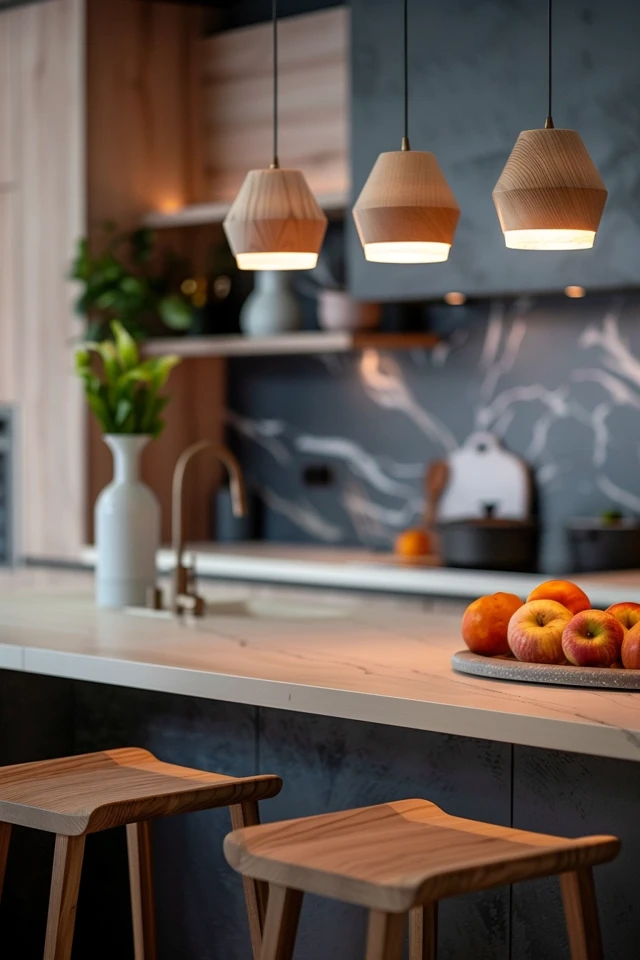
Accent Wall Kitchen Ideas for Stunning Makeovers
The kitchen is often called the heart of the home, but in many houses, it is visually strictly utilitarian. We spend hours selecting the perfect cabinet hardware and durable countertops, yet we frequently leave the walls blank or covered in neutral, builder-grade beige. An accent wall is one of the most effective tools in an interior designer’s arsenal to inject personality, depth, and warmth into a cooking space without a full-scale renovation.
I remember walking into a client’s kitchen that had beautiful white shaker cabinets and high-end appliances, but it felt sterile, almost like a laboratory. By simply adding a vertical shiplap wall painted in a deep sage green behind the breakfast nook, the entire energy of the room shifted from cold to inviting. If you are looking for visual inspiration to spark your own creativity, be sure to check out the curated Picture Gallery at the end of this blog post.
Whether you are working with a tight rental budget or planning a permanent architectural upgrade, there is a solution for every space. This guide covers the practical realities of choosing materials that can withstand heat and humidity while elevating your design.
1. The Power of Paint: Color Theory and Finish
Paint is the most accessible entry point for an accent wall, but in a kitchen, it requires more thought than just picking a pretty swatch. You have to account for fixed elements like your cabinetry color, backsplash, and flooring tones. A painted accent wall works best on a wall that has no upper cabinets, or the wall furthest from the heavy work zones, such as a dining nook.
When selecting a color, consider the “60-30-10” rule of interior design. In this context, 60% of the room is your walls and cabinets, 30% is upholstery or flooring, and the accent wall serves as that bold 10% shift (or part of the 30% if you go for a softer tone). For example, if you have an all-white kitchen, a charcoal or navy wall creates a focal point that grounds the space and makes the white cabinetry pop.
Texture and sheen are critical in a cooking environment. Never use flat or matte paint in a kitchen, even on an accent wall that isn’t directly behind the stove. Airborne grease and moisture travel, and matte finishes hold onto dirt. Opt for a high-quality satin or semi-gloss finish. These reflect light beautifully and, more importantly, can be wiped down with a damp cloth without burnishing the paint.
Designer’s Note: The Lighting Trap
I see this happen constantly: a homeowner falls in love with a dark, moody color like “Iron Ore” or “Hale Navy” online, paints the wall, and hates it because it looks like a black hole.
The fix: Dark accent walls absorb light. If your kitchen has limited natural light, you must increase your artificial lighting. Add recessed cans or install wall sconces on the accent wall to wash light down the surface.
2. Wallpaper and Murals: Pattern and Scale
Wallpaper has made a massive resurgence, and modern technology has made it kitchen-friendly. For a kitchen accent wall, you generally have two material choices: traditional non-woven paper (paste-the-wall) or peel-and-stick vinyl. Vinyl is an excellent choice for renters or high-splash zones because it is essentially a sticker that repels water and can be wiped clean with mild soap.
Scale is the most important factor when choosing a pattern. In a kitchen, you already have a lot of visual “noise” from cabinet doors, drawer pulls, appliances, and items on the counter. If you choose a tiny, busy pattern, the room will feel cluttered. I recommend medium-to-large scale botanicals or geometrics. These larger repeats allow the eye to rest and make the room feel expansive rather than cramped.
Placement is key for longevity. Avoid placing wallpaper directly behind a gas range unless you have a stainless steel or glass backguard protecting it. The heat can cause the adhesive to fail, and the paper will peel or scorch. A far safer bet is the wall opposite the sink or the wall connecting the kitchen to the living area.
Common Mistakes + Fixes
Mistake: Stopping the wallpaper mid-wall because of cabinetry.
Fix: Wallpaper needs clear boundaries. It should run corner-to-corner. If you have to stop on an open wall, install a piece of vertical trim molding to create a deliberate edge.
3. Counter-to-Ceiling Tile and Stone
If you want a look that screams “luxury custom home,” stop treating tile as just a minimal backsplash. Taking tile from the countertop all the way to the ceiling is a signature move I use in high-end projects. This works exceptionally well on the sink wall, especially if there are windows flanking the sink.
Subway tile is the classic choice here, but to keep it from looking generic, pay attention to the glaze and texture. I prefer “Zellige” style tiles, which have uneven surfaces and edges. This texture catches the light differently throughout the day, adding movement to the wall. For a more industrial or rustic vibe, thin brick veneers are a fantastic option. They add warmth and history to new construction.
When tiling an entire wall, you must plan your electrical outlets. White plastic outlets on a beautiful dark green tile wall look like an afterthought. Coordinate your outlets and switches to match the tile, or better yet, place them horizontally near the countertop to keep the vertical expanse of tile uninterrupted.
Realistic Measurements
Standard backsplash height is 18 inches. When you extend that to a standard 8-foot (96-inch) ceiling, you are committing to significantly more material and labor.
Budget Tip: If slab stone is out of budget, look for large-format porcelain tiles (24×48 inches) that mimic marble. You get the seamless look with fewer grout lines for a fraction of the price.
4. Architectural Millwork: Shiplap and Board & Batten
Woodwork adds shadow lines and architectural weight that paint simply cannot achieve. In kitchens, this is a great way to bridge the gap between traditional and modern styles. Vertical shiplap (V-groove) is currently more contemporary than the horizontal “farmhouse” style and helps ceilings appear higher.
Board and batten is another strong contender, particularly for dining nooks within the kitchen. A simple grid pattern creates a sophisticated backdrop for a dining table. For durability, especially in a kitchen where humidity fluctuates, I recommend using high-quality moisture-resistant MDF for painted applications rather than standard pine, which can warp or bleed sap knots over time.
Spacing is critical for a professional look. For vertical battens, I usually space them 12 to 16 inches apart on center. If the spacing is too wide, the wall looks sparse; too narrow, and it looks like a cage. Always map out your spacing on the wall with blue painter’s tape before you make a single cut to ensure you don’t end up with a tiny 1-inch sliver of space in the corner.
What I’d Do in a Real Project
If I am designing a kitchen with a millwork accent wall, I almost always paint the trim, baseboards, and the wall itself in the same color (color-drenching). This unifies the texture. I also ensure the baseboard used on the accent wall is substantial—at least 5 to 6 inches high—to anchor the woodwork.
5. Functional Accent Walls: Shelving and Storage
Sometimes the best accent wall is one that works for you. In smaller kitchens, you might not have the luxury of a purely decorative wall. This is where open shelving on a contrasting background comes into play. By installing warm wood floating shelves against a dark charcoal or navy wall, you create a focal point that doubles as storage.
The key to making this look designed rather than cluttered is styling. This is not the place for your Tupperware or chipped mugs. Use these shelves for your matching dinnerware, clear glass jars with dry goods, or cookbooks. The background color of the wall frames these objects, turning your everyday items into decor.
Another functional option, particularly for families, is a chalkboard wall or a cork wall. However, avoid the dusty mess of traditional chalk by using liquid chalk markers. To keep it looking sharp, frame the chalkboard paint area with wood trim rather than painting the entire wall edge-to-edge. This makes it look like a built-in feature rather than a messy DIY project.
Shelving Measurements
For open shelving to be functional, shelves should be 10 to 12 inches deep to hold dinner plates comfortably.
Spacing matters: Allow 18 to 20 inches of clearance between the countertop and the bottom shelf. Subsequent shelves should have 12 to 15 inches of space between them.
Final Checklist: Designing Your Kitchen Accent Wall
Before you buy a single gallon of paint or roll of wallpaper, run through this checklist to ensure your project runs smoothly.
- Identify the Focal Point: Stand at the main entrance of your kitchen. Which wall does your eye naturally hit first? That is your accent wall.
- Check the Lighting: Tape a large sample of your paint or wallpaper to the wall. distinct lighting conditions: morning, noon, and night (artificial light).
- Measure Twice: Calculate the square footage of the wall. Add 15% extra for waste if you are buying wallpaper, tile, or wood.
- Prep the Surface: Kitchen walls have invisible grease layers. Clean the wall thoroughly with TSP (Trisodium Phosphate) or a degreaser before applying any finish.
- Plan Obstructions: Note where outlets, light switches, and vents are. Ensure your pattern or tile layout doesn’t create awkward cuts around these elements.
Frequently Asked Questions
Will an accent wall make my small kitchen look smaller?
Not necessarily. While it seems counterintuitive, a dark accent wall on the far side of a small kitchen can actually add depth, making the room feel like it extends further back. The key is to keep the other walls light and ensure the accent wall is not cluttered.
Can I put wallpaper over tiles?
I do not recommend this. The grout lines will eventually telegraph through the paper, looking bumpy and unprofessional. If you want to cover old tiles without demolition, look into tile stickers designed specifically for that purpose, or use a specialized primer to smooth the surface first (though removal is difficult).
How do I transition the paint color at an outside corner?
This is a tricky spot. Paint lines should always end at an inside corner (where two walls meet inward). If you have to end a color on an outside corner, the line is very likely to chip and look ragged. It is better to wrap the color around the corner to the next logical stopping point, or install a piece of corner trim to create a hard stop.
Is shiplap still in style for kitchens?
Horizontal, wide-plank shiplap had a massive peak a few years ago. While still popular in coastal or farmhouse homes, the trend is shifting toward thinner, vertical tongue-and-groove paneling or reeded wood details. These offer a more modern, tailored look that feels timeless rather than tied to a specific HGTV era.
Conclusion
Transforming your kitchen doesn’t always require a contractor and a five-figure budget. An accent wall is a manageable project that yields a high return on investment regarding visual impact and personal satisfaction. Whether you choose the moody elegance of a dark painted wall, the texture of brick veneer, or the playful pattern of a botanical wallpaper, the goal is to break up the monotony of cabinetry and appliances.
Remember that the kitchen is a workspace first, so always prioritize durability and cleanability in your material choices. Start with a plan, sample your materials in your specific lighting, and don’t be afraid to take a risk. After all, it is just one wall, but it changes everything.
Picture Gallery


