
Title: Accent Wall Panel Ideas: Elevate Your Space
Introduction
There is a moment in almost every design project where a room feels technically “finished,” yet something is missing. The furniture is scaled correctly, the rug is placed well, and the lighting is adequate, but the space feels flat. In my experience, this usually happens because the room lacks architectural texture. We often try to solve this with paint, but paint only changes the color, not the dimension. This is where accent wall panels come in to save the day.
Wall paneling immediately adds depth, shadow lines, and a custom architectural feel that elevates a standard builder-grade room into a curated space. Whether you are looking for the moody atmosphere of dark vertical slats or the traditional elegance of box moulding, paneling provides a focal point that anchors the furniture layout. It tricks the eye into seeing a space as more expensive and substantial than it actually is.
However, installing accent walls requires more than just buying wood and nailing it up. It requires careful math, an understanding of visual weight, and the right finish choices. For a huge dose of inspiration before you start measuring, make sure to check out the curated Picture Gallery at the end of the blog post. Now, let’s dive into the practical design rules and ideas to get this look right.
1. Selecting the Right Panel Style for Your Architecture
The most common mistake I see homeowners make is choosing a panel style that fights the architecture of their home. While contrast can be good, the bones of the house should generally dictate the style of the wall treatment. You want the accent wall to look like it could have been original to the structure, not a trend that was pasted on top.
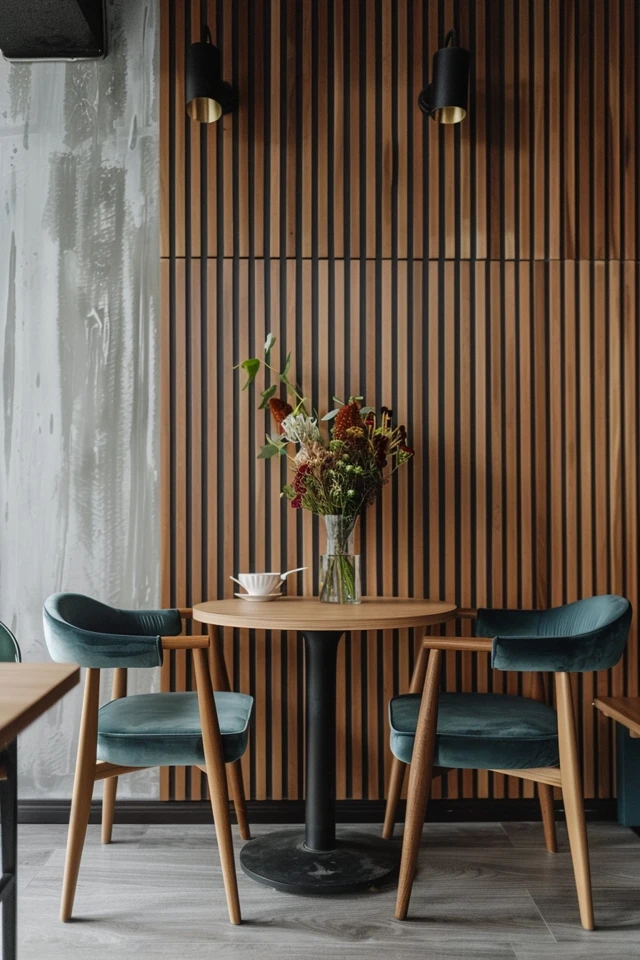
For modern, mid-century, or Scandinavian-inspired homes, vertical wood slats or “fluted” panels are the best choice. The vertical lines draw the eye upward, making standard 8-foot ceilings feel higher. This style relies on natural wood tones—think white oak, ash, or walnut—to bring warmth to otherwise minimal spaces. If you have a contemporary home, avoid heavy traditional chair rails or ornate crown moulding integration.
For traditional, transitional, or farmhouse styles, board and batten or picture frame moulding (wainscoting) is the gold standard. This grid-like pattern adds visual weight and formality. In a transitional home, I prefer a simple shaker-style grid without extra decorative beading inside the boxes. This keeps the look clean but substantial.
Designer’s Note: Material Matters
If you plan to paint the wall, save your money and use MDF (Medium Density Fiberboard). It is smoother than real wood, doesn’t warp as easily, and paints beautifully without visible grain. If you want a stained wood look, you must use solid wood or high-quality wood veneer. Never try to stain pine construction lumber from the hardware store for an interior accent wall; the grain is too wild and often looks cheap.
2. The Math of Spacing and Layout
Nothing ruins an accent wall faster than awkward spacing. I cannot stress this enough: do not start cutting until you have drawn the wall out on paper. If you are doing a board and batten grid, you want to avoid “slivers” (very thin boxes) at the corners of the room. The layout must be intentional.
How to calculate vertical batten spacing:
- Measure the total width of the wall in inches.
- Decide how many “spaces” (boxes) you want.
- Multiply the number of battens by the width of a single batten (e.g., 5 battens x 2.5 inches = 12.5 inches of wood).
- Subtract the wood width from the total wall width.
- Divide the remaining number by the number of spaces. This gives you the exact distance between each board.
For horizontal spacing (height), consider the “Rule of Thirds.” If you aren’t doing a full floor-to-ceiling wall, never stop the paneling exactly at the halfway mark of the wall height. It visually cuts the room in half and lowers the ceiling. Instead, install wainscoting at 1/3 of the wall height (around 32-36 inches) or 2/3 of the height (around 60-64 inches).
Common Mistake: Ignoring Outlets and Switches
Beginners often lay out a perfect grid and then realize a vertical board lands directly on top of a light switch or electrical outlet.
The Fix: Shift your entire layout left or right by a few inches during the planning phase. If a board must land on an outlet, you will need to use a jigsaw to notch the wood and install a box extender so the outlet sits flush with the new wood surface.
3. Finish, Color, and Sheen Strategies
Once the carpentry is done, the finish will determine the vibe. The current design movement is shifting away from the high-contrast “white wall with gray grid” look. That style can feel dated and disjointed. instead, I recommend a technique called “color drenching” or monochromatic styling.
Color drenching involves painting the baseboards, the wall panels, the drywall in between, and even the crown moulding the exact same color. This unifies the texture and makes the wall feel like a solid architectural element. Deep navies, forest greens, or charcoal grays look incredible this way. It creates a moody, cozy backdrop that allows your furniture (like a camel leather sofa or a beige linen headboard) to pop.
Sheen Guide:
- Satin: My go-to for paneled walls. It is durable enough to wipe down but isn’t so shiny that it highlights every imperfection in the drywall.
- Semigloss: Use this only for very traditional wainscoting in high-traffic areas like mudrooms or hallways.
- Eggshell/Matte: Avoid these for the woodwork itself. They are difficult to clean, and dust settles on the horizontal ledges of the paneling.
If you are using vertical wood slats, the finish strategy is different. You are likely keeping the wood natural. In this case, ensure the drywall behind the slats is painted black or dark charcoal before installation. This creates shadow depth and hides the wall, making the slats appear to float.
4. Integration with Baseboards and Crown Moulding
The transition points—where the accent wall meets the floor and the ceiling—are the hardest parts of the installation. A professional finish depends on how you handle the baseboards. You generally cannot simply butt a vertical batten on top of an existing decorative baseboard; the batten will overhang the curve of the baseboard, creating an ugly gap.
What I’d do in a real project:
- Remove the old baseboard: Carefully pry off the existing baseboard on that wall.
- Install the paneling: Run your vertical boards all the way down to about 1/4 inch off the floor.
- Install new baseboard: Place a simple, flat-stock craftsman baseboard over the bottom of your vertical boards. This creates a sandwiched look that feels built-in.
- Alternative (The Angle Cut): If you must keep existing baseboards, cut the bottom of your vertical batten at a 45-degree angle back toward the wall. This “returns” the wood visually and minimizes the overhang, though removing the baseboard is always the cleaner option.
For crown moulding, the logic is similar. If you have crown, the paneling should tuck underneath it. If you are retrofitting, you may need to add a horizontal header board just below the crown to give the vertical pieces a place to terminate cleanly.
5. Lighting Your Accent Wall
You can build the most beautiful wall in the world, but if it is in a dark shadow, the texture disappears. Texture relies on light to create dimension. The shadows cast by the battens or slats are what give the wall its character. Therefore, lighting plan integration is essential.
If possible, install recessed “grazer” lights in the ceiling about 6 to 12 inches away from the wall. These lights shine straight down the face of the panels, exaggerating the texture and drama. If rewiring the ceiling isn’t an option, use plug-in wall sconces.
Sconce Placement Rules:
- Height: For a living room, mount sconces roughly 60 to 66 inches from the floor.
- Spacing: Do not place sconces too close to the corners. Keep them at least 12 to 18 inches in from the edge of the wall.
- The Grid: Center your sconces perfectly inside the “boxes” of your grid, or perfectly centered on a vertical stile. Never place them randomly off-center relative to the woodwork.
For wood slat walls, LED strip lighting is a fantastic modern addition. You can route a channel into the side or top of the paneling to hide an LED strip, creating a soft, warm glow that highlights the timber grain.
Final Checklist: The Project Execution Plan
Before you head to the lumber yard, run through this checklist to ensure you are fully prepared for the project.
- Wall condition check: Is the wall flat? Use a long level. If the wall bows significantly, you will need construction adhesive and potentially some shims to keep the wood straight.
- Stud finding: Mark every stud with painter’s tape before you start. You want to nail into studs wherever possible for security.
- Material calculation: Buy 15% more material than you think you need. Mistakes happen, and wood often has defects.
- Primer purchase: If using raw wood or MDF, you must use an oil-based or high-quality bonding primer. Water-based paint raises the grain on MDF, creating a fuzzy texture if not primed first.
- Caulk and filler: You will need paintable latex caulk for the seams where the wood meets the wall, and wood filler for the nail holes. Do not use caulk for nail holes; it shrinks and leaves divots.
Common Mistakes + Fixes
Mistake: The “Floating” Wall.
The Issue: Homeowners stop the paneling on an outside corner, leaving the unfinished edge of the wood exposed.
The Fix: Use a piece of corner moulding (L-shaped trim) to wrap the corner, or finish the edge with a very thin piece of veneer banding if using a slat wall. The raw edge of MDF or plywood should never be visible.
Mistake: Renter’s Regret.
The Issue: Using liquid nails (construction adhesive) in a rental. This will rip the drywall paper off when removed, causing major damage.
The Fix: If you are renting, look for “peel and stick” wall moulding kits specifically designed for easy removal, or use small brad nails only. Small nail holes are easy to patch; torn drywall paper is a nightmare.
FAQs
Can I install accent paneling in a small room?
Absolutely. Many people fear that adding bulk to the walls will shrink the room. However, vertical paneling draws the eye up, and the texture adds depth, which actually tricks the brain into perceiving more space. Just stick to a monochromatic color palette (same color on walls and panels) to keep it from feeling cluttered.
How do I handle paneling around windows?
Treat the window casing (the trim around the window) as your boundary. Your paneling should butt up against the window casing. Ideally, your window casing should be thicker than your wall paneling. If your paneling is 3/4″ thick, your window casing should ideally be 1″ thick. If it’s not, you may need to replace the window trim or bevel the edge of your paneling for a smooth transition.
Is this suitable for a bathroom?
Yes, but material choice is critical. In a full bath with a shower, humidity is the enemy. Use PVC or urethane millwork instead of MDF. MDF acts like a sponge and will swell if moisture gets into the seams. If you use real wood, ensure it is sealed on all sides (even the back) before installation.
Conclusion
Adding an accent wall panel is one of the highest-return DIY projects you can undertake. It changes the acoustics, the lighting, and the perceived value of the home. Whether you opt for a quiet, japandi-style slat wall or a bold, color-drenched library grid, the key lies in the preparation. Measure twice, respect the architecture of your home, and don’t skip the sanding and caulking steps. These details distinguish a professional design from a weekend craft project.
Picture Gallery


