
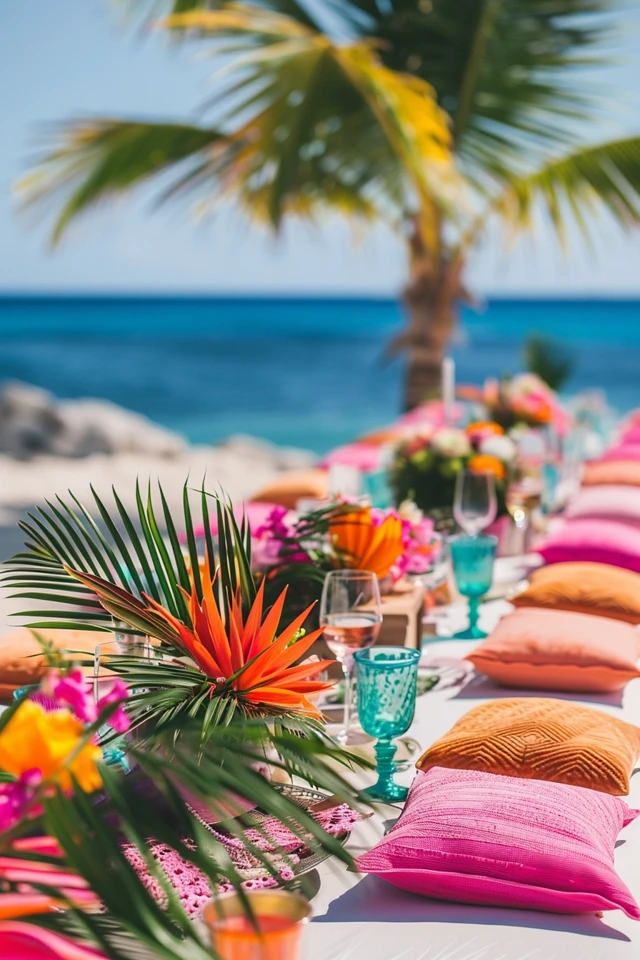
Adult Beach Party Ideas: Sun, Fun & Themes!
Hosting an adult beach party requires a delicate balance between relaxed fun and sophisticated design. As a designer, I approach these events exactly like I approach a living room renovation. You need distinct zones for conversation, durable materials that can withstand the elements, and a lighting plan that transitions seamlessly from the golden hour to late night.
Whether you are hosting on actual sand or transforming your backyard pool area into a coastal oasis, the principles of spatial planning remain the same. We want to avoid the tacky “spring break” aesthetic and aim for something elevated, comfortable, and functional. Be sure to check out the Picture Gallery at the end of this blog post for visual inspiration on these layouts.
In this guide, I will walk you through the structural and stylistic elements needed to pull off a memorable event. We will cover layout logistics, wind-proof décor, and how to mix high-end textures with practical constraints. Let’s design a party that feels effortless but looks professionally curated.
1. Spatial Planning and Zoning the Sand
The biggest mistake I see in outdoor entertaining is a lack of structure. Without walls, guests often feel lost, and the party tends to cluster awkwardly around the food or the cooler. In interior design, we use furniture to define “rooms,” and you must do the same outside.
I recommend creating three distinct zones: a lounge area for conversation, a dining or grazing station, and an activity or bar area. Separation is key here. Keep the high-traffic bar area at least 10 feet away from the lounge seating to prevent congestion.
If you are working with a large open beach or yard, use outdoor rugs to ground your furniture. A rug instantly signals to guests that “this is where we sit.” For a standard conversation group of four chairs, a 6×9 outdoor rug is usually the minimum size required to anchor the space effectively.
Designer’s Note: The Circulation Path
In my projects, I always map out the “desire lines”—the paths people naturally take to get from point A to point B.
- The Rule: Main walkways need to be at least 36 to 42 inches wide.
- The Why: This allows two people to pass each other comfortably without spilling drinks.
- The Fix: If you are setting up on soft sand, lay down slat-wood walkways or roll-out boardwalks. This isn’t just aesthetic; it creates a stable surface for guests carrying trays or wearing wedges.
Defining Boundaries
Without architectural walls, you need visual boundaries to make the space feel intimate. I often use potted palms or tall sea grasses in weighted planters to create corners.
If you are on a public beach, low-profile windbreaks or fabric windscreens can offer privacy and define your perimeter. Keep these below eye level (seated height is about 40 inches) so you don’t block the ocean view.
2. Selecting a Sophisticated Theme
“Beach party” is a category, not a specific design theme. To make your event feel polished, you need to narrow down your aesthetic. Avoid generic tropical prints and plastic leis. Instead, look to specific coastal destinations for high-end inspiration.
Theme A: The Tulum Boho
This theme relies heavily on natural textures and neutral tones. Think cream, tan, sage green, and terra cotta.
- Materials: Jute, rattan, unbleached linen, and raw wood.
- Decor: Macrame runners, floor cushions for low seating, and dried pampas grass arrangements.
- Palette: Monochromatic earth tones. This creates a calm, spa-like atmosphere that feels very expensive, even if done on a budget.
Theme B: The Nantucket Classic
This is a crisp, tailored look that works well for dining-focused parties.
- Materials: White painted wood, navy stripes, galvanized metal, and hydrangeas.
- Decor: Hurricane lanterns with white pillar candles, cable-knit throws for the evening chill, and ceramic tableware.
- Palette: Bright white, navy blue, and accents of lobster red or soft gray.
Theme C: Modern Mediterranean
Inspired by the Greek Isles or the Amalfi Coast, this theme is vibrant but structured.
- Materials: Wrought iron, mosaic tiles, and lemon wood.
- Decor: Bowls of fresh citrus fruits as centerpieces, olive branches, and patterned blue-and-white tiles used as trivets or coasters.
- Palette: Cobalt blue, lemon yellow, and stark white.
Common Mistakes + Fixes
Mistake: Over-decorating with “kitsch” items (inflatable palm trees, plastic flamingos).
The Fix: Let the landscape do the work. If you are near the ocean or a pool, that is your focal point. Your decor should accent the view, not compete with it. Use natural elements like driftwood or river stones as decor rather than store-bought plastic props.
3. Lighting the Landscape
Lighting is the single most important element for transitioning a day party into an evening event. Once the sun sets, overhead floodlights will kill the mood instantly. You need low, warm ambient lighting.
Kelvin Temperature Matters
For outdoor entertaining, always check the Kelvin (K) rating on your bulbs. You want 2700K or lower (warm white). Anything above 3000K will look blue and clinical, resembling a parking lot rather than a private beach club.
Layering Your Light Sources
Just like an indoor living room, you need three layers of light:
- Overhead (The String Light Canopy): Bistro lights are a classic for a reason. If you don’t have trees, install temporary poles in weighted concrete planters. Aim for the lowest point of the drape to be 8 feet off the ground so tall guests don’t bump their heads.
- Eye-Level (Lanterns): Place large lanterns on side tables or hung from shepherd’s hooks. Battery-operated LED candles are best here to avoid the wind blowing them out.
- Floor Level (Path Lighting): This is a safety requirement. Solar stakes or portable LED cubes should mark the perimeter and any steps or uneven terrain.
What I’d Do in a Real Project: The Fire Feature
If local regulations allow, a fire pit is the ultimate anchor for an outdoor party. It provides light, warmth, and an activity.
- Measurements: Keep seating 24 to 30 inches away from the edge of the fire pit for legroom and safety.
- The Propane Option: If wood smoke is an issue or prohibited, portable propane fire bowls are excellent alternatives. They are clean-burning and instant to turn off.
4. Furniture & Comfort: The Lounge Factor
Adult guests expect comfortable seating. A few folding chairs won’t cut it. The goal is to recreate the comfort of a living room with materials that can handle sand, salt, and sun.
Seating Groups
Arrange furniture in “U” or “L” shapes to encourage conversation. A standard sofa is about 84 inches long; if you can’t haul a sofa to the beach, use two loveseats or four substantial lounge chairs facing each other.
For a more casual, bohemian vibe, pallet furniture is a great low-cost solution. Stack pallets two high (about 10-12 inches) and top them with deep outdoor foam cushions. This puts guests at a relaxed lounging height.
Textiles and Durability
You must use performance fabrics. Look for solution-dyed acrylics (like Sunbrella) which resist fading and are easy to bleach-clean if wine spills.
- The Throw Pillow Trick: Use heavy, textured pillows. Lightweight pillows will blow away in a sea breeze. I often choose pillows with heavy inserts (down alternative or heavy foam) rather than light poly-fill.
- Blankets: Always have a basket of rolled throws. Temperatures drop quickly near the water. Wool is warm but scratchy; cotton or fleece blends are better for bare skin.
Shade Structures
You cannot expect guests to sit in direct sunlight for four hours. Shade is mandatory.
Umbrellas: A standard 9-foot market umbrella covers a 48-inch round table comfortably. Ensure you have a heavy base (50 lbs minimum) to prevent tipping in the wind.
Shade Sails: These look more architectural and modern. They require three sturdy anchor points, so they work best in backyards with trees or fence posts. Tension is key; a sagging shade sail looks sloppy and catches rain.
5. The Dining Experience: Tablescapes & Materials
The dining setup is where logistics meet aesthetics. Wind is your primary enemy when styling a beach table. Everything needs to be weighted and secure.
Table Linens
Avoid light, flying tablecloths. They will whip into guests’ food. Instead, use a heavy-weight linen runner or forgo the cloth entirely if you have a nice wood or teak table.
If you must use a tablecloth, use tablecloth weights or clip the cloth to the underside of the table. A trick I use is to tie the corners of the cloth to the table legs with decorative jute rope or ribbon.
Dinnerware Selection
For an adult party, I strongly advise against flimsy paper plates. They blow away and feel cheap.
Melamine: High-quality melamine mimics the look of ceramic but is shatterproof. It has weight to it, so it won’t flip over in a breeze.
Glassware: Use acrylic stemware. It looks like crystal but bounces if dropped on a patio. For a beach setting, stemless wine glasses have a lower center of gravity and are less likely to tip over on uneven surfaces.
Centerpiece Logic
Keep centerpieces low and heavy.
- Height Rule: Keep floral arrangements below 12 inches so guests can see each other across the table.
- Stability: Instead of tall vases, use low, wide bowls filled with sand and succulents or shells. The sand adds necessary weight.
- Candles: Open flames will struggle outdoors. Use hurricane glass cylinders to shield candles from the wind. The glass needs to be at least 2 inches taller than the flame.
Buffet Layout
If you are serving buffet style, pull the table away from the wall. This allows guests to access food from both sides, doubling the efficiency of the line.
Space Planning: Allow at least 4 feet of clearance between the buffet table and the nearest dining table. You don’t want guests carrying plates to bump into seated diners.
Final Checklist: The Designer’s “Go-Bag”
When I stage an outdoor shoot or event, I always bring a “Go-Bag” of tools to solve last-minute problems. Here is what you should have on hand:
- Zip Ties (Clear and Black): Useful for securing decor, managing cords, or fixing a broken chair strut.
- Gaffer Tape: Unlike duct tape, this doesn’t leave a sticky residue. Use it to tape down extension cords so guests don’t trip.
- Heavy Duty Clips: For keeping tablecloths or napkins in place on a windy day.
- Bug Spray Station: Don’t make guests ask. Set up a tray with wipes or sprays near the entrance.
- Extra Trash Bags: Plan for more trash than you expect. Hide bins behind a potted plant or screen.
- Bluetooth Speaker (Fully Charged): Plus a backup power bank. Music is part of the design atmosphere.
- Sunscreen: A nice touch for daytime parties.
FAQs
How do I handle bugs without ruining the aesthetic?
I recommend placing citronella coils in decorative ceramic holders rather than using the metal buckets they come in. Additionally, setting up large oscillating fans helps immensely. Mosquitoes are weak flyers; a strong breeze keeps them away better than most candles.
What is the best flooring for a rental backyard with bad grass?
Outdoor rugs are the easiest fix, but for larger areas, consider interlocking teak deck tiles. They snap together without tools, float over the grass or dirt, and provide a solid, upscale floor. You can pop them apart and take them with you when you move.
How much space do I need per guest?
For a cocktail party (mostly standing), calculate about 8-10 square feet per person. For a sit-down dinner or heavy lounge setup, you need closer to 15-20 square feet per person to allow for furniture and circulation.
What if it rains?
Always have a Plan B. If you can’t move indoors, renting a high-peak frame tent is the best option. Frame tents don’t have center poles, so you have more freedom with your layout. Ensure the tent has sidewalls available in case the rain is blowing sideways.
Conclusion
Designing an adult beach party is about anticipating needs before they arise. It is about ensuring the ice is accessible, the seating is deep and comfortable, and the lighting flatters your guests. By focusing on flow, durable materials, and a cohesive color palette, you elevate the experience from a simple gathering to a designed event.
Remember that the best design feels invisible. When the walkways are wide enough, the shade is adequate, and the glass doesn’t tip over, guests can simply relax and enjoy the company. Use these rules of thumb as your foundation, but don’t be afraid to let your personal style shine through the details.
Picture Gallery


