
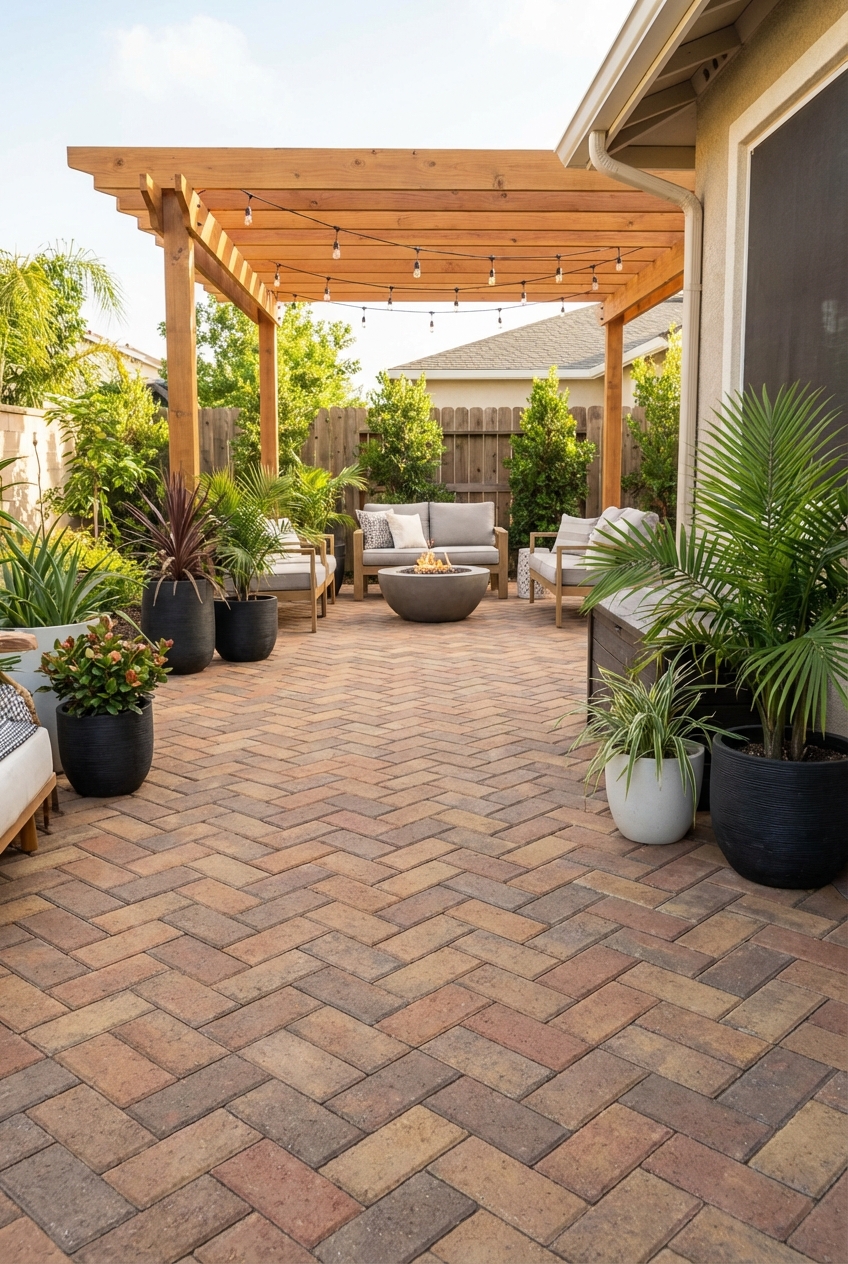
Affordable Patio Paver Designs & Tips
Creating a beautiful outdoor living space often feels like a luxury reserved for massive budgets and sprawling estates. However, after years of designing functional landscapes, I have learned that the most inviting patios are rarely the most expensive ones.
The secret lies in choosing the right materials and patterns that provide a high-end look without the custom-cut price tag. This guide will walk you through the practical steps of designing an affordable, durable, and stylish paver patio that transforms your backyard into a true extension of your home.
At-a-Glance: Key Takeaways
- Focus on Foundations: Your patio is only as good as the ground beneath it; never skimp on the base layers of gravel and sand.
- Standard Sizes Save Money: Stick to 12×12 or 16×16 concrete pavers to avoid the high costs of specialized masonry and complex cuts.
- Drainage is Non-Negotiable: Always slope your patio at least one inch for every eight feet of length to prevent water pooling against your foundation.
- Layout Matters: A simple running bond or basketweave pattern is easier for beginners and reduces material waste compared to a herringbone layout.
- Scale for Furniture: Design your patio based on your furniture footprint, adding at least 36 inches of “walk-around” space for comfort.
What This Style/Idea Means (and Who It’s For)
Affordable paver design is about maximizing visual impact while minimizing labor and material waste. It is a philosophy that favors clean lines, smart material choices, and DIY-friendly techniques over ornate, labor-intensive stonework.
This approach is perfect for homeowners who want a defined outdoor room but are working with a realistic budget. It also appeals to those who prefer a low-maintenance surface compared to wood decks, which require frequent staining and sealing.
If you have a small urban lot, a mid-sized suburban backyard, or even a rental where you have permission to make improvements, these designs offer scalability. The goal is to create a “permanent” feel that adds value to the property without over-investing in materials that are difficult to install or maintain.
The Signature Look: Ingredients That Make It Work
A professional-looking patio relies on a few core “ingredients” that elevate the design from a simple DIY project to an intentional outdoor room. It starts with the material choice, where concrete pavers are the most versatile and cost-effective option.
Material Texture and Color:
Opt for pavers with a slight texture to provide slip resistance and a more natural feel. Tumbled pavers offer a rustic, aged look that hides minor installation imperfections, while smooth-edged pavers provide a sleek, contemporary aesthetic.
The Border (The “Soldier Course”):
One of the easiest ways to make an affordable patio look expensive is by adding a border. Using a different color or orientation for the outer edge creates a “frame” for your patio, making the entire space look custom-designed.
Jointing Material:
The “sand” between your pavers is more important than you think. Polymeric sand, which hardens when misted with water, prevents weed growth and keeps ants from nesting in your joints, ensuring your patio looks clean for years to come.
Layout & Proportions (Designer Rules of Thumb)
In interior design, we talk about “traffic flow” and “clearance,” and the same rules apply to your patio. If your patio is too small, it will feel cluttered; if it is too large, it can feel cold and uninviting.
The 10×10 Rule:
For a basic dining area seating four people, a 10-foot by 10-foot space is the absolute minimum. This allows for a 48-inch table and enough room for guests to pull back their chairs without falling off the edge of the pavers.
Furniture Clearance:
I always recommend a 36-inch clearance for main walkways and 24 inches of space behind any seated chair. If you plan to have a grill, ensure there is at least 48 inches of space between the grill and any seating to prevent smoke from bothering guests and to allow the cook room to move.
The Rule of Thirds for Zoning:
If you have a larger space, divide it into thirds. One-third for dining, one-third for lounging (like a fire pit or outdoor sofa), and one-third for “negative space” or movement. This prevents the patio from looking like a sea of grey stone.
Designer’s Note:
One of the biggest mistakes I see in real projects is people choosing paver colors that perfectly match their house siding. This usually results in a flat, washed-out look. Instead, aim for a color that complements your home’s trim or roof. If your house is light grey, consider a darker charcoal or a multi-tonal tan paver to create necessary visual contrast.
Step-by-Step: How to Recreate This Look
1. Mark the Perimeter: Use stakes and string to outline your patio. Add 6 inches to each side to allow for the installation of edge restraints, which keep the pavers from shifting outward over time.
2. Excavate the Soil: Dig down roughly 7 to 9 inches. This accounts for 4 inches of compacted gravel base, 1 inch of leveling sand, and the thickness of the pavers themselves (usually 2 to 3 inches).
3. Establish the Slope: Use a line level to ensure the patio slopes away from your house. A 1 percent grade (1/8 inch per foot) is usually sufficient to handle rainfall without creating a noticeable incline for your furniture.
4. Lay the Base: Pour 2 inches of crushed stone or “road base” and compact it with a power tamper (which you can rent for a low daily fee). Repeat with another 2 inches and compact again until the surface is rock-hard.
5. Add the Sand Layer: Spread 1 inch of coarse bedding sand. Use two long pipes (screed rails) as guides and run a straight board across them to create a perfectly flat, level surface for your pavers to sit on.
6. Place the Pavers: Start from a 90-degree corner, ideally against the house. Lay the pavers one by one, dropping them straight down onto the sand rather than sliding them, which disturbs the level surface.
7. Install Edge Restraints: Once all pavers are down, install plastic or metal edging around the perimeter. Secure them with 10-inch steel spikes every 12 inches to lock the “rug” of pavers in place.
8. Sweep in Polymeric Sand: Pour the sand over the dry pavers and sweep it into the joints. Use a plate compactor over the top of the pavers to settle the sand, then sweep off all excess before lightly misting with water to activate the binder.
Budget Breakdown: Low / Mid / Splurge
Understanding where your money goes helps you make better trade-offs during the planning phase. Here is how costs generally break down for a 200-square-foot patio.
Low Budget (The DIY Approach):
Stick to basic grey concrete “stepping stone” pavers from a big-box store. Use a gravel base and standard leveling sand. You can complete a 200-square-foot space for roughly $500 to $800 in materials. The look is clean and functional, though it lacks the texture of higher-end products.
Mid-Range (The Designer’s Sweet Spot):
Use tumbled concrete pavers in a multi-tonal color (like “Canyon” or “Earth”). Incorporate a soldier course border and use high-quality polymeric sand. Expect to spend between $1,200 and $2,000. This provides a professional finish that mimics the look of natural stone at a fraction of the cost.
Splurge (The High-End Look):
Opt for natural bluestone, slate, or thick porcelain pavers. These materials are more expensive to buy and harder to cut, often requiring a wet saw rental. A 200-square-foot splurge patio can easily reach $3,500 to $5,000. While beautiful, the durability of mid-range concrete pavers is often comparable.
Common Mistakes (and How to Fix Them)
Mistake: Skipping the Plate Compactor.
Many people try to “hand-tamp” the gravel base. This inevitably leads to the patio settling unevenly within two years, creating tripping hazards.
Fix: Spend the $80 to rent a gas-powered plate compactor. It is the single most important tool for a long-lasting patio.
Mistake: Placing Pavers Too Far Apart.
Leaving large gaps between pavers makes the surface unstable and encourages weed growth.
Fix: Butt the pavers tightly against each other. Most pavers have small “nibs” on the sides to ensure a consistent, narrow joint of about 1/16 to 1/8 of an inch.
Mistake: Ignoring Local Utilities.
Digging 8 inches down can easily sever an irrigation line or an underground power cable.
Fix: Call 811 (the “call before you dig” number) at least three days before you start. It is a free service that marks your utility lines.
Room-by-Room Variations
Think of your patio not as one big slab, but as a series of outdoor “rooms.” Each zone has different requirements for comfort and functionality.
The Dining Zone
This area needs the smoothest surface possible. Avoid heavily textured or “cobbled” pavers here, as they make chairs wobbly and difficult to pull out. Keep this zone closest to the house or outdoor kitchen to minimize the distance you have to carry heavy trays of food.
The Lounge / Fire Pit Zone
This is where you can get more creative with your design. If you want to save money, consider a “paver and gravel” hybrid look. Space large 24×24 pavers about 4 inches apart and fill the gaps with pea gravel or Mexican beach pebbles. This reduces the number of pavers you need while creating a modern, airy feel.
The Walkway Zone
Walkways should be a minimum of 36 inches wide for one person, or 48 inches if you want two people to be able to walk side-by-side. Use a running bond pattern (where the joints are staggered like bricks) to lead the eye toward the destination, whether it is the patio or a garden feature.
Finish & Styling Checklist
A patio is just a floor; the styling is what makes it a home. Use this checklist to finish your project like a pro.
- Rugs: Use an outdoor-rated polypropylene rug to define the seating area. For a 10×10 patio, an 8×10 rug is perfect. Ensure the front feet of all furniture sit on the rug.
- Lighting: Don’t rely on a single bright porch light. Layer your lighting with string lights overhead, solar path lights along the perimeter, and a few “uplights” in nearby trees or large planters.
- Greenery: Use large pots to soften the edges of the pavers. Group pots in odd numbers (sets of 3 or 5) and Vary the heights to create visual interest.
- Furniture Weight: On a paver patio, choose furniture with wider feet or sled bases. Skinny metal legs can sometimes catch in the joints if the pavers aren’t perfectly flush.
- Maintenance: Plan to sweep your patio once a week and hose it down once a month. Re-apply polymeric sand in the joints every 3 to 5 years as needed.
What I’d Do in a Real Project: Mini Checklist
If I were managing your patio installation tomorrow, this is the internal checklist I would use to ensure success:
- Check the weather forecast: Never lay sand or pavers if rain is expected within 24 hours, as it will ruin your leveling efforts.
- Order 10% more pavers than the square footage suggests to account for breakage and mistakes during cutting.
- Double-check the “House Connection”: Ensure the pavers sit at least 2 inches below the threshold of your back door to prevent driving rain from entering the house.
- Validate the “Step-Up”: If your patio requires a step to reach the back door, ensure the step is exactly 7 inches high, which is the standard comfortable height for human gait.
- Perform the “Water Test”: Before applying the joint sand, spray the patio lightly with a hose to see where the water flows. If it pools, you need to lift those pavers and add more sand underneath now, rather than later.
FAQs
Q: Can I lay pavers directly on dirt?
A: No. Dirt expands and contracts with moisture and temperature changes. Without a gravel base, your pavers will shift, sink, and crack within a single season. Always use a compacted base.
Q: Do I need to seal my pavers?
A: Sealing is optional but recommended. A “wet look” sealer can enhance the color of the stone, while a “natural” sealer protects against oil stains from grills and food spills. Wait at least 60 days after installation before sealing to allow any efflorescence (white salty powder) to escape the concrete.
Q: How do I stop weeds from growing between pavers?
A: The key is polymeric sand. Unlike regular sand, it hardens into a mortar-like consistency that weeds cannot penetrate. If weeds do appear, it’s usually because dirt has blown into the joints on top of the sand; a quick spray with a vinegar-based weed killer will fix it.
Q: Are pavers cheaper than a concrete slab?
A: Initially, no. A poured concrete slab is usually cheaper in terms of raw materials and labor. However, pavers are a better long-term investment. If concrete cracks (and it will), it is expensive to repair and always looks patched. If a paver breaks or sinks, you can simply pull up that one stone, fix the base, and put it back.
Conclusion
An affordable patio doesn’t have to look like a budget compromise. By sticking to standard sizes, prioritizing a rock-solid foundation, and using smart design tricks like soldier course borders and “zoning” with furniture, you can create a high-end retreat for a fraction of the cost of a professional masonry install.
The most important part of the process is the preparation. While it is tempting to rush to the “pretty” part of laying the stones, the hours you spend tamping gravel and leveling sand are what will keep your patio looking straight and beautiful for decades. Take your time, measure twice, and don’t be afraid to mix and match affordable materials to create a space that feels uniquely yours.


