
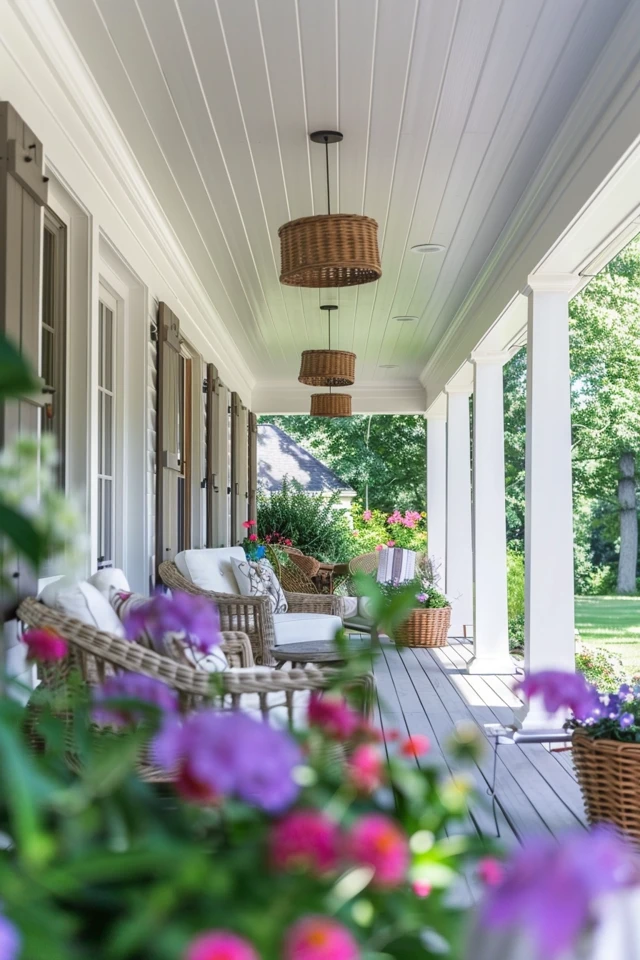
Affordable Porch Ceiling Ideas to Transform Your Home
When we think about curb appeal, we usually look down at the decking or straight ahead at the front door. We often ignore the “fifth wall” above our heads, leaving it as plain plywood or dull vinyl. A thoughtful porch ceiling completely changes the atmosphere of your outdoor living space, turning a basic entryway into a cohesive room.
You do not need a massive renovation budget to make a statement here. Some of the most high-end looks are actually clever applications of inexpensive materials like paint, lattice, or reed fencing. The secret lies in the finish quality and the lighting choices you pair with the ceiling.
If you are looking for visual inspiration to guide your renovation, be sure to check out the Picture Gallery at the end of this blog post. Here are my top strategies for elevating your porch ceiling without breaking the bank.
1. The Power of Paint: Color Blocking and The Haint Blue Tradition
Paint is the absolute most affordable way to change a space. The cost per square foot is pennies compared to installing wood or vinyl. However, simply slapping a coat of white paint on the ceiling is a missed opportunity for design depth.
Consider the Southern tradition of “Haint Blue.” This design choice involves painting the porch ceiling a soft, pale blue-green. Historically, folklore suggested this repelled spirits, but practically, it mimics the sky.
This extends the daylight hours visually and makes the porch feel taller and airier. It also discourages birds and wasps from nesting, as they reportedly confuse the paint for open sky.
Choosing the Right Shade
If your house siding is white or light gray, a soft aqua adds a subtle pop of color without overwhelming the facade. For brick homes, a muted powder blue works beautifully to cool down the warm tones of the masonry.
If you want a modern, dramatic look, consider going dark. A charcoal or “Iron Ore” color can make a high ceiling feel more intimate and cozy. This works exceptionally well if you have cedar posts or natural wood decking, as the contrast makes the wood tones pop.
Designer’s Rule of Thumb: Sheen Matters
- Flat/Matte: Hides imperfections and bumps in old plywood. Harder to clean.
- Satin/Eggshell: The sweet spot. Reflects a little light to brighten the porch but isn’t too shiny. Wipes down easily.
- Semi-Gloss: Only use this on perfect, smooth wood tongue-and-groove. On old surfaces, it highlights every flaw.
2. The Plywood and Lattice “Coffered” Hack
Real coffered ceilings or tongue-and-groove planks are expensive and labor-intensive. You can mimic the look of expensive millwork for a fraction of the price using standard plywood sheets and lattice strips. This is one of my favorite tricks for budget renovations that need to look high-end.
The concept is simple. You cover the existing ugly ceiling with clean sheets of exterior-grade plywood. You then cover the seams where the sheets meet with thin strips of wood (batten) to create a grid pattern.
Step-by-Step Execution
- Install 4×8 sheets of smooth, exterior-grade plywood (like ACX or BCX) over your joists or existing ceiling.
- Map out a grid. A square grid is classic, but rectangular shapes can widen the look of a narrow porch.
- Cover the plywood seams with 1×3 or 1×4 pine boards.
- Add intermediate strips in the center of the panels if you want smaller squares.
- Paint the entire assembly one color. White or cream looks most like traditional millwork.
Measurements and Scale
Scale is critical here. If your porch is small (under 8 feet deep), keep your grid squares smaller, around 24 to 30 inches. If you have a sprawling wrap-around porch, you can push the grid size to 48 inches.
Using 1×4 lumber for the grid strips gives a chunky, substantial look. If you want something more delicate, 1×2 strips or lattice molding offer a lighter profile.
3. Beadboard Paneling: Vinyl vs. Wood
Beadboard is the quintessential porch ceiling material. It offers texture, charm, and a timeless cottage vibe. While solid wood tongue-and-groove is pricey, there are budget-friendly ways to get this look.
The Plywood Beadboard Sheet
You can buy 4×8 sheets of plywood that are grooved to look like individual beadboard planks. This is significantly cheaper than buying individual boards and much faster to install.
Because these are large sheets, you will have seams. You must plan your layout so the seams fall on ceiling joists. You will need to caulk these seams carefully or cover them with a trim piece to make the ceiling look seamless.
PVC and Vinyl Options
For humid climates, wood composite can swell or rot if the roof leaks. PVC beadboard is an excellent alternative. It is rot-proof, insect-proof, and never needs painting if you stick with white.
Standard vinyl soffit—the kind used on roof overhangs—is the cheapest option of all. It is functional and vented, which is great for roof airflow. However, it can look a bit “plastic” and cheap if viewed up close.
To elevate vinyl soffit, ensure you install a high-quality crown molding around the perimeter. The molding draws the eye and makes the vinyl center feel more intentional and finished.
4. Natural Texture: Reed and Bamboo Mats
If you want a tropical, bohemian, or organic feel, rolled bamboo or reed fencing is an incredible hack. This material is typically sold in garden centers to cover chain-link fences, but it works wonders on a ceiling.
This is particularly useful if your current ceiling is unsightly, peeling, or unfinished. The mats are flexible and forgiving, hiding a multitude of sins underneath.
Installation Tips
You can staple these rolls directly onto wood sheathing or rafters. Use a pneumatic staple gun with 1-inch staples. Be generous with the staples to prevent sagging over time.
You will want to cover the edges where the reed meets the wall with a piece of timber trim or thick rope for a finished look. This stops the reeds from unraveling and hides the uneven cut ends.
Lighting Considerations
This material absorbs light rather than reflecting it. If you choose a dark bamboo, your porch will feel significantly darker at night. You will need to compensate with extra wall sconces or string lights.
A Warning on Pests
This texture creates small gaps that spiders love. If you live in an area with high arachnid activity, you must seal the ceiling above the mats perfectly. I recommend spraying a pest repellent on the backside of the mats before installation.
5. Exposed Rafters and Industrial Vibes
Sometimes the best ceiling is no ceiling at all. If your porch roof structure is exposed, you can embrace the raw, industrial look. This saves the cost of covering materials entirely.
The key to making this look “designed” rather than “unfinished” is uniformity. You need to clean the rafters thoroughly. Remove old wasp nests, cobwebs, and stray nails.
The Whitewash Technique
Painting the rafters and the underside of the roof deck all one color unifies the chaotic structure. White is the most common choice, as it reflects light down into the porch.
However, staining the rafters a dark walnut color while painting the roof deck above them white creates a stunning contrast. This mimics the look of a timber-frame lodge.
Lighting the Void
Exposed rafters are perfect for string lights. You can zig-zag bistro lights between the bays. The depth of the rafters hides the cords, leaving only the glowing bulbs visible.
Designer’s Note: The Reality of Exterior Durability
What usually goes wrong:
Homeowners often prioritize the aesthetic over the substrate. I have seen clients install beautiful beadboard over a porch roof that had a slow, undetected leak. Within six months, the new wood was warping and water-stained.
How to prevent it:
Before you spend a dime on ceiling finishes, get on a ladder on a rainy day. Look for damp spots on your existing plywood or rafters. Fix the roof shingles and flashing first.
Also, consider humidity. If you live in the South or a coastal area, standard interior plywood will delaminate (peel apart) due to moisture in the air. Always buy “Exterior Grade” wood. It uses glue that stands up to humidity. It costs about 20% more but lasts years longer.
Common Mistakes + Fixes
Mistake 1: Ignoring Ventilation
Porch roofs get hot. If you seal the ceiling completely without letting the attic space breathe, you cook your shingles from the bottom up.
The Fix: Install simple circular soffit vents or strip vents in your new ceiling. This allows hot air to escape and prolongs the life of your roof structure.
Mistake 2: Bad Fan Placement
Placing a ceiling fan too close to the wall renders it useless and looks awkward.
The Fix: The center of the fan should be at least 18 inches from the nearest wall, preferably more. The blades must be at least 8 inches from the ceiling to move air effectively.
Mistake 3: Using Interior Rugs to Define the Space
A great ceiling needs to be balanced by the floor. People often use cheap interior rugs that mold quickly.
The Fix: Use polypropylene outdoor rugs. They mirror the dimensions of your ceiling treatment (like the grid we discussed) to create a “room” effect.
“What I’d Do in a Real Project” Checklist
If I were consulting on your porch today, this is the exact order of operations I would follow:
- Assess the Structure: Is the roof leaking? Are the rafters straight? If they are sagging, we can’t do a rigid geometric pattern.
- Define the Zones: Where is the seating? Where is the door? I align the ceiling pattern (like a center beam) with the front door.
- Select the Fan First: I choose the fan finish before the paint. If we use a black matte fan, I might suggest a light wood ceiling for contrast.
- Plan the Lighting Loop: I check if we need to run new wire before the ceiling goes up. It is much cheaper to run wire while the ceiling is open.
- Choose Material by Climate: If it’s a damp area, I skip wood and go for PVC or exterior paint.
Final Checklist for Your Project
Use this checklist to ensure you have covered all your bases before heading to the hardware store.
- Budget Check: Have you calculated square footage plus 15% for waste?
- Moisture Check: Is the roof watertight?
- Electrical Plan: Do you need to move the junction box for the fan?
- Material Selection: Is the wood or plywood rated for exterior use?
- Tool Check: Do you have a ladder tall enough to work safely?
- Permits: Does your HOA require approval for exterior color changes?
FAQs
Can I use laminate flooring on my porch ceiling?
Technically, yes, and it is a popular trend because it looks like high-end wood. However, laminate flooring is heavy. You must screw it into the joists, not just the plywood sheathing. Also, ensure it is vinyl (LVP), not wood composite, as wood laminate will swell with humidity.
How much does a DIY porch ceiling cost?
For a standard 10×20 foot porch:
- Paint only: $100 – $200 (Paint + supplies).
- Plywood & Lattice: $400 – $600.
- Vinyl Beadboard: $500 – $800.
- Real Cedar Planks: $1,500+.
How do I clean a porch ceiling?
For painted wood or vinyl, use a “soft wash” approach. Mix water, a little dish soap, and a cup of white vinegar. Use a long-handled car wash brush to scrub gently, then rinse with a garden hose. Avoid high-pressure power washing, which can force water into the attic space and cause mold.
What is the best color for a small porch?
Light colors make spaces feel larger. A crisp white or a very pale “haint blue” blurs the line between the ceiling and the sky, making the porch feel less confined.
Conclusion
Your porch ceiling offers a massive canvas to express your home’s personality. It is the first thing guests sense when they step onto your property, even if they don’t look directly at it. By treating it with the same care as your living room ceiling, you extend your usable square footage and boost your curb appeal instantly.
Whether you choose the historical charm of haint blue paint, the architectural interest of a plywood grid, or the organic texture of bamboo, the key is execution. Measure twice, buy exterior-grade materials, and don’t forget the lighting. With a free weekend and a modest budget, you can turn that neglected overhang into your favorite room in the house.
Picture Gallery


