
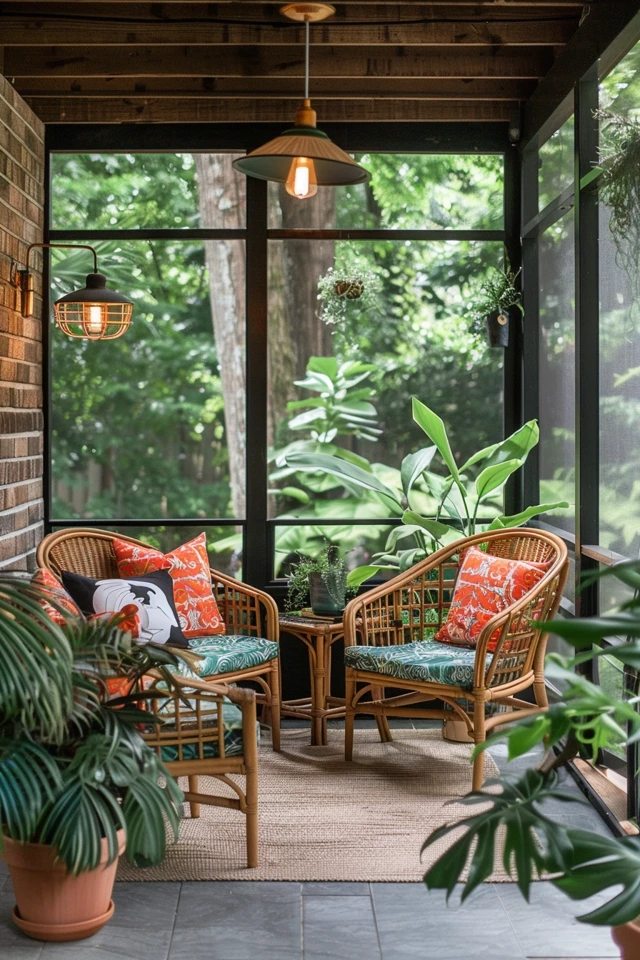
Title: Affordable Small Screened Porch Design Tips
Introduction
Designing a small screened porch on a budget is one of my favorite challenges as a designer. It forces you to prioritize exactly how you want to live in the space, rather than just filling it with furniture because you have the room. When you have limited square footage and a strict budget, every inch and every dollar has to work twice as hard.
I remember my first rental apartment which had a tiny 6×8 screened balcony. I had almost no money to spend, but I was determined to drink my morning coffee out there without staring at bare concrete. That project taught me that atmosphere is created through lighting and texture, not necessarily expensive high-end furniture.
In this guide, I will walk you through the practical steps of laying out, furnishing, and styling a small porch without breaking the bank. If you are looking for visual inspiration, please scroll down to view the Picture Gallery at the end of the blog post. Let’s turn that compact screened-in box into your favorite room in the house.
1. Strategic Layout Planning for Tight Spaces
Before you buy a single cushion, you need a floor plan. In small screened porches, the biggest mistake homeowners make is misjudging the scale of furniture. A standard deep-seat patio sofa is often 80 to 90 inches long and 35 inches deep. In a 10×10 room, that eats up nearly half your usable circulation space.
Designer’s Note: The “Shin-Buster” Rule
A common issue I see in DIY porch designs is overcrowding the pathway. You absolutely must leave 30 to 36 inches of clearance for main traffic paths. If you are squeezing past a coffee table to get to a seat, the room will feel stressful, not relaxing. In very tight spaces, I will cheat this down to 24 inches, but that is the absolute minimum.
Start by deciding on the primary function. Do you want to dine al fresco, or do you want to lounge? In a small porch (under 100 square feet), trying to do both usually results in doing neither well.
If you choose lounging, aim for a loveseat and two small-scale club chairs. This arrangement is flexible and allows for conversation. If you choose dining, look for a round bistro table (30 to 36 inches in diameter). Round tables are much easier to navigate around in square rooms than rectangular ones.
Common Mistakes + Fixes
Mistake: Blocking the screen door swing.
Fix: Measure the arc of your door swing and mark it on the floor with painter’s tape. No furniture or heavy rugs should enter this “no-go” zone.
2. Flooring Solutions That Don’t Cost a Fortune
The floor is the largest surface area in your porch and sets the tone for the entire design. Unfortunately, composite decking or high-end tile is expensive. If you are working with an existing concrete slab or old wood decking, paint is your best friend.
For concrete porches, a dedicated porch and patio floor paint is incredibly durable and affordable. I often recommend painting a “rug” directly onto the floor using a stencil. This saves you the cost of a physical rug and adds immediate character. It also eliminates the worry of a rug getting soggy if your screens let in a lot of rain.
If you prefer the warmth of a textile, outdoor rugs are essential. However, sizing is critical. A rug that is too small makes the room look cheaper and smaller.
Rules of Thumb for Rug Sizing
- The “Front Legs” Rule: At a minimum, the front legs of all your seating should sit on the rug. This anchors the conversation area.
- Perimeter Spacing: Ideally, leave 12 to 18 inches of bare floor visible around the edges of the rug. This creates a border that makes the room feel intentionally designed.
- Material: Stick to 100% polypropylene. It resists mold, bleaches easily, and is generally the most affordable option.
If your budget is extremely tight, check restore centers for leftover luxury vinyl tile (LVT). As long as your porch doesn’t get standing water, many LVT products can withstand temperature fluctuations, provided they are installed correctly with expansion gaps.
3. Selecting Furniture: Scale and Visual Weight
When shopping for affordable furniture, you have to look past the price tag and look at the “visual weight.” Solid, blocky furniture makes a small room feel claustrophobic. Instead, look for open frames, spindled legs, and wicker weaves that you can see through.
I frequently use “apartment-sized” outdoor furniture for screened porches. These pieces are scaled down, with sofas running 60 to 70 inches rather than the standard 80+.
What I’d Do in a Real Project
If I had a $500 furniture budget for a small porch, I would skip the big box store sets. They often have thin cushions that flatten in a month. Instead, I would:
- Buy a vintage rattan or bamboo set from Facebook Marketplace or a thrift store ($150-$200).
- Spray paint the frame matte black or navy for a modern look ($40).
- Spend the bulk of the budget on high-quality replacement cushions ($250). Good foam makes cheap furniture feel expensive.
Avoid glass-top coffee tables in small spaces where people might be moving around quickly. They show every speck of pollen and can be a breakage hazard. A small ottoman with a tray is a better choice. It doubles as extra seating when guests come over and serves as a footrest when you are alone.
Distance Rules
Keep your coffee table or ottoman 14 to 18 inches from the edge of the sofa. This is close enough to set down a drink but far enough to walk through without hitting your shins.
4. Lighting: Creating Ambiance Without Hardwiring
Lighting is the secret weapon of interior designers. Most screened porches only have one harsh overhead fan light or a wall sconce by the door. This creates unflattering shadows and kills the vibe at night.
To fix this affordably, layering is key. You rarely need to call an electrician. String lights (bistro lights) are the most cost-effective way to illuminate a porch.
Installation Tip for Renters and Owners
Don’t staple gun the wires tight against the wood. It looks messy and damages the insulation. Use screw-in hooks or command hooks designed for outdoor use. Drape the lights in a “W” or “X” pattern across the ceiling.
Color Temperature Matters
Always buy bulbs labeled “Warm White” or look for the Kelvin rating of 2700K. Anything over 3000K will look like a hospital waiting room or a gas station. We want the golden hour glow.
Floor and Table Lamps
Treat your screened porch like a living room. There are fantastic outdoor-rated floor lamps available now. However, if your porch is well-covered, you can often get away with using a heavy ceramic table lamp from a thrift store. Just be sure to bring it inside during heavy storms and use an outdoor-rated bulb.
Placing a lamp in the corner of a small porch draws the eye outward, making the space feel larger than it is.
5. Privacy and Vertical Styling
In a small space, you run out of floor room quickly. You have to design vertically. This draws the eye up and adds interest without cluttering the walking path.
Outdoor curtains are excellent for affordable design. They soften the hard lines of the screen framing and provide privacy from neighbors.
Curtain Hanging Rules
- Height: Hang the rod as close to the ceiling as possible. This makes your ceilings look taller.
- Length: The curtains should just “kiss” the floor. Avoid puddling fabric on a porch, as it will collect moisture, dirt, and bugs.
- Fabric: You can use canvas drop cloths (available at hardware stores) as a budget-friendly alternative to expensive outdoor drapes. Wash and bleach them first to soften the fabric, then hang them with ring clips.
Plants are the final layer. In a screened porch, you are in a micro-climate. You get air, but often filtered light. Snake plants, Ferns, and Pothos usually thrive here.
To save floor space, use wall-mounted planters or hang plants from the ceiling beams. If you use a floor planter, choose a tall, slender pot rather than a wide, squat one.
Final Checklist: The Designer’s Approach
If I were consulting on your porch today, this is the exact order of operations I would have you follow to ensure you stay on budget and maximize space.
1. The Audit
- Measure the room length and width.
- Measure the door swing and mark it.
- Identify existing electrical outlets.
2. The Layout
- Choose ONE main function: Dining or Lounging.
- Tape out furniture sizes on the floor before buying.
3. The Foundation
- Clean the floor thoroughly.
- Paint the concrete/wood OR purchase an outdoor rug (polypropylene).
4. The Big Buys
- Source used furniture with good bones.
- Prioritize comfortable cushions over fancy frames.
- Ensure furniture legs are visible (open weave/spindles) to keep the look airy.
5. The Layers
- Install string lights overhead (2700K bulbs).
- Add a vertical element (curtains or tall plant).
- Add a throw blanket and two accent pillows.
FAQs
How do I protect my furniture from pollen and dust?
Pollen is inevitable in a screened porch. I recommend choosing furniture frames that are easy to wipe down, like metal or smooth wicker. For cushions, choose fabrics in heathered grays or taupes rather than stark white or solid black, which show everything. During heavy pollen season, I advise my clients to keep a lightweight painter’s drop cloth handy to throw over the furniture when not in use.
Can I use indoor furniture on a screened porch?
You can, but with caveats. Solid wood indoor furniture will warp and crack due to humidity and temperature changes. Veneers will peel. However, solid metal, wicker, or teak pieces often transition well. If you use indoor textiles (pillows/rugs), you must bring them inside whenever rain is in the forecast to prevent mildew.
How do I make a small porch feel bigger?
Use a monochromatic color palette. If your walls, ceiling, and major furniture pieces are all in similar light tones (creams, light grays, whitewashed wood), the boundaries of the room blur. Use mirrors! Hanging a weather-resistant mirror on a solid wall of the porch reflects the view and doubles the visual depth.
What is the best budget flooring if my concrete is cracked?
If the cracks are minor, use a concrete filler and then paint over it with textured patio paint. If the cracks are significant, interlocking deck tiles are a great solution. They snap together, float over the existing surface, and allow water to drain through. You can often find these at major hardware stores or IKEA for a reasonable price.
Conclusion
Creating a beautiful, affordable screened porch doesn’t require a renovation loan or a massive footprint. It requires editing. It requires looking at a 100-square-foot space and being disciplined about what comes in and what stays out.
By focusing on the flow of traffic, choosing the right scale of furniture, and using lighting to create warmth, you can build a retreat that feels custom-made. Remember that the best porch is one that gets used. Whether that is a simple rocking chair and a side table or a full sectional for movie nights, design for the life you want to live out there.
Don’t be afraid to mix high and low. A $20 garage sale table looks fantastic next to a well-chosen outdoor sofa if the styling is right. Take your time, measure twice, and enjoy the fresh air.
Picture Gallery


