
Arizona Back Yard Ideas for Stunning Outdoor Spaces
Introduction
Designing an outdoor space in Arizona requires a very different approach than designing one in New England or the Pacific Northwest. We aren’t just battling aesthetics here; we are working with intense UV exposure, extreme heat fluctuations, and clay-heavy soil. In my years of designing indoor-outdoor transitions, I have seen too many homeowners buy standard big-box furniture that disintegrates after one Phoenix summer.
The goal for an Arizona backyard is to create an oasis that feels like an extension of your living room while remaining durable enough to withstand the elements. We want to embrace the desert beauty—the sculptural quality of cacti and the stunning sunsets—without sacrificing comfort. For a dose of visual inspiration, scroll down to the Picture Gallery at the end of the blog post.
If you are ready to transform your dust bowl into a resort-style retreat, you need to focus on heat mitigation, hardscaping, and native beauty. This guide covers the practical, designer-approved methods to get it right the first time.
1. Mastering Hardscape and Zoning
In Arizona, hardscape is often more important than softscape (plants). Because grass requires immense amounts of water and maintenance, your patio, decking, and walkways form the skeleton of the design.
The most critical decision you will make is the material for your patio. You must choose materials that remain relatively cool to the touch. Dark concrete or slate can reach temperatures upwards of 150 degrees Fahrenheit in July, which makes them unusable for bare feet or pets.
I almost exclusively recommend unfilled Travertine or light-colored artistic pavers for desert projects. Travertine is a natural insulator; it stays significantly cooler than concrete. If you are on a tighter budget and must use concrete, opt for a “cool deck” coating or an acrylic overlay in a light beige or sand tone.
Designer’s Note: Zoning Logic
When planning the layout, I treat the backyard exactly like a floor plan. You need distinct “rooms.”
- The Dining Zone: Place this closest to the kitchen door to minimize the travel distance when carrying food.
- The Lounging Zone: This should anchor the view, perhaps facing the mountains or the pool.
- The Fire Zone: Place this further out in the yard to draw people away from the house during cooler evenings.
Common Mistakes + Fixes
Mistake: Using dark grey or black pavers for a modern look.
Fix: While trendy, this is dangerous in AZ. Achieve the modern aesthetic through shape (large format rectangular pavers) rather than dark colors. Use light limestone or sand-blasted marble instead.
2. Shade Structures and Sun Orientation
You cannot enjoy an Arizona backyard without shade. It is not an optional accessory; it is a livability requirement. Before you buy a single plant or chair, you must understand the sun’s path across your property.
South-facing backyards get sun all day long. West-facing backyards get the punishing, horizontal late-afternoon sun that is the hardest to block. If your yard faces West, a simple overhead pergola won’t work because the sun will come in underneath the roofline.
For West-facing yards, I recommend installing motorized drop-down solar shades or planting dense, vertical shade trees like Hybrid Mesquites or Palo Verdes strategically to block that low-angle light. For North-facing yards, you have more flexibility as the house itself will cast a shadow over the patio for much of the day.
Choosing Your Structure
- Solid Roof Ramada: This offers the best protection. It allows you to install ceiling fans and recessed lighting.
- Alumawood Pergola: A great low-maintenance option that looks like wood but won’t rot, warp, or get eaten by termites—a major issue in the desert.
- Shade Sails: These add a sculptural, architectural element. However, they must be anchored into concrete footings deep enough to withstand monsoon winds.
What I’d Do in a Real Project
If I am designing a pergola attached to the house:
- I ensure the bottom of the beam is at least 9 feet high to keep the space feeling airy.
- I always integrate electrical wiring during the build. Retrofitting fans or heaters later is ugly and expensive.
- I align the rafters to cast shadow lines that follow the architectural lines of the home.
3. Xeriscaping and Native Flora
Xeriscaping is not just about gravel and a single lonely cactus. It is about creating a lush, low-water environment using plants adapted to our climate. The key to a high-end look is “massing” and variety in texture.
A common DIY mistake is the “polka dot” effect, where homeowners plant one agave, then five feet later one lantana, then five feet later one cactus. This looks sparse and unintentional. In professional landscape design, we group plants in odd numbers (groups of 3 or 5) to create drifts of color and texture.
For the ground cover, skip the turf unless you have kids or pets who absolutely need it. If you do need grass, consider high-quality synthetic turf. It has come a long way and stays green year-round without water. However, keep it in the shade; synthetic turf can get extremely hot in direct sun.
The Arizona Palette
Here are the reliable performers I use in almost every project:
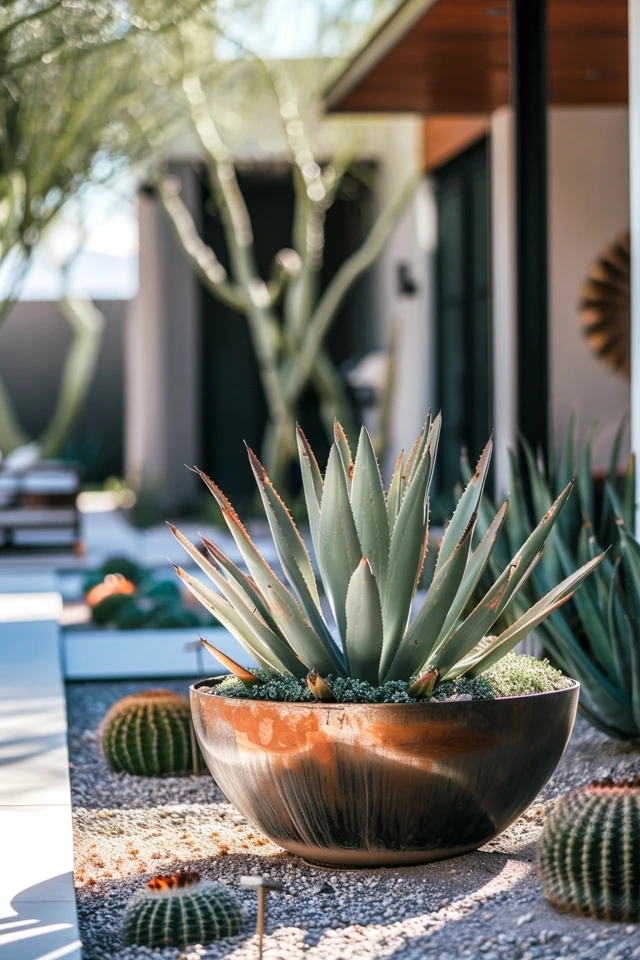
- Structure: Saguaro (expensive but iconic), Ocotillo (sculptural), or Golden Barrel Cactus.
- Softness: Deer Grass or Regal Mist. These ornamental grasses catch the light beautifully and soften the harsh lines of masonry.
- Color: Red Yucca, Bougainvillea (messy but vibrant), and Lantana.
- Trees: Ironwood (slow growing, very durable) or the Museum Palo Verde (fast growing, provides filtered shade).
Rules of Thumb: Planting Distances
Always plant for the mature size of the vegetation, not the size it is in the nursery pot.
- Agaves: Plant at least 3 feet away from walkways. Their spines are sharp and can injure guests if they overhang the path.
- Trees: Keep large trees at least 10–15 feet away from the foundation of the house and the pool shell to prevent root intrusion.
4. Water Features and Pools
In Arizona, a pool is often the centerpiece of the backyard. The trend right now is moving away from the kidney-shaped lagoons of the 1990s toward clean, geometric lines that mirror modern architecture. Rectangular pools with negative edges or perimeter overflows are timeless.
If a pool isn’t in the budget or space is tight, a standalone water feature is excellent for cooling the ambient air temperature and providing white noise. The sound of running water psychologically cools us down and masks neighborhood noise.
The Baja Shelf (Tanning Ledge)
This is the most requested feature in Arizona pool design. It is a shallow area, typically 9 to 15 inches deep, where you can place in-pool loungers.
Designer Tip: If you plan to use Ledge Loungers or similar in-pool furniture, verify the water depth specifications of the chair manufacturer before pouring the concrete. Most require water depths between 9 and 11 inches to function correctly without floating away.
Pool Decking and Coping
For the coping (the edge of the pool), safety is paramount. We need slip resistance.
- Travertine Pavers: The gold standard for grip and temperature control.
- Artistic Pavers: Concrete pavers that stay cool and offer high friction.
- Clearance: I prefer a minimum of 48 inches of walkway around the perimeter of the pool to allow for safe circulation.
Common Mistakes + Fixes
Mistake: Placing deciduous trees (trees that drop leaves) too close to the water.
Fix: The wind in Arizona will blow debris into your skimmer constantly. Keep messier plants like Bougainvillea or Mesquite trees downwind or at least 20 feet from the water’s edge.
5. Furnishing and Decor for the Desert
This is where the interior design principles truly come into play. Your outdoor furniture needs to be scaled correctly to the patio. A tiny bistro set on a massive paver patio looks lost. Conversely, a giant sectional on a narrow patio kills the flow.
Material Selection
The sun here destroys cheap materials. Here is what lasts:
- Powder-Coated Aluminum: Excellent durability. It doesn’t rust and is lightweight. However, the frame can get hot, so ensure the arms are covered or the cushions are substantial.
- HDPE Wicker: High-Density Polyethylene is synthetic wicker. It resists UV fading and cracking much better than PVC wicker.
- Teak: It is beautiful but high maintenance in the desert. You will need to oil it every 3–6 months to prevent it from turning silver and cracking in the dry air.
- Concrete Tables: Very durable and heavy (won’t blow over in monsoons), but they absorb stains easily. Seal them regularly.
Fabric and Cushions
Do not compromise on fabric. Look for solution-dyed acrylics like Sunbrella or Outdura. The color is in the fiber itself, not printed on top, meaning it won’t fade after one summer.
Designer Rule of Thumb: Even with the best fabric, I recommend custom furniture covers. Arizona dust is fine and settles into the weave of the fabric. Covers extend the life of your cushions by years and keep them clean for impromptu use.
Lighting the Night
Desert nights are magical, and lighting should enhance that, not overpower it.
- Bistro Lights: String these in a zigzag pattern over the dining or lounging area. Ensure they are commercial grade (heavy cords) to withstand heat and wind.
- Uplighting: Place spotlights at the base of trees or large cacti. Lighting the texture of a Saguaro or the trunk of a Palo Verde creates dramatic, sculptural art at night.
- Color Temperature: Stick to 2700K to 3000K (Warm White). Anything higher (4000K+) looks like a security floodlight and kills the ambiance.
Final Checklist: What I’d Do in a Real Project
If I were managing your Arizona backyard renovation, here is the mini-checklist I would run through before finalizing the design:
- Sun Study: Have I stood in the yard at 8 AM, 12 PM, and 5 PM to see exactly where the shadows fall?
- Drainage Check: Arizona rain comes fast and hard. Does the patio slope away from the house at a pitch of 1/4 inch per foot? Are there channel drains installed?
- Utility Locating: Have I called 811 to locate gas and electric lines before digging for trees or trenches?
- Traffic Flow: is there a clear 36-inch wide path from the back door to the pool and the grill?
- View corridors: When sitting on the living room sofa, what do I see out the window? I want to align the focal point (fire pit or sculpture) with that window.
FAQs
Q: Is artificial turf really better than grass in Arizona?
From a sustainability and maintenance standpoint, yes. Real grass consumes a massive amount of water. High-quality artificial turf looks realistic, drains well, and requires zero mowing. Just be aware it gets hot; I recommend a lighter-colored thatch to help reflect heat.
Q: How do I keep my outdoor rug from blowing away in a monsoon?
Anchor it with your heavy furniture. At least the front legs of your sofa and chairs should sit on the rug. If it is an exposed rug, use double-sided outdoor rug tape or heavy planters on the corners.
Q: What is the best color for outdoor cushions in the desert?
While white looks resort-chic, the desert dust will turn it beige in a week. I recommend heathered greys, taupes, or textured neutrals. These hide the dust much better than solid black or solid white.
Q: Can I put a TV outside in Arizona?
Yes, but you must use a specific “outdoor rated” TV. A regular indoor TV will overheat and fail quickly. Place it in a full-shade area, preferably inside a cabinet or deep patio cover, facing away from the sun to prevent glare.
Conclusion
Creating a stunning Arizona backyard is about respecting the environment. It is about balancing the harshness of the sun with the softness of native plants and the durability of quality materials. When you get the zoning, shade, and materials right, you create a space that adds usable square footage to your home.
Don’t rush the process. Invest in the hardscape first, as that is permanent. You can always add more plants or upgrade furniture later, but you can’t easily move a concrete patio. Focus on flow, heat management, and comfort, and you will have a retreat that you can enjoy from October through May, and—with the right shade—even in the summer mornings.
Picture Gallery


