
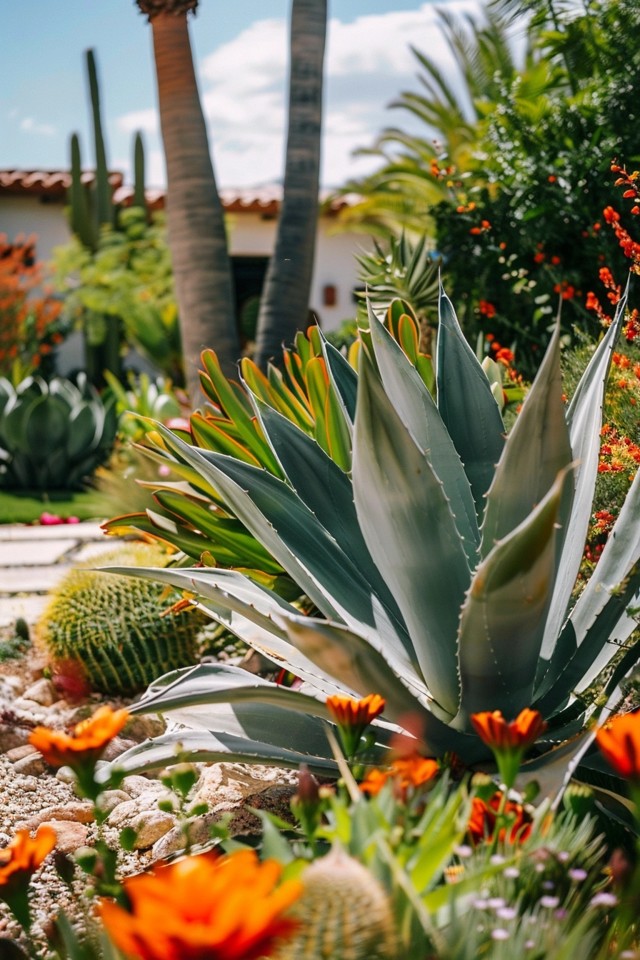
Arizona Backyard Landscape Ideas: My Desert Oasis
Designing a backyard in Arizona is unlike designing anywhere else in the country. You aren’t just creating a pretty view; you are battling the elements while trying to embrace the stunning natural beauty of the Southwest. I remember my first desert project involved a client who wanted lush, English garden vibes in the middle of Scottsdale.
We had to have a serious conversation about water bills, sustainability, and the harsh reality of the July sun. The goal is to create a sanctuary that feels lush and inviting without fighting the local climate. For a visual breakdown of these concepts, remember that a curated Picture Gallery is waiting for you at the end of this blog post.
By blending smart hardscaping, native flora, and strategic shade, you can turn a dust bowl into a resort-style retreat. This guide covers the exact strategies I use to design high-end desert landscapes that survive the heat and look incredible year-round.
1. Strategic Hardscaping and Zoning
In the desert, hardscaping often takes up more square footage than grass. This is practical for water conservation, but it also creates the “floor plan” of your outdoor living space.
The most critical decision you will make is your material selection. In Arizona, the ground gets hot enough to fry an egg, and more importantly, burn your bare feet.
Choosing the Right Pavers
I almost exclusively recommend natural travertine or light-colored porcelain pavers for pool decks and patios. Dark concrete or slate absorbs too much heat. Travertine stays surprisingly cool to the touch, even when it is 110 degrees out.
Defining Your Zones
Treat the backyard like a floor plan inside your house. You need distinct zones for dining, lounging, and distinct activities.
I usually adhere to these spacing rules:
- Walkways: Main paths should be at least 48 inches wide so two people can walk side-by-side. Secondary paths can be 36 inches.
- Dining Clearance: Allow 36 inches of clearance from the edge of the dining table to the edge of the patio. You do not want chair legs slipping off the pavers.
- Conversation Circles: Place lounge chairs and sofas within 8 feet of each other to encourage conversation without shouting.
Designer’s Note: Dealing with Drainage
In Arizona, the ground is hard clay (caliche). When the monsoon rains hit, water does not soak in; it floods.
- The Fix: Always grade your hardscape away from the home’s foundation at a slope of 1/4 inch per foot.
- The Lesson: I once saw a DIY patio project where the water pooled against the back door, flooding the living room during a storm. Proper grading is not optional.
2. The Xeriscape Palette: Texture Over Turf
Xeriscaping does not mean “zero-scaping.” A yard full of gravel with one lonely cactus is not design; it is a parking lot.
The secret to a lush desert look is layering textures and shades of green. We use drought-tolerant plants that thrive on neglect but look architectural and deliberate.
The “Thriller, Filler, Spiller” Concept
I apply this container gardening rule to the entire landscape beds.
The Thrillers (Structural Anchors)
These provide height and drama.
- Saguaro: The icon. Expensive, but you only need one.
- Ocotillo: Adds vertical interest and looks stunning when backlit.
- Blue Palo Verde: A nurse tree that provides dappled shade for smaller plants.
The Fillers (Mid-Ground Volume)
These soften the hard edges of walls and pavers.
- Red Yucca: incredibly durable with spikes of red flowers.
- Agave Parryi: The “artichoke” agave. Symmetrical and structural.
- Desert Spoon: Adds a shimmer of silver-blue to the palette.
The Spillers (Ground Cover)
Use these to break up the expanses of granite or rock.
- Lantana: Constant color, loves the heat.
- Trailing Rosemary: Spills over retaining walls and smells amazing after rain.
Common Mistakes + Fixes
Mistake: Planting thorny agave or cacti right next to a walkway.
Fix: Keep anything with a spine at least 3 feet back from the edge of a path. I learned this the hard way when a client’s child tripped and landed on a Golden Barrel cactus. Now, I use “soft” plants like succulents or grasses for the borders.
3. Mastering Shade and Sun Orientation
In Arizona, shade is not a luxury; it is a life support system. A backyard without shade is unusable for four months of the year.
When designing the layout, I always check the sun’s trajectory. You want to block the harsh Western sun in the late afternoon.
Solid Roof vs. Pergola
A lattice pergola looks nice, but it only offers partial relief. If you want to use the space in June, you need a solid roof structure or a very dense shade cloth.
The Attached Patio
This is an extension of your indoor living room. I recommend installing ceiling fans here.
- Fan Sizing: For a standard 12×12 patio, use a fan with a blade span of at least 52 inches. Go for 60+ inches if space allows.
- Airflow: Fans discourage flies and mosquitoes while dropping the felt temperature by about 5 degrees.
Shade Sails
For areas away from the house, like a pool deck, shade sails are fantastic. They add a modern architectural element.
- Installation Tip: You need steel posts set deep in concrete. The wind load during a monsoon can rip these sails right out of the ground if they aren’t anchored professionally.
- Design Tip: Layer two or three sails at different heights for a more dynamic look that offers better coverage as the sun moves.
What I’d Do in a Real Project
If the budget allows, I always integrate automated rolling solar screens on the main patio. They can drop down at the touch of a button to block the low-angle sun at 5:00 PM, instantly cooling the patio by 10 to 15 degrees.
4. Water Features and Cooling Systems
Water is the psychological counterbalance to the desert heat. Even if you don’t have the space or budget for a swimming pool, you need a water element.
The Sound of Water
A simple fountain or water wall masks traffic noise and lowers the ambient temperature through evaporation.
- Placement: Place fountains near the seating area. If it’s more than 10 feet away, you won’t hear the trickle over the sound of the AC units.
- Material: Ensure the basin is sealed concrete or stone. Plastic liners crack quickly in the UV rays.
High-Pressure Misting Systems
This is the game-changer for Arizona living. Do not confuse these with the cheap DIY kits from hardware stores that just get everything wet.
A professional “high-pressure” system (1000 PSI) flash-evaporates the water droplets instantly. This creates a curtain of cool air without soaking your furniture or your hair.
- Placement: Install the lines along the perimeter of the patio header.
- Effectiveness: These systems can drop the air temperature inside the patio by up to 20 degrees.
Pool Design Considerations
If you are putting in a pool, consider a “Baja Shelf” or tanning ledge. This is a shallow area (usually 6-12 inches deep) where you can place lounge chairs directly in the water.
- Function: It allows you to stay cool while reading or relaxing without treading water.
- Umbrella Sleeves: I always insist on installing umbrella sleeves directly into the Baja shelf gunite. This lets you have shade exactly where you are sitting in the water.
5. Furnishing, Lighting, and Decor
The furniture you choose must be able to withstand intense UV exposure and dust storms.
Material Selection
Metals: Powder-coated aluminum is the gold standard. It doesn’t rust, and it doesn’t retain heat as badly as wrought iron.
Wicker: Be very careful here. Cheap synthetic wicker will crack and unravel within two summers. Look for high-density polyethylene (HDPE) wicker, which is UV stabilized.
Fabrics: Solution-dyed acrylics (like Sunbrella) are non-negotiable. Polyester fades to a dull grey in one season.
Outdoor Rugs
Rugs define the living area and protect your feet from hot pavers.
- Sizing Rule: Just like indoors, the front legs of all furniture pieces should sit on the rug. For a standard sofa setup, an 8×10 or 9×12 rug is usually required.
- Material: Polypropylene is best. It can be hosed off and resists mold.
Lighting for Ambiance
Desert nights are dark. You need layers of light to make the space safe and magical.
- Path Lights: Place these every 6 to 8 feet along walkways. Stagger them left and right rather than creating a runway effect.
- Uplighting: Use uplights on the trunks of Palo Verde or Mesquite trees. The sculptural branches look incredible at night.
- Color Temperature: Stick to 2700K (warm white). 3000K or higher looks like a parking lot security light and kills the mood.
Designer’s Note: The Fire Pit
It seems counterintuitive, but fire pits are essential for Arizona winters. From November to March, the nights are chilly.
- Clearance: Keep the fire pit at least 10 feet away from combustible structures.
- Scale: Ensure there is 18-24 inches of legroom between the seat edge and the fire pit rim.
Final Checklist: What I’d Do in a Real Project
If I were consulting on your Arizona backyard renovation today, this is the checklist I would run through to ensure success:
Layout & Hardscape
- Verify drainage flows away from the home foundation.
- Select light-colored pavers (Travertine/Porcelain) to minimize heat absorption.
- Ensure main walkways are 48″ wide.
- Designate a dedicated pad for the grill/BBQ away from high traffic.
Planting & Softscape
- Verify irrigation is a drip system, not sprayers (saves water, reduces evaporation).
- Place thorny plants 3+ feet away from walkways.
- Group plants with similar water needs on the same valve zone.
- Add 2 inches of granite top-dressing to retain soil moisture.
Comfort & Living
- Install ceiling fans on covered patios (52″+ blade span).
- Plan for shade on the Western exposure.
- Select solution-dyed acrylic fabrics for upholstery.
- Install sleeves for umbrellas in the pool deck or lawn area.
Lighting
- Use 2700K LED bulbs for all landscape lighting.
- Uplight at least two specimen trees for drama.
- Put lighting on an astronomical timer so it adjusts with sunset automatically.
FAQs
Q: Artificial turf vs. Real grass: Which is better for Arizona?
A: From a design and maintenance standpoint, high-quality artificial turf is winning. It stays green year-round and requires no water. However, be warned: artificial turf gets extremely hot in direct sun. It is not suitable for dogs or kids to play on during the day in summer without shading or spraying it down first. If you have pets, ensure you use a turf product with a permeable backing for drainage and odor control.
Q: How do I stop my outdoor furniture cushions from blowing away in monsoons?
A: This is a classic desert problem. I recommend using furniture clips to bind sectional pieces together so they act as one heavy unit. For individual chairs, use Velcro straps to secure the cushions to the frame. When a dust storm is forecasted, the best practice is to stack the cushions in a sheltered corner or put them in a storage box.
Q: What is the best color for backyard walls?
A: Stick to earth tones that match the desert floor. Stark white walls can be blindingly bright when the sun hits them. Colors like sage green, taupe, or warm terracotta blend with the landscape and don’t show dust as badly as dark colors do.
Q: Can I grow citrus trees in my backyard?
A: Yes, citrus thrives here, but it needs protection. Lemon and lime trees are sensitive to frost (yes, it freezes here) and intense afternoon sun. Plant them on the East side of your home where they get morning sun but are shaded from the scorching late-afternoon rays.
Conclusion
Creating a desert oasis is about working with the environment, not against it. It requires a shift in perspective—viewing shade as a structural element and plants as architectural features.
When you get the balance right, an Arizona backyard is magical. The contrast between the rugged desert heat and your cool, curated sanctuary makes the effort worth it. Focus on durable materials, smart zoning, and layers of lighting, and you will have a space that rivals any five-star resort in Scottsdale.
Picture Gallery


