
Arizona Backyard Landscaping Ideas for Your Oasis
Designing a backyard in Arizona requires a completely different mindset than almost anywhere else in the country. We aren’t just battling weeds here; we are managing intense UV exposure, conserving water, and trying to create a livable space in triple-digit temperatures. The goal is to create a seamless flow between your indoor cooling and your outdoor sanctuary.
However, a “desert landscape” does not have to mean a barren yard full of nothing but red rocks and a single cactus. I have worked on countless projects in the Valley where we turned dust bowls into lush, functional retreats using native flora and smart hardscaping. If you are looking for visual inspiration, feel free to skip ahead to the Picture Gallery at the end of this blog post.
In this guide, I will walk you through the practical steps of designing an Arizona backyard that survives the summer and thrives in the winter. We will cover heat-resistant materials, layout logic, and the specific plants that give you that resort feel without the high water bill.
1. Hardscaping and Layout: The Bones of the Desert Yard
In Arizona, hardscaping is often more important than the planting itself. Because grass is water-intensive and often impractical, your patio, walkways, and pool decks define the usability of the space.
When selecting pavers, you must consider surface temperature. Dark slate or standard concrete can become hot enough to burn bare feet or pet paws within minutes in July. I almost exclusively recommend travertine or light-colored artistic pavers for uncovered areas.
Travertine is a natural stone that stays surprisingly cool to the touch, even in direct sunlight. It creates an upscale, resort-style aesthetic that blends perfectly with desert neutrals. If you are renting or on a tight budget, gravel (crushed granite) is the standard alternative, but color matters. Choose “Table Mesa Brown” or “Madison Gold” rather than dark grey to reflect heat.
Designer’s Note: The “Caliche” Factor
One specific challenge in Arizona is “caliche,” a cement-like layer of calcium carbonate found just under the topsoil. It is nearly impossible to dig through with a standard shovel. If you are planning a DIY paver patio or planting large trees, you may need a jackhammer. Always test your soil density before committing to a layout.
Common Mistakes + Fixes
- Mistake: Using stamped concrete for pool decks.
- Fix: Stamped concrete is slippery when wet and requires frequent resealing in the sun. Stick to textured pavers or acrylic lace decking (Cool Deck) which lowers surface temperature by 10–20 degrees.
- Mistake: Undersized patios.
- Fix: A functional dining area needs at least 10×10 feet. If you want a lounge area with a fire pit, aim for 12×12 feet minimum.
2. The “Softscape” Strategy: Lushness Without Waste
Xeriscaping is the practice of landscaping with slow-growing, drought-tolerant plants to conserve water. Many people hear this and imagine zero greenery, but a well-designed xeriscape is vibrant and full of texture.
The key to a professional look is layering. I like to anchor the corners of a yard with native trees like the Palo Verde or Ironwood. These provide filtered shade, which is essential for protecting smaller plants beneath them.
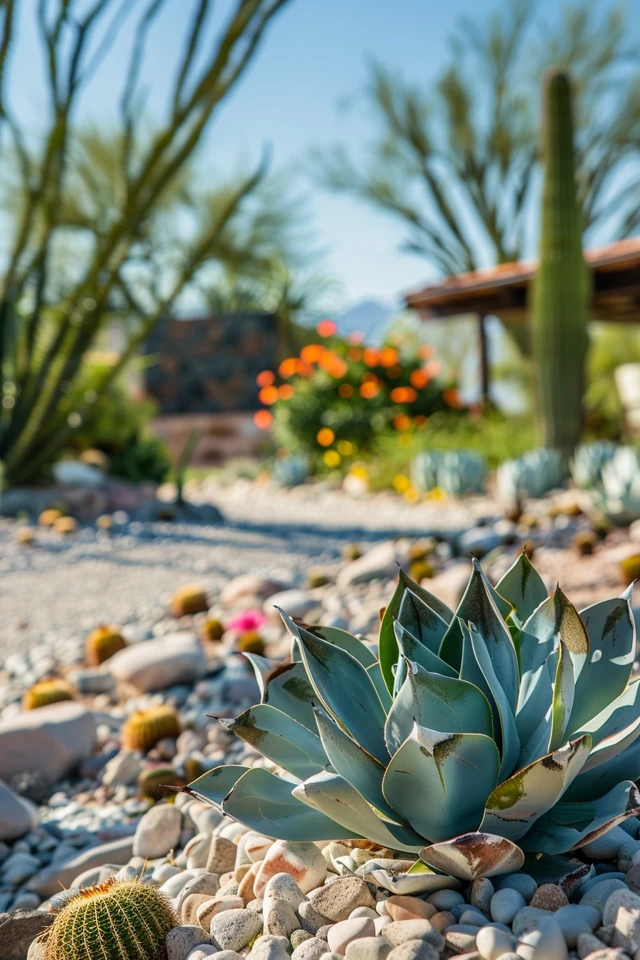
For the middle layer, use architectural succulents like Agave Parryi or various Aloe species. They offer a sculptural, modern look that contrasts well with the rugged desert backdrop. For ground cover, avoid water-hungry annuals. Instead, look for trailing Lantana or Red Eremophila, which provide bursts of color almost year-round.
Real-World Constraints: Pets and Turf
If you have dogs, crushed granite is tough on their paws, and real grass is expensive to irrigate. Artificial turf is the standard solution in Arizona, but it gets dangerously hot.
- The Rule: Only install artificial turf in shaded areas or areas you can hose down before use.
- The Hack: Use an organic infill (like walnut shells) rather than black rubber crumbs. This can reduce the surface temperature of the turf significantly.
Common Mistakes + Fixes
- Mistake: Planting too close to the house.
- Fix: Keep plants at least 3 feet away from your foundation. Arizona termites love moisture, and irrigation right next to the wall is an invitation for trouble.
- Mistake: Buying plants based on their nursery size.
- Fix: An Agave might look small in a 5-gallon pot, but it can grow to 4 feet wide. Space plants according to their mature size to prevent overcrowding later.
3. Designing for Shade: The Survival Element
You cannot enjoy an Arizona backyard without shade. It is not a luxury; it is a functional requirement. When I look at a floor plan, I immediately check the sun orientation.
If your backyard faces West, you get the brutal late-afternoon sun. In this case, an attached covered patio (Alumawood is popular because it doesn’t rot or require painting) is vital. It acts as a thermal buffer, keeping your interior living room cooler as well.
For areas away from the house, pergolas are excellent for defining separate “rooms” in the yard. However, a slatted pergola often lets in too much sun. I recommend installing a solid roof pergola or adding a rolling solar shade to the western side of the structure.
Shade Sails and Umbrellas
For a more budget-friendly approach, tensioned shade sails are fantastic. They add a modern architectural element and come in high-density polyethylene fabric that blocks 90-95% of UV rays.
- Measurement Tip: When installing shade sail posts, bury at least 1/3 of the post length in concrete. The monsoon winds in Arizona are fierce and will rip poorly anchored sails right out of the ground.
- Umbrella Tip: Don’t buy cheap umbrellas. The sun will bleach them white in one season. Look for Sunbrella fabric or marine-grade canvas.
4. Desert Lighting and Nightscaping
Because days are hot, we do most of our outdoor living in the evening. This makes your lighting plan just as critical as your planting plan. We want to avoid “security floodlight” vibes and aim for soft, resort-style ambiance.
I strictly use low-voltage LED systems with a color temperature of 2700K (Warm White). Anything higher (3000K-5000K) looks blue and clinical, which ruins the warm tones of desert stone and wood.
Techniques to Try:
- Uplighting: Place spotlights at the base of trees, aiming up. This works incredibly well with the sculptural branches of a Mesquite tree or the ribs of a Saguaro cactus.
- Path Lighting: Use shielded path lights that direct light down, not out. You want to see the walkway, not the bulb. Space them 6 to 8 feet apart to avoid the “runway effect.”
- Silhouette Lighting: If you have a block wall (very common in AZ), place a light behind an agave or shrub to cast a dramatic shadow against the wall.
Designer’s Note: Wiring
Bury your low-voltage wire at least 6 inches deep. I always run the wire inside a PVC conduit if it’s going under a walkway or through a high-traffic zone. It saves you from accidentally cutting the line with a shovel later.
5. Functional Features: Fire and Water
The “Fire and Ice” concept is huge in desert design. We have swimming pools for the day and fire pits for the night.
If a pool isn’t in the budget or space is tight, consider a “spool” (spa/pool hybrid) or simply a decorative water feature. The sound of running water has a psychological cooling effect. A simple urn fountain recirculating water can drown out neighborhood noise and attract hummingbirds.
For fire features, gas is the preferred method in Arizona. We have many “No Burn Days” due to air quality restrictions where wood fires are prohibited. A natural gas or propane fire pit can be used year-round.
Space Planning for Fire Pits:
- Clearance: You need 18 to 24 inches of space between the edge of the fire pit and the front of your seat for legroom.
- Circulation: Allow another 30 to 36 inches behind the chairs so people can walk around the circle without tripping.
- Height: For a lounge vibe, keep the fire pit height at 14–16 inches (coffee table height). For dining, it needs to be 29 inches.
Final Checklist: What I’d Do in a Real Project
If I were consulting on your backyard renovation today, here is the exact checklist I would run through before buying a single item:
- Check the Drainage: Watch where water flows during a heavy rain. Does it pool against the house? Fix the grade first.
- Call 811: In Arizona, gas lines and main water lines are often shallow. Always get utilities marked before digging.
- Audit the Irrigation: Switch from spray heads to drip irrigation for all plants. It reduces evaporation and disease.
- Select Light Materials: Choose beige, cream, or sand-colored pavers. Avoid dark grey or black.
- Plan for Storage: Monsoon storms bring dust. You need a deck box to store cushions when not in use, or they will be ruined in one season.
- Verify HOA Rules: Many Arizona HOAs have strict “approved plant lists” and height restrictions for structures.
FAQs
Can I grow tropical plants in Arizona?
It is difficult. Plants like hibiscus or queen palms struggle with the frost in winter and the searing heat in summer. If you must have tropicals, keep them in pots under the patio so you can move them, or stick to hardy desert adaptations like Tecoma or Oleander.
How do I keep my patio furniture from melting?
Synthetic wicker (resin) is generally durable, but cheap versions will crack. Look for “High-Density Polyethylene” (HDPE) wicker. Avoid wrought iron without cushions, as it becomes a branding iron in the summer. Powder-coated aluminum is the best choice for durability and heat management.
Is a misting system worth it?
Yes, but only high-pressure systems. Low-pressure systems (the ones that hook to a hose) just get everything wet. A high-pressure pump atomizes the water, dropping the air temperature by up to 20 degrees without soaking your furniture.
What is the best material for privacy walls?
Most Arizona homes have cinder block walls. To soften the look, I recommend stucco and paint to match the house. For added height and privacy, adding a wooden or composite trellis topper is a great option that allows airflow while blocking sightlines.
Conclusion
Creating an oasis in the Arizona desert is about working with the environment, not against it. By prioritizing shade, choosing heat-resistant materials, and selecting a plant palette that can withstand the extremes, you create a space that is beautiful and sustainable.
Remember that outdoor design is an extension of your indoor living space. The colors, textures, and flow should feel connected. Whether you are installing a full outdoor kitchen or just a comfortable reading nook with a shade sail, the goal is to make the harsh climate feel welcoming.
Picture Gallery


