
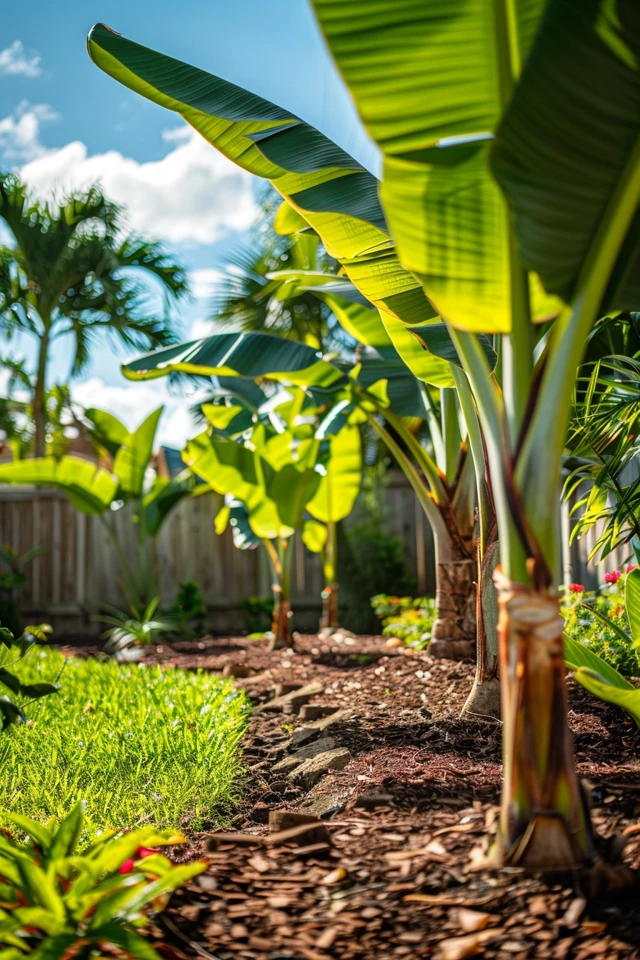
Banana Tree Landscaping Tips for Your Backyard
There is no faster way to transform a bland backyard into a lush, tropical retreat than by planting a banana tree. In my design projects, I often call them “instant architecture” because of how quickly they establish height, drama, and volume. I remember a specific project in a surprisingly cool climate zone where the homeowner felt stuck with evergreens and boxwoods; we introduced a cluster of cold-hardy Musa Basjoo, and the entire energy of the garden shifted from rigid to relaxed overnight.
However, incorporating these giants requires more than just digging a hole and walking away. Banana trees are heavy feeders, thirsty drinkers, and visually dominant, meaning they can easily overwhelm a space if not placed with intention. You need to consider wind patterns, sun angles, and the reality of seasonal maintenance to keep them looking like a resort feature rather than a jungle weed.
If you are looking for visual inspiration, check out the Banana Tree Landscaping Picture Gallery at the end of this article. Below, I will walk you through the practical steps, layout rules, and design secrets I use to integrate banana trees into cohesive landscapes.
1. Location and Spacing: The Foundation of Design
The most common mistake I see homeowners make is underestimating the mature footprint of a banana tree clump. While the main trunk (pseudostem) grows vertically, the plant produces “pups” or suckers around the base, quickly turning a single stalk into a wide grove.
When plotting your layout, you need to provide ample clearance. I recommend keeping large banana varieties at least 6 to 8 feet away from your home’s foundation or fencing. If you plant them right up against a wall, the massive leaves—which can reach 6 to 9 feet in length—will rub against the structure, shredding the foliage and causing aesthetic damage.
For a grove effect, space individual plants about 4 to 5 feet apart. This allows enough density for privacy but ensures enough airflow to prevent fungal issues. If you are planting near a walkway, step the planting back at least 4 feet from the edge of the path. You do not want guests having to duck under weeping leaves to get to the patio.
Designer’s Note: Watch the Wind
Wind is the enemy of the banana tree aesthetic. Those broad, beautiful leaves act like sails. If you place a banana tree in a wind tunnel (like the side of a house or an open hill), the wind will shred the leaves into ribbons. While the plant remains healthy, it loses that smooth, resort-style look. Always try to site them near a windbreak or in a sheltered corner of the yard.
2. Creating Layers and Companion Planting
A banana tree standing alone in a patch of grass often looks out of place or “unfinished.” To make the tree look like a deliberate design choice, you must anchor it with underplanting. This creates a tiered look that mimics a natural rainforest floor.
I use a “Rule of Three” for height layering in tropical gardens. The banana tree serves as the canopy (Tier 1). Beneath that, you need a shrub layer (Tier 2) that hits about waist to chest height. Finally, you need a ground cover (Tier 3) to hide the soil and retain moisture.
For the middle layer, I love using Hibiscus, Canna Lilies, or Fatsia Japonica. These plants offer contrasting leaf shapes but share the same water requirements. For the ground layer, consider Sweet Potato Vine or Liriope. The goal is to hide the “ankles” of the banana tree, which can look brown and messy as the old outer sheaths peel away.
Common Mistake + Fix
Mistake: Planting sun-loving annuals right at the base of the tree.
Fix: Remember that a healthy banana tree casts dense shade. Only plant shade-tolerant species like Hostas, Ferns, or Caladiums directly under the canopy. Save the sun-lovers for the perimeter of the bed.
3. Using Banana Trees for Privacy and Screening
If you have a neighbor with a second-story window looking directly into your pool or patio, banana trees are one of the most effective solutions. Unlike traditional privacy hedges that take years to fill in, a banana tree can grow 5 to 10 feet in a single season depending on the variety and heat.
For screening, I prefer to plant them in staggered rows rather than a straight line. A straight line can look too agricultural. By staggering them in a zigzag pattern, you create a denser visual block that looks more organic.
However, you must consider the seasonality of this screen. In USDA zones 8 and lower, banana trees will die back to the ground or need to be cut back in winter. This means your privacy screen is seasonal. I often advise clients to pair banana trees with a permanent hardscape element, like a trellis or a section of privacy fence, so they aren’t left exposed from November to April.
Real-World Measurement:
When using banana trees to screen a pool area, place them at least 8 to 10 feet back from the water’s edge. Banana trees transpire heavily and drip sap and water, and they shed large leaves. You do not want that debris ending up in your skimmer basket daily.
4. Container Gardening for Patios and Renters
You do not need a massive yard to enjoy the tropical look. Banana trees actually thrive in containers, provided you choose the right variety and pot size. This is my go-to strategy for renters or homeowners with heavy clay soil that drains poorly.
For containers, look for “Dwarf” varieties, such as the Dwarf Cavendish. Despite the name, these can still reach 6 to 8 feet tall but are manageable. The pot size is critical here. You cannot put a banana tree in a standard 12-inch flower pot.
Start with a pot that is at least 20 to 24 inches in diameter and equally deep. Banana trees have aggressive root systems that circle quickly. I prefer heavy glazed ceramic or concrete pots over plastic; the top-heavy weight of a full-grown banana tree can easily tip a lightweight plastic pot over during a summer storm.
What I’d Do in a Real Project:
If I am styling a deck with potted bananas, I place the pot on a heavy-duty rolling plant caddy before filling it with soil. A wet, soil-filled ceramic pot with a tree in it can weigh over 100 pounds. You will want the ability to roll it into a corner or indoors during a freeze without breaking your back.
5. Maintenance and Aesthetics
The fantasy of a banana tree is lush green perfection; the reality involves a fair amount of brown. As new leaves unfurl from the center, the oldest lower leaves turn yellow, then brown, and eventually droop. This is a natural process, not a sign of death.
To keep the landscape looking high-end, you need to stay on top of “grooming.” I recommend trimming off the lower leaves as soon as they start looking tattered. Cut them close to the main trunk. This keeps the energy directed upward and exposes the architectural trunk, which usually has a beautiful texture.
Watering is the other non-negotiable. In the heat of July and August, a large banana tree can consume gallons of water a day. If you see the leaves folding upward (looking like a taco shell), the plant is conserving moisture and needs a drink immediately. Installing a simple drip irrigation line for your banana grove saves massive amounts of time.
Designer’s Note: The “Messy” Phase
Be realistic about the winter phase. If you live in a zone where it freezes, the plant will turn into brown mush after the first frost. It is not pretty. Plan for a weekend in late fall to chop the stalks down (usually to about 2 feet high) and cover them with mulch. I tell clients to view this as a “reset” rather than a loss.
Final Checklist: Planning Your Tropical Oasis
Before you head to the nursery, run through this quick checklist to ensure your site is ready. This is the exact mental process I use when standing in a client’s backyard.
- Sun Exposure: Does the spot get at least 6 hours of direct sunlight? (Full sun is best, though they tolerate partial shade).
- Wind Protection: Is the site protected by a fence, wall, or other trees?
- Water Access: Is a hose bib or irrigation line nearby? You will not want to haul buckets of water.
- Soil Drainage: Dig a test hole and fill it with water. Does it drain within an hour? If it sits for hours, you need to amend the soil with perlite and compost or choose a raised bed.
- Space Verification: Have you measured a 6-foot diameter circle for each tree?
- Hardiness Zone: Have you checked if the specific variety is root-hardy in your zip code? (Musa Basjoo is hardy to Zone 5 with protection; Cavendish is tropical).
Frequently Asked Questions
Do banana trees attract pests?
They can attract aphids and spider mites, especially if the plant is stressed or indoors. However, in an outdoor landscape, these are rarely fatal. The biggest issue is usually snails or slugs that enjoy eating the decomposing leaves at the base. Keeping the area free of leaf litter helps reduce this.
Will my banana tree actually produce fruit?
This depends entirely on your climate and the variety. In tropical zones (9-11), yes, fruiting varieties will produce edible bananas. In cooler zones, the growing season is often too short for the fruit to mature before the frost hits. If you live in a cold climate, I recommend focusing on ornamental varieties like Musa Basjoo or Ensete Maurelii (Red Abyssinian), which are grown for their stunning foliage rather than fruit.
Can I plant a banana tree near my septic tank?
I advise against it. Banana trees have water-seeking roots. While they aren’t as aggressive as willow trees or bamboo, they will seek out moisture. It is safer to keep them at least 15 to 20 feet away from septic fields or drain lines to avoid any potential clogging or disruption of the drain field ecosystem.
How do I feed my banana tree?
They are incredibly hungry plants. I use a slow-release, high-nitrogen fertilizer (like a 10-10-10 or 20-10-10) applied once a month during the growing season. A generous layer of compost in the spring also does wonders. If the leaves look pale or yellow, it is usually a nitrogen deficiency.
Conclusion
Adding banana trees to your landscape is a bold move that pays off with high visual impact. They bring a sense of movement, lushness, and scale that few other plants can match. Whether you are creating a poolside oasis or simply want to block out a view of the neighbor’s garage, these architectural giants get the job done efficiently.
The key to success lies in respecting their size and satisfying their thirst. Give them room to breathe, protect them from the wind, and feed them well. In return, they will give your backyard a sophisticated, vacation-like atmosphere that makes every summer evening feel a little more special.
Picture Gallery


