
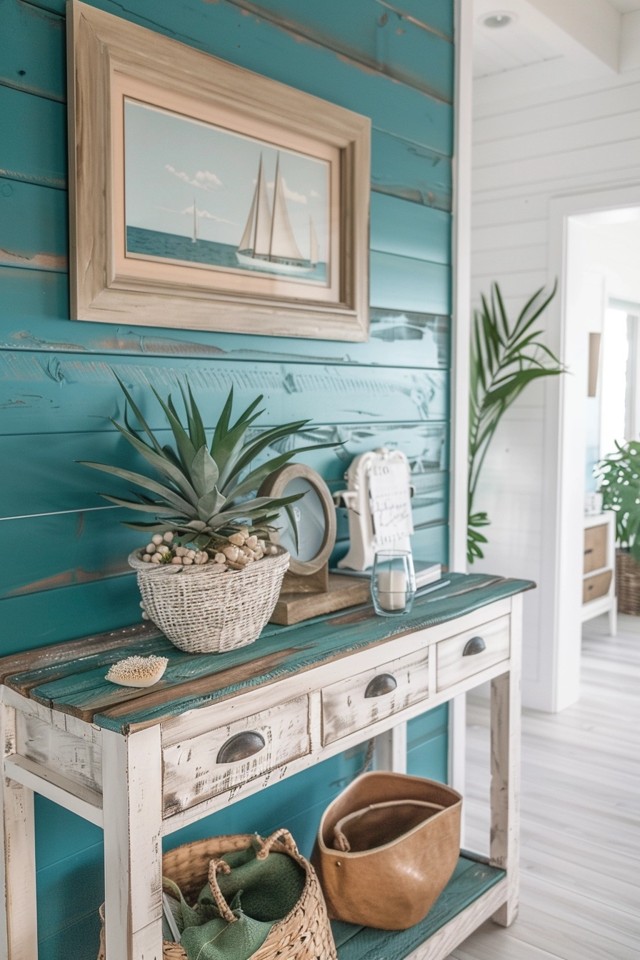
Beachy Entryway Makeover: Coastal Decor Tips
There is a specific feeling you get when you walk into a high-end beach house. It is not just about the view outside; it is about the immediate sense of decompression that happens the moment you step through the door. To give you plenty of inspiration for your own space, I have curated a stunning Picture Gallery at the end of the blog post.
You do not need to live on the coast to achieve this aesthetic. In my years as an interior designer, I have brought that “exhale” feeling to suburban colonials and city apartments alike. The secret lies in balancing casual textures with elevated finishes.
This guide will walk you through transforming your entryway into a coastal retreat. We will cover everything from the durability of flooring to the Kelvin temperature of your light bulbs. Let’s create a space that welcomes you home.
1. Establishing the Coastal Palette and Materials
The biggest misconception about coastal design is that it requires blue and white stripes everywhere. Modern coastal design is actually much more subtle. It relies heavily on a neutral foundation layered with organic textures.
I always start a beachy makeover by looking at the hard finishes. We want to mimic the colors found in nature: sand, driftwood, stone, and sea foam. If you go too saturated with your colors, the space starts to feel like a theme park rather than a home.
The 60-30-10 Color Rule for Coastal Spaces:
- 60% Primary Color: Warm whites, creams, or very pale greys (think Benjamin Moore “White Dove” or “Chantilly Lace”).
- 30% Secondary Color: Natural wood tones (white oak or bleached walnut) and woven textures (rattan, jute, seagrass).
- 10% Accent Color: Soft watery blues, sage greens, or even matte black for a modern edge.
Texture is the hero of this style. Because the color palette is restrained, you need tactile variation to keep the eye interested. I love mixing rough materials like a sisal rug with smooth materials like a glass vase or a lacquered tray.
If you have kids or pets, be wary of true natural fibers like jute for high-traffic entryways. While they look beautiful, they can shed and stain easily. Instead, look for high-quality polypropylene rugs that mimic the look of sisal but can be hosed down outside.
2. Layout Planning: Function Meets Flow
An entryway has to perform. It is the highest traffic zone in your house, and coastal design is inherently practical. A cluttered entryway kills the relaxing vibe immediately.
The first step in layout planning is determining your clearance. You need a minimum of 36 inches of walking path. If your entryway is tight, do not force a deep console table into the mix. A standard console is 12 to 18 inches deep; if that cramps your walkway, opt for a floating shelf or a wall-mounted shoe cabinet instead.
Designer’s Note: The “Drop Zone” Reality
In my early projects, I would style entryways purely for looks. I quickly learned that if you do not give people a place to put their keys and mail, they will put them on the nearest surface, ruining the design. Always include a designated “catch-all” vessel. A shallow woven bowl or a stone tray works perfectly to corral the clutter while maintaining the aesthetic.
Rug Sizing and Placement:
- The Gap Rule: Leave 6 to 12 inches of floor visible on all sides of the rug. This makes the space feel intentional, not like wall-to-wall carpeting.
- Door Clearance: Check your door swing height. Natural fiber rugs can be thick. Ensure the bottom of your door clears the rug, or the constant rubbing will ruin the fibers.
- Runner vs. Area Rug: If the space is long and narrow, use a runner. If you have a foyer that is more square, a round rug can soften the angular lines of the walls.
3. Lighting: Capturing the Golden Hour
Lighting in a beach house is airy, bright, and warm. You are trying to replicate natural sunlight. Avoid cool, blue-toned LED bulbs at all costs, as they make a space feel clinical rather than cozy.
Aim for a light temperature of 2700K to 3000K. This provides a warm, inviting glow that mimics the “golden hour” sunset light. Anything higher than 3000K will look like a hospital waiting room.
Selecting the Right Fixtures:
- Overhead: Look for semi-flush mounts or pendants made of capiz shell, woven rattan, or seeded glass. These materials diffuse light beautifully and add to the texture story.
- Scale Check: A common mistake is buying a light fixture that is too small. For a standard 8-foot ceiling, your fixture should hang no lower than 7 feet from the floor. Add the length and width of the room in feet; the sum equals the approximate diameter your fixture should be in inches.
- Sconces: If you do not have room for a table lamp, wall sconces are a fantastic alternative. Brass or polished nickel finishes work well to add a touch of shine against matte coastal textures.
Layering is critical. Overhead lighting is for cleaning; ambient lighting is for living. A table lamp on your console table adds a sculpture element during the day and a cozy pool of light at night.
4. Architectural Details and Wall Treatments
If your entryway feels plain or boxy, architectural details can add instant character. This is where you can really drive home the coastal theme without buying a single piece of furniture.
Shiplap and Paneling:
Horizontal shiplap is a classic choice. It draws the eye horizontally, making narrow hallways feel wider. For a more modern take, try vertical V-groove paneling. This draws the eye up and makes low ceilings feel higher. You do not need to do the whole wall; a wainscot height of 36 to 42 inches helps protect walls from scuffs in high-traffic zones.
Wallpaper Options:
Grasscloth wallpaper is my favorite trick for coastal entries. It adds depth, warmth, and sound dampening. If you are renting, there are excellent peel-and-stick options that mimic the texture of real grasscloth effectively.
Mirrors:
A mirror is non-negotiable in an entryway. It allows you to do a final check before leaving, and it bounces light around the room. In a coastal space, look for frames wrapped in rope, light wood, or even a simple frameless round mirror with brass clips.
Common Mistakes + Fixes:
- Mistake: Hanging art or mirrors too high. It disconnects the item from the furniture below it.
- Fix: The bottom of your mirror or art should be 6 to 10 inches above the top of your console table. This visually connects the two pieces.
- Mistake: Using themed hardware (like starfish knobs).
- Fix: Swap novelty hardware for classic shapes in coastal finishes. Brushed gold, matte black, or unlacquered brass feel timeless and sophisticated.
5. Styling the Console: The Rule of Three
Once the furniture is in place, styling brings the personality. I use the “Rule of Three” or the “Visual Triangle” to arrange accessories. This generally means grouping items in odd numbers and varying heights to keep the eye moving.
The Anchor Piece:
Start with your largest item. This is usually your table lamp or a large vase with greenery. Place this on one side of the console. This provides the vertical height needed to balance the horizontal line of the table.
The Middle Layer:
On the other side, stack two or three coffee table books. Place a decorative object on top of the stack, such as a piece of driftwood, a coral sculpture, or a candle. This creates a mid-height level.
The Connector:
Bridge the gap with a low, horizontal item. This is usually your catch-all tray for keys. It physically and visually connects the left and right sides of the table.
Greenery and Life:
No coastal space is complete without organic elements. A large glass vase with a single oversized palm leaf is elegant and lasts for weeks. If your entryway lacks natural light, high-quality faux olive branches or preserved eucalyptus are excellent alternatives.
What I’d Do in a Real Project (Mini-Checklist)
If I were hired to design your coastal entryway tomorrow, here is the exact mental checklist I would run through:
- Durability check: Is the rug indoor/outdoor? Is the console table surface scratch-resistant (stone or sealed wood)?
- Storage audit: Where do the shoes go? If not in a closet, I am adding a woven basket under the console.
- Mirror placement: Is it reflecting something nice? I try to avoid positioning mirrors so they reflect a bathroom door or a cluttered closet.
- Smell test: Coastal design engages the senses. I often add a reed diffuser with notes of sea salt, linen, or citrus to complete the experience.
Final Checklist for Your Makeover
Ready to start shopping and styling? Use this summary to stay on track.
- Clear the space: Remove everything to see the bare bones of the room.
- Measure twice: distinct walkways (36″+) and furniture scale.
- Select the rug: Choose a durable, textured material that frames the floor.
- Install lighting: Swap harsh bulbs for 2700K-3000K warm LEDs.
- Add the console: Ensure it provides storage (drawers or space underneath).
- Hang the mirror: 6-10 inches above the console table.
- Style the surface: Use the Rule of Three with lamps, books, and trays.
- Add life: Incorporate greenery or branches.
Frequently Asked Questions
How do I make my entryway look beachy but not tacky?
Focus on the palette and textures rather than motifs. Use colors like sand, white, and soft blue. Use materials like linen, wood, and jute. Avoid signs that say “Beach,” anchors, or brightly colored seashell prints. Subtlety is key.
What is the best rug material for a wet/sandy entryway?
Polypropylene or PET (recycled plastic) rugs are best. They look like wool or sisal but are water-resistant, stain-resistant, and can often be bleached or hosed down. Real sisal and jute stain instantly with water.
My entryway opens directly into the living room. How do I define the space?
Use a rug to visually outline the “entry” zone. You can also position the back of a sofa to create a walkway. A console table behind that sofa can serve as your entryway drop zone.
Can I mix metal finishes in a coastal entryway?
Absolutely. Mixing metals adds depth. A safe bet is to pick a dominant metal (like brushed nickel) for 70% of the fixtures and an accent metal (like matte black or brass) for the remaining 30%.
Conclusion
Creating a beachy entryway is about more than just aesthetics; it is about setting a tone for your entire home. It is the transition point where the stress of the outside world should fall away, replaced by the calm, airy atmosphere of the coast.
By focusing on natural materials, functional layouts, and warm lighting, you can build a space that is both beautiful and resilient. Remember that the best designs serve your lifestyle. Prioritize storage and durability so that your beautiful new space remains clutter-free.
Take your time sourcing the right pieces. Look for the perfect drift-wood tone or the right woven texture. When you get the balance right, you will feel that sense of relaxation every time you turn the key in the lock.
Picture Gallery


