
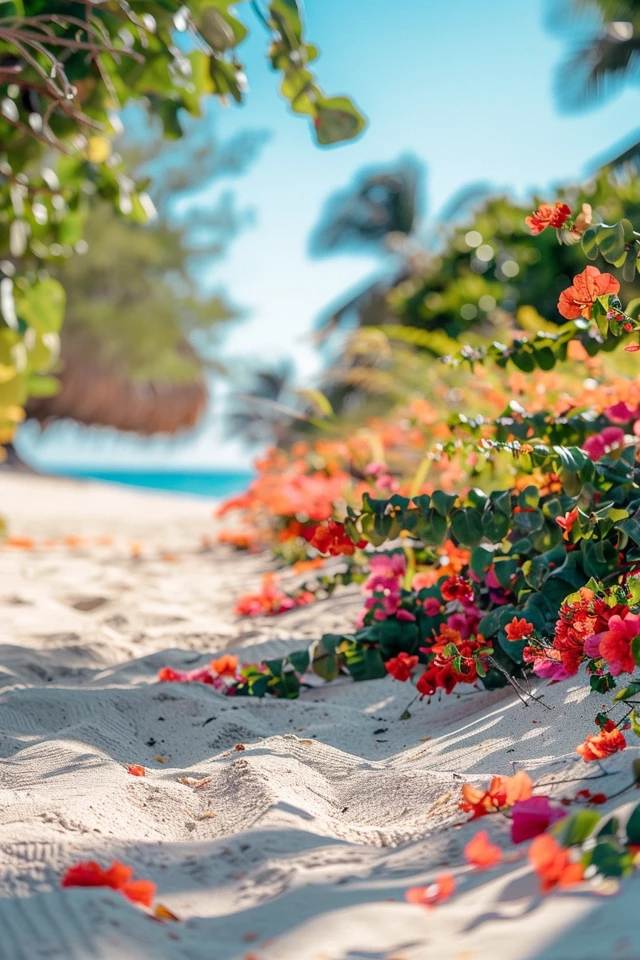
Beachy Vibes: Landscaping Ideas with Sand
There is something undeniably relaxing about the texture of sand under your feet. It instantly transports you to a vacation mindset, even if you are just stepping out your back door with a cup of coffee. If you are looking for visual examples of how to execute this look, be sure to check out the Picture Gallery at the end of this blog post.
I remember a project I worked on in a landlocked suburb where the client was desperate for a coastal retreat. We didn’t have an ocean, but by replacing a struggling patch of high-maintenance lawn with a structured sand lounge, we completely changed the energy of the home. It went from a standard backyard to a destination.
However, bringing sand into a residential landscape requires more than just dumping a truckload of material on the ground. Without proper containment, drainage, and material selection, a beachy paradise can quickly turn into a muddy, migrating mess. In this guide, I will walk you through exactly how to design with sand to create a clean, high-end aesthetic that functions for real life.
1. Selecting the Right Type of Sand
Not all sand is created equal. One of the biggest mistakes DIYers make is buying the cheapest “fill sand” available or grabbing bags of play sand from a big-box store.
Play sand is often too fine. It tracks everywhere, sticks to clothing, and can turn into a dense sludge when wet. For a high-end landscape look, you need material with more grit and weight.
I almost always recommend “washed concrete sand” or “masonry sand” for general landscaping. These have a coarser grain that stays in place better and drains significantly faster. It feels more like the textural sand you find on a wild coast rather than a playground sandbox.
Decomposed Granite as an Alternative
If you love the look of sand but hate the instability, consider Decomposed Granite (DG). It compacts down to a hard surface while retaining that warm, sandy aesthetic.
DG is perfect for dining areas where you need to slide chairs in and out. True loose sand is terrible for dining tables because the legs sink unevenly, leading to spilled drinks.
Designer’s Note: Grain Size Matters
When sourcing your material, ask for samples. If you hold it in your hand and the wind blows it away, it is too fine for an open yard. You want grains that are heavy enough to withstand a breeze but soft enough to walk on barefoot.
2. Designing the Ultimate Sand Fire Pit Zone
The most popular application for sand landscaping is undoubtedly the fire pit area. It creates a distinct “zone” or “room” within your yard without requiring expensive concrete pouring or decking.
To make this look intentional rather than accidental, scale is everything. A common error is making the sand circle too small.
You need to account for the fire pit unit, the chairs, and the circulation space behind the chairs. If your guests have to step off the sand and into the grass just to walk around their chair, the zone is too small.
The Golden Rules of Spacing
I use specific measurements when laying out these areas. You need at least 30 to 36 inches of depth for an Adirondack chair.
Beyond the chair, you need another 24 to 30 inches of clearance for people to walk behind seated guests safely.
If you are using a standard 4-foot wide fire pit, your sand circle needs to be roughly 14 to 16 feet in diameter minimum. This ensures the furniture sits fully on the sand, which looks luxurious and intentional.
Safety and Placement
Keep the sand pit at least 10 to 15 feet away from your home or any combustible structures. Sand is fireproof, but the sparks from wood-burning pits are not.
Additionally, consider the prevailing wind direction. You don’t want sand blowing into your pool or your neighbor’s patio. Placing the pit near a windbreak, like a row of hedges or a privacy fence, helps contain the material.
Common Mistake + Fix
Mistake: Placing fire pit furniture directly on loose, deep sand makes it hard to stand up and sit down.
Fix: Bury large flat flagstones flush with the sand level right where the chairs will sit. This gives the chair legs a solid foundation so they don’t sink, but the visual effect is still 100% beachy.
3. The Modern Zen Garden Aesthetic
If your style leans more modern or minimalist, you might look toward Japanese “Karesansui” (dry landscape) gardens for inspiration. This approach uses sand not as a place to sit, but as a visual canvas.
This style relies heavily on negative space. The sand represents water, and rocks represent islands. It is a fantastic solution for shady side yards where grass refuses to grow.
Styling with Boulders
The key to this look is the “rule of odd numbers.” When placing rocks or boulders in a sand bed, always group them in threes, fives, or sevens.
Vary the scale of the rocks. You want one “anchor” boulder that is significantly larger, supported by smaller stones.
Bury the bottom 1/3 of the boulders into the sand. This makes them look like they are emerging from the earth naturally. Rocks resting right on top of the surface look artificial and temporary.
Raking for Texture
To get that rippled water effect, you need a wide-tooth rake. The ridges catch the light and create shadows, adding depth to the yard.
This is a high-maintenance design choice. You will need to rake it regularly to keep it looking crisp. However, many of my clients find the act of raking the sand to be a meditative morning ritual.
What I’d Do in a Real Project:
- I would use a very pale, off-white crushed granite or quartz sand for a Zen garden to maximize light reflection.
- I would install a commercial-grade weed barrier underneath. Raking sand brings up weed seeds from the soil below if you don’t have a barrier.
- I would keep deciduous trees away from this area. Picking dead leaves out of raked sand is tedious work.
4. Pavers and Wide-Joint Sand Pathways
You don’t need a massive pit of sand to get the vibe. Using sand as a grouting material between large pavers creates a “soft hardscape” that feels organic and casual.
This is a great solution for rental properties or budget-conscious homeowners because it is DIY-friendly and permeable. Rainwater soaks right through, reducing runoff issues near the foundation.
Determining the Gap
For a beachy look, I space pavers much further apart than a traditional patio. I aim for 2 to 4 inches of space between large stepping stones (24×24 inch squares or larger).
This wide gap allows the sand to become a major visual element rather than just a crack filler. It creates a grid pattern that looks modern and architectural.
Stabilizing the Look
If you use loose sand in a walkway, it will eventually wash out or be kicked out. For high-traffic paths, I recommend using “polymeric sand.”
Polymeric sand contains binding agents that activate with water. Once it sets, it becomes firm—almost like a rubbery concrete—but maintains the grainy look of sand. It prevents ants from nesting and stops weeds from popping up between the stones.
Material Combinations
Contrast is your friend here. If you use light beige sand, go with dark grey slate or bluestone pavers.
If you use white concrete pavers, try a darker grey granite sand. The contrast makes the design pop and prevents the area from looking washed out.
Designer’s Note: Leveling is Critical
Even though this is a casual look, the pavers must be perfectly level. If a paver rocks when you step on it, the sand between the joints will crack and displace immediately. Spend extra time tamping down the base layer before laying the stone.
5. Containment, Edging, and Drainage
Now for the technical side. Sand is a fluid material. If you do not contain it, it will migrate into your lawn, your pool, and your living room.
You must install a hard edge around any sand feature. This acts as a dam to keep the material in place.
Edging Options
Steel Edging: This creates a nearly invisible line. It is perfect for modern homes. It holds the sand back without creating a visual distraction.
Pressure-Treated Timber: For a rustic or coastal cottage look, use 4×4 or 6×6 timbers. This creates a raised border that also helps keep grass clippings out of the sand.
Natural Stone: A border of river rocks or cobblestones can work, but make sure they are cemented or mortared in place. Loose rocks will eventually get kicked into the loose sand, creating a maintenance headache.
The Importance of Depth and Drainage
Never put sand directly over topsoil. It will turn into mud.
Here is the proper layering for a sand area:
1. Excavate: Dig down about 6 to 8 inches.
2. Compact: Tamp down the native soil.
3. Fabric: Lay down heavy-duty, non-woven geotextile landscape fabric. This stops weeds and prevents the sand from mixing with the dirt.
4. Base: Add 2 to 3 inches of crushed gravel (3/4 inch minus) and compact it. This allows for drainage.
5. Sand: Top with 3 to 4 inches of your chosen aesthetic sand.
This layering system ensures that when it rains, the water flows through the sand, through the gravel, and into the earth. If you skip the gravel base, the sand will stay soggy for days after a storm.
Keeping it Clean
Sand creates a litter box risk if you have neighborhood cats. This is the number one objection I hear from clients.
To mitigate this, you can install motion-activated sprinklers nearby (set to night mode). Alternatively, keep the sand area covered with a custom canvas tarp when not in use during the off-season.
Another trick is to use slightly coarser, sharper grit sand. Cats prefer soft, fine sand. If the texture is a bit rougher (like crushed granite), they are less likely to use it.
Final Checklist: Installing Your Sand Feature
If I were managing your project, this is the checklist I would use to ensure success.
Planning Phase
- Measure the space. Ensure you have 3 feet of circulation around all furniture.
- Check local codes regarding fire pit placement (usually 10+ feet from structures).
- Select your sand type. Avoid play sand; choose washed masonry sand or decomposed granite.
Prep Work
- Mark the perimeter with spray paint.
- Excavate 6-8 inches of soil.
- Cap any irrigation lines that run through the area.
Installation
- Install your edging material first. Ensure it is level.
- Lay down heavy-duty landscape fabric. Overlap seams by 6 inches.
- Spread and tamp 3 inches of gravel base.
- Pour the sand to a depth of 3-4 inches.
- Rake smooth.
Styling
- Place furniture.
- Add potted plants (ornamental grasses work best) to soften the edges.
- Install solar path lights around the perimeter for nighttime ambiance.
FAQs
How do I keep sand from getting into the house?
This is all about transition zones. Never have a door open directly onto the sand. You need a buffer zone of decking, pavers, or grass between the sand pit and your back door. I also recommend a high-quality coir doormat at the entry point to catch granules. Removing shoes before entering the sand area helps, too.
Will weeds grow in the sand?
Yes, eventually. Seeds blow in from the wind and land on top. However, if you use a high-quality weed barrier fabric underneath, the weeds cannot root deeply. They are usually very easy to pull out by hand because the root system is just floating in loose sand. A quick rake once a week usually disturbs seedlings enough to kill them.
Can I put a sand pit over an existing concrete patio?
Technically yes, but you need to build a frame to hold the sand. You also need to ensure the concrete has a slope for drainage. If the concrete is flat, water will pool at the bottom of the sand, creating a swamp. It is generally better to remove the concrete or build a wood deck over it instead.
Does sand get too hot to walk on?
Dark sand or grey decomposed granite can absorb heat. Light-colored silica sand reflects sunlight and stays cooler. If you live in a very hot climate like Arizona or Texas, stick to white or beige sand. You might also want to incorporate a shade sail over the area to keep surface temperatures down.
Conclusion
Using sand in your landscaping is a bold choice that pays off in atmosphere. It breaks up the monotony of green lawns and grey concrete, introducing a tactile, organic element that feels like a getaway.
Whether you are building a social fire pit lounge or a quiet Zen retreat, the secret lies in the preparation. Invest in good edging, proper drainage, and the right grain size. If you get the infrastructure right, the maintenance is surprisingly manageable.
Don’t be afraid to embrace the imperfection of it. A few footprints in the sand just mean the space is being enjoyed. It is a material that invites interaction, so kick off your shoes and enjoy your new coastal vibe.
Picture Gallery


