
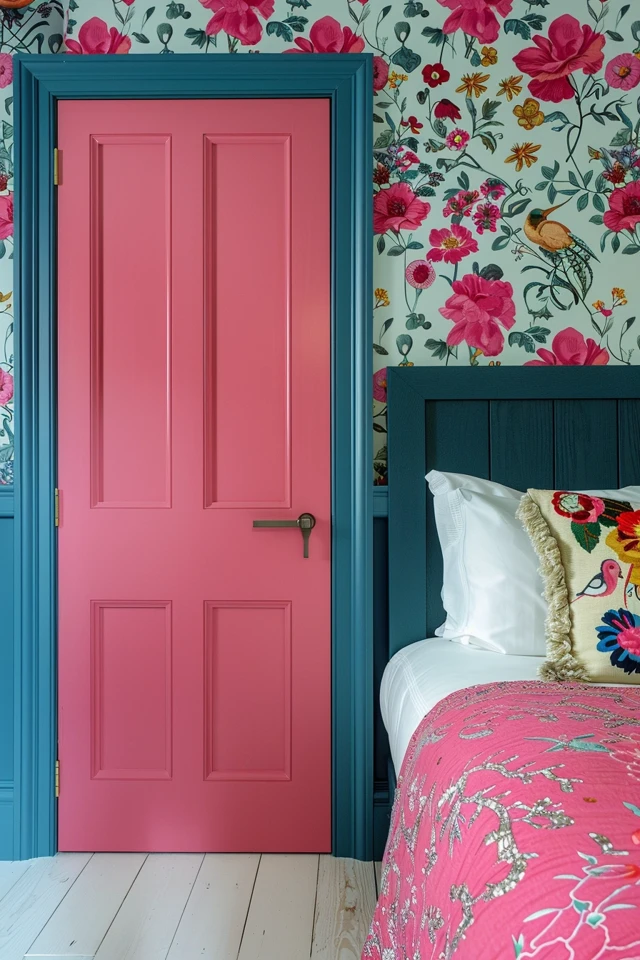
Bedroom Door Ideas to Elevate Your Space
Most homeowners treat interior doors as invisible necessities rather than architectural assets. We often spend months selecting the perfect headboard or rug, yet we settle for the hollow, builder-grade doors that came with the house. If you are looking for visual inspiration to help you visualize these concepts, make sure to check out the Picture Gallery at the end of this blog post.
Changing your bedroom door is one of the highest-impact upgrades you can make because it affects both the hallway and the room interior. It sets the expectation for the sanctuary that lies behind it. A solid, well-designed door adds physical weight and visual character to the space.
In my years as an interior designer, I have found that doors are the tactile handshake of a home. The weight of the swing, the feel of the handle, and the sound it makes when latching all contribute to your perception of quality. Let’s explore how to select the right style, material, and hardware to transform your bedroom.
1. Selecting the Right Door Style and Profile
The visual profile of your door should communicate with the rest of your home’s architecture. You generally want continuity in the hallway, but the interior side of a bedroom door offers a bit more flexibility.
The Shaker Style
Shaker doors are the chameleon of interior design. They feature a flat center panel with square edges and minimal detailing. They work effortlessly in modern farmhouse, transitional, and craftsman homes.
If you want a clean look that is not starkly modern, a 3-panel or 5-panel Shaker door is a safe bet. The horizontal lines in a 5-panel door can actually help a small room feel slightly wider.
Traditional Raised Panel
This is likely what you grew up with. These doors have beveled edges and raised center sections that catch the light, creating shadows and depth. They lean towards a classic, colonial, or Victorian aesthetic.
Designer’s Note: Be careful with the standard “6-panel” colonial door in a modern setting. It can date a renovation instantly. If you have a traditional home but want a fresher look, opt for a 2-panel door with an arched top or a square top. It feels historic but less cluttered.
Modern Slab Doors
A slab door is completely flat on both sides with no detailing. In high-end design, we use these for contemporary and mid-century modern spaces.
The secret to making a slab door look expensive is the material. A hollow-core white slab looks cheap. A solid-core walnut or white oak slab looks incredibly luxurious. If you paint a slab door, consider a high-gloss finish to reflect light and treat it as an architectural color block.
2. Material Matters: Solid Core vs. Hollow Core
If you take only one piece of advice from this guide, let it be this section. The construction of the door dictates privacy, soundproofing, and durability.
The Problem with Hollow Core
Hollow core doors are essentially a honeycomb of cardboard sandwiched between two thin sheets of fiberboard. They transmit sound easily, which kills the feeling of privacy in a bedroom. They also dent easily if you have kids or moving boxes.
Why Solid Core is Worth the Investment
Solid core doors are filled with a composite material (usually wood byproducts) that mimics the weight and density of solid wood. They are significantly heavier and block sound much better.
Sound Transmission Class (STC):
- Hollow core doors typically have an STC rating of 20-25. You can hear a conversation through them.
- Solid core doors typically range from 30-35. They muffle voices and TV noise significantly.
Solid Wood
True solid wood doors are beautiful but sensitive to humidity. They expand and contract, which can cause sticking in the summer and gaps in the winter. Unless you are restoring a historic home, I usually recommend solid core composite for better stability and lower cost.
3. Space-Saving Mechanisms and Functionality
Not every bedroom allows for a traditional hinged door. In tight apartments or small guest rooms, the “swing” of the door can eat up valuable floor space.
Pocket Doors
A pocket door slides into a compartment within the wall. It disappears completely when open. This is the gold standard for saving space, reclaiming about 10 square feet of usable floor area compared to a swing door.
The Trade-off: Installing a pocket door in an existing wall is invasive. You have to rip out drywall and ensure there is no electrical or plumbing in that stud bay. They also seal less tightly than swing doors, meaning less soundproofing.
Barn Doors
Surface-mounted sliding doors, or “barn doors,” have been trendy for a decade. They slide over the wall rather than into it.
My Professional Take: I rarely recommend barn doors for a primary bedroom. Because they sit off the wall to slide, there is always a gap. This gap lets in light and sound. They are fine for a closet or an ensuite bathroom, but for the main bedroom entry, they compromise privacy.
French Doors
Double doors add a sense of grandeur to a master suite. They require a wider opening (usually 48 to 60 inches). If you love the look but need privacy, use frosted glass or install a rod with sheer curtains on the interior side.
4. Color, Finish, and Paint Techniques
The finish of your door is just as important as the profile. You do not always have to paint your doors white to match the trim.
The Power of Contrast
Painting interior doors a dark color is one of my favorite tricks. A charcoal, navy, or black door creates an anchor in the room. It also hides fingerprints better than white paint.
If you paint the door a dark color, you have two choices for the trim:
- Classic: Keep the casing/trim white. This frames the color.
- Drenched: Paint the trim and the door the same color. This makes the opening look larger and more architectural.
Wood Tones
Natural wood doors are making a massive comeback. White oak with a clear matte sealer brings warmth to a sterile white hallway. If you mix wood tones (like a wood floor and a wood door), try to keep the undertones consistent (warm with warm, cool with cool).
Sheen Levels
Durability is key for surfaces we touch daily.
- Satin: The most popular choice. It has a soft glow and is scrubbable.
- Semi-Gloss: More durable and traditional. Good for high-traffic kids’ rooms.
- Matte: Looks velvety and modern but shows every greasy fingerprint. Avoid this unless the paint is specifically formulated to be scuff-resistant.
5. Hardware: The Jewelry of the Door
You can elevate a basic builder-grade door simply by swapping the hardware. This is a very renter-friendly upgrade.
Levers vs. Knobs
Levers are generally more accessible and modern. They are easier to operate when your hands are full of laundry. Knobs are traditional and harder for toddlers and pets to open.
Finish Coordination
Do your door handles need to match your light fixtures? No. But they should coordinate.
- Matte Black: Works with almost anything. Modern and clean.
- Unlacquered Brass: Ages beautifully and fits traditional or organic modern styles.
- Satin Nickel: A safe, neutral choice that hides scratches well.
Hinges Matter
If you change your handle from silver to black, you must change the hinges to match. Nothing looks more like an afterthought than mismatched metal finishes on the edge of a door.
Designer’s Note on Hinge Corners: Check your existing hinges before buying new ones. Do they have square corners or rounded (radius) corners? You need to buy the matching shape, or they won’t fit in the routed groove.
Common Mistakes + Fixes
Here are the specific errors I see on job sites and how to avoid them.
Mistake: The Undercut is Too High
If the gap between the bottom of your door and the floor is more than 3/4 of an inch, you lose soundproofing and light control.
The Fix: If you are replacing flooring, measure the new floor height before ordering doors. If the door is already cut too short, you can install a tasteful door sweep or an automatic door bottom that drops down when closed.
Mistake: Incorrect Swing Direction
A bedroom door should usually swing into the room, against the nearest perpendicular wall. You typically do not want the door to open and immediately block the light switch.
The Fix: Stand in the doorway and visualize the path. If you open the door, does it hit the nightstand? If so, you may need to reverse the swing or switch to a sliding option.
Mistake: Ignoring the “Backset”
When buying new handles for old doors, people often buy the wrong size latch.
The Fix: Measure from the edge of the door to the center of the bore hole. The standard US measurements are either 2-3/8″ or 2-3/4″. Most modern hardware is adjustable, but verify this before installation.
What I’d Do: A Real Project Mini-Checklist
If I were consulting on your bedroom refresh today, this is the decision tree I would use:
- Step 1: Assess the jambs. Are the frames square and in good condition? If yes, we are doing a “slab replacement” only. If no, we are doing a “pre-hung” unit (door + frame).
- Step 2: Check the width. Is it at least 30 inches? Ideally, for a master, I want 32 or 36 inches to move furniture easily.
- Step 3: Choose the core. I will always specify a solid core door for a bedroom. The sleep quality improvement is worth the extra $100-$150.
- Step 4: Pick the profile. For a versatile look, I usually choose a 2-panel or 3-panel shaker.
- Step 5: Hardware selection. I look for a heavy lever with a solid “return” (the end curves back toward the door) to prevent snagging clothes.
Final Checklist
Before you head to the lumber yard or click purchase, ensure you have these details sorted:
- Measure three points: Measure the width of your frame at the top, middle, and bottom. Use the smallest measurement.
- Rough Opening vs. Door Size: If buying a pre-hung door, know the “rough opening” size (stud to stud) vs. the actual door slab size.
- Wall Thickness: Standard walls are 2×4 (4-9/16″ jambs), but some older homes have 2×6 walls (6-9/16″ jambs). Get this right, or your trim won’t fit.
- Handing: Know your “left hand” vs. “right hand” swing. To determine this, stand on the side of the door where the hinges are visible. If they are on the left, it’s a left-hand door.
- Finish Plan: Will you paint the door flat on sawhorses before hanging? This provides the smoothest finish with no drips.
FAQs
Can I have different doors for the bedroom and the closet?
Yes. It is common to have a solid swing door for the room entry and lighter bifold or sliding doors for the closet. However, the panel style (shaker, raised, slab) and color should ideally match to reduce visual clutter.
How much space do I need for a barn door?
You need a wall section next to the opening that is equal to the door width. If you have a 36″ door, you need at least 36″ of clear wall space next to it. You also need to ensure no light switches, outlets, or thick baseboards obstruct the slide path.
Is it okay to paint my bedroom door a different color than the hallway side?
Absolutely. This is a great way to customize the bedroom interior without disrupting the flow of the main hallway. The rule is to paint the edge of the door the color of the side it swings into. Since bedroom doors usually swing into the bedroom, the latch edge gets painted the bedroom color.
Does a solid core door require three hinges?
Yes. Because of the weight, a solid core door should always have three hinges to prevent sagging over time. Hollow core doors sometimes get away with two, but three is always better for stability.
Conclusion
Your bedroom door is the gatekeeper of your rest. It separates the busyness of the household from your personal retreat. By upgrading from a hollow builder-grade slab to a solid, well-detailed door, you improve the acoustics, the aesthetics, and the overall value of your home.
Whether you choose a sleek modern slider or a moody, dark-painted traditional door, prioritize the quality of materials. A heavy door with smooth hardware brings a subtle daily satisfaction that you will appreciate every time you turn the handle.
Picture Gallery


