
Beige and Grey Living Room Ideas for Chic Decor
Introduction
Mixing beige and grey is often met with hesitation by homeowners who fear the result will look muddy or indecisive. However, in the professional design world, combining these two neutrals is the secret to achieving a sophisticated, layered look that feels both cozy and modern. I recently worked with a client who insisted on an “all-grey” palette, but once we introduced warm oatmeal textiles and natural wood elements, the room finally felt like a home rather than a showroom.
The key to this look lies in the balance of temperature, ensuring that your cool tones and warm tones interact intentionally rather than clashing. When done correctly, a beige and grey living room offers a timeless canvas that allows you to swap out seasonal decor without ever repainting the walls. It is versatile, forgiving of clutter, and deeply calming.
For a curated visual list of these concepts in action, be sure to visit our Picture Gallery located at the very end of this blog post.
1. Mastering Undertones: The Science of “Greige”
The biggest failure point in a neutral living room is mismatching undertones. Grey is rarely just black and white; it often carries blue, green, or purple undertones. Similarly, beige can lean pink, yellow, or orange.
To create a cohesive palette, I usually recommend sticking to “warm greys” (often called greige) paired with “cool beiges.” If you pair a very icy, blue-based grey with a yellow-based beige, the beige will look dirty and the grey will look clinical. The goal is to bridge the gap so the colors flow into one another.
When selecting paint, look at the Light Reflectance Value (LRV) and the undertone description. For a chic living room, I aim for paints with an LRV between 55 and 70. This range reflects enough light to keep the room airy but has enough saturation to contrast against white trim.
Designer’s Note: The Paper Test
One lesson I learned early in my career involved a “perfect” beige that turned peach once it was on the wall. To prevent this, never rely on the paint chip alone.
Hold your paint swatch against a sheet of pure white printer paper. The white reference point will immediately reveal the hidden undertone. If the beige looks pink next to the paper, it will look pink on your walls.
Common Mistakes + Fixes
Mistake: Using “builder beige” with “industrial grey.”
Fix: Update the wall color to a complex neutral like a mushroom or taupe. These shades naturally contain both grey and brown pigments, acting as a bridge between your furniture pieces.
2. Texture is Your New Color
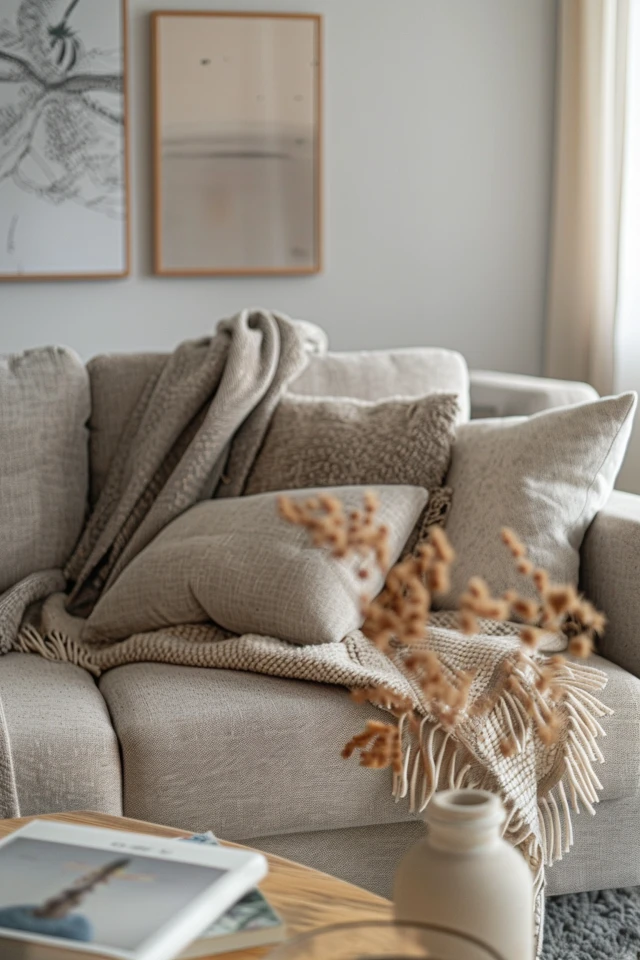
When you remove bright colors from a room, texture must do the heavy lifting. A beige and grey room without textural variety will look flat and uninviting. You need to create visual friction by placing opposing materials next to one another.
Think about the tactile experience of the room. If your sofa is a smooth grey performance velvet, your throw pillows should be a chunky beige wool or a nubby bouclé. If your coffee table is sleek grey stone or glass, style it with a rough woven tray or a wooden bowl.
Layering Fabrics
I follow a rule of three when layering textiles in a neutral space:
- The Base: This is your sofa and rug. Keep these durable and relatively smooth. Tightly woven linens or performance blends work best here.
- The Middle Layer: This includes curtains and accent chairs. Introduce a weave structure here, such as a herring-bone pattern or a heavy cotton velvet.
- The Top Layer: This is your throw blankets and pillows. Go wild here with high-pile textures like faux fur, shearling, or raw silk.
Rug Sizing and Placement
The rug is the anchor of a neutral living room. A common error is buying a rug that is too small, which makes the furniture look like it is floating on an island.
For a standard living room layout, aim for the front legs of the sofa and all accent chairs to sit on the rug. The rug should extend at least 6 to 8 inches past the sides of the sofa. In a beige and grey room, a jute or sisal rug layered underneath a smaller, vintage grey wool rug adds immense depth and defines the seating area.
3. Furniture Finishes and Material Mix
To keep a beige and grey room from feeling too sterile, you must introduce organic materials. Wood tones are essential for warming up grey elements. Walnut, white oak, and ash are excellent choices because they have neutral to warm undertones that complement greige palettes.
Avoid cherry or mahogany finishes in this specific aesthetic, as the deep red undertones can look dated against modern grey fabrics. If you are renting and stuck with dark cherry floors, cover as much as possible with a large, light beige area rug to reset the foundation.
Metallic Accents
Metals act as the “jewelry” of the room. Mixing metals is allowed and encouraged, but you should stick to two finishes to maintain calm.
- Matte Black: Adds a modern, graphic punch. Use this for curtain rods, picture frames, or lamp bases.
- Antique Brass: Adds warmth and reflects light. Use this for cabinet hardware, mirror frames, or table legs.
- Polished Nickel: If you prefer a cooler look, nickel works better than chrome, which can feel too cold in a cozy living room.
Clearances and Layout Guidelines
Regardless of the color palette, the flow of the room dictates its comfort.
- Coffee Table Spacing: Keep 14 to 18 inches between the edge of the sofa and the coffee table. This is close enough to set down a drink but wide enough for legroom.
- Walkways: Main traffic paths should be 30 to 36 inches wide. If your beige armchair encroaches on this path, the room will feel cramped regardless of how nice the colors are.
- Conversation Circle: Ensure seating is no more than 8 feet apart. If you have a large grey sectional, pull the beige accent chairs in closer rather than pushing them against the far walls.
4. Lighting Strategies for Neutral Palettes
Lighting can make or break a beige and grey room. Because these colors are easily influenced by light temperature, the wrong bulb can ruin your design. A cool grey wall can turn icy blue under daylight bulbs, or a beige sofa can look yellow under soft white bulbs.
Kelvin Temperature Matters
I almost exclusively specify LED bulbs in the 2700K to 3000K range for living rooms.
- 2700K: Warm and cozy. Great for table lamps and evening relaxation.
- 3000K: Crisp and neutral. Ideal for overhead recessed lighting or reading lamps.
Avoid anything over 3500K. Daylight bulbs (5000K) create a clinical, hospital-like cast that strips the warmth out of beige and makes grey look harsh.
Window Treatments
Curtains are an opportunity to bridge your two main colors. If your walls are a light grey, choose curtains in a textured oatmeal or sand color.
Designer Rule for Curtains:
Always hang your curtain rod 4 to 6 inches above the window frame, or all the way to the ceiling molding if possible. Extend the rod 8 to 12 inches past the window on each side. This ensures that when the curtains are open, the “stack” rests against the wall, not the glass, maximizing natural light.
5. Creating Contrast: The Anchor Points
A room consisting entirely of mid-tone beige and mid-tone grey will look washed out. You need high-contrast elements to give the eye a place to rest. This is often referred to in design as “grounding” the space.
The Role of Black
Every room needs a touch of black. It sharpens the blurry line between beige and grey. You don’t need a lot—just a few hits of black will do.
- A thin black metal floor lamp.
- A gallery wall with simple black frames.
- Patterned throw pillows with charcoal or black stitching.
Biophilic Design
Plants are the “third neutral” in this scheme. The vibrant green of a Fiddle Leaf Fig or the dusty green of an Olive tree creates a natural contrast that enlivens the muted palette. Place a large plant in a beige ceramic pot next to a grey armchair to instantly separate the hues and add life.
What I’d Do in a Real Project: The Mini Checklist
If I were starting a beige and grey living room renovation today, this is the exact order of operations I would follow:
- Select the Rug First: It is easier to match paint to a rug than a rug to paint. I would find a vintage-style rug incorporating grey, cream, and taupe.
- Choose the Sofa: I would select a performance fabric in a medium oatmeal or light grey. (Avoid white if you have kids or pets; oatmeal hides stains much better).
- Sample Paint: I would buy three “greige” samples and test them on different walls to see how the light changes throughout the day.
- Add Case Goods: I would look for a walnut or oak coffee table to add warmth.
- Layer Accessories: Finally, I would bring in the contrast with black hardware, brass lighting, and varied textiles.
Final Checklist
Before you finalize your purchases or start painting, run through this list to ensure your design is sound.
- Undertone Check: Have you compared your grey and beige elements in natural daylight to ensure they don’t clash?
- Texture Audit: Do you have at least three distinct textures (e.g., wood, velvet, metal) in the room?
- Lighting Temperature: Are all your bulbs between 2700K and 3000K?
- Rug Size: Does the rug sit under the front legs of all major seating furniture?
- Contrast: Is there at least one element of black or deep charcoal to ground the space?
- Functionality: do you have 14-18 inches of clearance between the sofa and coffee table?
FAQs
Is a beige and grey living room practical for families with pets?
Yes, it is actually one of the most practical color schemes if you choose the right shades and materials. Avoid extremely light pale greys or creams. Instead, opt for “heathered” fabrics for upholstery. A heathered grey or beige weaves different colored threads together, which naturally hides pet hair and minor dirt better than a solid color.
Can I use grey walls with beige carpet?
You can, but you must be careful with the wall tone. Because beige carpet covers a huge surface area, it reflects warm light up onto the walls. You should choose a wall color that is a warm greige rather than a cool blue-grey. A cool grey wall will look distinctively blue against a beige floor, creating an unwanted contrast.
How do I make a small living room look bigger with these colors?
Keep the contrast low on the large items. Match your curtain color closely to your wall color to keep the eye moving across the perimeter without interruption. Use a sofa that is similar in tone to the walls. Save your high-contrast grey or black accents for smaller items like lamps and art frames.
Conclusion
Designing a beige and grey living room is about much more than picking two safe colors. It is about layering warmth, texture, and light to create a space that feels sophisticated and intentional. By paying attention to undertones and varying your materials, you can create a sanctuary that feels timeless rather than trendy.
Remember that this palette is a background for your life. It allows you to feature your favorite art, books, and plants without them fighting for attention. Start with a solid layout, layer in your organic textures, and trust the process of mixing warm and cool tones.
Picture Gallery


