
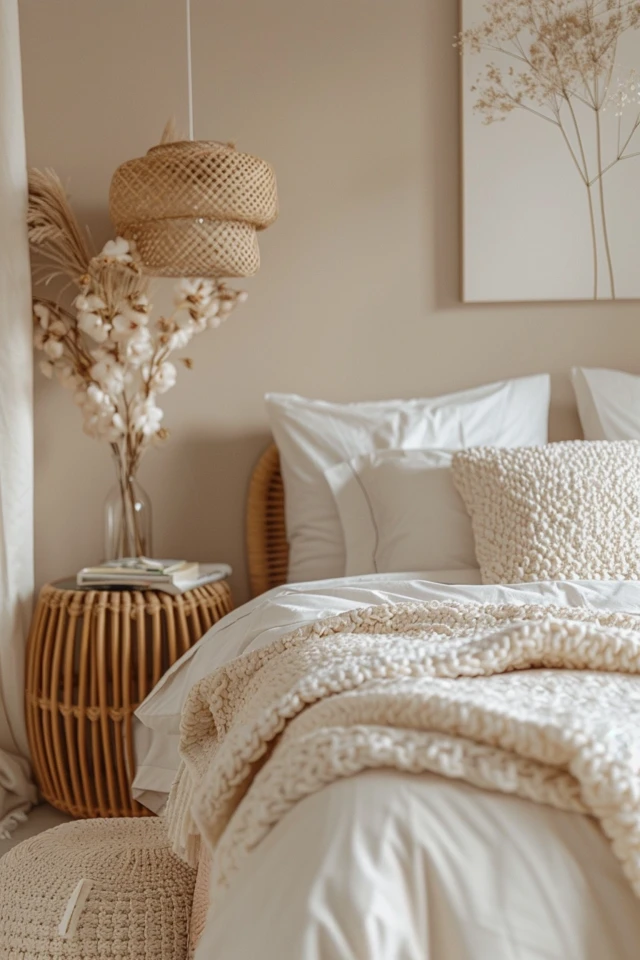
Beige and White Bedroom Ideas for Serene Decor
There is a common misconception that beige and white interiors are the safe, boring choice for people who are afraid of color. As an interior designer, I see it differently. A neutral palette is actually one of the hardest styles to execute well because you cannot rely on bold hues to distract the eye. When you strip away color, every texture, line, and shadow becomes significantly more important.
When done correctly, a beige and white bedroom is the ultimate sanctuary. It promotes deep rest, reflects light beautifully, and feels timeless regardless of passing trends. I remember a client who insisted she needed bright blue walls to feel “happy” in her room, but after realizing her high-stress job was overstimulating her, we switched to a layered cream and taupe scheme. She told me later it was the first time in years she slept through the night.
If you are strictly looking for visual inspiration to guide your renovation, you can jump straight to the extensive Picture Gallery at the end of this blog post. However, if you want to understand the mechanics of why these rooms work and how to replicate them without your space looking flat or unfinished, keep reading for the breakdown.
Understanding Undertones: The Secret to Mixing Neutrals
The biggest mistake homeowners make with beige and white decor is assuming all neutrals go together. They do not. Beige is rarely just brown and white; it usually carries an undertone of pink, yellow, green, or gray. If you mix a pink-beige carpet with yellow-beige walls, the room will instantly feel “off” or dirty, even if you can’t quite put your finger on why.
To create a serene space, you must identify the undertone of your fixed elements first. If you are renting and have existing carpet or flooring, that is your boss. Look closely at it in daylight. Does it cast a warm, golden glow? Or does it look slightly mushroom or gray?
Once you identify the base, stay in that lane. If your flooring is a warm honey oak, choose whites that are creamy (yellow-based) rather than stark architectural whites (blue-based). If you are working with gray-washed floors or cool taupe carpet, stick to crisp whites and “greige” furniture to maintain harmony.
Texture is Your New Color
When you remove color from the equation, texture must do the heavy lifting. In a monochromatic room, a lack of texture results in a space that feels sterile, like a hospital room or a builder-grade flip. To avoid this, you need to layer at least five different tactile materials.
Start with the headboard. In a beige and white room, an upholstered headboard usually works better than wood because it adds immediate softness. Look for fabrics like heavy linen, bouclé, or velvet. If you prefer a wood bed frame, ensure the wood grain is visible and has a matte finish rather than a high-gloss shine.
Move to the bedding. Do not just use a flat cotton sheet set. Layer a linen duvet cover (which has natural wrinkling and depth) with a chunky wool throw at the foot of the bed. The interplay between the smooth sheets, the nubby wool, and the woven linen creates visual interest that replaces the need for bright colors.
Finally, consider the hard surfaces. A sleek white lacquered nightstand looks fantastic against a grasscloth wallpaper. A rough ceramic lamp base contrasts beautifully with a smooth silk shade. These subtle tensions between rough and smooth, matte and shiny, are what make a neutral room look expensive.
Lighting: The Make or Break Factor
Lighting is critical in every room, but in a beige and white bedroom, it defines the mood entirely. White walls are highly reflective. If you use light bulbs with a cool color temperature (anything above 3500 Kelvin), your cozy sanctuary will look like a dentist’s office. The white will turn blue, and the beige will look muddy.
Designer’s Note:
I recently consulted on a project where the homeowner hated her new “Creamy Latte” paint color. She thought it looked green at night. The problem wasn’t the paint; it was her lightbulbs. She was using “Daylight” bulbs (5000K). We swapped them all for “Soft White” (2700K) LEDs, and the paint instantly transformed back to the warm cream she wanted. Always check your bulbs first.
Layer your lighting to avoid shadows in the corners, which can make white rooms feel gloomy. You need three sources: ambient (overhead), task (reading lamps), and accent (mood). For a bedroom, dimmers are non-negotiable. Being able to lower the light levels softens the contrast between the white and beige elements, blurring the lines and increasing the cozy factor.
When selecting lamp shades, opt for white linen or silk. A beige or gold shade can sometimes muddy the light output, making the room feel dim even when the light is on. Let the shade be white to let the light pass through clearly, and let the lamp base provide the beige accent.
Window Treatments and Privacy
Window treatments in a neutral bedroom serve two purposes: light control and architectural softening. In a beige and white scheme, I almost always recommend a two-layer approach. This adds volume to the room and solves practical privacy needs.
Start with a privacy layer mounted inside the window frame. This could be a woven wood shade (adding a natural wood tone to the palette) or a simple white roller shade. Woven woods like bamboo or grass weave are excellent for introducing a “third neutral” that bridges the gap between your white walls and beige furniture.
Layer drapery panels on top. Mount the curtain rod at least 4 to 6 inches above the window frame (or all the way to the ceiling molding if possible) to make the room feel taller. The rod should also extend 6 to 10 inches past the window on either side. This allows the fabric to stack against the wall, not the glass, maximizing natural light.
For the fabric, avoid matching the wall color exactly. If your walls are white, go for oatmeal or flax-colored linen curtains. If your walls are beige, try crisp white cotton drapery. This subtle contrast frames the window and draws the eye outward.
The Role of Rugs in Anchoring the Space
A common error in bedrooms is choosing a rug that is too small, which makes the furniture look like it is floating on an island. In a neutral room, the rug provides the foundation. It anchors the bed and covers a large expanse of flooring, offering a major opportunity to introduce pattern or texture.
Standard Rug Sizing Rules:
- King Bed: You need a 9’x12’ rug. This allows for ample softness on both sides of the bed when you step out in the morning.
- Queen Bed: An 8’x10’ is ideal. A 6’x9’ can work in very small rooms, but you lose the luxurious feeling.
- Placement: The rug should stop a few inches in front of your nightstands. Do not push it all the way to the wall behind the headboard; the nightstands should sit on the hard floor (or carpet), while the bed overlaps the rug.
For a beige and white room, vintage-style rugs with faded patterns are fantastic. They offer a “lived-in” feel that keeps the room from feeling too precious. Alternatively, a high-pile Moroccan-style rug with a simple geometric pattern adds massive comfort and fits the color scheme perfectly.
If you have wall-to-wall carpeting that you cannot change, layering a rug on top is acceptable and encouraged. It defines the sleeping area. Just ensure the layered rug is thick enough to not bunch up as you walk over it.
Adding Warmth with Wood Tones
A room that is strictly paint-white and fabric-beige can risk feeling washed out. Wood is the antidote. It acts as a grounding element. You don’t need a heavy timber bedframe to achieve this; small touches go a long way.
Consider nightstands in a white oak or walnut finish. The natural grain breaks up the solid colors. If you prefer painted nightstands, perhaps incorporate a wooden bench at the foot of the bed or a vintage wooden dresser on the opposite wall.
Be mindful of the wood tones. In a serene, airy room, light-to-medium woods generally work better than dark mahogany or cherry, which can feel heavy and formal. White oak, ash, and maple complement beige and white interiors beautifully because they share the same warm, earthy DNA.
Common Mistakes + Fixes
Even with a simple palette, things can go wrong. Here are the most frequent issues I see in DIY neutral bedrooms and how to solve them.
Mistake 1: The “One-Note” Room
The homeowner paints the walls beige, buys a beige bed, beige bedding, and a beige rug. The result is a flat, muddy box.
The Fix: Use the 60-30-10 rule, even with neutrals. 60% White (walls, bedding), 30% Beige (headboard, rug), 10% Contrast (wood tones, black metal accents, or brass).
Mistake 2: Ignoring Scale
Using tiny lamps on large nightstands or a small piece of art on a large wall. In minimal rooms, empty space is noticeable.
The Fix: Go bigger. Table lamps should be substantial. Art should fill 50-75% of the wall width above the bed. When in doubt, scale up.
Mistake 3: Buying Matching Sets
Buying the bed, nightstands, and dresser from the same showroom catalogue page. This looks commercial and lacks character.
The Fix: Break the set. If you love the bed, buy it. But source your nightstands from a different brand or choose a different finish. Mix painted pieces with stained wood pieces.
What I’d Do in a Real Project: A Mini Checklist
If I were designing a beige and white bedroom for a client tomorrow, this is the exact mental checklist I would run through to ensure success:
- Step 1: Paint Selection. I would test “White Dove” by Benjamin Moore (warm white) for walls and “Pale Oak” (light greige) for the trim, or vice versa for a moodier look.
- Step 2: The Anchor. I would source a vintage-style Turkish rug in faded creams and browns to hide lint and add history.
- Step 3: The Bed. I would choose a fabric headboard in a performance linen (oatmeal color) to withstand wear while looking soft.
- Step 4: Bedding Layers. Crisp white percale sheets for the base. A duvet cover in a waffle-weave texture. Two large European shams in a darker taupe for height and contrast against the headboard.
- Step 5: Nightstands. I would opt for wide (30-inch) wooden nightstands to introduce warmth.
- Step 6: Greenery. A large Fiddle Leaf Fig or an Olive tree in the corner. Green is nature’s neutral and breathes life into the space.
Frequently Asked Questions
How do I keep a white and beige bedroom from getting dirty?
This is a valid concern, especially with pets or kids. The secret is materials. Use semi-gloss or eggshell paint on walls (wipeable) rather than flat. For bedding, stick to 100% cotton or linen that can be bleached or washed in hot water. Avoid delicate synthetics. For upholstery, specify “performance fabrics” like Crypton, which repel liquids and resist staining.
Can I add black to a beige and white room?
Absolutely. In fact, every room needs a hint of black to “ground” it. Without it, the room can feel like it’s floating. Use black in small doses: a thin matte black picture frame, black metal legs on a chair, or the hardware on your nightstand. It adds definition and modernizes the look.
Is gray out of style for bedrooms?
Cool, blue-based grays have fallen out of favor as trends shift toward warmer, earthier tones. However, warm grays (often called “greige”) or taupes fit perfectly into a beige and white scheme. They bridge the gap between brown and gray and feel very current.
What is the best way to style the space above the bed?
You generally have two strong options. One is a single, large-scale piece of art centered over the bed. The bottom of the frame should hang 6 to 8 inches above the top of the headboard. The second option is a gallery wall of 3 identical frames in a row. Avoid small, scattered items, which can look cluttered in a serene space.
Conclusion
Creating a beige and white bedroom is about much more than just picking safe paint colors. It is an exercise in restraint, texture, and careful layering. By paying attention to undertones, prioritizing varied materials, and ensuring your lighting is warm and inviting, you can create a space that feels sophisticated rather than simple.
Remember that a neutral room is designed to evolve. It provides a perfect backdrop for your life. You can swap out a throw pillow or add fresh flowers, and the room feels new again. It is a long-term investment in your peace of mind. Take your time selecting the pieces, focus on how they feel to the touch, and you will end up with a retreat you love walking into every night.
Picture Gallery


