
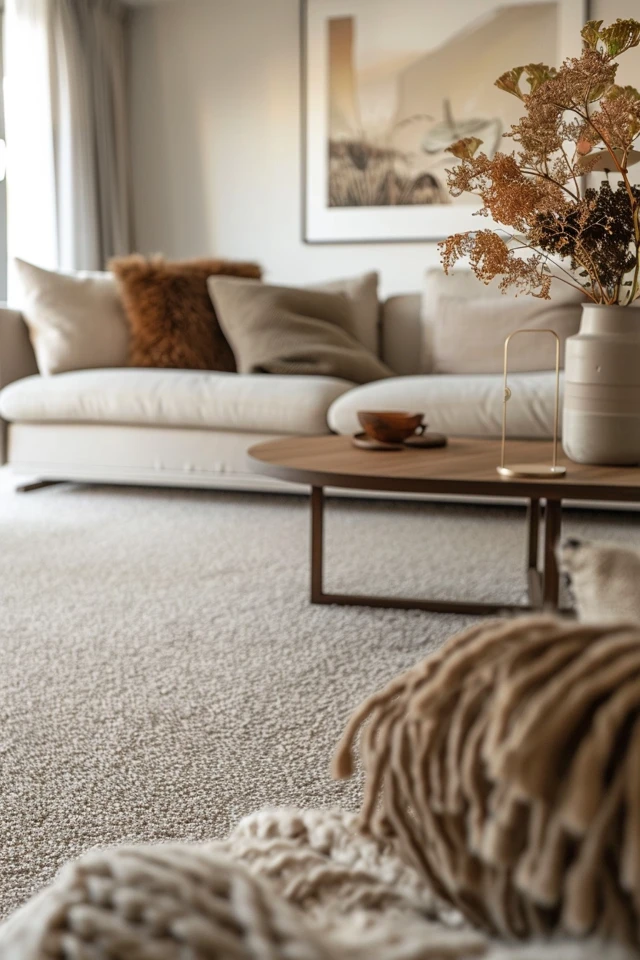
Beige Carpet Living Room Ideas: Cozy Decor Tips
I have walked into countless client consultations where the homeowner immediately apologizes for their beige wall-to-wall carpeting. There is a common misconception that beige carpet is outdated, boring, or strictly “builder-grade.” However, as a designer, I view it as a massive, warm blank canvas that offers acoustic benefits and unparalleled coziness.
The secret to making beige carpet look high-end isn’t ignoring it, but rather leaning into its warmth while creating intentional contrast. When styled correctly, beige flooring allows your furniture and art to take center stage without fighting for attention. If you are looking for visual inspiration, check out our curated Picture Gallery at the end of this blog post.
In this guide, I will walk you through the exact strategies I use to elevate living rooms with beige carpeting. We will cover everything from layering area rugs—yes, you can do that—to selecting the right paint undertones to prevent your room from looking “muddy.”
1. The Art of Layering Rugs on Carpet
One of the most effective ways to zone a living room and add personality is to layer an area rug directly over your wall-to-wall carpet. This creates a distinct “living zone” and breaks up the expanse of beige. It instantly elevates the room from a standard rental look to a designed space.
However, there is a technical art to this. You cannot simply throw a rug down and hope it stays; friction will cause it to ripple and creep.
Choosing the Right Material
- Flatweave is best: Choose a rug with a flat weave or very low pile (like a vintage Kilim or a jute blend). Placing a thick, plush rug over a thick, plush carpet creates a tripping hazard and looks visually heavy.
- Natural fibers: Sisal or jute rugs provide excellent texture contrast against synthetic nylon carpeting. This mix of rough and soft makes the room feel organic.
- The backing matters: Avoid rugs with rough latex backings that might degrade the carpet fibers underneath over time.
The Stability Rule
To prevent the annoying “rug creep” (where the rug walks across the room as people step on it), you must use a specific carpet-to-rug pad. These are dual-sided felt pads designed to grip the carpet pile below and the rug above. Do not skip this step, or you will be straightening that rug every single day.
Designer’s Note: The “Floating” Mistake
A common error I see is using a rug that is too small, making it look like a postage stamp floating in the middle of the room.
The Fix: Ensure the front legs of all major seating pieces (sofa and accent chairs) sit on the area rug. In a standard 12×14 living room, an 8×10 or 9×12 rug is usually the correct scale. Leave at least 12 to 18 inches of the beige carpet visible around the perimeter of the room to frame the space.
2. Managing Undertones and Paint Selection
Beige is never just beige. It always leans into an undertone, usually pink, yellow, or green. Identifying the undertone of your carpet is the single most important step in choosing wall colors and furniture fabrics.
If you choose a wall color with a yellow base but your carpet has a pink base, the room will feel dirty or clashing, even if you can’t quite put your finger on why.
How to Identify Your Undertone
Take a piece of bright white printer paper and lay it on the carpet in natural daylight.
- If the carpet looks slightly salmon or rose next to the paper, it has pink undertones.
- If it looks creamy or golden, it has yellow undertones.
- If it looks slightly khaki or olive, it has green undertones.
Coordinating Paint Colors
Once you know the undertone, you have two choices: harmonize or neutralize.
- To Harmonize: Use a paint color with the same undertone but significantly lighter. For a yellow-beige carpet, a warm creamy white like Swiss Coffee works beautifully.
- To Neutralize: If you hate the pinkish hue of your carpet, do not paint the walls green (the complementary color), as this will intensify the pink. Instead, choose a neutral greige that bridges the gap.
Common Mistakes + Fixes
Mistake: Painting the walls “cool grey” to modernize the room.
The Fix: Cool grey walls and warm beige carpet rarely work together; the grey makes the carpet look old, and the carpet makes the walls look icy. If you want grey, choose a “warm grey” or “taupe” that shares the warmth of the floor.
3. Creating Depth Through Texture
When your floor is a solid block of neutral color, your furniture and decor must provide the visual interest. In a room with hardwood, the grain provides movement. With carpet, you lose that natural pattern, so you must add it back through texture.
A “flat” room occurs when the carpet, sofa, and pillows all have a similar smooth, synthetic texture. To create a cozy, designer look, you need to mix materials aggressively.
The Texture Mix Checklist
I always try to include at least three of the following textures in a beige carpeted living room to create depth:
- Something Shiny: Brass lamps, a glass coffee table, or a mirror. The reflection breaks up the matte finish of the floor.
- Something Organic: A wood side table, a woven basket for blankets, or leather chairs. Leather creates a fantastic separation from the fabric of the carpet.
- Something Nubby: A bouclé accent chair or a chunky knit throw.
- Something Slick: Velvet or silk pillows.
The Importance of Vertical Elements
Because carpet draws the eye down with its visual weight, you need to draw the eye up. Install floor-to-ceiling drapes.
Pro Rule: Mount your curtain rod at least 4 to 6 inches above the window frame (or just below the crown molding) to heighten the room. Ensure the drapes “kiss” the floor. If they puddle too much on the carpet, it looks messy; if they are too high, it looks cheap.
4. Furniture Selection and Layout
The furniture you choose needs to contrast with the floor to avoid the “furniture showroom” look where everything blends into a sea of tan. Contrast is your best friend here.
Wood Tones
Beige carpet loves dark wood. Walnut, espresso, or even black-stained oak create a sharp, sophisticated boundary against the light floor. Light woods like maple or blonde oak can sometimes blend in too much, creating a washed-out appearance unless you have very contrasting wall colors.
Leg Styles and “Lift”
Since carpet is visually heavy, you want furniture that feels “light.”
- Leggy Furniture: Choose sofas and chairs on legs rather than skirted pieces that go all the way to the floor. Seeing a bit of space under the sofa helps the room feel airier.
- Thin vs. Thick: A thin metal leg on a coffee table can sometimes leave permanent divots in deep pile carpet. Look for tables with a sled base or wider legs to distribute the weight.
Color Contrast
If you have a beige floor and a beige sofa, you risk a monochromatic wash. If you must use a beige sofa, ensure it is at least two shades lighter or darker than the carpet.
Better yet, go bold with the sofa color. Navy blue, forest green, or charcoal grey sofas look incredible sitting on beige carpet because the warm floor neutralizes the cool tones of the fabric.
What I’d Do in a Real Project
If I were designing a rental with standard beige carpet, I would choose a camel leather sofa or a charcoal velvet sectional. I would avoid a linen beige sofa unless I planned to put a large, patterned area rug underneath it to create separation.
5. Lighting: The Kelvin Scale Factor
Lighting can make or break a beige room. Beige is highly reactive to light temperature. If your light bulbs are too cool, the room will look like a hospital waiting area. If they are too warm, the walls and floor will turn sickly orange.
Understanding Kelvin (K)
You need to look at the packaging of your LED bulbs.
- 5000K (Daylight): Avoid this. It casts a blue light that makes beige carpet look dingy and creates a harsh, sterile environment.
- 2700K (Soft White): This is the standard for cozy living rooms, but on yellow-beige carpet, it can intensify the yellowing effect.
- 3000K (Bright White): This is often the sweet spot for beige rooms. It is crisp enough to neutralize some of the yellowness, making the carpet look cleaner, but warm enough to feel inviting.
Layering Light Sources
Do not rely on the single ceiling boob light often found in these rooms. You need three layers of light:
- Ambient: The general overhead light.
- Task: A reading lamp by the armchair or sofa.
- Accent: Picture lights over art or a small table lamp on a shelf.
By directing light onto the walls and art, you draw attention away from the floor and create a vertical visual interest.
Final Checklist: The “Designer Refresh”
If you are feeling overwhelmed, here is the condensed action plan I would use to refresh a client’s living room over a weekend.
- Deep Clean First: Rent a high-quality carpet cleaner. Beige hides dust, but restoring the pile fluff makes the room look instantly newer.
- Check Your Bulbs: Swap all bulbs to 3000K LEDs for a crisp, clean warmth.
- Add a Rug: Place a large (8×10 or larger) flatweave rug to center the furniture arrangement.
- Introduce Black: Add at least two hits of black (a picture frame, a lamp base, or a side table) to ground the space and add modernity.
- Raise the Curtains: Ensure drapes are high and wide to distract from the floor.
- Add Greenery: A large floor plant (like a Ficus or Monstera) in a ceramic pot creates a natural transition between the carpet and the rest of the decor.
FAQs
Q: Can I put a rug over carpet if I have pets?
A: Yes, and it is actually recommended. It protects the permanent carpet from accidents. I suggest indoor/outdoor rugs or washable rugs for pet owners. They have come a long way in design and are easy to clean while adding the necessary style layer.
Q: What if my beige carpet has a pattern or texture already?
A: If your carpet has a strong ribbed or waffle pattern, stick to a simpler area rug. A solid-colored rug with a contrasting border works well. If you mix a busy carpet pattern with a busy rug pattern, the floor will look chaotic.
Q: How do I protect the carpet from heavy furniture dents?
A: Use clear caster cups or carpet spikes under the legs of heavy sofas and cabinets. If you move furniture and find a dent, place an ice cube in the dent and let it melt. As the fibers absorb the water, they swell. Blot up the moisture and fluff with a spoon or your fingers.
Q: Is beige carpet making my room look small?
A: Generally, light floors make a room look larger because they reflect light. If the room feels small, it is likely due to heavy, dark furniture blocking the view or poor lighting, rather than the carpet color itself.
Conclusion
Beige carpet does not have to be a design liability. In fact, its neutral warmth is the reason it has remained a staple in homes for decades. It is forgiving, quiet, and comfortable—qualities we often sacrifice for the aesthetic of hard surfaces.
By layering intentional textures, selecting the correct paint undertones, and using lighting to your advantage, you can turn a “builder-grade” room into a sophisticated, cozy sanctuary. The goal isn’t to hide the carpet, but to integrate it into a palette where it serves as the warm foundation for your life.
Picture Gallery


