
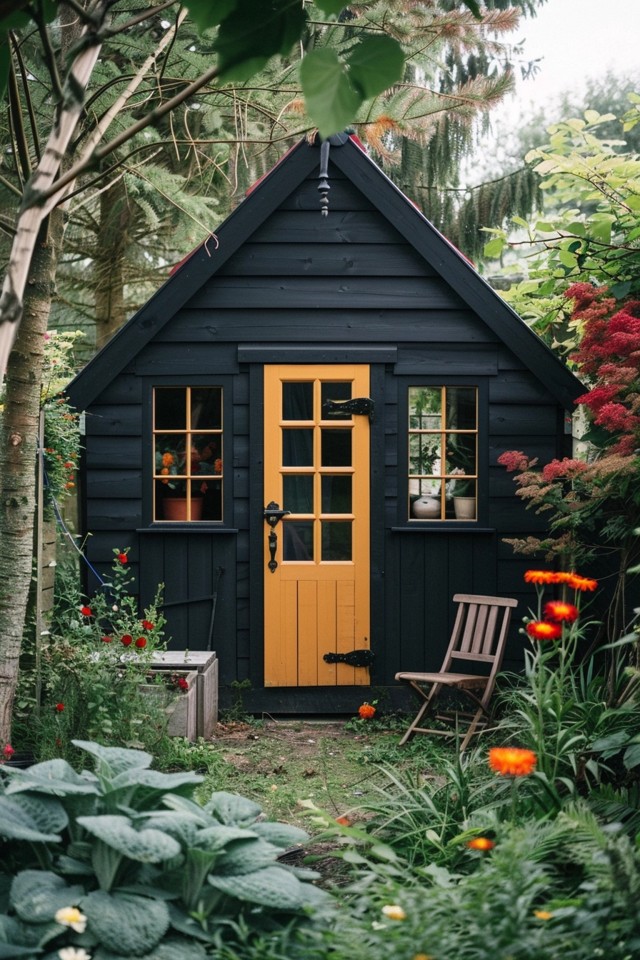
Title: Black Shed Ideas for Striking Backyard Appeal
Introduction
For years, the backyard shed was strictly utilitarian. It was a place to hide the lawnmower, stack bags of potting soil, and generally keep out of sight. Recently, however, I have seen a massive shift in how clients view these outbuildings. We are moving away from the standard “garden variety” white or beige structures and embracing something far more dramatic: the all-black exterior.
A black shed immediately creates a modern, architectural focal point in a garden. It acts as a silhouette that recedes into the shadows of the tree line while simultaneously making a bold statement. The darkness of the structure allows the vibrant greens of your landscaping to pop in a way that lighter colors simply cannot achieve. It transforms a storage space into a destination, whether you use it as a home office, a gym, or a moody potting shed.
If you are considering this upgrade, visual inspiration is key to understanding how different materials and finishes interact with light. We have compiled a curated Picture Gallery at the end of this article to spark your imagination. Before you scroll down, let’s dive into the practical design rules, material choices, and landscaping strategies you need to know to pull this look off successfully.
1. Choosing the Right Shade and Material
One of the biggest misconceptions in design is that black is just one color. In reality, black exterior paint comes in a spectrum of undertones that react differently to sunlight. A “cool” black will have blue or grey undertones, giving it a steel-like appearance that works well in modern, industrial landscapes. A “warm” black often carries subtle brown or bronze notes, which pairs beautifully with natural stone and lush greenery.
When selecting your paint, I always recommend sampling at least three distinct shades. Paint a two-foot by two-foot patch on the side of the shed that gets the most sun and another on the shaded side. Observe how the color shifts throughout the day. For example, a popular choice like Sherwin Williams’ Tricorn Black is a very neutral, true black, whereas Iron Ore has a softer, charcoal quality that feels less stark in a small yard.
Material selection is just as critical as color. If you are building from scratch or re-siding, consider vertical board and batten. The vertical lines draw the eye upward, making a small shed feel taller and more stately. The shadows cast by the battens add texture, preventing the black building from looking like a flat, dark void.
For a truly high-end, organic look, I often point clients toward Shou Sugi Ban. This is an ancient Japanese technique of preserving wood by charring it with fire. The result is a deep, rich black with a distinct texture that paint cannot mimic. It is naturally weather-resistant and adds an incredible layer of craftsmanship to the backyard.
2. Managing Scale and Visual Weight
There is a visual trick in interior design that applies to exteriors as well: dark objects appear smaller or “recede,” while light objects expand. If you have a small backyard, a large white shed can dominate the space and feel cluttered. A black shed, conversely, tends to blend into the background, especially if placed against a fence or a row of hedges.
However, because black has a heavy “visual weight,” you need to balance the architecture. If you paint a small, low-profile shed black, it can look squat or heavy. To counter this, I focus on the roofline. Steep gables look fantastic in black because the angle cuts through the sky, creating a sharp, intentional silhouette.
If you are working with a modern lean-to or flat-roof style, the black finish emphasizes the geometry. In these instances, I recommend extending the roof overhangs slightly more than standard. An overhang of 12 to 18 inches creates deep shadows and provides a practical shelter for entry, adding dimension to the dark block.
Another consideration is the roof material itself. You have two main routes here: monochromatic or contrast. A black metal standing-seam roof on a black body is incredibly chic and seamless. Alternatively, using cedar shingles on the roof creates a warm “hat” that softens the severe look of the black walls. This is often a better choice for traditional or cottage-style gardens.
3. Contrasting Elements: The “Jewelry” of the Shed
An all-black structure runs the risk of looking like a black hole if you do not accessorize correctly. The trim, doors, and hardware are the “jewelry” that define the style. The most timeless combination I use is natural wood against black paint.
A raw wood door, specifically in Cedar, White Oak, or Cypress, warms up the cool black tones instantly. The orange and honey hues in the wood sit opposite blue-toned blacks on the color wheel, creating a perfect complementary contrast. If a full wood door isn’t in the budget, consider wrapping the corner boards or the fascia in natural wood.
Lighting plays a massive role here as well. On a dark building, fixtures need to be larger than you might expect to stand out. A good rule of thumb for exterior sconces is that the fixture should be roughly one-quarter to one-third the height of the door opening. If your shed door is 80 inches tall, your light fixture should be around 20 to 26 inches tall.
Regarding finishes, unlacquered brass or copper looks stunning against black. Over time, the copper will patina, adding character. Matte black fixtures can work if you want a “stealth” look, but make sure the shed has enough architectural texture to support it. If the siding is flat, black lights will disappear.
Do not forget the hardware. Oversized handles and hinges in a metallic finish provide necessary tactile contrast. When you reach for the handle, you want it to feel substantial. I often specify long, vertical pull bars for modern sheds, usually 24 to 36 inches in length, to emphasize the height of the structure.
4. Landscaping Around a Dark Structure
The landscape design around a black shed is where the magic happens. Black is the perfect canvas for plants. Vibrant greens, silvers, and chartreuse shades pop aggressively against a dark background.
I love using plants with variegated leaves or bright foliage. Hostas, Japanese Painted Ferns, and Coral Bells (Heuchera) are excellent choices for the base of the shed. If you want drama, plant a Japanese Maple with red leaves nearby; the deep crimson against the black siding is a showstopper.
Avoid planting dark, heavy evergreens directly against the black walls, as they will get lost visually. Instead, aim for layers. Start with a row of light ornamental grasses in the front, followed by medium-height flowering shrubs. The movement of the grasses softens the rigid lines of the shed.
Hardscaping is the final piece of the puzzle. You need to create a clear separation between the black wall and the ground. I never recommend letting grass grow right up to the siding, as it makes maintenance difficult and can rot the wood.
Create a border using light-colored materials. White pea gravel, crushed granite, or light grey concrete pavers provide a stark, clean line at the foundation. This “skirt” around the shed reflects light upward and prevents mud splatter on your dark paint during rainstorms. A 3-foot perimeter of gravel is usually sufficient for both aesthetics and drainage.
5. Interior Functionality and Heat Management
We cannot discuss black sheds without addressing the primary concern: heat gain. Black surfaces absorb significantly more solar radiation than white surfaces. If your shed is in direct sunlight for most of the day, it will get hot inside.
If you plan to use the shed as a workspace or studio, insulation is non-negotiable. I recommend closed-cell spray foam for the walls and ceiling. It provides the highest R-value per inch and adds structural rigidity. Additionally, consider installing a ridge vent or a solar-powered exhaust fan to keep air circulating.
Window placement is critical for cross-ventilation. I try to place operable windows on opposite walls to encourage a breeze. If you are in a particularly hot climate, planting a deciduous tree on the south or west side of the shed can provide natural shade in the summer while letting sunlight warm the structure in the winter.
For the interior design, I rarely paint the inside black. Because the exterior absorbs light, you want the interior to reflect it. High-gloss white shiplap or warm plywood paneling (like birch) keeps the space feeling bright and airy.
Flooring should be durable and easy to clean. Since you are tracking in debris from the yard, I avoid carpet entirely. Luxury Vinyl Plank (LVP) in a light wood tone is waterproof and durable. Alternatively, painting the plywood subfloor with a heavy-duty floor enamel is a budget-friendly option that looks intentional if done in a cool grey or a checkered pattern.
Designer’s Note: A Lesson from the Field
I once worked on a project where the client insisted on a high-gloss black paint for their backyard studio because they wanted it to look “sleek.” We warned them, but we proceeded. The result was disastrous. The gloss finish highlighted every single imperfection in the wood siding—every knot, warp, and nail head was visible from 50 feet away. It looked like cheap plastic.
We ended up having to sand it down and repaint it with a matte finish. The lesson here is simple: Always choose a matte, flat, or satin finish for black exteriors. Matte finishes absorb light, hiding surface textures and flaws, which gives the building a velvety, solid appearance. Reserve the gloss for the front door or trim if you want a bit of shine.
Common Mistakes + Fixes
Mistake 1: Ignoring the “Pollen Effect.”
Black shows dust, pollen, and bird droppings much more than lighter colors. In spring, a black shed can turn yellow-green if you have pine or oak trees nearby.
The Fix: Plan for maintenance. Make sure you have a water spigot nearby and a high-quality hose. A quick rinse once a month keeps the finish looking sharp. Do not use a high-pressure washer too close to wood siding; a garden hose with a spray nozzle is sufficient.
Mistake 2: Painting Vinyl Siding Black.
Many homeowners try to paint existing vinyl sheds black. Dark colors absorb heat, which can cause standard vinyl siding to warp, buckle, or melt.
The Fix: If you have vinyl, you must use paint specifically formulated for vinyl siding (often called “vinyl-safe” colors). However, most vinyl-safe palettes do not go all the way to true black. If you want true black, you likely need to replace the siding with wood or fiber cement (like Hardie Board).
Mistake 3: Poor Lighting Temperature.
Installing cool-white (5000K) LED bulbs on a black shed makes it look like a security outpost or a prison yard. It is harsh and unflattering.
The Fix: Always use warm white bulbs, ideally 2700K or 3000K. This creates a golden glow that looks welcoming and sophisticated against the dark exterior.
What I’d Do in a Real Project: A Mini Checklist
If I were designing a black shed for a client tomorrow, this is the exact workflow I would follow:
1. Site Assessment: Determine the sun path. If the spot is full sun 100% of the time, I budget for extra roof insulation and a solar vent immediately.
2. Siding Selection: I would specify T1-11 plywood (for budget) with 1×2 battens applied over it to create a Board and Batten look. It’s cost-effective and looks high-end when painted.
3. Color Sampling: I would sample Benjamin Moore “Black Beauty” and Sherwin Williams “Tricorn Black.” I would verify which one looks less “blue” in the morning light.
4. The “Jewelry”: I would source a raw wood slab door and seal it with a clear marine-grade varnish to prevent graying.
5. Hardscape: I would lay down a barrier of landscape fabric and top it with 3 inches of limestone screenings or crushed gravel around the perimeter to prevent mud splash-back.
6. Lighting: I would install two large gooseneck barn lights in a galvanized steel finish to contrast against the black paint.
Final Checklist
Before you commit to the dark side, ensure you have ticked these boxes:
- Paint Sheen: Have you selected Matte or Satin? (Avoid Gloss).
- Undertones: Have you tested the paint to ensure it doesn’t look navy blue or forest green in the sun?
- Heat Control: Do you have a plan for ventilation (ridge vents, windows, fans)?
- Contrast: Have you planned for wood, metal, or stone accents to break up the mass?
- Vegetation: Do you have light-colored plants planned for the perimeter?
- Maintenance: Are you prepared to hose it down during pollen season?
FAQs
Does a black shed get hotter than a white one?
Yes, absolutely. A black exterior can be 10-20 degrees hotter on the surface than a white one. This heat transfers inside if you lack insulation. Proper roof venting and wall insulation are essential if you plan to spend time inside.
Will black paint fade faster?
Dark colors are more prone to fading from UV rays than lighter colors. However, modern acrylic latex paints are very durable. To minimize this, invest in a high-quality exterior paint with UV protection. You may need to apply a fresh coat every 5-7 years, slightly more often than a lighter shed.
Can I paint a metal shed black?
Yes, but preparation is key. You must clean the metal thoroughly to remove oxidation and use a “direct-to-metal” (DTM) primer and paint. If you skip the primer, the paint will peel in sheets within a year.
Does a black shed look gloomy in winter?
Surprisingly, no. In winter, when trees are bare and the sky is often grey, a black shed provides a structural anchor. If you add warm exterior lighting, it becomes a cozy, inviting focal point rather than a gloomy spot.
Conclusion
Embracing a black shed is a bold move that pays off by elevating the entire aesthetic of your property. It shifts the perception of your backyard from a collection of grassy patches to a designed, curated landscape. By carefully selecting your undertones, managing the scale with proper landscaping, and paying attention to the functional realities of heat and maintenance, you can create a structure that is as practical as it is beautiful.
Remember that the success of this look lies in the contrast. The darkness of the building is there to highlight the warmth of the wood, the shine of the brass, and the vibrancy of your garden. It is a design choice that signals confidence. Take the leap, test your samples, and enjoy the sophistication that a touch of noir brings to your outdoor living space.
Picture Gallery


