
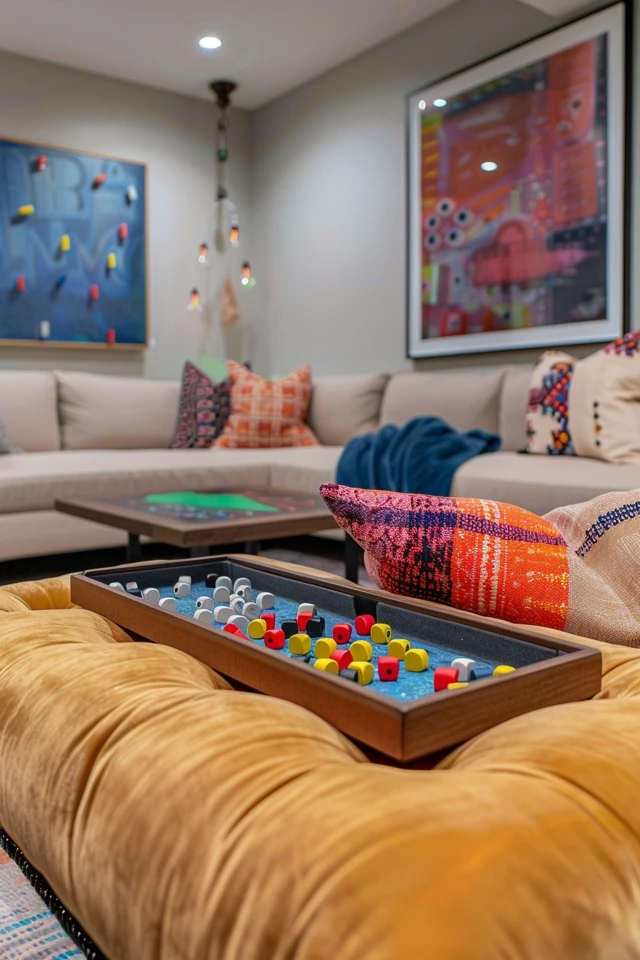
Board Game Room Ideas for Enthusiasts & Families
There is something remarkably grounding about gathering around a table, disconnecting from digital screens, and engaging in tactile gameplay. Whether you are battling for resources in Catan or navigating a complex Dungeons & Dragons campaign, the environment significantly impacts the experience. A well-designed game room bridges the gap between a chaotic clutter of boxes and a streamlined sanctuary for leisure.
I recall one of my first residential projects involved transforming a formal dining room into a dedicated library and gaming space. The clients were using a wobbly card table that barely fit their game board, and poor lighting meant everyone was squinting by round three. That project taught me that gaming rooms require just as much ergonomic planning as a home office, combined with the hospitality requirements of a living room.
In this guide, we will cover the essential layouts, furniture specifications, and design elements required to build a functional game room. If you are looking for visual inspiration, you can find our curated Picture Gallery at the end of this blog post.
The Centerpiece: Choosing the Right Game Table
The table is the undisputed anchor of the room. Unlike a dining table, a board game table serves a specific technical function. It needs to accommodate large playmats, character sheets, and potentially hundreds of small components.
When selecting a table, surface area is your primary metric. A standard dining width of 36 to 40 inches is often too narrow for complex strategy games, which frequently require a 4-foot by 6-foot surface to play comfortably. However, going too wide (over 54 inches) makes it difficult to reach pieces across the board.
The Case for a Recessed Vault
Many high-end game tables feature a recessed playing surface, often called a “vault,” which sits 3 to 5 inches below the armrest. This design serves two purposes. First, it keeps dice and pieces contained so they do not roll onto the floor. Second, it improves ergonomics by lowering the viewing angle, making it easier to see the entire board without standing up.
If a custom vault table is out of budget, you can modify a standard table. I often recommend using a large neoprene mat on top of a solid wood table. This makes picking up cards easier and dampens the sound of rolling dice.
Clearance and Flow Rules
The most common layout error is buying a table that is too large for the room. You must maintain specific clearances for the room to function.
- Minimum Clearance: Leave at least 36 inches between the table edge and the wall (or nearest furniture). This allows someone to scoot their chair back to stand up.
- Walkway Clearance: If people need to walk behind a seated player to get to the bathroom or kitchen, you need 48 inches of clearance.
- Rug Sizing: If you use a rug, ensure it extends 24 inches past the table on all sides so chair legs do not catch on the edge.
Common Mistakes + Fixes
Mistake: Using a glass-top table.
Fix: Glass is loud, cold to the touch, and creates terrible glare from overhead lights. Stick to wood or tables with a felt/neoprene playing surface.
The Comfort Factor: Seating for Marathon Sessions
Board games often run longer than a standard dinner party. A game of Twilight Imperium can last six to eight hours, and Monopoly can feel like it lasts a lifetime. Consequently, the seating must offer superior lumbar support and cushioning.
Avoid benches at all costs. While benches save space and look tidy tucked under a table, they offer zero back support. After forty-five minutes, your guests will be squirming in discomfort.
Chair Specifications
Look for dining chairs that lean slightly toward “office chair” ergonomics but keep the residential aesthetic. Upholstered dining chairs with a high back and armrests are ideal. The armrests allow players to rest their elbows while contemplating their next move.
However, check the arm height against your table apron. You need at least 7 inches of clearance between the seat and the table apron for leg comfort. If the chair has arms, ensure they slide under the table fully when not in use to maximize walkway space.
Fabric and Durability
Snacks and drinks are inevitable during game night. As a designer, I always specify performance fabrics for these rooms. Look for “Crypton” or solution-dyed acrylics (like Sunbrella meant for indoor use).
These fabrics resist staining and can be cleaned with water and mild soap. If you prefer leather, opt for a distressed top-grain leather. It handles scratches better than smooth, corrected leather, and wear adds to the character.
Designer’s Note: The “Crash Pad”
In larger rooms, I like to include a secondary seating area away from the main table. A small loveseat or a pair of lounge chairs allows eliminated players to relax while the game finishes. It also provides a break area for people to stretch their legs without leaving the social zone.
Lighting Strategy: Eliminating Glare and Shadows
Lighting is the most technical aspect of a game room design. You need high visibility to read small text on cards and distinguish between similar colors on a board. However, you must avoid the harsh “interrogation room” feel.
The enemy of board gaming is glare. Glossy game boards, plastic card sleeves, and laminated tokens reflect light. If you hang a singular pendant light with an exposed bulb directly over the table, half the players will be blinded by the reflection.
Layering the Light
I recommend a three-layer approach to lighting this space.
- Overhead Diffused Light: Use a linear suspension fixture or a large drum pendant with a bottom diffuser. The diffuser (a frosted glass or acrylic sheet) softens the light and spreads it evenly, eliminating hot spots on the board.
- Recessed Perimeters: Install recessed cans or track lighting directed at the walls or storage shelves. This brightens the room without casting shadows on the table.
- Dimmers are Mandatory: Install a dimmer switch on the main overhead light. You want full brightness for setup and rules reading, but you may want to dim it slightly for gameplay atmosphere.
Color Temperature Matters
Pay attention to the Kelvin (K) rating of your bulbs. For a game room, aim for 3000K to 3500K. This is a crisp, neutral white.
Anything lower (2700K) is too yellow and makes reading text difficult. Anything higher (4000K+) feels sterile and blue, like a hospital. Correct color rendering is vital for games where color-matching is a mechanic, like Ticket to Ride.
Common Mistakes + Fixes
Mistake: Placing the light fixture too high or too low.
Fix: The bottom of the chandelier or pendant should be 30 to 36 inches above the table surface. This height prevents the light from obstructing eye contact while keeping the illumination focused.
Storage Systems: Managing the Collection
Board game boxes are notoriously inconsistent in size. You have small card games, standard square boxes (like Catan), and massive rectangular coffins (like Gloomhaven or Scythe). Designing storage requires flexibility.
Depth is Key
Standard bookcases are often 10 to 11 inches deep. This is insufficient for modern board games. Most standard square game boxes are roughly 11.75 inches by 11.75 inches.
You need shelving that is at least 13 inches deep to prevent boxes from overhanging the edge. Overhangs look messy and increase the risk of boxes being bumped off the shelf.
The “Kallax” Standard vs. Custom
The IKEA Kallax is the gold standard for budget gaming storage because the 13-inch cubes fit standard game boxes perfectly. However, for a more polished “built-in” look, you can frame these units with base molding and crown molding.
If you are going custom, I recommend adjustable shelving. This allows you to stack small card games on a shallow shelf and create taller gaps for the massive “big box” games.
Vertical vs. Horizontal Stacking
This is a hot debate, but from a design and preservation standpoint, store games vertically (like books). This prevents the weight of top boxes from crushing the lids of the bottom boxes.
It also makes it easier to pull a single game off the shelf without toppling a stack. The only exception is extremely heavy games with loose components inside; those should sit flat on the bottom shelves.
What I’d Do in a Real Project: Hidden Storage
- Drawer Bases: I design the bottom 24 inches of the storage unit as cabinets or drawers. This hides the messy, small card games, dice bags, and expansion packs that never stack neatly.
- Open Upper Shelving: Above the cabinets, I use open shelving to display the beautiful box art of the main collection.
- Styling: Break up the rows of boxes with the occasional plant or framed piece of art to keep the wall from looking like a retail store.
Acoustics and Accessories: The Finishing Touches
Game nights get loud. Between the cheering, the groaning over bad dice rolls, and the general table talk, the decibel level rises quickly. If your room has hardwood floors and bare walls, the echo will be exhausting.
Sound Dampening
You need soft surfaces to absorb sound. A thick area rug with a dense pad is your first line of defense. Heavy velvet or wool curtains on the windows also help significantly.
Consider acoustic wall panels if the room is particularly echoey. You don’t need ugly foam squares; many companies now make felt acoustic tiles that look like geometric art installations. Placing these on the wall opposite the players helps catch bouncing sound waves.
The Drink & Snack Logistics
Food and drinks are the natural enemies of cardboard and paper components. A spilled soda can ruin a $100 out-of-print game in seconds.
To mitigate this, I recommend using side tables or “C-tables” that slide up to the chairs. This keeps beverages off the main play surface. If you must have drinks on the table, use heavy coasters with a lip, or install cup holders if you are building a custom table.
Decor and Theme
Avoid being too literal with “game” decor (like giant chess pieces or playing card wallpaper). It can quickly look tacky.
Instead, lean into a mood. A “speakeasy” vibe with dark walls, brass accents, and warm wood tones fits the intellectual nature of strategy games. Alternatively, a bright, modern library aesthetic with white oak and colorful shelving works well for families.
Final Checklist: The Designer’s Game Plan
If I were consulting on your home today, this is the exact checklist I would have you follow to ensure the room comes together correctly.
- Measure the Room: Verify you have a 10-foot by 10-foot space minimum for a standard table setup.
- Select the Table First: Choose your table size based on the 36-inch clearance rule, not the number of seats you hope to fit.
- Audit Your Electrical: Ensure there is a junction box centered over where the table will go. If not, plan for swag hooks or floor lamps.
- Check Shelf Depth: Measure your largest game box. Ensure your shelving purchase has at least 1-inch clearance beyond that depth.
- Plan for Trash: It sounds trivial, but a small, stylish trash bin is essential for snack wrappers and score sheets.
- Test the Chairs: Sit in your potential chairs for 20 minutes in the store. If you fidget, don’t buy them.
FAQs
Can I fit a game room in a small apartment?
Absolutely. For small spaces, look for a “dining top” game table. It functions as your everyday eating table but has a removable top revealing the game vault underneath. This eliminates the need for a separate room.
What is the best flooring for a game room?
Hardwood or luxury vinyl plank (LVP) is best for cleanability, specifically for spilled drinks. However, you must layer a large area rug over it to dampen the noise and add warmth.
How do I handle lighting if I can’t change the ceiling fixture?
If you are renting or on a budget, use arc floor lamps. A large arc lamp can reach over the center of the table to provide overhead light without wiring. Just ensure the shade diffuses the light to prevent glare.
Is a round or rectangular table better?
For 4 players or fewer, a round table is excellent because everyone is equidistant from the board. For 5 or more players, or for games with large boards, a rectangular table is necessary to provide enough surface area.
Conclusion
Creating a dedicated board game room is about more than just shelving and tables. It is about intentionally designing a space that fosters connection. When you solve the practical problems of comfort, lighting, and storage, you remove the friction from the experience.
By following these design principles, you ensure that the focus remains where it should be: on the strategy, the laughter, and the shared experience of the game. Whether you have a dedicated basement or a corner of the living room, prioritizing function will always lead to a more enjoyable game night.
Picture Gallery


