
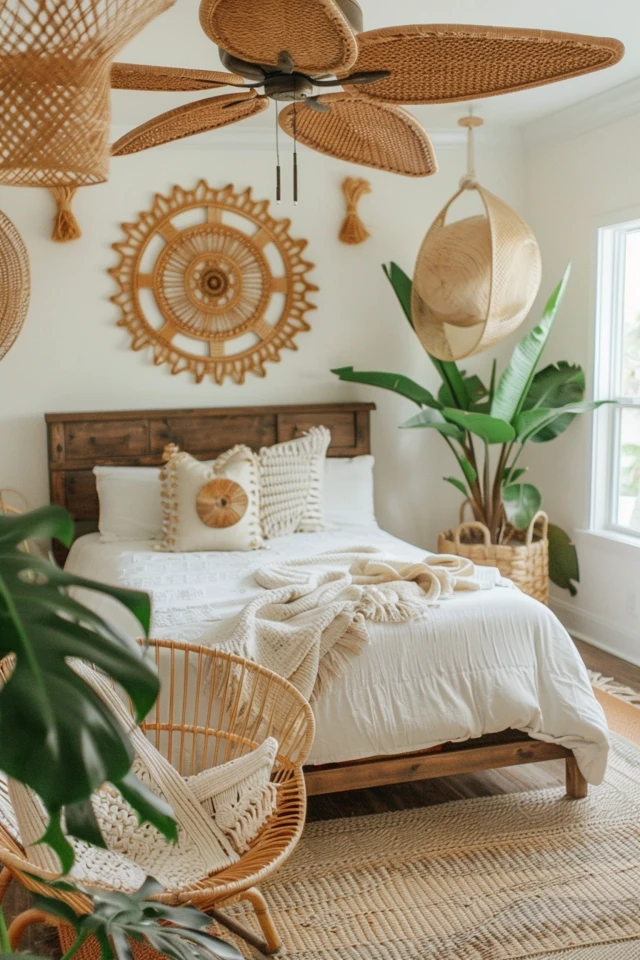
Title: Bohemian Ceiling Fans: Cool and Stylish
Introduction
There is a common misconception that ceiling fans are purely utilitarian eyesores that designers try to hide. In reality, a well-chosen ceiling fan can be the crowning jewel of a room, especially when working within the bohemian aesthetic. Bohemian design is all about layers, texture, and a relaxed atmosphere, and the right overhead fixture contributes to both the visual style and the physical comfort of the space.
I have worked on countless living rooms where the client initially wanted to rip out existing wiring to install a chandelier, only to realize they desperately needed the airflow during the summer months. The solution is never to sacrifice comfort for style. If you are looking for visual inspiration, you can jump right to the Picture Gallery at the end of this blog post.
The modern boho fan is no longer just a wobbly fixture with faux-wood blades; it is sculptural, often incorporating natural materials like rattan, wood beads, or woven cane. In this guide, I will walk you through how to select a fan that anchors your room, how to handle the technical sizing requirements, and how to maintain these textured fixtures so they look great for years.
The Bohemian Material Palette
When selecting a fan for a boho space, the materials are the most critical visual element. Unlike industrial or minimalist styles that rely on metal and plastic, bohemian design thrives on natural fibers and organic warmth.
I usually steer clients toward blades carved from real solid wood or high-quality composite that mimics timber grain. Look for lighter wood tones like white oak, ash, or distressed walnut. These tones generally soften the ceiling rather than creating a dark, heavy black hole overhead.
Texture is the second layer of the palette. Many stylish boho fans now feature housings wrapped in rattan, wicker, or cane webbing. This adds immediate warmth and connects the ceiling to other natural elements in the room, such as a jute rug or linen curtains.
Designer’s Note:
A common issue with “natural” fans is that cheap wicker can look plastic and shiny. Always look for matte finishes. If you can’t see the fan in person, zoom in on the product photos to ensure the weaving looks organic and irregular, not perfectly machine-stamped.
Sizing and Scale Rules of Thumb
The most beautiful fan in the world will look terrible if the scale is off. As a designer, I see fans that are too small for the room far more often than fans that are too big. A tiny fan in a large room looks like a toy and fails to move air efficiently.
For a standard bedroom that is roughly 12 by 12 feet, a 52-inch blade span is the industry standard. However, in a larger master suite or an open-concept living room, I almost always upgrade to a 60-inch or even a 72-inch fan. Large fans can spin at a lower speed while moving more air, which creates a gentle, quiet breeze rather than a noisy wind tunnel.
Ceiling height dictates your mounting method. You must have at least 7 feet of clearance from the floor to the blades for safety, though 8 or 9 feet is aesthetically preferred. If you have standard 8-foot ceilings, you will likely need a “hugger” or flush-mount fan, but be careful; some boho styles with hanging beaded light kits might drop too low.
Common Mistakes + Fixes:
- Mistake: Using the short downrod that comes in the box on a vaulted ceiling.
- The Fix: For high ceilings, buy an extension rod. The formula is: Ceiling Height minus 9 feet equals the ideal downrod length. If you have a 12-foot ceiling, you need a 3-foot (36-inch) downrod to bring the fan to the optimal height.
Lighting Considerations and Shadows
Bohemian fans often come with integrated light kits featuring woven shades, beaded cages, or intricate metal cutouts. While these are stunning to look at, they can create lighting challenges that you need to anticipate before installation.
A woven rattan shade will cast patterned shadows on your walls and ceiling. In a bedroom, this can be moody and romantic. In a home office or kitchen, however, a strobing shadow effect can be distracting and cause eye strain.
I rarely rely on a decorative boho fan as the single source of light in a room. The lumen output is often too low, and the shade restricts the spread of light. You must layer your lighting. Ensure you have recessed cans, floor lamps, or table lamps to provide the actual functional light for the space.
What I’d do in a real project:
- I always check the “Kelvin” temperature of the integrated LED. Many fans come with unchangeable LEDs.
- Ensure the light is between 2700K (warm white) and 3000K (soft white).
- Anything over 3000K will look blue and clinical, which instantly kills the cozy boho vibe.
- If the fan takes bulbs, use clear Edison bulbs for open cages to avoid the look of a white plastic bulb showing through the wicker.
Airflow and Motor Performance
Style matters, but if the fan wobbles or hums, you will hate it. In the design world, we look at the motor type: AC (Alternating Current) vs. DC (Direct Current).
For bedrooms and quiet living spaces, I highly recommend investing in a fan with a DC motor. They are significantly quieter, more energy-efficient, and usually offer more speed settings (often 6 speeds vs. the standard 3). This allows you to dial in the perfect gentle circulation for sleeping.
You should also look at the CFM (Cubic Feet per Minute) rating. For a main living area, look for a CFM of over 5,000 on high speed. If the fan has thick, heavy palm-leaf blades, be aware that they often have lower airflow efficiency because of the drag. They look great, but they are more for a gentle breeze than serious cooling.
Designer’s Note:
If you choose a fan with natural palm leaf blades, expect them to droop slightly over time due to humidity and gravity. This is part of the organic look, but if you prefer a crisp, straight line, stick to carved wood or ABS plastic that is painted to look like wood.
Durability and Maintenance
Bohemian design often involves textures that catch dust. A sleek metal fan is easy to wipe down, but a fan with a woven rope housing or cane blades requires a different cleaning strategy.
Dust buildup on fan blades causes them to become unbalanced, which leads to wobbling and noise. For woven textures, you cannot just use a rag, as it will snag the fibers. I recommend using a vacuum cleaner with a soft brush attachment or a can of compressed air to blow dust out of the crevices of rattan shades.
If you are installing the fan on a covered porch or patio—a very popular spot for boho design—you strictly need a “Wet” or “Damp” rated fan. Even if the roof doesn’t leak, humidity will cause standard indoor wood blades to warp and droop within a season. “Damp” rated fans use moisture-resistant motors and ABS plastic blades that withstand the elements while still looking like realistic wood or wicker.
Styling the Room Around the Fan
Once the fan is installed, you need to ensure it integrates with the rest of the room. A common error is trying to match the wood tone of the fan blades perfectly to the hardwood floors or the coffee table.
In boho design, we want the woods to coordinate, not match. If your floors are a warm honey oak, a walnut fan provides a nice contrast that draws the eye up. If your room feels heavy with dark furniture, a whitewashed or light maple fan can help lift the ceiling visually.
Hardware finishes also play a role. If your fan has matte black metal accents, try to repeat that black finish in at least one other place in the room, such as curtain rods, door handles, or a picture frame. This creates a cohesive “red thread” that ties the design together.
Common Mistakes + Fixes:
- Mistake: Placing a fan directly under recessed pot lights.
- The Fix: This creates a strobe-light effect when the blades spin. You need at least 3 feet of distance between the tip of the fan blade and the nearest recessed light. If you can’t move the lights, you may need a smaller fan or a “fandelier” (a chandelier with internal fans) style that has a smaller diameter.
Final Checklist: Buying Your Boho Fan
Before you click “purchase,” run through this checklist to ensure the fan will work for your specific space.
- Check the Span: Is the blade span appropriate for the square footage? (52″ for small/medium rooms, 60″+ for large rooms).
- Measure the Height: Do you have the right downrod length to keep the blades 8 to 9 feet off the floor?
- Verify the Rating: If this is for a bathroom or patio, is it Damp or Wet rated?
- Inspect the Light: Is the light dimmable? Is the color temperature warm (3000K or lower)?
- Control Check: Does it come with a wall control or a handheld remote? (Remotes get lost; wall controls are safer for rentals or kids).
- Slope Check: If you have a vaulted ceiling, does the mounting bracket support a slope, or do you need an angled ceiling adapter?
FAQs
Can I put a boho fan with wooden blades in a bathroom?
Technically, yes, but only if it is Damp-rated. Real wood absorbs moisture and will swell or warp in a steamy bathroom. For bathrooms, I always specify fans with ABS (plastic) blades that have a realistic wood finish. They look identical from the ground but are impervious to humidity.
Do rattan fans give off enough light?
Usually, no. The weaving blocks a significant amount of light output. Treat a rattan fan as a mood light or accent light. You will almost certainly need additional lamps or recessed lighting in the room to perform tasks like reading or cleaning.
How do I stop my fan from wobbling?
Wobbling is usually caused by loose screws or unbalanced blades. First, tighten every screw on the blade brackets. If it still wobbles, use the balancing kit that usually comes in the box (it looks like a weighted clip). Dust can also cause wobbling, so clean the blades thoroughly before trying to balance them.
What is a “fandelier” and should I get one?
A fandelier is a hybrid between a chandelier and a fan. The blades are usually much smaller and hidden inside a decorative cage. They are excellent for small rooms, walk-in closets, or dining areas where you want the look of a light fixture but need some air movement. However, they do not move as much air as a traditional wide-span fan.
Conclusion
Choosing a bohemian ceiling fan is about balancing the free-spirited aesthetic of the style with the practical physics of airflow and lighting. By focusing on natural materials, correct sizing, and warm lighting temperatures, you can turn a functional appliance into a major design statement.
Don’t be afraid to go bold with texture or scale. A large, slow-moving fan with a beautiful wood grain or woven texture can make a room feel settled and complete. Just remember to measure twice, check your clearance, and layer your lighting for the best result.
Picture Gallery


