
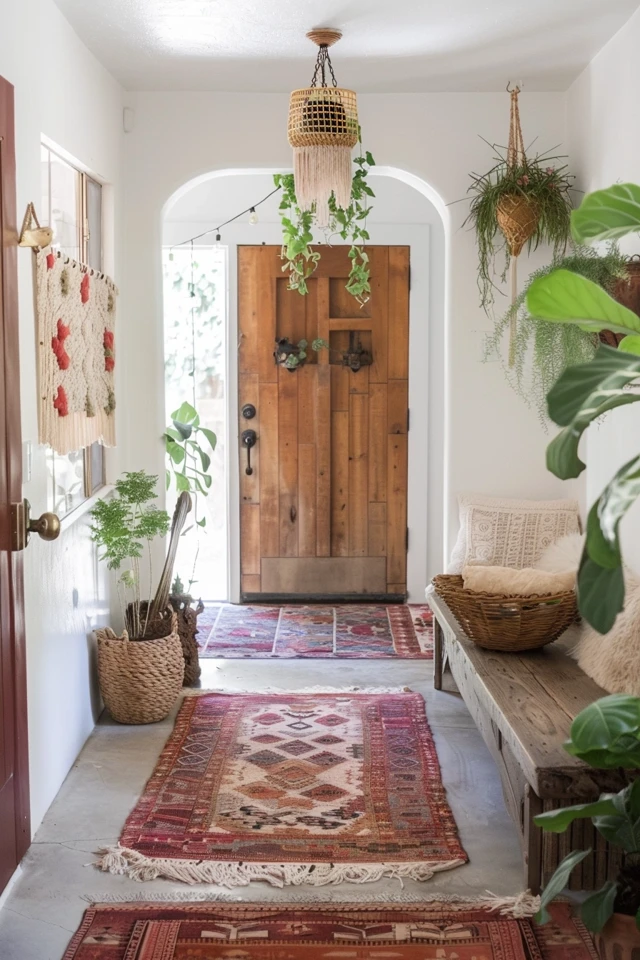
Title: Bohemian Entryway Ideas: First Impressions
Introduction
The entryway is the handshake of your home. It sets the tone for everything that follows, yet it is often the most neglected space in house design. In a bohemian home, this space should feel like a warm exhale, signaling that you have entered a place of creativity and comfort.
I remember my first apartment in the city had a long, narrow hallway that felt like an airlock. It was cold, sterile, and echoey. By adding a vintage runner, a rattan bench, and soft lighting, the energy shifted completely. It wasn’t just about decoration; it was about creating a transition zone that felt safe and inviting.
Bohemian style is inherently eclectic, but an entryway requires function above all else. If you are just looking for visual inspiration, you can skip this guide and go straight to the Picture Gallery at the end of the blog post. For those ready to design a space that works as hard as it looks good, let’s dig into the mechanics of a functional boho entry.
1. Grounding the Space: Rugs and Runners
In a high-traffic area like the foyer, flooring is your first line of defense. The bohemian aesthetic relies heavily on texture, and the rug is usually the anchor. However, this is where I see most homeowners make expensive mistakes.
Do not use high-pile shag rugs or delicate weaves in the entry. They trap mud, moisture, and debris that gets tracked in from outside. Instead, look for vintage flatweaves, Persian-style runners, or natural jute.
Designer’s Note: If you choose jute or sisal for that earthy texture, ensure it is a tight weave. Loosely woven natural fibers will snag on pet claws and heels. I always recommend layering a smaller, patterned vintage rug over a larger, thin jute mat. This adds that collected boho look while protecting the more expensive vintage piece from direct floor contact.
Sizing Rules of Thumb
- The Border Rule: Leave at least 4 to 6 inches of floor visible on all sides of the rug. If the rug touches the baseboards, the space will feel cramped and suffocating.
- Door Clearance: Check your door swing clearance before buying. If your front door sits low, a thick wool rug will jam it. You generally need a rug height of under 0.5 inches for standard clearance.
- Length Logic: For hallways, the rug should span at least 75% of the corridor’s length. A tiny “postage stamp” rug in a long hall creates a disjointed visual.
2. Functional Furniture: The Drop Zone
Bohemian design is often associated with maximalism, but in an entryway, clutter is the enemy. You need a designated “drop zone” for keys, mail, and bags. Without this, your beautiful boho decor will be buried under daily junk.
The centerpiece of a boho entry is usually a console table or a bench. If you have the space, a wooden console with turned legs or a piece made of burl wood adds incredible warmth. If you are tight on space, look for a floating shelf or a very narrow console (10-12 inches deep).
Selecting the Right Materials
- Rattan and Cane: These are quintessential boho materials. A cane-front cabinet hides shoes while allowing air to circulate, which prevents odors.
- Reclaimed Wood: Imperfections are a plus here. Scratches and knots hide the wear and tear of daily life.
- Unlacquered Brass: For hardware, choose finishes that patina over time. It feels more organic and lived-in than shiny chrome.
Common Mistake: Buying vintage furniture without measuring stability.
The Fix: Entryway furniture takes a beating. If you find a wobbly vintage bamboo table, reinforce it immediately with wood glue and corner braces. If it rocks when you toss your keys on it, it will eventually annoy you.
3. Lighting: Setting the Mood
Most entryways suffer from the dreaded “rental boob light” or harsh, cool-toned overhead LEDs. This creates a clinical atmosphere that kills the bohemian vibe instantly. Lighting in a boho space should be ambient, warm, and diffused.
Swap out flush mounts for fixtures with natural textures. Capiz shell, woven seagrass, wood beads, or oxidized metal pendants work beautifully. The goal is to cast interesting shadows on the ceiling and walls.
The Lighting Checklist
- Color Temperature: Always use bulbs between 2700K and 3000K. Anything above 3500K will look blue and hospital-like.
- Scale: A tiny light fixture in a tall foyer looks cheap. A general rule is to add the length and width of the room in feet; the sum equals the ideal diameter of the light fixture in inches.
- Clearance: Ensure the bottom of a pendant light is at least 7 feet off the floor so tall guests don’t bump their heads. If you have low ceilings, look for semi-flush mounts rather than pendants.
What I’d do in a real project: If hardwiring a new light isn’t an option (for renters or budget reasons), I add a small table lamp to the console. A lamp with a pleated fabric shade adds instant coziness and eliminates the need to turn on the harsh overhead light in the evening.
4. Vertical Styling: Mirrors and Wall Hangings
Vertical space is your best friend, especially in narrow apartment entryways. The walls are where you inject personality without taking up valuable floor square footage.
Mirrors are non-negotiable in an entryway. They allow for a final outfit check and bounce light around dark corners. For a boho look, move away from sharp rectangles. Look for arched shapes, oval wicker frames, or organic, asymmetrical “pond” mirrors.
The Art of the Gallery Wall
If you have a large blank wall, a gallery wall is a great way to showcase the eclectic nature of bohemian style. However, avoid the “cluttered mess” look by following a few grid principles.
- Anchor with a Hero Piece: Start with one large piece of art or a central mirror at eye level (center point roughly 60 inches from the floor).
- Mix Media: Don’t just frame prints. Mix in 3D objects like a small woven basket, a ceramic mask, or a macrame hanging. This variance in depth creates visual interest.
- Consistent Spacing: Keep roughly 2 to 3 inches between frames. If the gaps are too wide, the collection feels disconnected. If they are too tight, it looks chaotic.
Designer’s Note: Be careful with macrame. While it is a staple of 1970s boho, too much of it can look dated or cheap. I prefer finding vintage textile art or framed Hmong fabrics for a more sophisticated, traveled look.
5. Greenery: Bringing the Outdoors In
No bohemian space is complete without plants. They add life, improve air quality, and provide that crucial pop of organic green. However, entryways are often the darkest part of the home, which kills many standard house plants.
Be realistic about your light conditions. A dead Fiddle Leaf Fig is not a good first impression.
Plant Selection Guide
- Low Light / No Natural Light: Snake Plants (Sansevieria) and ZZ Plants are virtually indestructible. They can thrive in shadowy corners.
- Medium Indirect Light: Pothos or Philodendrons. These trail beautifully off the side of a console table or from a high shelf.
- High Traffic Areas: Avoid fragile plants that drop leaves when brushed against. A sturdy Rubber Tree (Ficus elastica) is a great vertical option that can handle a breeze from the door.
Styling Tip: Use baskets as planters. Place a plastic saucer inside a woven belly basket to catch water drainage. This integrates the plant into your texture palette seamlessly.
Final Checklist: The “Liveable Boho” Audit
Before you finalize your entryway setup, run through this checklist. I use this on every project to ensure the pretty details don’t ruin the functionality.
- The Swing Test: Open the front door fully. Does it hit the rug? Does the handle bang into the console table? You need at least 36 inches of clear walkway.
- The Shoe Reality: Be honest about how many shoes live by the door. If it’s six pairs, a tiny basket won’t cut it. Get a closed cabinet or a two-tier bench.
- The Mirror Height: Can the shortest and tallest members of the household see their faces? Adjust accordingly.
- The Fragility Check: Is there a heavy ceramic vase on a wobbly table? If you have dogs or kids, secure everything with museum putty.
- The Landing Strip: is there a clear 10×10 inch space on the console for keys and mail? If it’s covered in candles and decor, clear a spot.
FAQs
How do I mix boho with modern style?
Focus on clean lines for the major furniture pieces (console, bench) and add boho flair through accessories (rugs, pillows, lighting). This “Modern Boho” approach keeps the space feeling fresh and uncluttered.
Can I do a boho entryway in a small apartment?
Absolutely. Focus on wall-mounted storage to keep the floor clear. Use hooks for coats and bags, and a wall-mounted floating shelf as a landing strip. A runner rug will draw the eye down the hall, making it feel longer.
What is the best wall color for a boho entryway?
You have two main paths. The first is warm whites (like Sherwin Williams Alabaster) which allow your textiles to pop. The second is moody earth tones (like terracotta, sage green, or deep charcoal) which create a cozy, “jewel box” effect in small spaces.
How do I keep a jute rug clean in an entryway?
Jute hides dirt well, but it doesn’t like water. Shake it out outside weekly. For mud, let it dry completely and then vacuum it off. Do not scrub wet mud, as it will stain the fibers.
Conclusion
Creating a bohemian entryway is about balancing the free-spirited aesthetic with the rigid demands of daily life. It is the place where you shed the stress of the outside world and transition into your sanctuary.
By prioritizing durable materials like wool and wood, ensuring proper flow and clearance, and layering lighting and textures, you can create a space that is both practical and soulful. Remember that a home is a living thing; your entryway should evolve as your needs change. Start with the basics—a good rug and a place to put your keys—and layer in the personality over time.
Picture Gallery


