
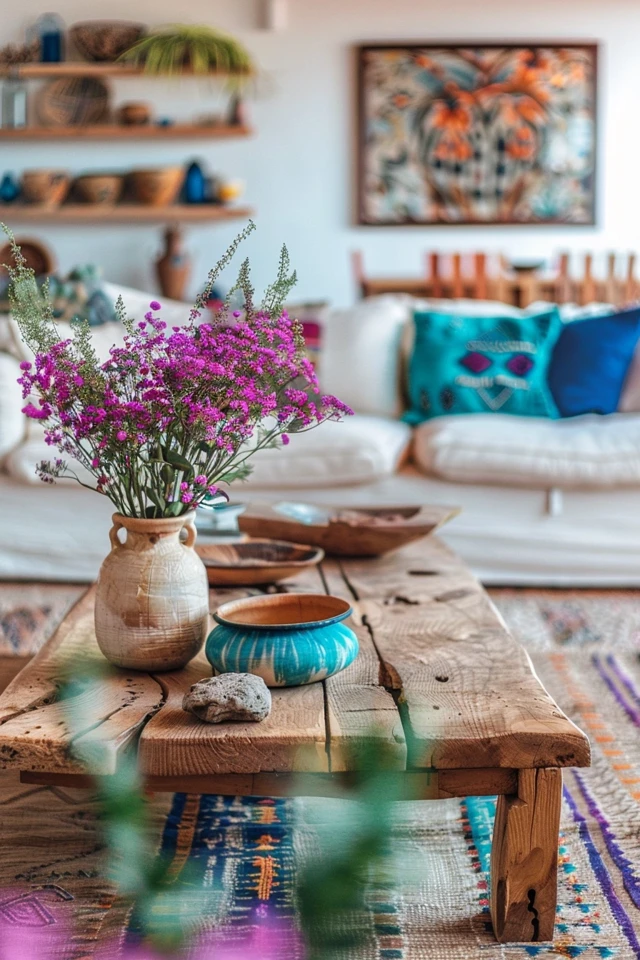
Title: Boho Chic Living Room Decor – Ideas & Inspiration
Introduction
Bohemian chic design is arguably the most personal style you can adopt for a living space. It relies on a relaxed, global-inspired aesthetic that prioritizes comfort and visual storytelling over rigid symmetry. When I walk into a client’s home to design a boho living room, my goal is always to create a space that feels collected over time, rather than purchased from a catalog in a single afternoon.
However, there is a fine line between a curated, artistic retreat and a cluttered, chaotic room. Many homeowners struggle with the “chic” part of the equation, ending up with too many disparate elements that fight for attention. For a massive dose of visual inspiration, don’t miss the curated Picture Gallery located at the very end of this post.
In this guide, I will break down exactly how to achieve that effortless, layered look while maintaining functionality. We will cover the specific rules of rug sizing, how to mix wood tones without clashing, and the lighting secrets that give these rooms their signature golden-hour glow.
1. Establishing the Palette and “Canvas”
The biggest misconception about boho design is that it requires an explosion of neon colors. In professional design, the most successful boho chic rooms actually start with a warm, neutral foundation.
I usually recommend starting with a 60-30-10 color rule, adapted specifically for this style. Your 60% base should be creamy whites, warm beiges, or soft terracottas. This allows your textiles and plants to pop without overwhelming the eye.
Designer’s Note: The Power of Texture Over Color
A lesson I learned early in my career involved a client who painted every wall a deep teal. The room felt incredibly small and dark. We repainted the walls a warm “Swiss Coffee” white and brought the teal back in through velvet curtains and an accent chair. The result was breathable but still vibrant.
If you are renting, you are in luck with this style. Peel-and-stick wallpaper in subtle geometric patterns or botanical prints works beautifully as a focal point behind a sofa.
If you own your home and want to add architectural interest, consider limewash paint. The chalky, suede-like texture of limewash adds immediate depth and age to the walls, which perfectly suits the bohemian vibe.
2. Furniture Selection: Scale and Materiality
Boho furniture tends to feature lower profiles and natural materials. We want to encourage lounging, so the furniture should look like it is inviting you to sit down.
When selecting a sofa, look for deep seats. I generally aim for a seat depth of at least 40 inches for a truly relaxed, lounge-ready feel. Leather (especially cognac tones) and velvet are the top material choices here because they patina well and handle wear gracefully.
Common Mistakes + Fixes
Mistake: Buying furniture sets that match perfectly.
Fix: Break up the set. If you have a heavy velvet sofa, pair it with a rattan accent chair or a wooden bench. Contrast is key.
Mixing Wood Tones
You do not need to match your coffee table wood to your side tables. In fact, you shouldn’t. The trick to mixing woods is to keep the undertone consistent.
If your floors are a warm oak, look for walnut or teak furniture, which also have warm undertones. Avoid mixing warm, red-based woods with cool, grey-washed woods, as this usually looks accidental rather than eclectic.
Layout Rules of Thumb
Even in a relaxed style, spacing matters.
- Keep 14 to 18 inches between the edge of your sofa and your coffee table.
- Ensure you have a 30 to 36-inch walkway for main traffic paths.
- Avoid pushing all furniture against the walls. Floating the sofa even three inches off the wall creates shadows that make the room feel larger.
3. The Art of Rug Layering and Textiles
If there is one non-negotiable element in boho decor, it is the rug. Actually, it is often two rugs. Layering rugs is a hallmark of this style that adds instant coziness and acoustic dampening.
How to Layer Rugs Like a Pro
Start with a large, neutral base rug made of natural fibers like jute, sisal, or seagrass. This rug should be large enough that the front feet of all your seating furniture sit on it.
On top of that, place a smaller, patterned vintage or Moroccan rug. This top rug can be set at an angle to add dynamism, or centered for a cleaner look.
Sizing Logic
If your room is an average 12×14 feet, your base rug should likely be an 8×10 or 9×12. The top rug can be a 5×7 or 6×9. The border of the bottom rug acting as a “frame” creates a finished look.
Pillows and Throws
This is where you introduce your accent colors. Mix varying sizes of throw pillows. I typically use two 22-inch square pillows in the corners, layered with two 20-inch pillows, and a lumbar pillow in the center.
Avoid the “chopped” look where pillows are karate-chopped down the middle. For boho styles, a relaxed, slouchy look is better. Down or down-alternative inserts are essential here; stiff polyester fill rarely looks high-end.
4. Lighting: Setting the Mood
You cannot achieve a bohemian atmosphere with cool, blue-toned lighting. Lighting in a boho living room must be warm and diffused.
The Kelvin Scale Rule
Check your lightbulbs. You want bulbs that sit between 2700K and 3000K on the Kelvin scale. Anything higher (4000K-5000K) will look like a hospital and kill the cozy vibe instantly.
Layering Light Sources
Relying on a single overhead light is a design crime in this aesthetic. You need three layers of light:
- Ambient: If you have an overhead fixture, swap it for a woven basket pendant or a capiz shell chandelier.
- Task: Floor lamps with rattan shades or arched metal lamps for reading nooks.
- Accent: Table lamps with ceramic bases or string lights specifically placed on shelving units.
What I’d Do in a Real Project
If I were styling a dark corner, I would hang a swag lamp (a plug-in pendant that hangs from a hook). It adds vertical interest and glows through a wicker shade, creating beautiful shadow play on the walls at night.
5. Biophilic Design and Accessories
Boho chic is heavily reliant on “bringing the outdoors in.” Plants are not just accessories; they are sculptural elements that breathe life into the room.
Plant Placement Strategy
Vary your heights. Place a tall Fiddle Leaf Fig or Bird of Paradise in a corner to draw the eye up. Use trailing plants like Pothos or String of Pearls on high shelves or in macrame hangers.
Realistic Constraints: Pets and Light
If you have low light or pets that chew, you have to be careful. Snake plants are great for low light but can be toxic to cats. Spider plants are non-toxic and add great texture.
When styling shelves, follow the “Rule of Three.” Group items in odd numbers. For example, a stack of books, a small plant, and a brass candlestick. This asymmetry keeps the eye moving.
The “Souvenir” Approach
This design style celebrates travel and heritage. Display items that mean something to you. A woven bowl from a trip, a piece of driftwood from a favorite beach, or a vintage camera.
However, edit ruthlessly. If an item doesn’t spark joy or fit the palette, store it. Surface clutter gathers dust and visual noise.
Final Checklist
Before you consider your room complete, run through this quick checklist to ensure the space is balanced and functional.
- The Sit Test: Can you sit comfortably on the sofa and reach a place to set your drink?
- Lighting Check: Turn off the main overhead light. Is the room still illuminated enough by lamps to feel cozy but usable?
- Texture Balance: Do you have at least three different textures (e.g., wood, velvet, rattan)?
- Rug Anchor: are the front legs of the sofa sitting on the rug?
- Greenery: Is there at least one living (or high-quality faux) plant in the room?
- Personal Touch: Is there at least one vintage or personal item displayed?
FAQs
How do I make my boho living room look expensive, not messy?
The key is a cohesive color palette. “Messy” usually happens when there are too many colors fighting each other. Stick to 3-4 main colors. Also, invest in larger, fewer accessories rather than dozens of tiny knick-knacks.
Can I do boho chic in a small apartment?
Absolutely. In small spaces, focus on verticality. Use hanging planters and wall-mounted shelving to keep the floor clear. Choose furniture with legs rather than blocky bases to show more floor, which makes the room feel bigger.
Is this style practical for families with kids?
Yes, because it is forgiving. Distressed leather hides scratches, and patterned rugs hide spills better than solid ones. Use round coffee tables to avoid sharp corners, and choose darker upholstery fabrics.
What creates the “boho” smell or atmosphere?
Scent is invisible decor. Soy candles with notes of sandalwood, amber, vanilla, or patchouli work well. Avoid sharp citrus or sterile “clean cotton” scents; aim for warm and earthy.
Conclusion
Designing a boho chic living room is an exercise in balance. It requires you to be brave with textures and relaxed with layouts, yet disciplined with color and clutter.
The most beautiful rooms are those that serve the people living in them. Don’t be afraid to break a rule if it makes your home feel more “you.” After all, the bohemian spirit is rooted in unconventionality and artistic expression.
Start with your rug, layer in your lighting, and slowly collect the pieces that tell your story. Your home should be your sanctuary, and with these tips, you are well on your way to creating a space that feels like a warm hug every time you walk through the door.
Picture Gallery


