
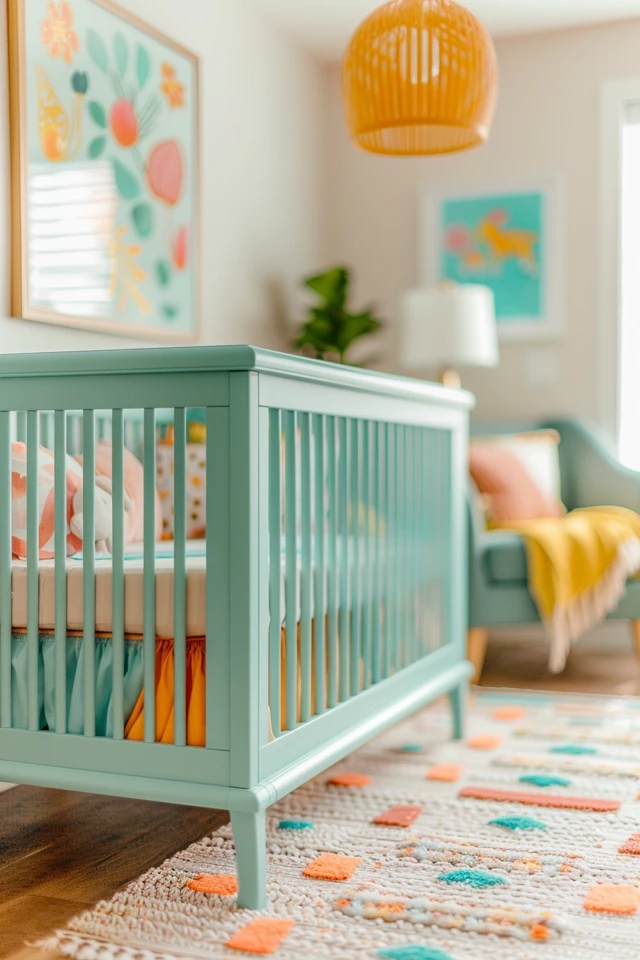
Bright Colorful Nursery Ideas to Inspire You
Designing a nursery is one of the most emotional and exciting projects a parent can undertake. I vividly remember a client who initially insisted on an “all-white” nursery because she thought it felt clean, only to realize halfway through that she desperately missed the energy of color. We pivoted to a vibrant teal and coral palette, and the room instantly transformed from sterile to joyful.
Color is not just about aesthetics; it plays a crucial role in a baby’s visual development and the overall mood of the space. A colorful nursery stimulates the senses and creates a backdrop for imagination that grows with your child. It is the one room in the house where you can truly take risks without worrying about “resale value” or flow with the rest of the home.
However, balancing bright colors without creating a chaotic mess requires a strategic eye and a solid plan. Check out our curated picture gallery at the end of this post for immediate inspiration.
1. Establishing Your Color Palette and The 60-30-10 Rule
The biggest fear most parents have when using bright colors is that the room will look like a kaleidoscope exploded. To prevent this, professional designers rely on the 60-30-10 rule. This formula helps maintain balance even when using bold hues like electric blue or sunshine yellow.
Sixty percent of the room should be a dominant color, which usually acts as the backdrop. In a colorful nursery, this doesn’t have to be white; it could be a soft sage green, a muted terracotta, or a pale lavender. This color covers the walls or large built-ins and sets the visual temperature of the room.
Thirty percent is your secondary color, which provides contrast and interest. This usually appears in the curtains, the area rug, or an accent chair. If your dominant color is cool (like blue), try a warm secondary color (like orange or wood tones) to create dynamic tension.
The final ten percent is the accent color. This is where you can go wild with the brightest, most saturated neons or deep jewel tones. This color shows up in throw pillows, lamp bases, art frames, and mobile accessories.
Designer’s Note: Understanding Light Reflectance Value (LRV)
A common mistake is picking a bright paint color in the store without testing it at home. Paint colors have an LRV number on the back of the swatch. This indicates how much light the paint reflects.
In a nursery with south-facing windows, a high-LRV bright yellow will practically glow and might be too stimulating for nap time. In a dim north-facing room, that same yellow might look muddy. Always paint a 2-foot by 2-foot swatch on two different walls to see how the color reads at different times of day.
Common Mistakes + Fixes
- Mistake: Matching everything perfectly.
- Fix: Coordinate, don’t match. If your rug has navy blue, choose a slate blue for the curtains. Tonal variations make a room look high-end rather than “bed-in-a-bag” generic.
- Mistake: Ignoring the ceiling.
- Fix: In a colorful nursery, the ceiling is the “fifth wall.” Painting it a soft contrasting color adds coziness and gives the baby something interesting to look at while lying in the crib.
2. Selecting the Big Three: Crib, Dresser, and Glider
When designing a colorful nursery, the furniture acts as the anchor. You have two distinct paths here: neutral furniture that lets the walls scream with color, or painted furniture that serves as the focal point against quieter walls.
If you choose a bright emerald green crib, ensure your dresser balances it out. I typically recommend buying the crib and dresser as coordinates rather than a matching set. A painted crib looks stunning next to a natural wood or white oak dresser. This adds texture and warmth to the space.
The glider or rocking chair is often the most expensive investment in the room. Because upholstery hides stains better than wood, this is a great place to introduce a performance fabric in a deep color. A navy or charcoal velvet glider can hide milk spills much better than a beige linen one.
Spacing and Layout Rules
- The Triangle: Ideally, position the crib, changing table, and glider in a loose triangle. You want to be able to move silently between them in the dark.
- Clearance: Leave at least 30 inches of walking space in front of the dresser to open drawers fully while standing there.
- Glider Clearance: Ensure your glider has at least 10 to 12 inches of clearance from the wall behind it to rock fully without banging the drywall.
What I’d Do in a Real Project: The Dresser Hack
In 90% of my nursery projects, I skip the dedicated “changing table.” Instead, I source a standard 6-drawer dresser that is roughly 34 to 36 inches high.
I secure a changing pad to the top using non-slip grip pads and a screw-in safety strap on the back. Once the baby is out of diapers, you remove the pad, and you have a piece of furniture that lasts until they go to college. Dedicated changing tables usually become obsolete within two years.
3. Textiles and Window Treatments: Functional Color
Textiles are the workhorses of a nursery. They provide comfort, sound absorption, and the easiest way to inject color. The rug is the most critical element here for grounding the space.
For sizing, the golden rule in a nursery is “front legs on.” The front legs of the crib and the glider should sit on the rug. In a standard 10×12 bedroom, an 8×10 rug is usually the correct size. A 5×7 rug will likely look like a postage stamp floating in the middle of the room, making the space feel smaller.
Window treatments are non-negotiable for functionality. You need darkness for daytime naps. I recommend installing an outside-mount blackout Roman shade for the actual light blocking. Then, layer floor-length curtain panels on either side for softness and color.
Curtain Hanging Measurements
- Rod Height: Mount the curtain rod at least 4 to 6 inches above the window frame, or halfway between the frame and the ceiling. This draws the eye up and makes the ceiling feel higher.
- Rod Width: The rod should extend 8 to 12 inches past the window frame on each side. This allows the curtains to stack against the wall when open, rather than blocking the glass and reducing natural light.
- Hem Line: Curtains should just “kiss” the floor. Puddling curtains (where excess fabric gathers on the floor) are a tripping hazard in a nursery and collect dust bunnies.
Material Selection Guide
- Wool Rugs: The best choice for nurseries. Wool is naturally flame retardant, hypoallergenic, and self-cleaning due to natural lanolin. It is durable and soft underfoot.
- Cotton Flatweaves: Great for color, but they slip easily and bunch up. If you use one, you must use a high-quality felt rug pad underneath.
- Performance Velvet: Excellent for curtains and upholstery. It is durable, cleans easily with water, and feels luxurious.
4. Wall Treatments: Paint vs. Wallpaper vs. Decals
If you want a truly bright, colorful nursery, walls are your biggest canvas. Wallpaper has made a massive comeback, and for good reason. A large-scale floral or geometric print can introduce five or six colors into the room instantly, giving you a roadmap for the rest of the decor.
For a high-end look, consider wallpapering the upper two-thirds of the wall and installing wainscoting or beadboard on the bottom third. Paint the woodwork a durable satin finish in a color pulled from the wallpaper. This protects the walls from inevitable scuffs when the toddler years hit.
If wallpaper is out of budget or you are renting, color-blocking with paint is a fantastic alternative. You can paint a simple arch behind the crib to create a focal point. Use painter’s tape and a laser level to create crisp geometric mountain ranges or stripes.
Renter-Friendly Options
Peel-and-stick wallpaper is a viable option, but it requires patience. The wall must be perfectly smooth (no orange peel texture) and cured (painted at least 30 days prior) for the adhesive to stick properly.
Vinyl decals are another low-stakes way to add color. I often use polka dots or star decals spaced irregularly to create a “confetti” look. It mimics the look of custom wallpaper for a fraction of the price and peels off in seconds.
Designer’s Note: Lighting and Finish
Lighting affects how wall colors are perceived. Install a dimmer switch on the overhead fixture—this is arguably the most important tool in a nursery.
For light bulbs, avoid “Daylight” bulbs (5000K), which look blue and clinical. Stick to “Soft White” or “Warm White” (2700K to 3000K). This warmer light makes colorful walls feel cozy rather than jarring.
5. Storage and Styling: Organizing the Chaos
Bright nurseries can easily cross the line into clutter if storage isn’t managed well. Open shelving is beautiful for styling, but it is not practical for daily storage.
Use closed storage (dressers, bins, closets) for 80% of the items. Use open shelves for the remaining 20%—specifically for colorful books and sentimental items. Picture ledges are fantastic for nurseries because you can display books face-out. The book covers themselves become the artwork, adding pops of color that change as you rotate the library.
Safety First in Styling
- Heavy Items: Never hang heavy framed art or heavy shelving directly above the crib. Earthquakes or accidental bumps can lead to injury. Stick to lightweight canvas art, tapestries, or decals in the “drop zone.”
- Cords: Keep all lamp cords and monitor cables secured to the wall and at least 3 feet away from the crib.
- Plants: Real plants add great color, but ensure they are non-toxic (like Spider Plants or Boston Ferns) and placed on high shelves or heavy floor pots that cannot be tipped over.
The “Rule of Three” for Shelves
When styling shelves, group items in odd numbers, typically threes. A stack of books, a wooden toy, and a small framed photo create a balanced vignette.
Vary the height of these objects. You want the eye to move up and down as it scans the shelf. If everything is the same height, the arrangement will look flat and uninteresting.
Final Checklist: Ready for Baby
Before you declare the room finished, run through this practical checklist to ensure the room functions as well as it looks.
- The Squint Test: Stand in the doorway and squint your eyes. Does one color dominate too much? Do you need to add a contrasting throw pillow to break up a large block of color?
- The Crawl Test: Get down on your hands and knees. Check for loose rug corners, exposed outlets, or sharp corners on the dresser that need bumpers.
- Blackout Check: Close the curtains at noon. If you can still read a book comfortably, it is too bright for a midday nap. Add a liner or heavier drapes.
- Sound Check: Walk across the room. Does the floor creak right next to the crib? If so, place the rug strategically to dampen that noise.
- Reach Test: Sit in the glider. Can you reach the side table to set down a bottle or your phone without getting up? If not, move the table closer.
FAQs
How do I make a small nursery look colorful without feeling cramped?
Stick to cool colors like teals, greens, and blues for the walls. Cool colors visually recede, making the walls feel further away. Use your hot colors (reds, oranges, pinks) only for small accents like pillows or art. This adds energy without closing in the walls.
Is it okay to mix metals in a nursery?
Absolutely. Mixing metals adds depth. If your crib has brass hardware, it is perfectly fine to have a black light fixture and brushed nickel curtain rods. Just try to repeat each finish at least once so it looks intentional.
What is the best paint finish for nursery walls?
I almost exclusively specify “Eggshell” or “Satin” for nursery walls. Flat or Matte paint is impossible to wipe down if (when) projectile fluids happen. Satin has a slight sheen that allows you to scrub it with a damp sponge without removing the pigment.
Can I use a vintage rug in a nursery?
Yes, but get it professionally cleaned first. Vintage wool rugs are incredibly durable and hide stains well due to their complex patterns. Just ensure the pile is low enough that it doesn’t trap excessive dust and allergens.
Conclusion
Designing a bright, colorful nursery is an exercise in joy. It is an opportunity to create a space that feels optimistic and welcoming for your new arrival. By following the 60-30-10 rule, investing in quality textiles, and paying attention to functional layouts, you can create a room that is vibrant but restful.
Don’t be afraid to paint the ceiling or choose the emerald green velvet. This room is for your baby, but it is also for you. You will spend countless hours in this space rocking, feeding, and playing. It should be a place that makes you smile the moment you walk through the door.
Picture Gallery


