
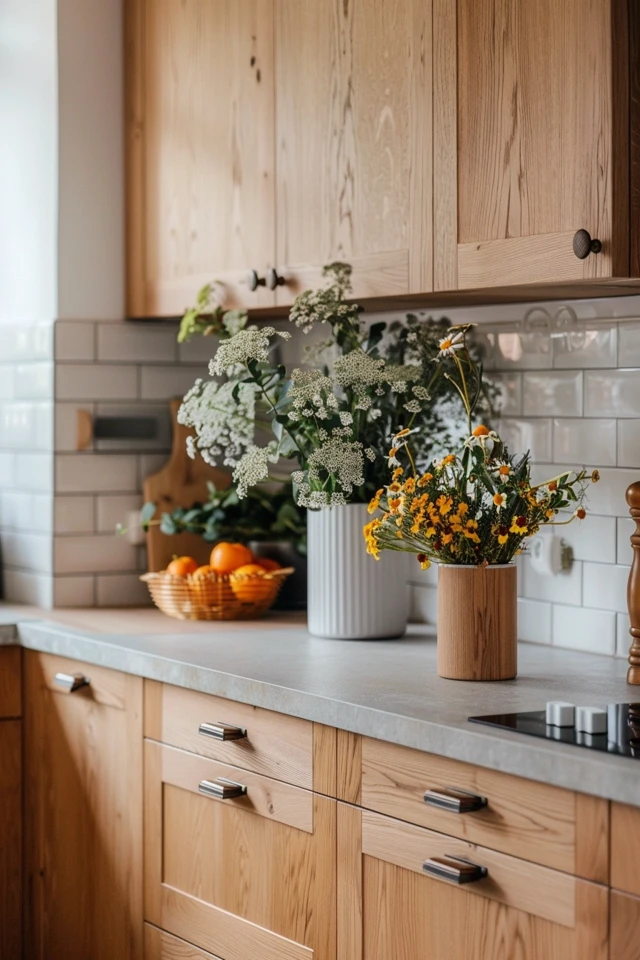
Title: Brighten Your Space with Honey Oak Kitchen Cabinet Ideas
Introduction
Honey oak cabinets were the gold standard of kitchen design for decades, but many homeowners today feel stuck with a kitchen that feels overly warm or outdated. You might be staring at that distinct wood grain and wondering if the only solution is a messy, expensive painting project or a full gut renovation. Fortunately, you can completely transform the look of your kitchen without touching a paintbrush to those cabinet doors.
The secret lies in understanding that wood is a neutral, and the “dated” look usually comes from what surrounds the cabinets, not the cabinets themselves. If you are looking for visual inspiration to guide your renovation, be sure to check out the Picture Gallery at the end of this blog post. By adjusting the supporting elements like wall color, lighting, and hardware, you can turn honey oak into a warm, inviting asset rather than a design liability.
In this guide, we will walk through actionable steps to modernize your kitchen while keeping your existing cabinetry. We will cover specific color palettes, hardware sizing, and lighting temperatures that neutralize the orange tints. Let’s look at how to make your honey oak feel fresh, intentional, and bright.
1. Mastering Color Theory to Neutralize Orange
The biggest complaint I hear about honey oak is that it feels “too orange.” To fix this, we have to look at the color wheel. Blue and green are complementary colors to orange, meaning they balance each other out, while warm neutrals can help bridge the gap.
If you paint your walls a yellow-based beige, you are only amplifying the orange in the wood. Instead, you need to introduce cool-toned contrasts. Shades of navy, sage green, or slate blue work incredibly well as accents or island colors because they cool down the visual temperature of the room.
However, most people want a bright, airy kitchen, which leads us to whites. You must be careful here. A stark, cool white (like a hospital sterile white) will make honey oak look dingy. You need a soft, warm white that relates to the wood’s warmth without matching it.
Designer’s Note: The 60-30-10 Rule
When balancing honey oak, treat the cabinets as your “30” (secondary color). Your walls and backsplash should be the “60” (dominant color, usually a fresh white or soft greige), and your accents—like rugs or appliances—should be the “10.” If you let the oak be the dominant color by having oak floors and beige walls, the room will feel suffocating.
Specific Paint Recommendations
I often specify Sherwin Williams Alabaster or Benjamin Moore White Dove for these kitchens. These shades have just enough creaminess to sit harmoniously next to the oak. If you prefer a bit more depth, a “greige” (grey-beige) like Benjamin Moore Revere Pewter can modernize the space by bridging the gap between the warm wood and modern stainless steel appliances.
2. Backsplash Strategies that Modernize Oak
The backsplash is the visual bridge between your upper and lower cabinets. In many 90s kitchens, this space was occupied by 4-inch laminate spacers or busy, small-scale mosaic tiles. Removing these is the single highest-impact change you can make.
For a timeless look, simple subway tile is effective, but texture matters. Instead of a flat, machine-made white tile, look for a “handcrafted” look or Zellige-style tile. The uneven surface reflects light differently, adding depth that distracts the eye from the heavy grain of the oak.
Pro-Level Measurement Rules:
- Standard Spacing: The distance between your countertop and the bottom of your upper cabinets is usually 18 inches.
- Tile Scale: Avoid small 1×1 inch mosaic tiles; they are too busy next to the grain of the oak. Stick to larger formats like 3×6 inch or 2×8 inch tiles.
- Grout Lines: Keep grout lines tight (1/16 to 1/8 inch). Use a warm gray or off-white grout rather than black. High-contrast grout creates a grid pattern that competes with the wood grain for attention.
Material Selection for Durability
If you are a heavy cooker or have kids, gloss ceramic tile is easier to wipe down than matte natural stone. Stone implies maintenance and sealing. For renters, there are high-quality peel-and-stick vinyl tiles that mimic glass or ceramic. They are heat-resistant enough for behind most ranges (check the manufacturer’s rating) and remove cleanly when you move out.
3. Countertop Pairings for a Fresh Look
Old honey oak kitchens often feature laminate countertops with wood edges or dark, speckled granite (like Uba Tuba). These surfaces absorb light and make the room feel cave-like. Replacing them with light-colored quartz or solid surface material instantly bounces light around the room.
When selecting a countertop, you want a contrast. Since the cabinets are a mid-tone, go very light or very dark. However, for the goal of “brightening” the space, white-based quartz with subtle veining is the winner.
Common Mistakes + Fixes:
- Mistake: Choosing a countertop with heavy gold or brown veining to “match” the cabinets.
- Fix: This usually results in a muddied look. Choose a white base with cool grey or soft charcoal veining. The cool tones in the counter will help neutralize the warm tones in the wood.
- Mistake: Ignoring the edge profile. elaborate ogee edges look dated.
- Fix: Stick to an “eased” or “square” edge profile. It is cleaner, more modern, and easier to wipe down.
Consider the “Busy” Factor
Honey oak has a very prominent grain pattern. It is visually “busy.” Therefore, your countertop should be visually “quiet.” Avoid granites that have tight, speckled patterns. The eye needs a place to rest. A solid color or large-scale marble look provides that necessary visual break.
4. Hardware and Fixture Updates
Think of hardware as the jewelry of the kitchen. Many oak cabinets still have the original ceramic-and-brass knobs or chunky wooden handles. Swapping these out is a DIY-friendly task that takes an afternoon but changes the entire vibe of the cabinetry.
Matte black is a fantastic choice for honey oak. It is modern, high-contrast, and grounds the space. It acts like eyeliner, defining the cabinets and drawing the eye away from the orange undertones. Satin nickel is another safe, classic choice that works well if you have stainless steel appliances.
Hardware Sizing Guide:
- Knobs vs. Pulls: A modern approach is to use knobs on doors and pulls on drawers.
- Pull Size: A common mistake is using tiny 3-inch pulls on wide drawers. If a drawer is wider than 24 inches, use a pull that is at least 5 to 7 inches long, or use two smaller knobs. This improves the scale and makes the cabinetry look more expensive.
- Drill Centers: Before buying, measure the “center-to-center” distance of your existing screw holes. If you choose hardware with different spacing, you will have to fill holes and drill new ones, which is difficult to hide on finished wood.
Mixing Metals
You do not have to match your faucet perfectly to your cabinet hardware. A matte black faucet pairs beautifully with unlacquered brass hardware. However, try to keep it to two finishes max. If your appliances are stainless, your faucet is chrome, and your hardware is brass, the room will feel cluttered.
5. Lighting and Wall Colors
Lighting can literally change the color of your cabinets. If you have warm white bulbs (2700K) or old incandescent lighting, your kitchen will glow orange. This is the “amber effect” that makes honey oak look outdated.
The Lighting Temperature Rule:
Switch all your bulbs to 3000K or 3500K. This is often labeled as “Bright White” or “Soft White” (check the Kelvin rating on the box). This temperature is crisp and neutral. It will make your whites look white and your wood look like natural timber rather than amber. Avoid 5000K (Daylight) as it creates a harsh, blueish clinical feel that clashes with the cozy nature of wood.
Window Treatments
Natural light is the best tool for brightening a space. Remove heavy valances or dark blinds. If you need privacy, opt for light-filtering woven wood shades (in a color distinct from the cabinets, like a dark walnut or whitewashed bamboo) or simple white linen roman shades.
Designer’s Note: Rugs and Textiles
Use a runner rug to break up the floor. If you have wood floors that clash with the cabinets, a runner is essential. Look for a vintage-style printed rug or a durable indoor/outdoor flatweave. This introduces those cooling blues or greens we discussed earlier and covers the “wood-on-wood” conflict. Ensure the rug leaves at least 4 to 6 inches of floor visible on all sides for proper scale.
Final Checklist: What I’d Do in a Real Project
If I were consulting on a honey oak kitchen renovation today with a moderate budget, here is the exact checklist I would follow to guarantee a result that feels designed and intentional.
- Audit the Lighting: Immediately swap every bulb to 3000K LED. Add under-cabinet lighting strips (2700K-3000K) to brighten the work surface.
- Deep Clean: Scrub cabinets with a wood cleaner to remove 20 years of grease. Sometimes the “orange” is actually oxidation and grime.
- Paint the Walls: Apply a fresh coat of Sherwin Williams Alabaster or a similar creamy white.
- Update Hardware: Remove old hinges and knobs. Spray paint hinges matte black if they cannot be replaced. Install matte black pulls with a sleek, square silhouette.
- Address the Sink Area: Install a high-arc faucet. It creates a focal point that feels luxurious.
- Style the Counters: Clear the clutter. Add a large white ceramic fruit bowl, a wooden cutting board (in a contrasting wood tone like Walnut), and a potted plant (fern or pothos) to bring in life.
FAQs
Should I just paint my honey oak cabinets white?
Painting oak is difficult because the deep grain texture shows through the paint, often looking like “painted oak” rather than smooth cabinets. It requires filling the grain, sanding, priming, and spraying for a pro finish. If you cannot afford a professional paint job ($5,000+), embracing the wood is often the better aesthetic choice than a messy DIY paint job.
What flooring goes with honey oak cabinets?
Avoid matching the stain. You need contrast. A slate-look luxury vinyl tile (LVT) or a very light, desaturated wood look works best. If you have existing hardwood that clashes, rely on large area rugs to separate the visual planes.
Can I mix honey oak with modern grey trends?
Yes, but avoid cool, blue-based greys. Stick to warm greys (greige). Cool grey against warm orange oak creates a vibration that is unpleasant to the eye. Warm greys harmonize with the wood’s undertone.
How do I handle exposed hinges?
Many older oak cabinets have exposed hinges. You can try to replace them with “hidden” Euro-style hinges, but this requires special drilling tools. The easier fix is to remove them and spray paint them to match your new hardware (e.g., matte black or satin nickel).
Conclusion
Honey oak cabinets are not a renovation sentence; they are a sturdy, solid wood foundation that just needs the right supporting cast. By stripping away the dated elements—like yellow paint, busy granite, and brassy hardware—and replacing them with fresh whites, matte metals, and proper lighting, you can create a kitchen that feels curated and cozy.
The goal isn’t to hide the wood, but to modernize the context around it. When you stop fighting the orange and start balancing it with cool tones and bright neutrals, you might find that you actually love the warmth and character your original cabinets bring to your home.
Picture Gallery


