
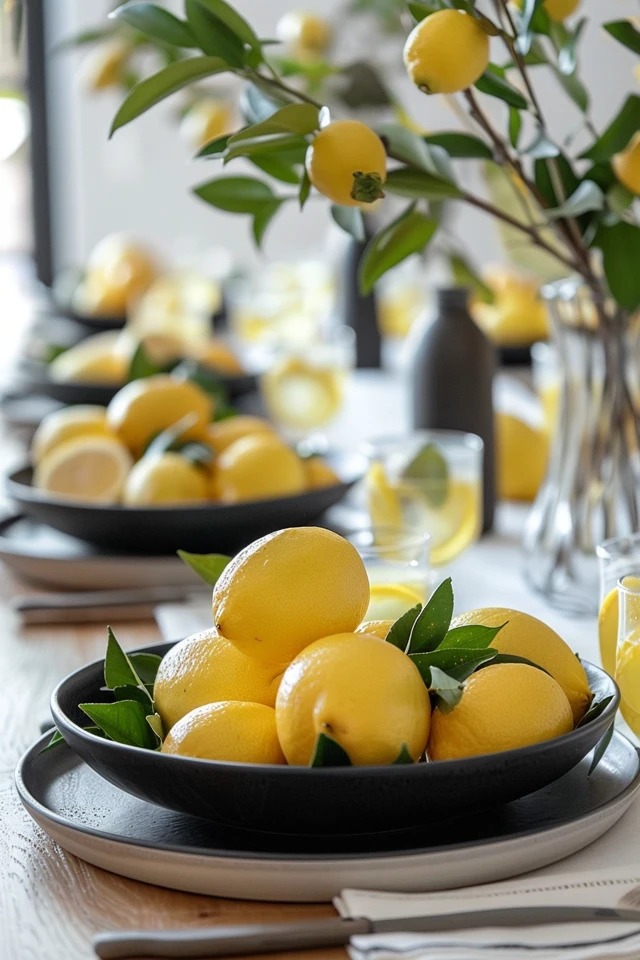
Brighten Your Table with Lemon Centerpiece Ideas
There is something undeniably cheerful about the vibrant yellow hue of a lemon. As an interior designer, I often rely on natural elements to inject life into a room, and lemons are one of my secret weapons for instant energy. They are accessible, affordable, and possess a structural integrity that holds up well during long dinner parties.
I remember my first frantic attempt at styling a massive dining table for a client’s summer brunch. I was short on expensive florals, but I had a surplus of citrus fruit; by simply massing the lemons in a vintage dough bowl and tucking in sprigs of mint, the room transformed from sterile to inviting. For a wealth of visual inspiration, don’t miss our curated Picture Gallery at the end of the blog post.
Whether you are hosting a formal gathering or just want to spruce up your kitchen island, lemon centerpieces offer versatility that few other decor items can match. In this guide, I will walk you through the mechanics of styling citrus, selecting the right vessels, and keeping your arrangement fresh.
Selecting the Right Vessel for Your Space
The container you choose sets the tone for the entire arrangement. When styling with lemons, the vessel needs to either showcase the fruit through transparency or provide a strong contrasting foundation.
For a modern or transitional look, clear glass cylinders or squares are your best bet. They allow the texture of the rind to be the star of the show. If you are aiming for a farmhouse or rustic aesthetic, opt for wooden dough bowls or white ceramic pitchers.
Scale is critical here. A common rule of thumb in design is that your centerpiece should not exceed one-third of the table’s width. For example, if your dining table is 40 inches wide, keep your centerpiece width under 13 inches to leave ample room for place settings and glassware.
Designer’s Note:
One thing that often goes wrong in DIY centerpieces is the height. If people are seated for a meal, the centerpiece must be low enough to see over. Keep the total height under 14 inches. If you want drama with tall branches, ensure the foliage starts above 24 inches so the line of sight across the table remains clear.
The Double-Vase Technique
If you have ever wondered how designers get lemons to stack perfectly in water without floating messily to the top, the answer is usually the double-vase method. This is a high-impact look often seen in luxury hotels and weddings.
You will need two clear glass cylinder vases. One should be significantly narrower than the other, with about a 1-inch to 1.5-inch gap between the walls of the two vessels when nested.
Place the smaller vase inside the larger one. carefully slide sliced lemon rounds or small whole lemons into the gap between the two glasses. Fill the gap with water to magnify the fruit. You can then fill the inner vase with fresh water and arrange your flowers there. This keeps the acidic fruit juice separate from the flower stems, which prolongs the life of your blooms significantly.
Pairing Lemons with Greenery and Florals
Yellow is a bold primary color, so pairing it requires a basic understanding of color theory to avoid a clash. I prefer three main palettes when working with lemons: monochromatic fresh, complementary contrast, or classic analogous.
For a monochromatic fresh look, pair lemons with white hydrangeas, white tulips, or baby’s breath. This is crisp, clean, and works beautifully in modern kitchens with marble countertops.
For high contrast, look to the opposite side of the color wheel. Blue and white chinoiserie vases filled with lemons create a stunning, classic visual. Deep purple irises or lavender also pop against the yellow rind.
Common Mistakes + Fixes:
- Mistake: Using greenery that wilts instantly (like soft ferns) alongside heavy fruit.
- Fix: Use hardy, structural greens. Ruscus, eucalyptus, magnolia leaves, and boxwood are sturdy enough to hold their own against the visual weight of the lemons.
Whole vs. Sliced: Managing Longevity
Deciding between whole fruit and sliced fruit is not just an aesthetic choice; it is a maintenance decision. Whole lemons can last for weeks as a centerpiece if kept dry and at room temperature. Sliced lemons, however, have a lifespan of roughly 24 hours before the rinds begin to soften and the pulp looks mushy.
If you are styling for a one-night dinner party, sliced lemons in water offer a stunning, effervescent look. The scent is also lovely for the first few hours. However, do not expect this arrangement to last until the next weekend.
For everyday decor, stick to whole lemons. To make them look like they belong in a magazine, wash them with a drop of mild soap to remove any wax or grime, dry them thoroughly, and then buff them with a tiny amount of vegetable oil on a paper towel. This mimics the natural sheen of fresh-picked fruit.
What I’d Do in a Real Project:
- Monday–Friday: I use a long wooden trough filled with whole lemons and faux moss balls on the dining table. It requires zero maintenance.
- Saturday Night Hosting: I slice three lemons and add them to a pitcher of water with mint as a functional centerpiece, or line a clear vase with slices for a fresh floral arrangement.
Integrating Lighting for Evening Ambiance
Lemons have a waxy skin that reflects light beautifully. When transitioning your table from day to night, lighting becomes the most important element.
Tea lights are excellent companions for low lemon arrangements. If you are using a runner of greenery (like a garland of eucalyptus) interspersed with loose lemons, tuck glass votives throughout the length of the garland. The flickering flame bouncing off the yellow skin creates a warm, inviting glow.
For outdoor dining, I recommend using battery-operated pillars if you are mixing them closely with greenery to avoid fire hazards. The yellow of the lemon remains visible even in dim lighting, unlike dark fruits like plums or grapes which tend to disappear visually once the sun goes down.
Final Checklist: The Designer’s Approach
Before you finalize your table, run through this mental checklist that I use on job sites. These steps ensure the look is polished and practical.
1. Check the View
Sit down in a dining chair. Can you see the person across from you? If not, the arrangement is too tall or too dense. Move it to a sideboard or lower the profile.
2. The Scent Test
Lemons smell great, but be careful with heavily scented flowers like lilies or gardenias mixed with citrus. The combination can be overwhelming while eating. Stick to unscented blooms like hydrangeas or tulips when food is being served.
3. Stability Check
If you are piling lemons into a pyramid shape or a high mound, are they secure? I often use a small dab of floral adhesive or even double-sided tape on the bottom layer of fruit to keep them from rolling off the table if someone bumps it.
4. Surface Protection
Lemon juice is acidic and can etch marble or stain wood. Always ensure your vessel is watertight. If you are placing cut lemons directly on a surface (which I advise against), use a small glass coaster or plate underneath.
5. Color Balance
Step back five feet. Does the yellow overwhelm the space? If you have yellow walls or yellow curtains, a lemon centerpiece might get lost. In that case, use a dark bowl (navy or charcoal) to provide contrast.
FAQs
How long do whole lemons last as decor?
At room temperature, whole lemons typically last two to four weeks. To extend their life, ensure they are completely dry before placing them in a bowl. One moldy lemon will quickly spoil the rest, so check them every few days and remove any that show soft spots.
Can I use artificial lemons?
Yes, but quality matters. Cheap plastic lemons look shiny and fake. Look for “weighted” faux fruit with a matte finish and realistic texture. I often mix high-quality faux lemons with real fresh greenery; guests rarely notice the difference because the leaves are real.
Do cut lemons kill flowers?
Yes, the acidity in lemon juice damages the stems of most flowers, preventing them from drinking water efficiently. This causes blooms to wilt prematurely. This is why the double-vase technique mentioned earlier is so important—it keeps the citrus acid separate from the fresh water source for the flowers.
How do I keep fruit flies away?
Fruit flies are attracted to fermentation. They usually appear only when a lemon has started to rot or has been cut. To prevent this, use whole fruit, rotate the lemons regularly, and wash the bowl with vinegar and water between uses. If you use cut fruit, discard it immediately after your event.
Conclusion
Styling with lemons is one of the most forgiving and rewarding ways to brighten up a dining space. It bridges the gap between sophisticated design and organic comfort. Whether you are stacking them in glass cylinders for a wedding-worthy display or simply tossing a few into a ceramic bowl for a pop of kitchen color, the impact is immediate.
Remember that the best interior design serves the lifestyle of the people living in the home. If you have toddlers, a glass vase of water and lemons might be a risk—stick to a wood bowl. If you are a renter with a small bistro table, a single bud vase with a lemon slice and one bloom is perfect. Start with what you have, experiment with the rules of scale and color, and enjoy the fresh energy this simple fruit brings to your table.
Picture Gallery


