
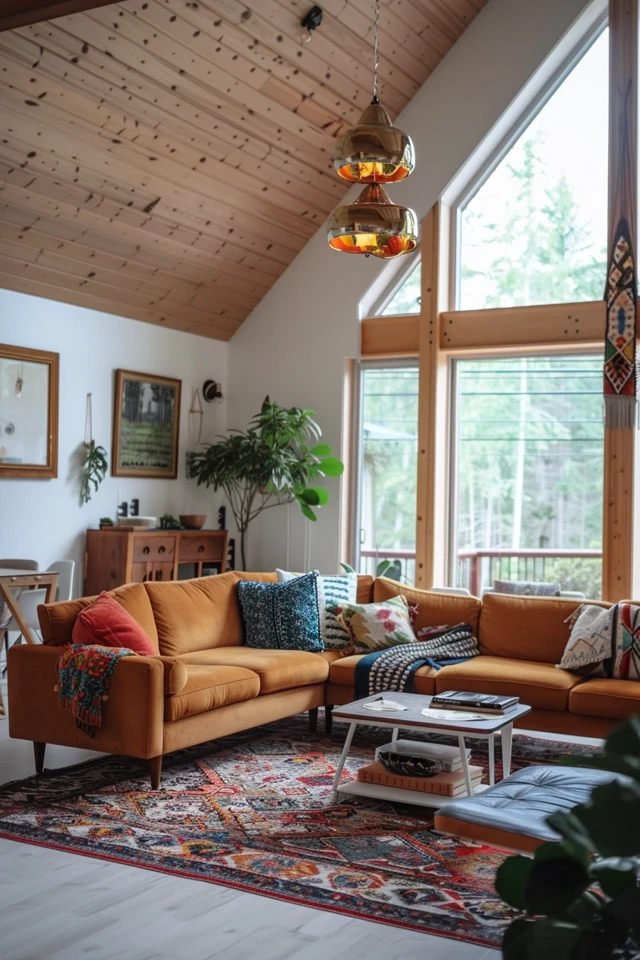
Brightening Vaulted Ceilings: Top Light Ideas
There is nothing quite like the architectural drama of a vaulted ceiling. It immediately opens up a room, makes small footprints feel grand, and allows for stunning window configurations that bring the outdoors in. However, once the sun sets, that soaring height can turn into a dark cavern if you have not planned your electrical layout correctly.
In my years of designing living spaces, the “black hole effect” is the most common complaint I hear from clients with cathedral ceilings. Standard lighting rules simply do not apply when your ceiling pitch is twelve or fifteen feet high. You cannot rely on a single central fixture to do the heavy lifting, and changing a burnt-out bulb requires a lot more than a step stool.
lighting a vault requires a strategic blend of layering, scale, and maintenance planning. If you are looking for visual inspiration to go along with these technical tips, be sure to check out the Picture Gallery at the end of the blog post.
Understanding Scale and Suspension Height
The biggest mistake homeowners make with vaulted ceilings is buying undersized fixtures. A chandelier that looks massive in a showroom often looks like a miniature toy when hung in a room with 15-foot peaks.
In standard rooms, we worry about head clearance. In vaulted rooms, we worry about visual weight. The fixture needs to feel like it anchors the space, bridging the gap between the furniture and the architecture. If the light is too small, the room feels disjointed; if it is hung too high, it provides no functional light to the living area below.
The Rules of Thumb for Sizing
When selecting a statement piece for a high ceiling, use the “Room Sum” calculation as a starting point, but size up by about 20% for vaults. If your room is 15 feet by 20 feet, add those numbers together (35). A standard room needs a 35-inch diameter fixture. For a vault, look for something in the 40-45 inch range.
Vertical length is just as important as diameter. A flat, flush-mount fixture gets lost in a vault. You need a fixture with “body”—something with vertical height. Multi-tier chandeliers or large open lanterns work best because they occupy vertical volume.
Designer’s Note: The 3-Inch Rule
Here is a formula I use on site: for every foot of ceiling height, allow 2.5 to 3 inches of fixture height. If you have a 12-foot ceiling, your chandelier should ideally be at least 30 to 36 inches tall. This ensures the fixture looks proportional to the surrounding negative space.
Placement and Hanging Height
Determining how low to hang the light depends on what is underneath it.
- Over a Coffee Table: The bottom of the fixture should be no lower than 7 feet from the floor if people walk under it. If the table is stationary and no one walks through, you can drop it to 6.5 feet to create intimacy.
- Over a Dining Table: In a room with 8-foot ceilings, we hang lights 30-32 inches above the table. For vaulted ceilings, raise it to 36-40 inches. This compensates for the visual pull of the high ceiling so the light doesn’t feel like it is falling on your head.
The Architectural Approach: Recessed and Track Lighting
While a chandelier provides the “jewelry,” architectural lighting provides the functional illumination. However, putting standard recessed cans in a sloped ceiling is a recipe for glare.
If you install a standard flat trim on a 45-degree slope, the light bulb points directly into the eyes of anyone sitting on the sofa opposite the slope. Furthermore, the light cone hits the floor at an awkward angle, leaving weird shadows.
The Solution: Adjustable Gimbal Trims
You must use adjustable trims, often called “Eyeball” or “Gimbal” lights. These allow you to tilt the light engine inside the housing so that it points straight down, perpendicular to the floor, regardless of the ceiling pitch.
When specifying these, look for a deep regress. This means the bulb is pushed further back into the ceiling. This cuts down on glare significantly, which is vital when the light source is high up and in your peripheral vision.
Wall Washing
One of the best ways to brighten a vault is to stop trying to light the floor and start lighting the walls. Aiming recessed track heads or gimbal lights at the vertical walls bounces light back into the room.
This technique, known as “wall washing,” makes the room feel wider and eliminates the dark corners that usually plague vaulted rooms. It also highlights artwork or texture, like a stone fireplace facade, which draws the eye up.
Common Mistakes + Fixes
Mistake: Installing cans too close to a ceiling fan.
Fix: When the fan spins, it cuts through the light beam, creating a strobe-light effect that creates vertigo. Keep recessed lights at least 24 inches away from the tip of the fan blades.
Mistake: Using standard 60-degree beam spreads from high up.
Fix: The higher the ceiling, the tighter the beam spread needs to be to reach the floor. Switch to narrow flood (25-40 degrees) bulbs so the light actually punches through to the seating area.
Layering Ambient and Uplighting
The most effective way to combat the “cave effect” is to light the ceiling itself. If the ceiling is dark, the room feels oppressive. If the ceiling is illuminated, the vault feels airy and limitless.
Since you cannot easily put floor lamps on the ceiling, you have to be creative with uplighting. This is light that originates lower and shines upward to wash the ceiling slope.
Cove Lighting and Ledges
If your architecture includes horizontal beams or a perimeter ledge, this is the perfect spot for linear LED tape light. We hide these strips on top of the beams or crown molding.
The light bounces off the white ceiling and reflects down as a soft, diffuse glow. This is the most flattering light for human faces and creates a cozy atmosphere without any harsh shadows.
Structural Beam Lighting
Many vaulted ceilings feature exposed timber trusses. Use this to your advantage.
- Track Lighting on Beams: You can run low-voltage track lighting along the side or top of a beam. It hides the wiring and allows you to aim heads wherever you need task light.
- Cable Systems: For a more modern or industrial look, string high-tension cable lights across the void between beams. This brings the light source down to a human scale without requiring a heavy electrical box in the drywall.
The Role of Sconces
Wall sconces are essential in high-ceiling rooms. They bridge the gap between the high overhead lights and the floor lamps.
In a vaulted room, I almost always specify “Up/Down” sconces. These fixtures have two bulbs: one shoots light down for reading or pathways, and the other shoots light up to wash the wall and ceiling. This bidirectional light helps integrate the lower and upper volumes of the room.
Selecting the Right Statement Fixture
The style of your fixture matters just as much as the size. Because the fixture is likely to be viewed from multiple angles (including from a second-story loft or landing), it needs to look good from the top, bottom, and side.
Open vs. Solid Shades
Avoid fixtures with solid metal shades that force all the light straight down. In a vault, this creates a spotlight effect and leaves the upper two-thirds of the room in darkness.
Instead, choose fixtures with:
- Glass or Acrylic shades: These allow light to escape in all directions (omnidirectional).
- Exposed Candelabras: Great for traditional or farmhouse styles, providing general glow.
- Fabric Drums (with diffusers): These glow warmly and soften the light. Ensure there is a bottom diffuser so you aren’t staring at bare bulbs when you look up.
Material Considerations
Maintenance is a massive factor here. If your ceiling is 18 feet high, you might only clean that fixture once a year (or hire someone to do it).
Clear glass lanterns are beautiful, but they show every speck of dust and every spider web. If you cannot easily access the light, avoid clear glass. Go for seeded glass, frosted glass, wood, or antique metal finishes that hide dust better.
What I’d Do in a Real Project
If I were designing a great room with 16-foot vaulted ceilings today, here is my go-to combination:
1. Central Anchor: A large, 3-tier ring chandelier (48″ diameter) with frosted shades for soft, general light.
2. Perimeter Fill: 4-inch recessed gimbal LED lights, spaced 6 feet apart, aimed at the walls (not the floor).
3. Accent: Two large uplight sconces on the fireplace wall to emphasize height.
4. Control: Caséta or similar smart dimmers on all three separate zones.
Natural Light and Skylights
The best light source is the sun, and vaulted ceilings offer unique opportunities to harness it. However, managing heat and glare is just as important as letting the light in.
Skylight Placement
Skylights should be placed to maximize indirect north light or managed south light. A single large skylight is often more effective and cheaper to frame than several small ones.
For high vaults, consider “venting” skylights. Heat rises, and trapped hot air at the peak of a vault can ruin your energy efficiency in the summer. A solar-powered venting skylight can open to release that hot air, creating a passive cooling chimney effect.
Solar Tubes
If you have a vaulted ceiling in a smaller space, like a bathroom or hallway, a traditional skylight might be too large structurally. Solar tubes are reflective pipes that funnel sunlight from the roof down to a diffuser in the ceiling.
They are incredibly efficient. One 14-inch tube can output as much light as three 100-watt bulbs on a sunny day. They are perfect for dark corners of a vaulted living room where electricity is hard to run.
Managing Glare
If you install skylights, you must plan for window treatments. A skylight that allows a shaft of sunlight to hit your TV screen at 4 PM is a nuisance.
Motorized cellular shades are the industry standard here. They run on batteries (lasting 1-2 years), so no wiring is needed, and they can be operated via remote or smartphone. They also provide insulation, keeping heat out in summer and warmth in during winter.
Final Checklist for Vaulted Lighting
Before you order any fixtures or cut holes in your drywall, run through this final sanity check.
- Check Your Lumens: High ceilings “eat” light. You need roughly 30-40 lumens per square foot. For a 400 sq ft room, that is 12,000-16,000 lumens total. Do not rely on a single 3-bulb fixture.
- Verify Bulb Life: Use LED bulbs with a 15,000+ hour lifespan. You do not want to rent scaffolding every six months to change a bulb.
- Coordinate Color Temperature: Stick to 3000K (soft white). 2700K can look too yellow/dim from a distance, and 4000K looks like a garage. 3000K is the sweet spot for volume.
- Plan the Switch Legs: Do not put the chandelier and the recessed lights on the same switch. You need to dim the overheads while keeping the accent lights bright, or vice versa.
- Order Extra Chain: Most fixtures come with 3 to 6 feet of chain/wire. If you have a 16-foot ceiling, you might need 8 or 9 feet of suspension. Always check the specs and order a “chain kit” if needed.
- Weight Support: Large fixtures are heavy. Ensure your junction box is braced to a joist or beam and rated for the weight (often 50lbs+).
Frequently Asked Questions
How do I clean a chandelier on a vaulted ceiling?
For ceilings up to 12-14 feet, a sturdy A-frame ladder works. For anything higher, safety is key. There are motorized light lifts available that allow you to lower the chandelier to floor level with a key turn—this is the ultimate luxury solution. Otherwise, hire professional cleaners with scaffolding once a year.
Should I use a ceiling fan or a chandelier?
If you need air circulation but want style, you have two options. First, the “fandelier”—a fan hidden inside a decorative fixture. Second, install a fan high up (with a long downrod) and use recessed lights for illumination. Do not rely on the single light kit attached to a fan to light a large vaulted room; it is never enough light and looks dated.
Can I install track lighting on a sloped ceiling?
Yes, but orientation matters. If you run the track horizontally across the slope, the heads may look crooked. It is often cleaner to mount track lighting on exposed beams or flat vertical walls. If mounting on the slope, use “monorail” systems which have standoffs that can be adjusted to hang level even if the ceiling is angled.
What is the best bulb wattage for high ceilings?
Ignore wattage and look at lumens. For recessed cans at heights of 12+ feet, standard 600-lumen bulbs won’t reach the floor effectively. Look for “high output” LED modules that deliver 1000 to 1200 lumens. Put them on a dimmer so you can dial it back, but have the power when you need it for cleaning or tasks.
Conclusion
Lighting a vaulted ceiling is admittedly more complex than lighting a standard box room, but the payoff is immense. When you correctly layer your lighting—mixing powerful gimbal recessed cans with a properly scaled statement chandelier and soft wall washing—you transform the volume of the room.
The goal is to highlight the architecture, not just the floor. By drawing the eye upward with light, you celebrate the height rather than losing it to shadows. Remember to prioritize maintenance by choosing long-life LEDs and dust-forgiving materials. With these strategies, your high ceilings will feel welcoming, warm, and spectacularly bright.
Picture Gallery


One thought on “Brightening Vaulted Ceilings: Top Light Ideas”