
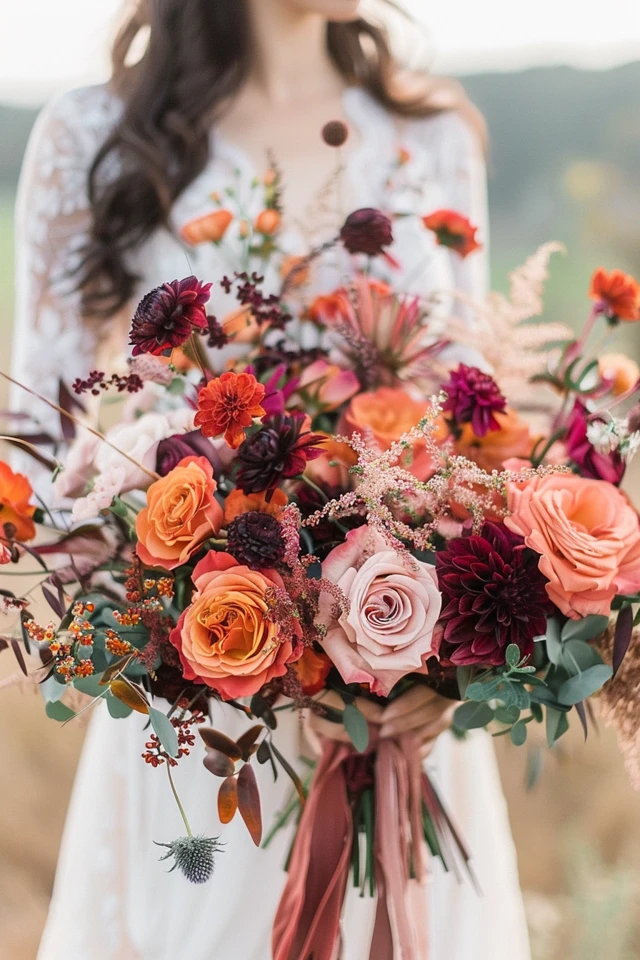
Budget Fall Wedding Ideas for Your Big Day
Fall is arguably the most atmospheric season for a wedding, offering a natural color palette that rivals any expensive floral arrangement. The crisp air and golden light provide a built-in filter that makes everything look more expensive than it actually is. If you are looking for visual inspiration, don’t miss the curated Picture Gallery located at the very end of this blog post.
However, planning a wedding on a budget requires more than just picking a pretty season; it requires strategic design choices that maximize impact while minimizing cost. As a designer, I approach event styling the same way I approach a home renovation: prioritize the “bones” of the space and use texture to add warmth.
You do not need to spend a fortune to create a high-end feel. By focusing on lighting, spatial layout, and locally sourced materials, you can host a stunning autumn celebration that feels curated and personal.
1. Strategic Venue Layout and Landscape Usage
The most significant budget saver is often the venue itself. For many fall weddings, this means a backyard, a public park, or a family property. As a designer, my first step is always space planning. You must treat the outdoors like a floor plan.
Define your “rooms” using the existing landscape. A large oak tree creates a natural canopy for the ceremony, while a flat grassy area is ideal for the reception. Use existing hedges or fence lines to create boundaries so guests don’t feel like they are floating in an open field.
Designer’s Note: The Shoe Test
Real-world lesson: I once attended a beautifully styled outdoor wedding where the design team forgot to check the ground firmness. The women’s heels sank into the soft autumn mud, and the chair legs wobbled unevenly.
Always walk your proposed aisle and seating area in heels a week before the event. If the ground is soft, you must rent a runner or subfloor. A budget-friendly hack is using thick, overlapping Persian-style rugs for the aisle. It adds a bohemian flair and solves the stability issue.
Correct Spacing Measurements
When setting up a DIY venue, spacing is critical for flow.
- Aisle Width: Allow a minimum of 5 feet (60 inches) for the aisle. This accommodates two people walking side-by-side without brushing against the seated guests.
- Chair Spacing: Place chairs 20 to 24 inches from center to center. Guests wearing bulky fall coats will appreciate the extra inch of breathing room.
- Table Distance: If you are using round tables, leave at least 60 inches between them to allow for service staff and guest movement.
2. Lighting: The High-Impact Budget Savior
In interior design, lighting is everything. In an outdoor fall wedding, it is the difference between a gloomy backyard and a magical wonderland. Because the sun sets earlier in autumn, you will rely on artificial light for a significant portion of the event.
Avoid harsh, cool-toned LEDs. You want a color temperature of 2700K (Warm White). This mimics the glow of candlelight and incandescent bulbs, which is universally flattering for skin tones and photography.
Layering Your Light Sources
Do not rely on a single floodlight. You need three layers of light:
- Ambient: Bistro string lights overhead. Hang them in a zig-zag or X-pattern. For a 20×20 foot dance floor, you need at least four strands of 50-foot lights to create sufficient glow.
- Task: Light specifically for the bar and buffet. Clip-on battery-operated lights or heavy clusters of lanterns work well here so guests can see what they are eating.
- Accent: Uplighting trees. Place inexpensive solar or battery-powered spotlights at the base of trees, pointing up into the orange and red foliage. This creates a dramatic, high-end backdrop for free.
Common Mistakes + Fixes
Mistake: Underestimating power requirements.
Fix: String lights draw amperage. If you plug ten strands into one outdoor outlet, you will trip the breaker.
Correction: Calculate the total wattage of your lights. A standard household circuit usually handles 15 to 20 amps. Split your lighting runs across different circuits (e.g., one extension cord to the garage, one to the back porch).
3. Seasonal Tablescapes: Texture Over Florals
Fresh flowers are often the most expensive line item in a wedding budget. In the fall, you have the advantage of using produce, dried goods, and foliage, which are significantly cheaper and last longer.
I prefer to design “low and long” centerpieces. Tall arrangements block conversation and require expensive mechanics to keep stable in the wind. A runner-style centerpiece is easier to execute and looks bountiful.
What I’d Do in a Real Project
If I were styling a budget fall table today, here is my formula:
- The Base: Skip the white polyester tablecloths. Use a raw wood table if possible, or cover a folding table with a linen-blend cloth in a moodier tone like sage green, terracotta, or slate blue.
- The Runner: Use cheesecloth dyed in a contrasting color. Pool it in the center.
- The Anchor: Instead of flowers, use gourds, pumpkins, and seasonal fruit like pears or pomegranates. Spray paint small pumpkins in metallic gold or matte black for a modern look.
- The Glow: Taper candles in varying heights. Use glass hurricanes to protect the flame from wind.
Scale and Proportion
When using non-floral items, grouping is key.
- The Rule of Three: Always group items in odd numbers (1, 3, 5). A cluster of three pumpkins looks designed; two looks accidental.
- Height Variation: Ensure your tallest element (candlestick or branch) is roughly 12-15 inches high, and your lowest element (fruit or votive) sits on the table surface. This bridges the visual gap.
4. Incorporating Cozy Textiles
Fall weddings can get chilly. As a designer, I always consider the “touch” experience. Incorporating textiles not only keeps guests warm but adds a layer of visual softness that makes the event feel luxurious.
You don’t need to buy 100 brand new blankets. Scour thrift stores for plaid wool blankets or flannel sheets that can be cut and hemmed.
Styling a Lounge Area
Create a designated “soft zone” away from the dance floor.
- Rug Layering: Overlap two or three vintage rugs on the grass. This anchors the space.
- Furniture: Rent or borrow a velvet sofa or a few leather armchairs. If that’s not in the budget, use hay bales but drape them completely with thick quilts. Hay is itchy and can ruin formal wear if left exposed.
- Blanket Station: distinct form the lounge, place a basket of rolled blankets near the entrance or the ceremony seating. A simple chalkboard sign reading “To have and to hold, in case you get cold” is a classic, functional touch.
5. Ceremony Backdrops and Focal Points
The ceremony backdrop is the most photographed element of the wedding. It frames the couple and sets the tone. In landscape design, we call this a “terminus” or focal point.
You do not need an expensive floral arch. Structural shapes and dried grasses are very on-trend and budget-friendly.
The Pampas Grass Strategy
Pampas grass and dried palm leaves offer massive volume for a fraction of the cost of fresh roses. They also withstand wind and lack of water.
- Structure: Build a simple triangle frame using 2×4 lumber stained dark walnut. A triangle is structurally more stable on uneven ground than a rectangle.
- Assembly: Use zip ties to attach large bundles of dried grass to the frame. Focus the volume at the base and one upper corner for an asymmetrical, modern look.
- Safety: If using dried grass, keep all open flames (candles) at least 6 feet away. Dried materials are extremely flammable.
What I’d Do: The “Grounded” Arch
Instead of a tall arch, I love a ground-level semi-circle arrangement. Arrange potted mums (re-potted into nice baskets, never leave them in plastic nursery pots) and large pumpkins in a semi-circle around where the couple will stand. It defines the space without obstructing the view of the landscape behind you.
6. Practical Considerations for Home Weddings
When hosting at home, logistics are just as important as aesthetics. A beautiful design fails if the toilet overflows or the caterer has no power.
The Bathroom Equation
If you have more than 20 guests, do not rely on your home’s powder room. Septic systems and residential plumbing are not designed for high-volume usage over a 4-hour period.
- The Ratio: You generally need one bathroom per 35-50 guests.
- The Solution: Rent luxury portable trailers. They are not like construction site port-a-potties. They have running water, mirrors, and lighting. It is worth every penny to keep foot traffic out of your private living quarters.
Waste Management
Catering generates a massive amount of trash.
- Concealment: Place trash cans in visible but discreet locations. Build a simple three-sided screen using wooden lattice or hay bales to hide the plastic bins.
- Recycling: Clearly mark bins for glass and cans. This saves hours of sorting later.
Final Checklist: 12-Month Design Timeline
12 Months Out
- Select venue and assess the landscape “bones.”
- Determine the sun path (where does the sun set in late October?).
- Set the budget cap.
6 Months Out
- Book tent and furniture rentals (tables, chairs).
- Begin thrifting for brass candlesticks, vases, and blankets.
- Plan the lighting schematic.
3 Months Out
- Conduct a lighting test at the venue at night.
- Finalize the menu based on seasonal produce availability.
- Build any DIY structures (arches, signage).
1 Month Out
- Buy non-perishable decor (dried grasses, candles).
- Test the sound system outdoors.
- Walk the site in heels to check ground firmness.
1 Week Out
- Purchase pumpkins, gourds, and hardy mums.
- Check the 10-day weather forecast.
- Mow the lawn (do this 3 days early so grass clippings don’t stain dresses).
FAQs
How can I make a tent look expensive on a budget?
Lighting is the answer. Avoid the standard perimeter lighting provided by rental companies. Instead, drape bistro lights extensively inside the tent peaks. Additionally, wrap the metal tent poles with foliage or fabric to hide the industrial aluminum.
What are the best budget flowers for fall?
Chrysanthemums (Mums) are incredibly cheap, hardy, and come in massive volume. Carnations are also budget-friendly and look high-end when grouped tightly in monochrome clusters. Dried hydrangeas from your own garden (harvested in late summer) are free and fit the aesthetic perfectly.
How do I handle rain for an outdoor fall wedding?
You must have a “Plan B” that you are happy with, not just one you tolerate. If a tent is your backup, ensure it has sidewalls to block wind and driving rain. Reserve flooring if the ground is prone to flooding. Design the tent layout in advance so you aren’t scrambling on the morning of the wedding.
Conclusion
Planning a budget fall wedding is an exercise in creativity and restraint. It is about working with the season rather than against it. By utilizing the natural drama of the landscape, prioritizing warm lighting, and focusing on texture over expensive florals, you can create an event that feels intimate and high-end.
Remember that the best design feels effortless. It considers the comfort of the guest—from the spacing of the chairs to the warmth of the blankets—just as much as the visual impact of the decor. Embrace the imperfections of the outdoors, layer your textures, and enjoy the unique atmosphere that only autumn can provide.
Picture Gallery


