
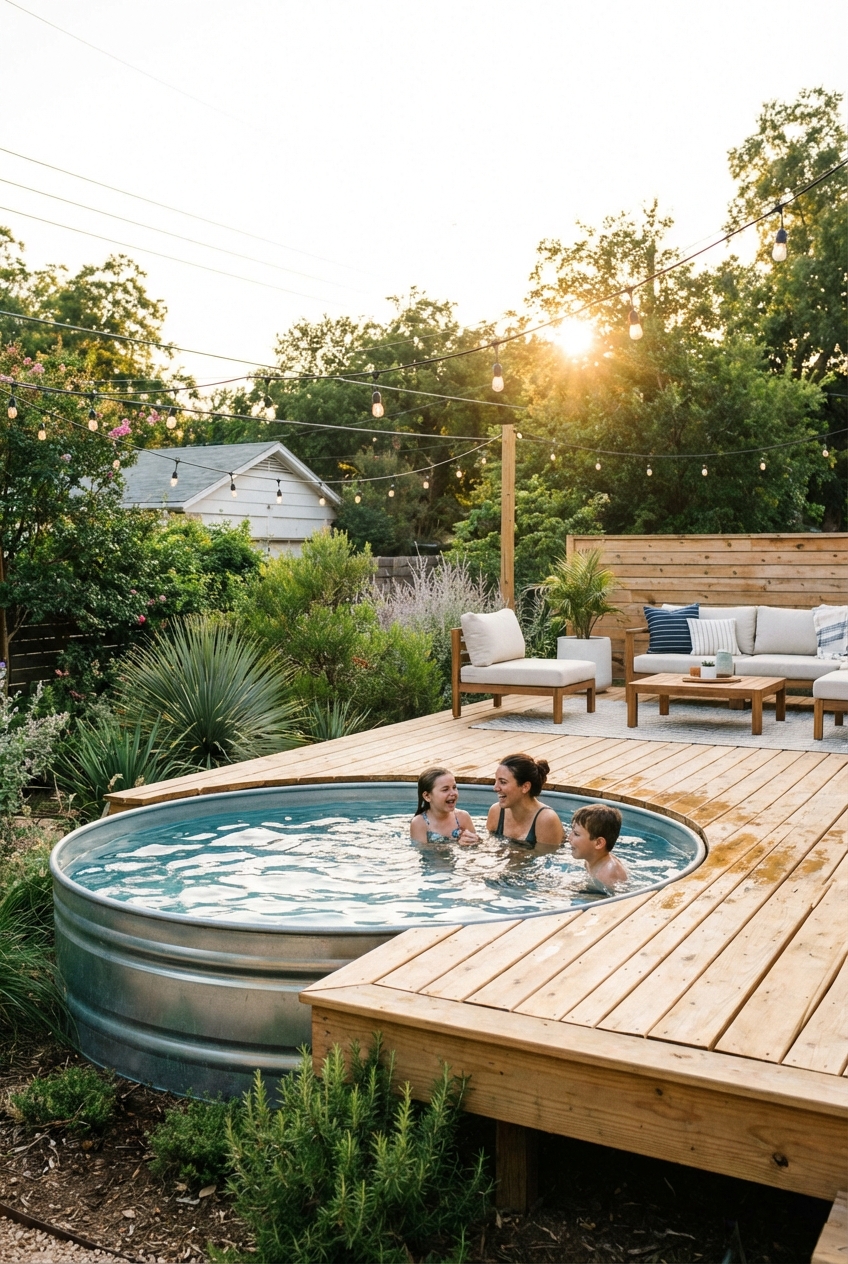
Budget-Friendly Backyard Pool Ideas
The dream of owning a pool often feels out of reach when you start looking at the six-figure price tags of custom inground gunite installations. However, as a designer, I have seen firsthand that a refreshing, stylish water feature does not require a second mortgage or a massive construction crew.
Creating a budget-friendly oasis is about shifting your perspective from “traditional luxury” to “creative utility.” By focusing on smart materials, DIY-friendly installations, and strategic landscaping, you can transform a standard backyard into a resort-style retreat for a fraction of the cost.
At-a-Glance: Key Takeaways
- Embrace the Stock Tank: These agricultural staples offer a chic, industrial look for under $1,000 and are incredibly durable.
- Prioritize Leveling: The most expensive mistake you can make is skipping professional-grade ground leveling, which leads to structural failure.
- Focus on the Surroundings: A basic above-ground pool looks high-end when you invest in high-quality decking, pea gravel, or lush landscaping to hide the exterior walls.
- Size Matters: Smaller “plunge” style pools cost less to heat, treat, and maintain over the long term.
- Safety First: Budget for a proper fence and locking gate immediately, as these are non-negotiable for insurance and safety.
What This Style/Idea Means (and Who It’s For)
Budget-friendly pool design is for the homeowner who values experience over prestige. It is for families who want a place to cool off during August heatwaves, but don’t want the permanent commitment or the massive footprint of a standard 40-foot inground pool.
This approach often leans into a “boho-chic” or “modern industrial” aesthetic. Because many affordable pools are smaller or utilize unconventional materials like galvanized steel or vinyl, the design depends on how you integrate the vessel into your existing landscape.
This is also an ideal solution for renters or people in “starter homes” who may not want to invest $50,000 in an asset they cannot move. Many of these options, such as stock tanks or high-end inflatable pools, can be drained and transported if you relocate.
The Signature Look: Ingredients That Make It Work
To keep a budget pool from looking like a temporary after-thought, you need a cohesive design language. We achieve this by focusing on texture and “anchoring” the pool to the ground.
Natural Textures: Use wood, stone, and organic greenery to soften the hard edges of a pool. If you have a vinyl-sided pool, surrounding it with a cedar-planked skirt or a field of river rocks immediately elevates the visual quality.
Monochromatic Color Palettes: Stick to a consistent color story for your pool accessories, towels, and umbrellas. Deep blues, crisp whites, or earthy terracottas create a curated “boutique hotel” vibe that distracts from the modest price tag of the pool itself.
Integrated Lighting: Never underestimate the power of light. Solar-powered path lights, waterproof LED pucks inside the pool, and string lights overhead create an ambiance that makes the space feel expensive and intentional after the sun goes down.
Layout & Proportions (Designer Rules of Thumb)
When placing a pool on a budget, you have to be precise with your measurements to avoid costly plumbing or electrical rerouting. Here are the rules I use in every project:
- The 3-Foot Perimeter Rule: Always maintain at least 3 to 4 feet of clear walking space around the entire pool. This prevents the area from feeling cramped and allows for safe entry and exit.
- Sightlines from the House: Position the pool so you can see it clearly from a primary window (usually the kitchen or living room). This is essential for safety and ensures you enjoy the “water view” even when you aren’t swimming.
- Proximity to Utilities: Stay within 15 to 25 feet of an electrical outlet and a water spigot. Running new lines underground can easily add $2,000 to $5,000 to your “budget” project.
- The Scale Factor: In a small yard, a 10-foot round stock tank looks like a purposeful design choice. A 24-foot above-ground pool in that same yard will overwhelm the space and make the backyard feel unusable for other activities.
Designer’s Note: One of the most common mistakes I see is people placing their pool directly under a large shade tree. While the shade sounds nice, the constant battle with leaves, sap, and bird droppings will make you hate your pool within two weeks. Position the pool in the sunniest spot possible and use a stylish cantilever umbrella for shade instead.
Step-by-Step: How to Recreate This Look
1. Site Selection and Prep: Identify the flattest part of your yard. Use a transit level or a long 2×4 with a bubble level to ensure the ground is perfectly flat. Even a two-inch slope can cause an above-ground pool to collapse under the weight of the water.
2. Excavation and Base: Remove all grass and sod from the area. Dig down about 2 to 4 inches and fill the space with leveled masonry sand or a high-density foam pool pad. This protects the bottom of your pool from rocks and roots.
3. Assembly: Follow the manufacturer’s instructions for your specific model. For stock tanks, ensure you treat the interior with a rust-inhibitor if you plan to use chlorine. For vinyl pools, let the liner sit in the sun for an hour before installing to make it more pliable.
4. The “Finishing” Skirt: This is where the design happens. Build a simple wooden frame around the pool using pressure-treated lumber. Face it with cedar pickets, horizontal slats, or even bamboo fencing to hide the structural supports of the pool.
5. Landscaping the Border: Create a 24-inch border of crushed stone or pea gravel around the base of the pool. This prevents mud from splashing into the water and provides a clean “edge” for your lawn mower to follow.
Budget Breakdown: Low / Mid / Splurge
Low Budget ($500 – $1,500): This tier focuses on “plug and play” options. A large 10-foot Intex-style inflatable pool or a basic 8-foot galvanized stock tank falls here. Your money goes toward the vessel, a basic filter pump, and a heavy-duty cover. Styling is achieved with potted plants and colorful outdoor rugs.
Mid Budget ($2,000 – $5,000): Here, you move into permanent above-ground pools or “hard-sided” stock tank setups with professional filtration. You can afford a small wooden “sun deck” that meets one side of the pool, allowing for a seated entry point. This budget also allows for basic solar heating mats to extend your swimming season.
Splurge Budget ($7,000 – $15,000): This is the “Semi-Inground” category. You can buy a high-quality resin-framed above-ground pool and sink it halfway into a hillside. Surround it with a full wrap-around composite deck, professional hardscaping (like pavers), and integrated lighting. At this level, the pool looks and feels like a permanent architectural feature of the home.
Common Mistakes (and How to Fix Them)
Mistake: Ignoring Drainage. A pool holds thousands of gallons of water. If it leaks or if you splash excessively, that water needs a place to go. The Fix: Grade the land away from your house and pool base. Install a simple French drain or a gravel trench if your yard is prone to holding water.
Mistake: Using the Wrong Chemicals. Many people buy “all-in-one” chemicals that actually degrade vinyl liners or cause rust in metal tanks. The Fix: Use a high-quality test kit daily. For stock tanks, specifically, use a floating dispenser and never let chlorine tablets touch the metal bottom directly.
Mistake: Forgetting the “Wet Path.” People often forget that kids will run from the pool to the house. The Fix: Create a clear, slip-resistant path using stepping stones or outdoor mats to prevent grass and mud from being tracked into your clean pool and your clean house.
Backyard Zone Variations
The Small Urban Lot: If you only have a 20×20 patio, go for a “cocktail pool.” This is a deep, 6-to-8-foot diameter tank meant for soaking rather than swimming. Surround it with tall potted palms to create privacy from neighbors.
The Sloped Yard: Use the slope to your advantage. Build a deck that is level with your back door and have it terminate at the edge of an above-ground pool. This gives you the “inground feel” because you walk straight out onto the water’s surface without climbing a ladder.
The Renter’s Backyard: Stick to high-quality inflatable “soft-sided” pools. These have come a long way in design, with some featuring realistic wood-grain or stone-print exteriors. Use “interlocking deck tiles” over your existing grass or patio to create a temporary, removable pool deck.
Finish & Styling Checklist
When you are ready to put the finishing touches on your budget pool, use this checklist to ensure you haven’t missed any design opportunities:
- The Decking: Is the wood stained to match your house trim? (Coordination makes it look custom).
- The Storage: Do you have a weather-proof box for noodles, goggles, and chemicals? (Clutter kills the “resort” vibe).
- The Entry: Is the ladder sturdy and aesthetic? Consider upgrading to “wedding cake” style steps for a more high-end feel.
- The Textiles: Do you have a designated “towel station” with hooks?
- The Greenery: Are you using “pool-friendly” plants? Avoid anything with thorns, heavy pollen, or invasive root systems.
- The Sound: Have you considered a small, outdoor Bluetooth speaker or a solar-powered water fountain to provide ambient white noise?
What I’d Do in a Real Project: Mini Checklist
If I were designing this for a client today, this would be my “Day One” action plan to ensure success:
- Check local HOA and city permits first; many “temporary” pools still require a 4-foot fence.
- Order a “Ground Cloth” or “Gorilla Pad” to go under the liner; it’s the best $100 you’ll ever spend to prevent punctures.
- Buy a “pool vacuum” that attaches to a standard garden hose for easy maintenance.
- Paint the exterior of a galvanized tank with a matte black or deep forest green “Direct-to-Metal” paint to make it disappear into the landscaping.
- Install a simple outdoor shower head (even one that hooks to a hose) to keep body oils and sunscreen out of your pool water.
FAQs
How long do budget-friendly pools last?
A well-maintained stock tank pool can last 10 to 15 years. A high-quality vinyl-sided above-ground pool usually lasts 7 to 12 years before the liner needs replacing. Cheap inflatable pools are generally 2-to-3-season items.
Is it hard to keep a small pool clean?
Actually, it can be harder than a large pool because the water volume is low. Small amounts of debris or sweat can change the chemistry quickly. However, because they are small, they are much faster to scrub and vacuum.
Can I heat a budget pool?
Yes. Solar covers (the blue “bubble wrap” style) are very effective for small pools. You can also buy electric heat pumps for above-ground pools, though they will significantly increase your monthly utility bill.
Do I need a permit for a stock tank pool?
In many jurisdictions, any vessel that holds more than 18 to 24 inches of water requires a permit and a safety fence. Always check your local building codes before filling the tank.
Conclusion
Creating a budget-friendly backyard pool is entirely possible if you prioritize the right elements. By focusing on a level foundation, intentional landscaping, and thoughtful “finishing” touches like decking and lighting, you can create a space that feels like a luxury getaway.
Remember that the goal is relaxation and joy. You don’t need a vanishing edge or a grotto to create memories with your family. A simple, clean, and well-designed water feature is often all you need to turn a hot summer afternoon into a highlight of the year. Start small, plan your layout carefully, and focus on the details that make the space feel like home.


